

More news on this day
Thousands of air travelers across Canada faced extensive delays and abrupt cancellations today as operational disruptions at major hubs in Calgary, Montréal, Toronto, Vancouver and Ottawa affected at least 445 flights and led to 97 cancellations, snarling schedules for WestJet, Air Canada, Porter Airlines, Jazz Aviation, Air Transat and several smaller carriers.
Get the latest news straight to your inbox!
Canada’s Major Hubs Grind Through a Day of Disruption
Publicly available flight-tracking data for today show widespread disruption across Canada’s busiest hubs, with Calgary, Montréal, Toronto, Vancouver and Ottawa all reporting a high volume of late departures, missed connections and same-day cancellations. The five-city disruption involved hundreds of movements and rippled through domestic and transborder routes throughout the day.
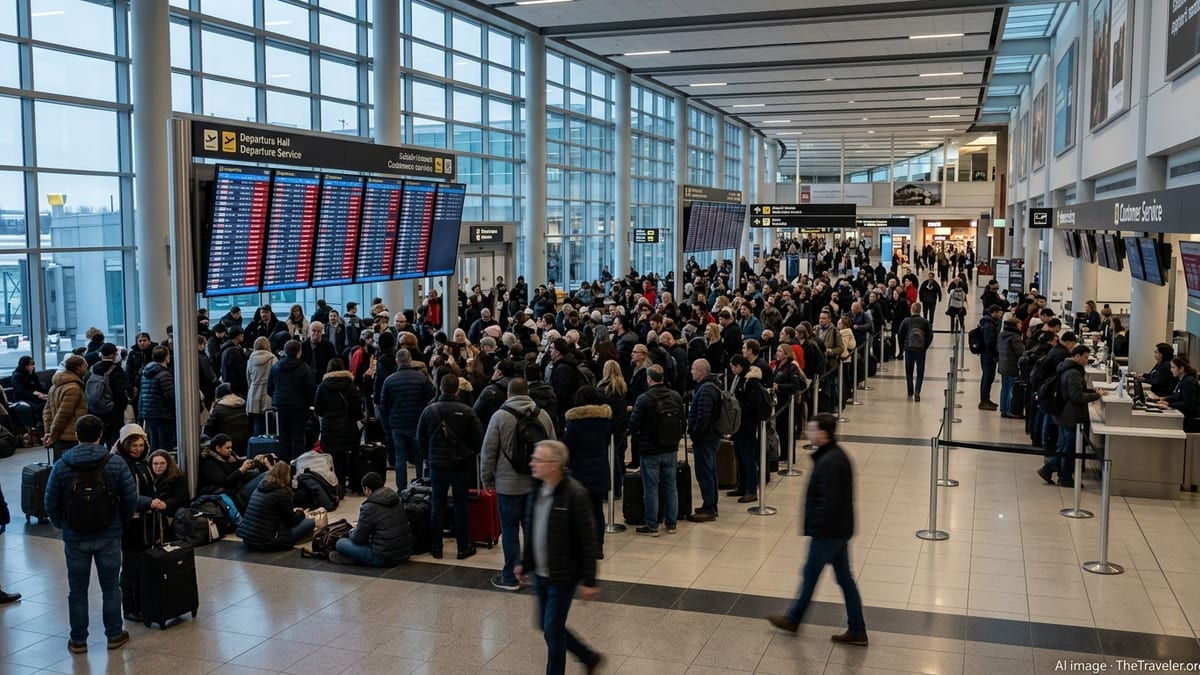
Reports indicate that more than 445 flights were delayed and at least 97 were cancelled across these airports, affecting tens of thousands of passengers at the height of the spring travel period. The clustered timing of delays meant departure boards in key terminals were filled with revised times, while some flights cycled through multiple estimated departure updates before ultimately being scrubbed.
Travelers described scenes of crowded gate areas, long lines at rebooking counters and ad hoc queues forming around customer-service desks as passengers sought alternative routes. With many flights operating close to capacity, same-day rebooking options were limited, and some travelers were told to expect overnight or multi-day delays before reaching their destinations.
The disruption added fresh strain to Canada’s already challenged aviation network, which has faced repeated pressure in recent seasons from weather volatility, air traffic control constraints and tight airline staffing levels, according to prior industry assessments.
Calgary and Toronto Emerge as Epicenters
Calgary International Airport and Toronto Pearson International Airport appeared to bear a substantial share of today’s irregular operations. Public data show that both hubs experienced concentrated periods in which large clusters of flights were delayed beyond an hour, with some services held for significantly longer as knock-on effects accumulated.
In Calgary, reports circulating on aviation and traveler forums spoke of aircraft waiting extended periods for departure slots and de-icing operations, echoing recent patterns during severe winter weather that have repeatedly slowed the airport’s tightly scheduled operations. Passengers recounted lengthy tarmac waits and abrupt gate changes as ground crews worked through backlogs.
Toronto Pearson, Canada’s busiest airport, also experienced substantial schedule pressure. Published coverage in recent months has highlighted ongoing vulnerability at the airport to weather and system bottlenecks, and today’s disruption followed a familiar pattern in which early-day delays cascaded into missed connections and evening cancellations. Travelers connecting through Pearson reported difficulty securing onward seats as fully booked flights left little room to absorb displaced passengers.
These two hubs serve as critical connective points for both WestJet and Air Canada, meaning disruptions there tend to echo across the national network. A late arrival in Calgary or Toronto can trigger a series of subsequent delays as the same aircraft and crew are scheduled to operate multiple segments over the course of the day.
Multiple Carriers Affected Across Montréal, Vancouver and Ottawa
While Calgary and Toronto shouldered much of the impact, Montréal, Vancouver and Ottawa also reported heightened irregular operations. Flight-status boards at Montréal–Trudeau and Vancouver International showed elevated numbers of delayed services, particularly on short- and medium-haul routes that link Canada’s major population centers.
Publicly available information shows that WestJet, Air Canada, Porter Airlines, Jazz Aviation and Air Transat were all affected to varying degrees, alongside several smaller regional and charter operators. In many cases, a single delayed aircraft rotation appeared to affect multiple brands, especially where regional partners operate under mainline banners.
At Montréal–Trudeau, travelers encountered delays on eastbound and transatlantic departures as crews and aircraft arrived late from disrupted domestic segments. In Vancouver, the west coast gateway role of the airport meant that schedule issues on flights arriving from the Prairies and central Canada worked their way into later departures across the Pacific and down the North American west coast.
Ottawa, though smaller than the other affected airports, nevertheless saw an outsized impact as its schedule relies heavily on precisely timed connections to larger hubs. When morning and midday flights from Toronto and Montréal operated behind schedule or were cancelled, passengers bound for Ottawa often found themselves facing extended waits or rerouting through alternative cities.
Passengers Confront Long Queues, Limited Options and Policy Hurdles
The operational turmoil quickly translated into a difficult day for passengers. Social media posts and online travel forums chronicled long queues at service counters, with some travelers reporting multi-hour waits to speak with airline representatives about rebooking and hotel arrangements.
Because many of today’s disruptions were linked in part to weather and broader operational constraints, travelers attempting to claim compensation encountered the complexity of Canada’s air passenger protection rules, which distinguish between events within and outside an airline’s control. Publicly accessible consumer guidance notes that when disruptions are categorized as weather- or safety-related, carriers typically have fewer financial obligations beyond rebooking and basic assistance, which can leave travelers covering extra costs on their own.
With same-day inventory tight across the network, some passengers turned to alternative routing on different carriers, often at significant added expense. Others opted to abandon trips entirely, particularly on short business journeys where the timing of meetings or events could not be salvaged after lengthy delays.
Travel advocates have previously pointed to such episodes as evidence that Canada’s air travel system remains highly sensitive to external shocks, whether from weather extremes or system bottlenecks in crowded hubs, and that passengers still face substantial uncertainty when plans unravel at short notice.
Broader Questions About Resilience in Canada’s Air Network
Today’s mass disruption arrives against a backdrop of repeated operational challenges in North American aviation, with Canada experiencing its share of high-impact weather events, staffing shortages and infrastructure strains over recent years. Industry analyses have highlighted how tightly timed schedules, lean spare capacity and complex aircraft rotations can leave airlines with limited flexibility when irregular operations begin.
Weather has been a recurring trigger. Recent seasons have brought severe storms and prolonged cold snaps that have forced airports to slow or suspend operations, particularly in Calgary and Toronto, where heavy snowfall and freezing precipitation can require intensive and time-consuming de-icing and runway clearing. When such conditions intersect with peak travel periods, the result is often cascading delays that persist even after skies clear.
Today’s events are likely to renew debate on how much redundancy airlines and airports should build into their systems to accommodate unforeseen shocks. Additional backup aircraft and crews, more generous connection windows and investments in de-icing and ground-handling capacity all improve resilience but raise operating costs in a sector already grappling with tight margins.
For travelers, the immediate takeaway is a familiar one. Publicly available travel guidance continues to emphasize strategies such as booking earlier flights in the day, allowing substantial connection times at major hubs and monitoring flight status closely in the 24 hours before departure, particularly during Canada’s volatile winter and shoulder seasons. On a day when hundreds of flights shifted off schedule, those precautions offered limited comfort to the thousands of passengers left navigating crowded terminals and uncertain arrival times.