

More news on this day
Thousands of travelers across Europe faced severe disruption as more than 360 flights were reportedly cancelled and some 3,000 delayed at major hubs including Istanbul, London, Cologne, Prague and Munich, affecting services operated by carriers such as Pegasus Airlines, easyJet, Turkish Airlines and Ryanair.
Get the latest news straight to your inbox!
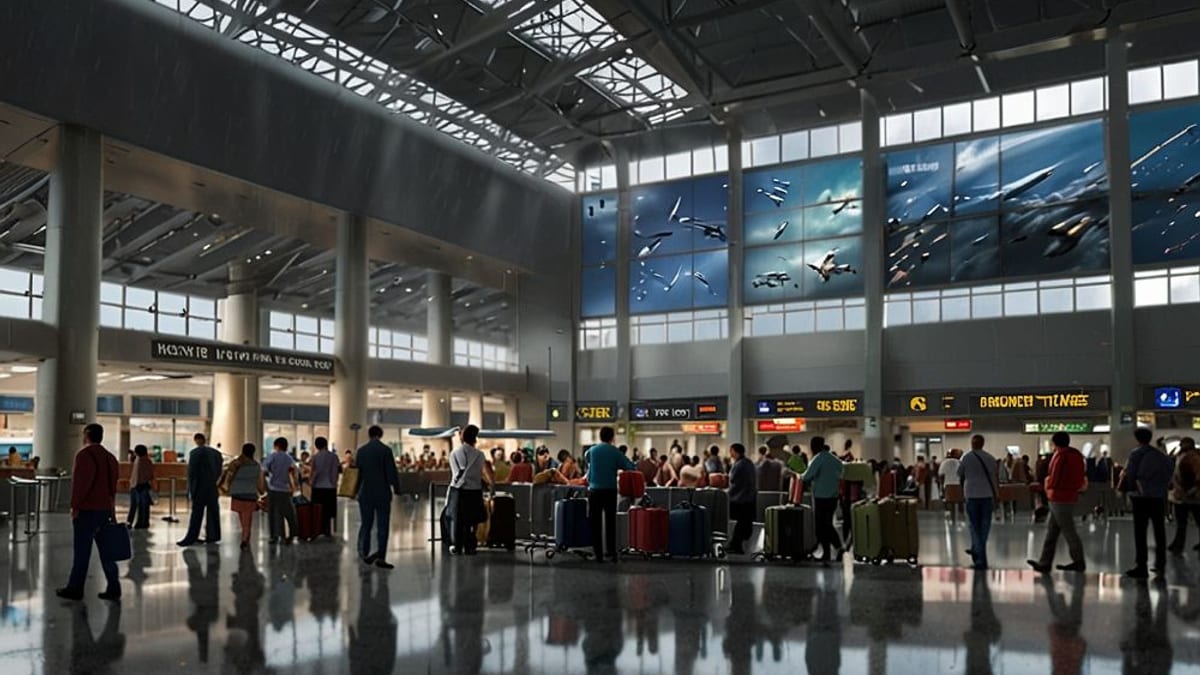
Image by Travel And Tour World
Widespread Cancellations at Europe’s Key Hubs
Published data from flight-tracking platforms and airport operational updates indicate that the latest wave of disruption hit a broad arc of airports stretching from Turkey to the United Kingdom and central Europe. Istanbul, London, Cologne, Prague and Munich all reported elevated levels of cancellations and delays, with low-cost and full-service carriers simultaneously affected.
Across these hubs, more than 360 flights were removed from schedules and in excess of 3,000 departures and arrivals experienced significant delays. Budget operators including Pegasus Airlines, easyJet and Ryanair featured prominently in disruption statistics, alongside Turkish Airlines and other European carriers. The pattern echoed previous large-scale events in the region where congestion at a handful of major hubs quickly spread across airline networks.
Airport operations reports and publicly available performance data show that even modest timetable shocks can multiply as aircraft and crews fall out of position. Once morning waves of flights are disrupted, subsequent rotations are often delayed or cancelled as airports hit curfew limits or run out of available slots. The latest figures suggest that this knock-on effect played a major role in the breadth of the current disruption.
Although the precise operational triggers varied from airport to airport, analysts note that Europe is still operating with limited slack in both staffing and aircraft availability. This leaves airlines and infrastructure highly vulnerable when several hubs experience pressure at the same time.
Travelers Stranded in Turkey, the UK and Central Europe
The operational impact translated into long queues, missed connections and overnight airport stays for passengers across multiple countries. In Turkey, Istanbul’s role as a key regional and intercontinental hub meant that disruption to Pegasus Airlines and Turkish Airlines services created a cascade of missed onward flights, particularly for travelers connecting between Europe, the Middle East and Asia.
In the United Kingdom, London airports faced a mix of cancellations and rolling delays for flights operated by easyJet, Ryanair and other European carriers. Publicly accessible discussion forums and traveler reports described crowded terminals and difficulties securing alternative seats as later services also filled up or encountered delays of their own.
Cities such as Cologne, Prague and Munich experienced similar patterns on a smaller scale. These airports serve as important points in intra-European networks, and when departures there are cancelled, disruptions ripple outward to secondary cities that rely on a limited number of daily connections. Passengers on evening departures were particularly vulnerable to becoming stranded when curfews and crew duty-time limits prevented airlines from operating late replacement services.
Some travelers reported through social platforms that they had been stranded for multiple days while waiting for available seats, especially on popular leisure routes and flights feeding into long-haul services. These experiences align with previously documented large-scale disruptions in Europe, where backlogs have taken several days to clear once airline and airport capacity is constrained.
Operational Strain, Weather and System Constraints
A combination of seasonal weather, air traffic control constraints and tight airline schedules appears to have set the stage for the current wave of disruption. Recent reporting on European aviation performance has highlighted how winter weather patterns and recurring capacity bottlenecks at certain control centers continue to drive elevated levels of delays and cancellations compared with pre-pandemic norms.
Analysts point to the way European carriers operate dense daily rotations with limited spare aircraft and crews. When storms, snow or high winds affect one or more major hubs, even temporarily, airlines may be forced to prioritize long-haul routes and cancel shorter intra-European sectors to preserve wider network integrity. This approach can leave large numbers of short-haul passengers facing cancellations, particularly at secondary airports.
Industry studies published in early 2026 suggest that thousands of flights are cancelled across Europe each month, with a significant share attributed to air traffic management issues and weather. The latest figures from Istanbul, London, Cologne, Prague and Munich appear consistent with that broader pattern, though the clustering of more than 360 cancellations and around 3,000 delays within a short time frame has amplified the effect on passengers.
Infrastructure limitations also play a part. Night curfews at several European airports limit the ability to operate late recovery flights, while ground-handling and security staffing shortages at some locations continue to slow the turnaround of aircraft. Publicly available performance reports show that even small slowdowns on the ground can lead to missed slots in crowded airspace, further compounding delays.
Passenger Rights Under EU261, UK261 and Turkish Rules
The scale of the disruption has renewed focus on what protections passengers can rely on when flights are heavily delayed or cancelled. Within the European Union, Regulation EC 261/2004 sets out common rules on compensation and assistance for affected travelers. Under this framework, passengers on eligible flights may be entitled to meals, refreshments, hotel accommodation and, in many cases, fixed-sum financial compensation when cancellations or long delays are not caused by extraordinary circumstances.
Similar provisions apply to flights covered by the United Kingdom’s post-Brexit UK261 regime, which largely mirrors the original EU regulation for services departing from UK airports or operated by UK carriers. Public guidance from consumer organizations emphasizes that eligibility often depends on factors such as the length of delay on arrival, the flight distance and the specific reason for the disruption.
For flights involving Turkey, passenger protections are governed by national rules commonly referred to as SHY regulations. These rules, which have been highlighted in recent consumer discussions, provide for assistance and in some cases compensation on flights operated by Turkish carriers such as Pegasus Airlines and Turkish Airlines, particularly when services originate in Turkey or are operated within its jurisdiction.
Travel advocacy groups and online guides advise passengers to retain boarding passes and written proof of delays or cancellations, and to submit claims directly to airlines in the first instance. If disputes arise over eligibility or timing, travelers may escalate cases to national enforcement bodies or alternative dispute resolution schemes that oversee compliance with EU261, UK261 and equivalent Turkish regulations.
What Stranded Travelers Are Being Advised to Do
In the face of widespread cancellations and overbooked alternative flights, publicly available travel advisories recommend a combination of proactive rebooking and careful documentation. Passengers are being encouraged to monitor airline apps and airport departure boards closely, as schedules can change at short notice when carriers adjust operations to work through backlogs.
Consumer guidance also stresses the importance of exploring multiple options when stranded, including considering nearby airports such as alternative London terminals or regional hubs in Germany or neighboring countries. During previous disruption events, some travelers have successfully reached their destinations by combining rail segments with flights from less congested airports.
Air travel forums and passenger rights organizations further highlight the value of knowing one’s entitlements under EU261, UK261 and Turkish SHY rules before accepting vouchers or itinerary changes. In some cases, travelers may be entitled to both a refund and compensation, or to accommodation and meals while waiting for a rebooked flight, depending on the circumstances of the disruption.
With European aviation still operating close to capacity, analysts suggest that similar episodes of large-scale disruption remain a risk. For now, the latest wave of cancellations and delays at Istanbul, London, Cologne, Prague and Munich serves as a reminder that even routine travel in and around Europe can be vulnerable to sudden and widespread breakdowns in the system.