

More news on this day
Thousands of passengers were left stranded today across Georgia, California, New Jersey and Florida as a fresh wave of flight disruptions rippled through the U.S. air travel system, with at least 57 flights canceled and nearly 600 delayed on routes operated by Delta Air Lines, United Airlines and Southwest Airlines.
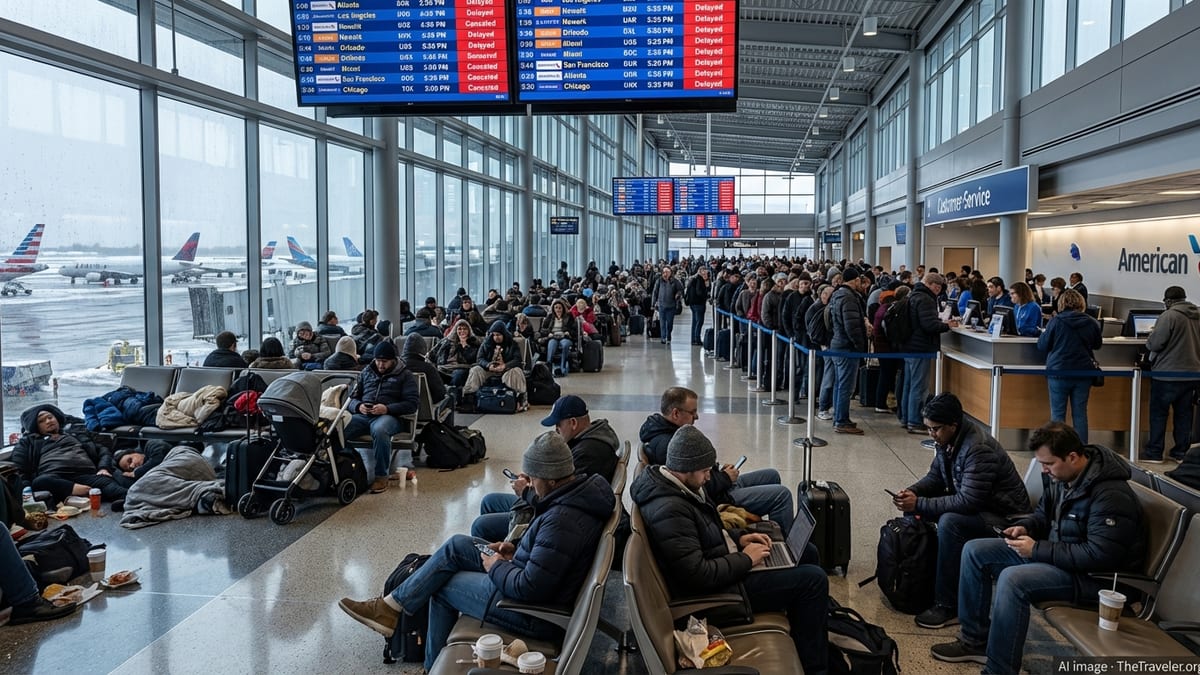
Where Today’s Disruptions Are Hitting the Hardest
The latest round of interruptions is concentrated at major hub and leisure gateways in four key states: Hartsfield-Jackson Atlanta International in Georgia, Los Angeles International and San Francisco International in California, Newark Liberty International in New Jersey and a cluster of busy Florida airports including Orlando, Miami and Fort Lauderdale. Together, these airports form some of the most critical nodes in the domestic network for Delta, United and Southwest, meaning that every cancellation or extended delay there quickly reverberates across the country.
Data from nationwide flight-tracking services today shows that Delta, United and Southwest are among the carriers driving a broader pattern of disruption in the United States, with dozens of cancellations and hundreds of delays attributed to the three airlines across their networks. While the precise breakdown varies by hour as operations shuffle, combined totals for the four affected states have passed 57 outright cancellations and roughly 595 delayed departures and arrivals, leaving aircraft and crew out of position and passengers scrambling for options.
Atlanta, Delta’s largest hub, has again emerged as a flashpoint, with rolling departure delays spilling into the early afternoon and knock-on effects for connecting travelers heading to smaller cities across the Southeast. In California, Los Angeles and San Francisco are seeing hold-ups tied to recent bouts of strong winds and low clouds, compounding congestion on already busy Friday schedules. In New Jersey, Newark’s tightly packed runway and taxiway system is proving vulnerable to residual congestion after recent operational emergencies. Florida, meanwhile, is seeing familiar bottlenecks at Orlando and South Florida airports, where heavy leisure demand amplifies even minor schedule disruptions.
What Is Behind Today’s Cancellations and Delays
Several overlapping factors are feeding into today’s wave of cancellations and delays, reflecting broader strain on the U.S. aviation system this winter. Weather remains a dominant driver. In California, a series of Pacific storm systems in recent days has forced air-traffic managers to slow the flow of arrivals into San Francisco because of high winds and low visibility, often triggering ground-delay programs that push back departure times at origin airports by hours and leave arriving passengers circling in holding patterns.
In the interior West, winter weather has snarled operations at connecting hubs such as Salt Lake City, where heavy, persistent snow has periodically reduced airport capacity to a single runway. That, in turn, has disrupted banks of Delta and Southwest flights, with aircraft and crews arriving late into downstream stations in Georgia and Florida today. Across the East Coast, the lingering impacts of recent winter storms and the ripple effect of an earlier ground stop at Newark after an aircraft emergency have kept schedules tight, leaving airlines with little buffer when minor disruptions arise.
Operational and staffing challenges are compounding the weather impacts. Airlines are still working with crew rosters that leave limited slack when storms, sick calls or aircraft maintenance issues cascade across a system. Spirit Airlines’ recent large-scale cancellations across Florida due to crew shortages underscore how sensitive the industry remains to staffing imbalances, and today’s disruptions at Delta, United and Southwest show that even the largest carriers can quickly feel the strain when severe weather or air-traffic constraints collide with tight schedules.
How Delta, United and Southwest Routes Are Being Affected
Delta’s network is bearing a significant share of the disruption through its Atlanta and Salt Lake City hubs, which serve as primary connections between the Southeast, West Coast and mountain states. Travelers heading from Florida and Georgia to California are encountering extended departure holds, rolling gate changes and, in some cases, outright cancellations on transcontinental routes. Short-haul feeder flights into Atlanta are also affected, as the airline prioritizes keeping longer-haul aircraft and international departures on schedule when capacity is squeezed.
United is experiencing pressure at Newark Liberty and some of its key connecting points for traffic bound to and from California. Flights linking Newark with West Coast gateways, including Los Angeles and San Francisco, are encountering compounding delays as congestion builds at each end. United’s Florida-bound services from the Northeast and Midwest are similarly impacted when inbound aircraft arrive late or crews hit their regulated duty-time limits, forcing the airline to cancel or reroute flights to remain within federal safety rules.
Southwest, with its point-to-point network and heavy presence in both California and Florida, is seeing a more scattered pattern of disruptions. Delays are cropping up on high-frequency shuttle routes such as those linking Northern and Southern California, as well as on leisure-heavy services connecting Orlando and Tampa with cities across the Midwest and Northeast. Because Southwest often relies on tight turnarounds to keep planes moving, even a short weather-related or air-traffic delay early in the day can cause a chain reaction that affects flights many legs down the line.
Airport-by-Airport Snapshot in Georgia, California, New Jersey and Florida
At Hartsfield-Jackson Atlanta International, passengers are confronting long lines at customer-service counters and crowded gate areas as delays ripple through the country’s busiest airport. The combination of regional weather issues and knock-on effects from earlier storms has pushed some departures back by an hour or more. For many travelers, especially those connecting from smaller Southeastern cities, missed connections are a growing concern, and rebooking options later in the day are limited on already busy routes.
In California, San Francisco International is navigating the aftermath of strong wind events that recently forced air-traffic authorities to slow arrivals significantly, while Los Angeles International is dealing with a mix of weather-related spacing requirements and heavy traffic heading into a peak travel weekend. Travelers arriving to or departing from these airports on Delta, United or Southwest are being advised by airport officials to monitor their flight status closely and to anticipate potential last-minute gate or timing changes even when flights remain listed as operating.
Newark Liberty International in New Jersey, a major United hub, continues to feel the residual effects of an aircraft emergency earlier this week that briefly halted all operations and resulted in a backlog of delayed departures and arrivals. While the immediate emergency has passed, today’s schedule remains tight, and any new disruption, be it weather or runway congestion, can quickly push flights into delay. In Florida, Orlando International and Miami International are absorbing heavy demand from both family vacationers and cruise passengers, and the pressure is evident in the number of delayed departures on Delta, United and Southwest services, particularly on routes to Atlanta, New York, Chicago and other major hubs.
What Stranded Passengers Are Experiencing on the Ground
Inside terminals across the four states, the human cost of today’s disruption is plain. Families with young children are sprawled across gate area floors, business travelers are clustered around power outlets juggling laptop work and rebooking calls, and international visitors unfamiliar with U.S. hubs are struggling to navigate a constantly shifting maze of gate changes and departure boards dotted with red delays and cancellation notices. With many affected flights departing from early morning onward, airport food courts and seating areas are increasingly packed as the day wears on.
Social media posts from Atlanta, Los Angeles, Newark and Orlando show lengthy lines at airline customer-service counters, where wait times of an hour or more are being reported as passengers seek rebooking or hotel assistance. Some travelers describe being automatically rebooked on flights departing many hours, or even a full day, after their original schedule, particularly on heavily booked Florida and California routes where spare seats are scarce. Others are reporting taking matters into their own hands, renting cars for overnight drives or looking for alternate routings through less congested hubs.
The strain is particularly acute for passengers with tight onward commitments, including cruises departing from Florida ports, international connections through coastal hubs, or work obligations that hinge on daytime arrivals. For them, the uncertainty surrounding rolling delays can be more frustrating than outright cancellations, as departure times are repeatedly pushed back in small increments. Travelers with mobility challenges or medical needs face additional hurdles, as airport assistance services themselves can become stretched when so many flights are disrupted at once.
Everything You Need to Know About Rebooking and Compensation
For passengers whose flights on Delta, United or Southwest have been canceled today, the first priority is securing a new itinerary. Airlines generally rebook affected customers on the next available flight to their destination at no additional fare cost, but that next available seat may not be until much later in the day or, on popular routes, the following day. Acting quickly is essential. Experts recommend simultaneously joining the line at an airport service desk, calling the airline’s customer-service number and using the carrier’s mobile app or website to search for alternative options, improving the odds of finding an acceptable replacement flight.
When it comes to out-of-pocket expenses, travelers should temper expectations. U.S. regulations do not require airlines to provide hotel rooms or meal vouchers in cases where disruptions are caused by weather, air-traffic control constraints or other circumstances deemed outside the airline’s control. In practice, each carrier has its own policies and may, on a case-by-case basis, issue vouchers when delays stretch late into the night and passengers are forced to overnight at a hub. Passengers are encouraged to ask politely at the counter about available support and to keep all receipts for food, accommodation and ground transportation in case they can seek reimbursement through travel insurance or credit-card benefits.
Voluntary compensation in the form of travel credits or frequent-flyer miles is more likely when delays or cancellations stem from controllable causes such as crew mismanagement or mechanical problems, though such determinations are often opaque to passengers. Travelers should also be aware that they may be entitled to a full refund if their flight is canceled and they choose not to travel, or if there is a significant schedule change and they decline the alternative offered. In such cases, requesting a refund rather than a voucher can preserve flexibility, especially if future travel plans remain uncertain.
Practical Tips for Travelers Flying Later Today
For travelers who have not yet headed to the airport, the most important step is to verify the real-time status of their flight before leaving home or their hotel. Same-day schedule changes are common on disruption-heavy days, and a flight that appears on time in the morning can be affected later as aircraft and crews fall behind schedule. Checking both the airline’s app and the airport’s own flight information can provide a clearer picture of delays building along a route and help travelers decide whether to adjust their plans or reach out proactively to the airline for alternative options.
Arriving early is also advisable, especially at the hardest-hit airports in Georgia, California, New Jersey and Florida. Security lines, check-in counters and bag drops tend to swell when large numbers of flights are delayed, as passengers from multiple departure waves overlap in the terminal. Building in extra time reduces stress and increases the room for maneuver if a gate or terminal change is announced, or if an airline offers earlier rebooking opportunities on a standby basis.
Finally, travelers should prepare for the possibility of extended time at the airport. Packing essential medications, snacks, a refillable water bottle and portable chargers in carry-on bags can make a long delay more manageable. Saving or printing key documents such as confirmation numbers, hotel reservations and rental-car bookings can speed adjustments if plans must change at the last minute. While today’s disruptions are severe, they are not unprecedented for the winter travel season, and passengers who stay informed and flexible are best positioned to navigate the turbulence.