

More news on this day
Thousands of air travelers across the United States are facing severe disruption today after 455 flights were canceled and another 1,119 delayed, with major knock-on effects at key hubs in Texas, New York, and California and significant operational pressure on Delta Air Lines and United Airlines.
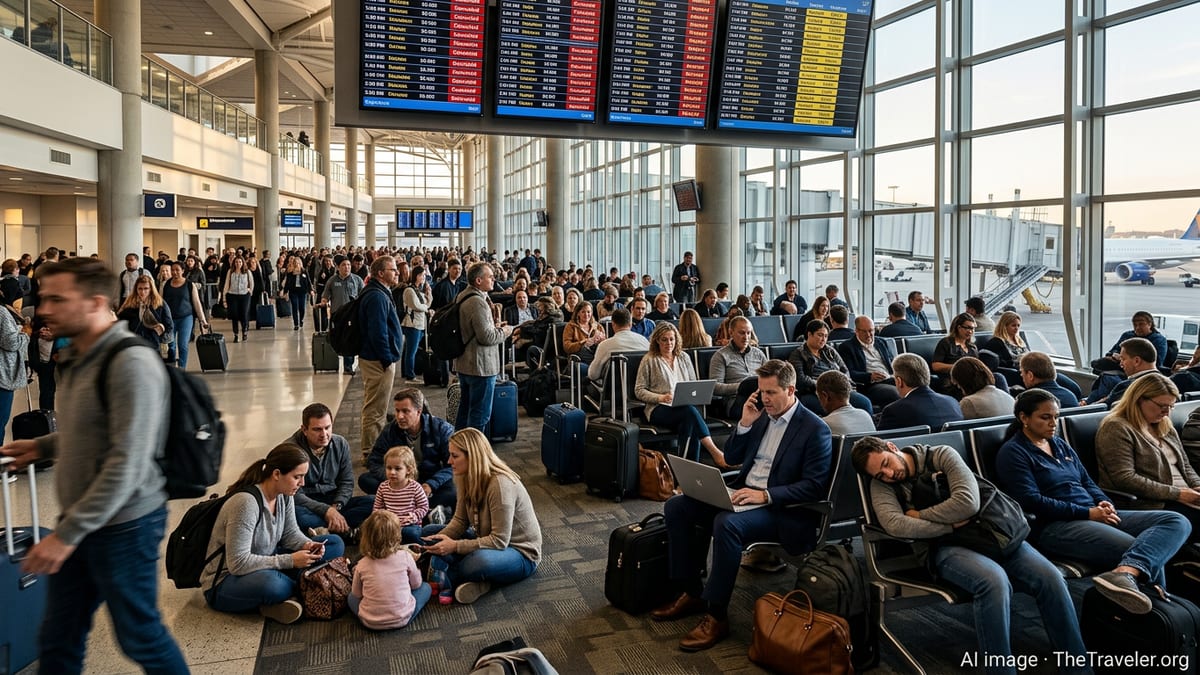
Widespread Disruption Across Texas, New York, and California
The wave of cancellations and delays is rippling through some of the country’s busiest airports, leaving terminals crowded with stranded passengers and departure boards dominated by red and yellow alerts. Data from national tracking services show that the most serious bottlenecks are concentrated in large hub airports in Texas, New York, and California, where the combination of weather issues and wider operational challenges has sharply reduced on-time departures.
In Texas, Dallas Fort Worth and Houston’s major airports are reporting clusters of grounded or late-running departures, with knock-on effects for connecting flights across the domestic network. Travelers heading to or from regional cities are particularly affected as aircraft and crews are repositioned to protect core trunk routes serving larger markets.
New York’s main airports are also experiencing significant disruption, with extended departure queues and arrival holds compounding delays once they begin. Even relatively short disturbances early in the day have cascaded into missed connections and rebookings later on, as already busy schedules leave little slack to recover from early problems.
Across California, from Los Angeles and San Francisco to regional coastal and inland airports, passengers are reporting long waits at customer service desks and crowded gate areas as airlines juggle equipment and crew availability. The disruption is hitting both leisure and business travelers, with some facing overnight stays or being rerouted through multiple hubs to reach their destination.
Delta and United Among Hardest Hit Carriers
Delta Air Lines and United Airlines are bearing a significant share of today’s cancellations and delays, reflecting their large footprints at many of the affected hubs. Both carriers operate dense connecting banks at key airports, meaning that any shock to the system can reverberate quickly across their networks.
Operational experts say that when disruptions reach this scale, airlines often prioritize long haul and high demand routes, while trimming or consolidating shorter flights to free up aircraft and crew. That leaves some passengers on domestic and regional services more vulnerable to last minute schedule changes or rolling delays as carriers attempt to maintain overall network integrity.
Delta and United have advised customers to check their flight status frequently through airline apps, text alerts, or airport information screens, rather than relying solely on the original booking confirmation. Same day schedule changes are common in these conditions, and departure times can shift multiple times as weather patterns evolve and equipment becomes available.
While both airlines routinely offer waivers during severe disruption, eligibility and conditions can vary depending on the cause and route. Passengers whose travel is not time sensitive are being encouraged to consider moving their trips to less congested days or off peak hours if flexible rebooking options are offered.
What Stranded Passengers Should Do at the Airport
For those already at the airport when a flight is canceled or heavily delayed, speed and preparation are crucial. Travelers are advised to immediately open their airline’s app or website, which often offers limited self service rebooking options before gate agents can assist the entire queue of affected customers. In many cases, the fastest way to secure a new seat is through digital tools while simultaneously joining the line at the service desk.
Passengers should keep boarding passes, booking references, and any airline notifications handy, as these details help agents quickly locate records and assess eligibility for alternate routings or partner flights. If traveling with checked baggage, it is important to confirm with staff whether bags will be automatically retagged to a new itinerary or must be retrieved and rechecked.
Long delays can mean hours in crowded terminals, so travelers are urged to monitor airport announcements and screens regularly for gate changes and revised departure times. Staying close to the gate area, where staff receive the latest operational instructions, can ensure passengers are present if a tight departure window opens and boarding begins earlier than expected.
Families with young children, elderly passengers, and those with medical needs should proactively speak with airline staff about seating, preboarding, and access to quiet areas where possible. In large scale disruption, these groups may receive priority assistance, but only if their circumstances are clearly communicated to the airline.
Your Rights on Cancellations, Delays, and Compensation
In the United States, passenger rights vary depending on whether a disruption is considered within an airline’s control, such as crew or maintenance issues, or outside its control, such as severe weather or air traffic restrictions. While airlines are not generally required by law to provide compensation for delays, many offer meal vouchers, hotel accommodation, or travel credits when cancellations stem from controllable operational problems.
Travelers should request written confirmation of the reason for a cancellation or major delay, as this documentation can be useful when negotiating with the airline or seeking reimbursement from travel insurance providers. Policies differ not only between carriers but also between ticket types, so passengers holding basic economy fares may face more limited options than those with flexible or premium tickets.
If a domestic flight is canceled, passengers are typically entitled to a choice between a refund for the unused portion of the ticket or rebooking on a later flight operated by the same airline, subject to availability. Those who no longer wish to travel should clearly request a refund rather than a credit if they prefer the return of funds, particularly where long delays have made the trip impractical.
For significant delays that cause missed connections on the same ticket, airlines will usually rebook passengers to their final destination at no additional fare, though routing may involve extra stops or overnight layovers during severe disruption. Travelers whose plans are time critical, such as for events or cruises, should make these constraints clear while discussing options with airline representatives.
How to Minimize Disruption on Future Trips
While today’s wave of cancellations and delays is causing substantial frustration, there are steps travelers can take to reduce the impact of similar events in the future. Booking the first flights of the day on heavily traveled routes can improve the chances of an on time departure, as early services are less affected by the cumulative delays that build up over the afternoon and evening.
Selecting longer connection times at major hubs can also provide a buffer when inbound flights run late. In periods of widespread disruption, tight connections of under an hour can quickly become unrealistic, particularly at large airports where security, terminal changes, or long taxi times add to the journey between gates.
Frequent travelers may consider enrolling in airline loyalty programs or holding co branded credit cards that offer priority support lines or same day standby benefits. While these advantages cannot eliminate disruption, they can sometimes speed rebooking or secure a remaining seat on crowded alternate flights when capacity is constrained.
Finally, travel insurance with strong trip interruption and delay benefits can help offset the cost of extra hotel nights, meals, and alternative transport when schedules unravel. As today’s disruption at major hubs in Texas, New York, and California shows, even routine trips can be upended with little warning, making preparation an essential part of modern air travel.