

More news on this day
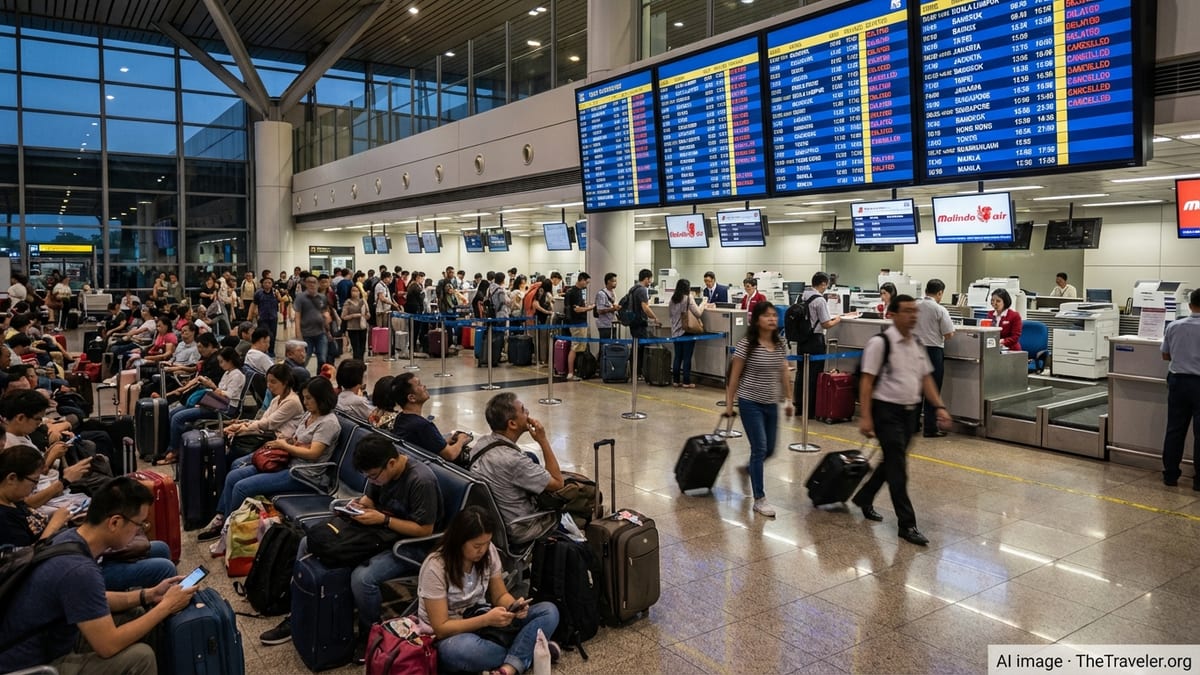
Hundreds of passengers have been left stranded across Poland as a fresh wave of flight disruptions hits Krakow, Warsaw and Gdańsk, with monitoring data pointing to at least 117 delays and 28 cancellations affecting services operated by Lufthansa, Lufthansa CityLine, Buzz, Ryanair and several other carriers.
Get the latest news straight to your inbox!
Delays and Cancellations Mount at Key Polish Airports
Publicly available flight-tracking information for services operating on Friday, April 10, 2026, indicates significant disruption across Poland’s busiest airports, with a concentration of problems at Krakow John Paul II International Airport, Warsaw Chopin Airport and Gdańsk Lech Wałęsa Airport. Tallying departures and arrivals across these three hubs points to around 117 delayed flights and 28 outright cancellations, affecting both domestic and international routes.
The disruption is spread across multiple airlines, with network carriers such as Lufthansa and its regional arm Lufthansa CityLine, as well as low cost operators including Ryanair and its Polish-based subsidiary Buzz, appearing frequently in delay and cancellation statistics. Other European and regional airlines serving Poland’s main gateways are also registering knock-on schedule issues as aircraft and crews fall out of position.
The pattern mirrors a broader uptick in flight problems across Europe in early April 2026, where separate monitoring of major hubs in Germany, the Netherlands and other markets has highlighted spikes in late-running services and cancellations. For travelers in Poland, however, the concentration of delays at three primary airports has amplified the local impact, particularly for those relying on onward connections.
While the absolute disruption figures are lower than the continent-wide totals reported earlier in the week, the share of affected movements at Krakow, Warsaw and Gdańsk on a single day is high enough to cause substantial congestion in terminals, long queues at service desks and limited availability on alternative departures.
Travelers Face Missed Connections and Overnight Strands
The practical consequences for passengers have been immediate. With many of the delayed and cancelled flights involving hub-linked services operated by Lufthansa and Lufthansa CityLine, travelers connecting through Frankfurt and Munich have been particularly exposed to missed onward departures. Some have been forced to rebook for later dates or accept rerouting via other European hubs with extended journey times.
Low cost routes operated by Ryanair and Buzz from Krakow and Gdańsk to popular leisure and migrant worker destinations have also seen multiple late departures and cancellations. For travelers relying on tightly timed weekends away or short visits, even multi-hour delays can effectively wipe out a substantial portion of their trip, while same-day cancellations have left many searching for last-minute seats at higher fares.
Reports from passengers and airport observers describe crowded check in halls and boarding areas, with rolling delay announcements and frequent gate changes. In some instances, aircraft have pushed back only to hold on the tarmac before returning to stand, extending uncertainty for those on board. Others have encountered late-night cancellations that require overnight accommodation or improvised journeys by rail and road.
Families traveling with children, school and tour groups, and business travelers with fixed meeting schedules appear to be among the hardest hit, as they face limited flexibility to adjust plans on short notice. With disruption concentrated on a busy Friday, the ripple effects are expected to carry into the weekend as aircraft and crews gradually return to normal rotations.
Operational Strains and Airspace Limits Behind the Disruption
The immediate causes of individual delays and cancellations vary from flight to flight, but recent industry analysis suggests that a combination of factors is placing sustained strain on Poland’s air travel network. European aviation data released earlier this year highlighted a rise in en route air traffic control delays over the last decade, while airlines continue to grapple with staffing and fleet utilization challenges that leave little buffer when unexpected issues arise.
In Poland specifically, recent weeks have brought additional pressures on the aviation and logistics system. Publicly available notices and commentary point to temporary border controls with neighboring countries and a three month flight restriction zone in eastern Polish airspace that runs from March 10 to June 9, 2026. While the restricted area is far from major hubs such as Krakow, Warsaw and Gdańsk, the associated rerouting requirements can add complexity to flight planning and contribute to knock on scheduling challenges when traffic levels are high.
Separately, changes in ground handling arrangements at Warsaw Chopin Airport and previous warnings of congestion in cargo and mail operations have been cited by logistics operators as sources of delay risk. Although these issues primarily affect freight and postal flows, the same ground infrastructure and staffing pools are often involved in passenger aircraft turnarounds, making it harder for airports and airlines to recover quickly when irregular operations occur.
Airlines operating in and out of Poland have also acknowledged in broader public communications that technical problems with individual aircraft, crew duty time limits triggered by earlier delays, and weather related constraints at other European airports can all cascade into cancellations. When several of these factors coincide on busy travel days, the result is a surge in schedule disruption of the kind seen on April 10.
Impact on Poland’s Tourism and Domestic Connectivity
The timing of the latest wave of disruption is particularly sensitive for Poland’s tourism sector. Krakow and Gdańsk are among the country’s most visited cities, drawing city break travelers from across Europe as spring temperatures rise. Persistent reports of delays and cancellations risk deterring some visitors or encouraging them to favor rail and road alternatives where practical.
For domestic connectivity, recurring issues at Warsaw and Krakow complicate travel between Poland’s main population centers and secondary cities served primarily via air links. Business travelers connecting between regional airports and international long haul services are especially exposed, as missed links can mean a full day’s delay in reaching distant destinations in North America, the Middle East or Asia.
Tour operators, hotels and local tourism boards are monitoring the situation closely, as they rely on predictable flight operations to sustain visitor flows. Extended periods of disruption can lead to increased no show rates, compressed stays and higher customer service workloads as accommodation providers help guests manage rebooked arrivals and departures.
At the same time, rail operators on key domestic corridors such as Krakow to Warsaw and Warsaw to the Tri City region around Gdańsk may see incremental demand from travelers seeking more reliable alternatives, even when journey times are longer. Industry observers suggest that repeated bouts of flight disruption across Europe in 2025 and 2026 are already prompting some travelers to reassess when air travel is essential and when other modes are viable substitutes.
What Stranded Passengers Can Do Next
For passengers affected by the latest delays and cancellations at Krakow, Warsaw and Gdańsk, immediate priorities include confirming the status of their flights, securing rebooking options and clarifying their rights to care and compensation. European Union regulations set out entitlements to meals, refreshments, hotel accommodation and, in some circumstances, financial compensation when flights are heavily delayed or cancelled for reasons within an airline’s control.
Travel industry guidance generally encourages passengers to use official airline apps and airport information displays as primary sources for live updates, as information from third party booking sites and intermediaries can lag during fast moving disruption. Where flights have been cancelled or significantly delayed, rebooking via digital channels is often quicker than waiting in airport queues, although many travelers still prefer in person assistance for complex itineraries and multi airline tickets.
Those with flexible plans may choose to reroute via alternative Polish airports or nearby hubs in neighboring countries if seats are available, particularly when heading to major destinations with frequent daily services. Others may opt to shift their trip entirely, particularly if the purpose is discretionary leisure travel rather than time sensitive business or family commitments.
With aviation analysts warning that Europe’s air traffic management system and airline staffing levels remain tight ahead of the peak summer season, travelers planning to use Krakow, Warsaw or Gdańsk in the coming weeks are being advised by consumer advocates and travel planners to allow extra buffer time for connections, consider earlier flights on the day of important events and keep contingency funds available for unexpected overnight stays or alternative transport.