

More news on this day
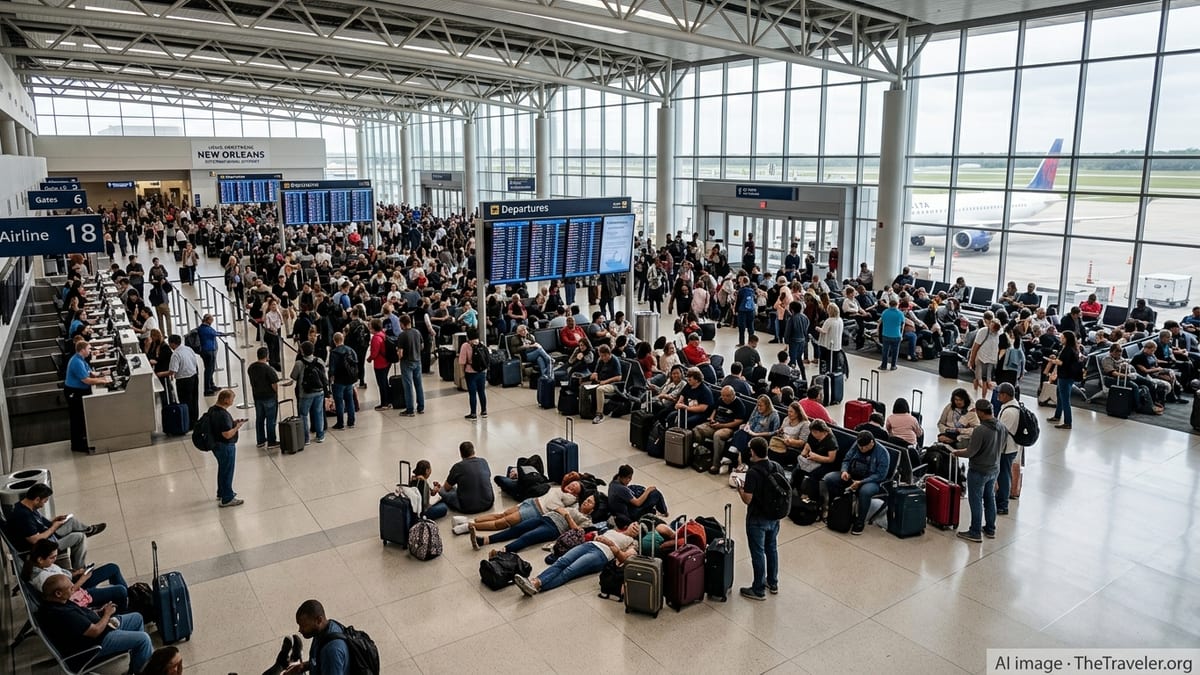
Hundreds of travelers were left stranded or facing extensive waits at Louis Armstrong New Orleans International Airport on March 23 as 91 departures and arrivals were delayed and at least five flights were canceled, disrupting operations for major carriers and severing connections to hubs such as Chicago, Atlanta, Orlando and other key U.S. cities.
Get the latest news straight to your inbox!
Ripple Effects Across Major U.S. Airline Networks
Publicly available flight-tracking data for March 23 show a sharp spike in operational disruption at Louis Armstrong New Orleans International Airport, with dozens of departures and arrivals running significantly behind schedule and a small but impactful number of outright cancellations. Airlines including Delta Air Lines, Southwest Airlines and United Airlines appear among the most affected operators at the airport, alongside several smaller domestic and regional carriers.
The delays and cancellations in New Orleans added fresh strain to a U.S. aviation system already coping with ongoing weather-related disruptions in multiple regions of the country. Reports indicate that carriers were scrambling to re-balance aircraft and crews after several days of turbulent operations tied to severe spring weather across parts of the Midwest and East, leaving limited slack in schedules when New Orleans flights began to stack up on March 23.
According to published coverage of the broader national picture, airlines across the United States have been working through lingering schedule challenges linked to recent storm systems, a scenario that can cause relatively modest local disruptions to cascade quickly through hub-and-spoke networks. As a connecting point for routes across the South and Midwest, New Orleans found itself exposed to those knock-on effects.
While the raw number of cancellations at New Orleans remained comparatively low, the concentration of delays on a busy spring weekend meant that large numbers of passengers experienced missed connections, forced overnight stays and last-minute itinerary changes.
Key Routes to Chicago, Atlanta and Orlando Disrupted
Routes linking New Orleans with major hubs such as Chicago, Atlanta and Orlando were among the most visibly affected, based on publicly available schedule and tracking information. These city pairs are typically operated by multiple airlines and serve as vital links for both point-to-point travelers and those connecting onward to other domestic and international destinations.
Services between New Orleans and Atlanta, a cornerstone route in Delta Air Lines’ network, saw a series of rolling delays that compressed already tight connection windows for passengers bound for the East Coast, Midwest and international long-haul flights. Even when flights were able to depart, later-than-planned arrivals in Atlanta increased the likelihood of missed onward connections and overnight rebookings.
New Orleans connections to Chicago and Orlando also encountered significant disruption. Chicago functions as a key mid-continent gateway in the networks of several major U.S. airlines, while Orlando remains one of the nation’s busiest leisure destinations, especially during the spring break period. Schedule changes on these routes tended to reverberate quickly as planes and crews were pulled off their expected rotations, forcing last-minute adjustments throughout the day.
For local travelers in New Orleans, the issues meant limited alternatives. Once early departures slipped behind schedule or were canceled, later flights in the day filled rapidly, and standby lists swelled as passengers sought any open seat to their intended destinations or to alternate hubs.
Passenger Experience: Long Queues, Uncertain Timelines
Accounts shared on social media and in local forums described crowded gate areas at New Orleans’ terminal, with passengers lining up at service desks to secure rebooked itineraries. Families traveling for spring break, business travelers facing missed meetings and visitors attempting to return home after weekend events in the city all appeared among those caught in the disruption.
Public posts from travelers indicated confusion as departure times were repeatedly pushed back in short increments, a pattern that often keeps passengers close to the gate in anticipation of boarding that does not materialize on schedule. Such rolling delays can be especially challenging for those traveling with children or older relatives, who may have limited options for food, rest or quiet space while they wait.
Airport operations information suggests that security screening times at New Orleans fluctuated through the day as peaks of delayed departures and re-timed flights pushed more passengers into the terminal at once. While some travelers reported moving through security relatively quickly, others described heavier crowds and longer queues as the effects of the disrupted schedule accumulated into the afternoon and evening.
For passengers whose flights were canceled, options often involved accepting next-day departures or rerouting through alternate hubs with more available capacity. That in turn created pressure on nearby hotels and ground transportation providers, as stranded travelers sought last-minute accommodation and rides.
Weather and System Strain Behind the Disruptions
While conditions in New Orleans on March 23 were not described as extreme, the disruptions there unfolded against the backdrop of a broader pattern of unsettled weather impacting large parts of the United States during March. Recent storm complexes have brought heavy rain, strong winds, snow and severe thunderstorms to multiple regions, prompting thousands of flight delays and cancellations at major hubs.
According to national aviation and weather reporting, such systems often create a chain reaction for airlines, as aircraft and crew end up out of position after earlier delays or diversions. Even when skies clear at a given airport, schedules may remain vulnerable while networks reset, occasionally leading to pockets of disruption in locations that are not experiencing the worst of the weather on a given day.
Operational data and prior industry analyses show that when delays build across multiple hubs at once, mid-size airports like New Orleans can feel the impact quickly. Flights operated with regional jets, late-evening departures and thinner routes are typically more susceptible, as airlines prioritize limited resources for the highest-demand and most strategically important services.
Reports from recent months highlight that U.S. carriers are still navigating the combined pressures of strong travel demand, tight staffing, aircraft maintenance constraints and weather volatility. Each factor contributes to a system in which small schedule shocks can turn into multi-day ripple effects for travelers.
What Travelers in and out of New Orleans Should Expect Next
Looking ahead to the coming days, publicly available forecasts and aviation data suggest that airlines operating at New Orleans will work to restore normal schedules by cycling delayed aircraft and crews back into position. However, residual delays can linger after an intensive disruption day, particularly on routes that operate less than daily or rely on tight turn times.
Industry guidance commonly advises passengers traveling during periods of national operational strain to monitor flight status frequently, check in early and build extra time into connections where possible. For travelers passing through New Orleans, this may mean favoring slightly longer connection windows at hubs such as Atlanta or Chicago to reduce the risk of misconnection if departure times slip.
Travelers whose plans were disrupted on March 23 may be eligible for rebooking options or schedule changes, depending on each airline’s policies and the cause of the delay or cancellation. Publicly available customer service guidance from major U.S. carriers outlines varying rules for meal vouchers, hotel accommodation and fee waivers in the event of significant disruption.
With spring travel demand building and weather patterns in March remaining unsettled, aviation analysts note that airports like Louis Armstrong New Orleans International will likely remain sensitive to system-wide challenges. Passengers planning trips in and out of the region over the coming weeks are being encouraged, in publicly shared advisories, to keep a close eye on evolving conditions and to prepare for the possibility of further schedule adjustments.