

More news on this day
Severe disruption at London Heathrow in early April has left hundreds of passengers stranded across Europe, as a cascade of delays and cancellations rippled through already stretched flight networks.
Get the latest news straight to your inbox!
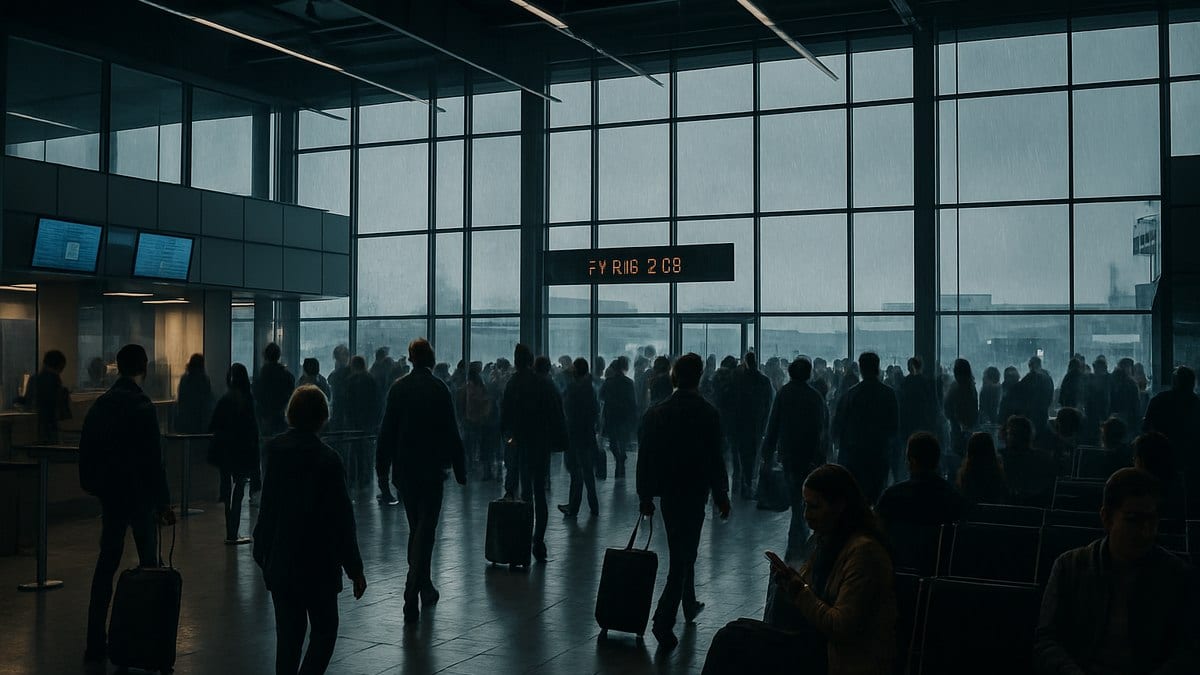
Heathrow Bottleneck Amplifies Europe-Wide Flight Chaos
Operational data from flight-tracking and aviation analytics platforms in the first week of April 2026 point to London Heathrow as one of the key pressure points in a wider European disruption pattern. Reports indicate that on some of the worst-affected days, Heathrow recorded well over one hundred delayed departures and arrivals, alongside a cluster of cancellations that removed vital capacity on trunk routes linking the United Kingdom with continental hubs.
The knock-on effect has been most visible at major connecting airports such as Amsterdam, Paris Charles de Gaulle, Frankfurt and Madrid, where passengers relying on Heathrow for onward services to North America, the Middle East and Asia found themselves stranded when their inbound legs failed to arrive on time. Industry monitoring sites describe a cascading effect in which missed slots at Heathrow translate into missed connections and overnight backlogs several countries away.
Travel industry briefings show that, across Europe, recent disruption days have produced flight-delay totals in the high hundreds and, on some dates, beyond one thousand. In that context, even a limited spike in cancellations at Heathrow can quickly turn into a widespread shortage of seats for displaced travelers trying to rebook from cities such as Rome, Zurich, Dublin or Copenhagen.
Passenger-rights platforms note that this latest disruption has unfolded on top of a busy spring travel period, leaving little spare capacity in airline schedules. As aircraft and crews fall out of position at Heathrow, carriers face difficult choices about which routes to prioritize, adding further uncertainty for travelers across the network.
Weather, Capacity Strain and System Vulnerabilities
Publicly available information from meteorological and aviation agencies attributes a significant share of the early April disruption to unsettled weather patterns across western and northern Europe. Strong winds, heavy rain and low cloud at times reduced the arrival and departure rates at Heathrow, where runway capacity is tightly constrained even under normal conditions.
When air traffic flow management restrictions are imposed in response to poor weather, Heathrow’s limited runway resilience means that small reductions in hourly movement rates can translate into dozens of delays. Airlines then face extended holding patterns, diversions to alternate airports, or late inbound aircraft that miss their planned turnarounds, all of which can force short-notice cancellations.
The recent disruption has also highlighted the broader vulnerabilities of Europe’s interconnected aviation systems. Over the past year, incidents ranging from power-supply problems near Heathrow to cyber events affecting aviation technology providers have demonstrated how rapidly an issue at one node in the network can affect passengers thousands of kilometres away. Although the latest episode appears driven mainly by weather and congestion, analysts note that it comes against a backdrop of heightened concern about infrastructure resilience.
Capacity constraints on the ground compound those challenges. Heathrow continues to operate close to its maximum sustainable throughput for much of the day, leaving limited room to absorb shocks. Ground-handling resources, air traffic control staffing and available stand space can all become bottlenecks when disruption builds, slowing recovery and prolonging the time that passengers remain stranded in regional airports across Europe.
Hundreds Stranded From Rome to Copenhagen
Travel and aviation reports from April 6 to 8 describe scenes of disruption from Rome and Milan to Zurich, Lisbon and Copenhagen, with Heathrow-related delays featuring prominently in the mix. On one recent day, aggregated statistics cited more than 1,400 delays and around 20 cancellations across a cluster of key European airports, including Heathrow, Gatwick and several major continental hubs.
While many of those delays were relatively short, several hundred passengers were left without same-day options as missed Heathrow connections broke multi-leg itineraries. Families returning from Mediterranean holidays, business travellers en route to long-haul meetings and students connecting to transatlantic flights were among those forced into overnight stays and rebookings on alternative routings.
In cities such as Amsterdam and Paris, local media coverage described long queues at transfer desks as travelers attempted to secure replacement flights after their Heathrow-bound services were delayed beyond their onward departure times. Similar scenes were reported at Italian and Swiss hubs, where limited remaining seat availability made it difficult to accommodate everyone on the next departures.
Some passengers also experienced extended waits for checked baggage that did not follow them onto hastily rebooked flights. Baggage-handling systems can struggle to keep pace when aircraft are retimed, swapped or rerouted at short notice, increasing the likelihood that bags become separated from their owners at congested hubs.
Airlines Juggle Recovery, Rights and Costs
According to published coverage in European business and travel outlets, airlines operating through Heathrow have spent much of the week juggling recovery schedules while attempting to meet their obligations under passenger-rights regulations. Within the European Union and the United Kingdom, frameworks such as EU261 require carriers to offer rebooking or refunds when flights are significantly delayed or cancelled, and to provide care in the form of meals and hotel accommodation in many circumstances.
Legal analysts note that in cases where adverse weather is deemed an extraordinary circumstance, cash compensation payments may not apply, yet airlines must still cover basic assistance. For travelers stranded overnight in cities across Europe because their route depended on a disrupted Heathrow leg, that distinction can determine whether they receive financial redress beyond immediate care.
The financial impact for carriers is substantial. Repositioning aircraft and crew to restore normal operations, paying for hotels and transport for displaced passengers, and absorbing the revenue loss from cancelled services can collectively cost millions of euros after a major disruption episode. At the same time, airlines face reputational pressures as images of crowded terminals and departure boards filled with delays circulate widely.
Some carriers have responded by temporarily trimming their schedules, especially at peak times, in an effort to build more slack into their operations. Industry commentators suggest that while such moves may reduce short-term capacity, they can improve the chances that remaining flights operate closer to schedule when conditions deteriorate at Heathrow or elsewhere in the network.
What Travelers Can Expect in the Coming Days
As the immediate disruption wave eases, aviation data still point to a fragile operating environment at Heathrow and other European hubs. Forecasts indicate that further unsettled weather is possible in parts of northern and western Europe, which could lead to renewed air traffic restrictions and localised delays.
Passenger-rights organisations are advising travelers with imminent itineraries through Heathrow to monitor their bookings closely, check in early where possible, and allow extra time for connections, particularly when journeys involve separate tickets or low-cost segments that may not be protected on a single record. Flexible ticket policies, introduced by some carriers during periods of sustained disruption, may offer options to move flights to less busy days or times.
Airports and airlines are also using digital channels and alert systems to push updates to customers as schedules shift. Travel specialists recommend that passengers ensure their contact details are correctly entered in booking records so they can receive notifications of gate changes, retimings or cancellations connected with Heathrow operations.
With the busy summer season approaching, analysts describe the latest Heathrow disruption as a warning that European aviation remains highly sensitive to shocks. For travelers, the events of early April provide another reminder that contingency planning, travel insurance awareness and realistic connection times are now essential parts of flying through Europe’s most crowded hubs.