

More news on this day
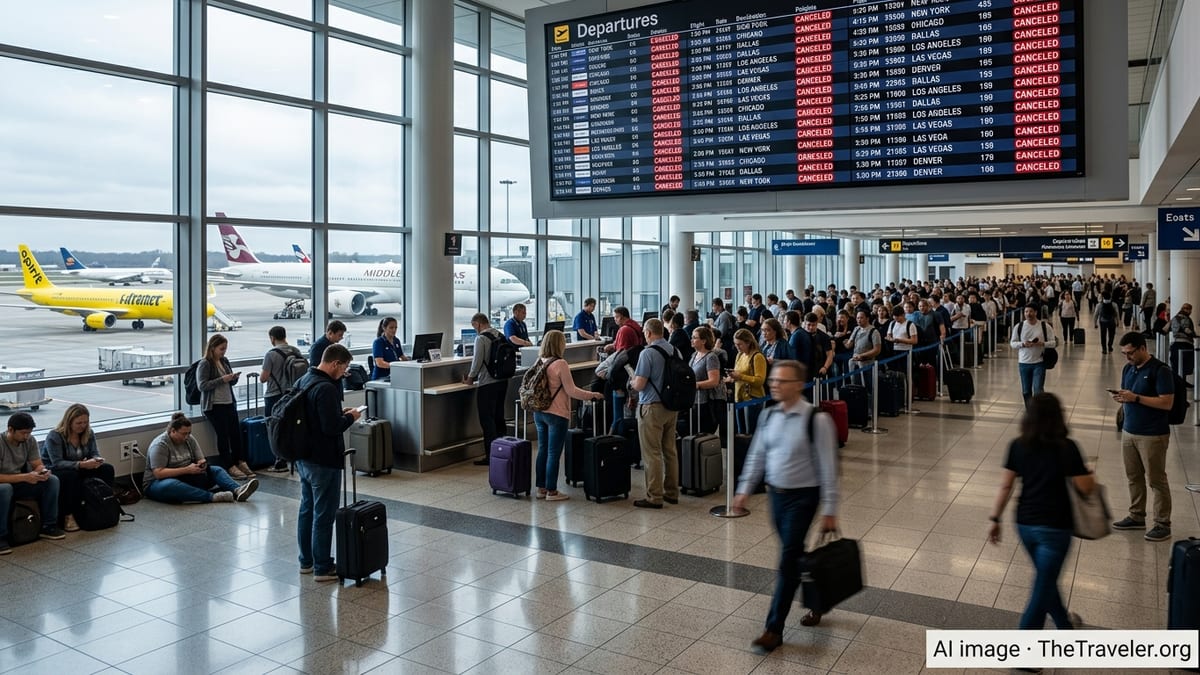
Air travelers across the United States are facing another day of disruption as more than 100 additional flights were canceled on Saturday, affecting major carriers including Spirit, Delta, United, JetBlue, Emirates, and others on key routes into New York, Chicago, Dallas, Los Angeles, Las Vegas, Denver, and other busy hubs.
Get the latest news straight to your inbox!
Fresh Cancellations Compound a Difficult March for Air Travel
Publicly available tracking data and airline status boards indicate that the latest wave of cancellations follows several days of elevated disruption across the US network. The new cancellations are concentrated on domestic trunk routes and select long haul services, adding strain for passengers who were already rebooking after earlier weather and operational issues.
Major US carriers, including Delta Air Lines, United Airlines, JetBlue Airways, and Spirit Airlines, all show newly scrubbed departures and arrivals on Saturday, alongside select international operators such as Emirates on routes linking into key US gateways. The pattern reflects a system still working through the knock-on effects of a turbulent mid-March, when storms and strong winds contributed to thousands of cancellations nationwide.
Data for March has already pointed to elevated cancellation rates for several US airlines on certain days, particularly among low cost and leisure focused operators. Reports from flight tracking platforms and airport boards suggest that today’s additional cancellations, while smaller in scale than the most severe weather days, are scattered widely enough to affect travelers across multiple time zones and connection banks.
Key Hubs Disrupted: New York, Chicago, Dallas, Los Angeles, Las Vegas, Denver
The latest cancellations are heavily focused on some of the country’s busiest airports. Flights touching New York area airports, including John F. Kennedy and LaGuardia, remain vulnerable after a week that saw repeated weather and wind related delays ripple through the Northeast corridor. Travelers heading to or from New York on Delta, JetBlue, United, and Spirit report new same-day schedule changes on popular domestic routes.
Chicago O’Hare and Midway also feature prominently among affected cities. According to published coverage and airport schedule summaries, carriers such as Spirit and Southwest had already trimmed some Midway services earlier in the year, and the newest cancellations further tighten options on links between Chicago and major sun and leisure destinations, including Los Angeles and Las Vegas.
In Texas, Dallas Fort Worth and Dallas Love Field are experiencing renewed disruption as airlines rebalance aircraft and crews after the mid-March storm system that moved across parts of the central and eastern United States. United, Delta, and American have been adjusting schedules through the region in recent days, and Saturday’s cancellations include a mix of short haul spokes and longer domestic legs that feed into Dallas connections.
On the West Coast and in the Mountain West, Los Angeles and Denver continue to see scattered cancellations that affect both point to point travel and onward connections. Publicly available airport data shows some Los Angeles departures to Las Vegas and inland hubs removed from schedules, while Denver’s role as a central connecting hub means even a modest number of canceled flights can trigger missed links for travelers crossing the country.
Spirit, Delta, United, JetBlue, Emirates and Others Adjust Schedules
The roster of airlines impacted reflects the breadth of the current disruption. Spirit Airlines, which has been actively reshaping its network as it works through financial and restructuring challenges, shows fresh same day cancellations layered on top of recent route reductions. Travel forums and previously published statements indicate that the carrier has been concentrating more on core markets such as Fort Lauderdale, Orlando, Detroit, and the New York area, leaving some secondary city pairs with fewer options when irregular operations occur.
Delta Air Lines and United Airlines, both with large domestic and international networks, continue to trim select flights as they work to restore normal operations following severe weather earlier in the week. Their cancellations are often clustered around storm affected regions and high traffic hubs, where a shortage of rested crews or repositioned aircraft can force last minute schedule changes even after skies clear.
JetBlue, which has a large presence in New York and Boston and a growing operation in cities such as Los Angeles, is also among the carriers canceling flights today, particularly on routes connected to weather sensitive Northeast airports. Publicly available information shows a mix of intra East Coast legs and cross country services affected, adding to what has been a challenging period for the airline’s on time performance.
International services are not immune. Emirates appears among airlines with cancellations impacting US bound passengers, underscoring how disruptions at US hubs can quickly extend into global networks. When arrival slots or turnaround times tighten in cities such as New York or Los Angeles, long haul operators sometimes consolidate frequencies or cancel individual rotations to preserve wider schedule reliability.
Passengers Confront Long Lines, Tight Rebookings and Limited Alternatives
For travelers, the latest round of cancellations means longer lines at ticket counters, crowded gate areas, and a renewed scramble for remaining seats on already busy spring flights. With multiple airlines adjusting schedules simultaneously, the pool of available alternatives on popular routes into New York, Chicago, Dallas, Los Angeles, Las Vegas, and Denver can shrink rapidly, particularly for same day rebooking.
Reports shared on social media and travel discussion boards describe passengers facing multi hour hold times on call centers and limited options for nonstop replacements. Some travelers have turned to connecting itineraries through secondary cities or have opted to drive part of the way when feasible, especially on shorter segments in the Northeast and Midwest.
The timing has amplified the disruption. March is a transitional month that combines lingering winter weather with the start of spring break travel, leaving planes fuller and schedules less flexible than in quieter seasons. High load factors mean that when a flight is canceled, it is increasingly common for the next several departures on the same route to be nearly full, making accommodations harder to secure without significant time shifts or overnight stays.
Travelers are being advised by airlines and consumer advocates to monitor flight status frequently on the day of travel, arrive early at the airport, and consider proactive rebooking if forecasts or tracking tools indicate rising cancellation numbers on their route or at their connecting hub.
What This Wave of Disruptions Signals for the Months Ahead
The pattern of repeated, multi airline cancellations in March highlights ongoing pressure points in the US aviation system. Weather remains the primary trigger, but industry observers note that staffing constraints in some operational roles, tight aircraft utilization, and infrastructure bottlenecks at a handful of major airports are all contributing to a lower margin for error.
Publicly available analyses of recent storms show that once cancellations pass a certain threshold on a particular day, it often takes airlines several days to fully restore their schedules, especially when aircraft and crews end up out of position. The cumulative effect is that even relatively modest subsequent weather events or technical issues can produce new cancellations for passengers who were not directly affected by the original disruption.
Looking ahead to the spring and early summer travel seasons, experts cited in industry coverage suggest that travelers may continue to encounter pockets of irregular operations, particularly around peak holiday and weekend periods. Airlines are expected to keep adjusting schedules, trimming underperforming routes, and focusing capacity on the strongest markets to create more operational breathing room when storms or other disruptions hit.
For now, the newest set of more than 100 cancellations serves as a reminder that US air travel can still be highly sensitive to cascading operational challenges. Passengers flying to or through major hubs such as New York, Chicago, Dallas, Los Angeles, Las Vegas, and Denver are likely to continue building extra flexibility into their plans as the busy spring travel period unfolds.