

More news on this day
Travelers across the United States faced severe disruption as more than 200 flights were canceled at major airports including New York’s LaGuardia and JFK, Los Angeles, Denver, and Chicago, with services on major international routes to Amsterdam, London, Vancouver, Tel Aviv, Kuwait, Bahrain, and other destinations heavily affected, according to real-time tracking data and published reports.
Get the latest news straight to your inbox!
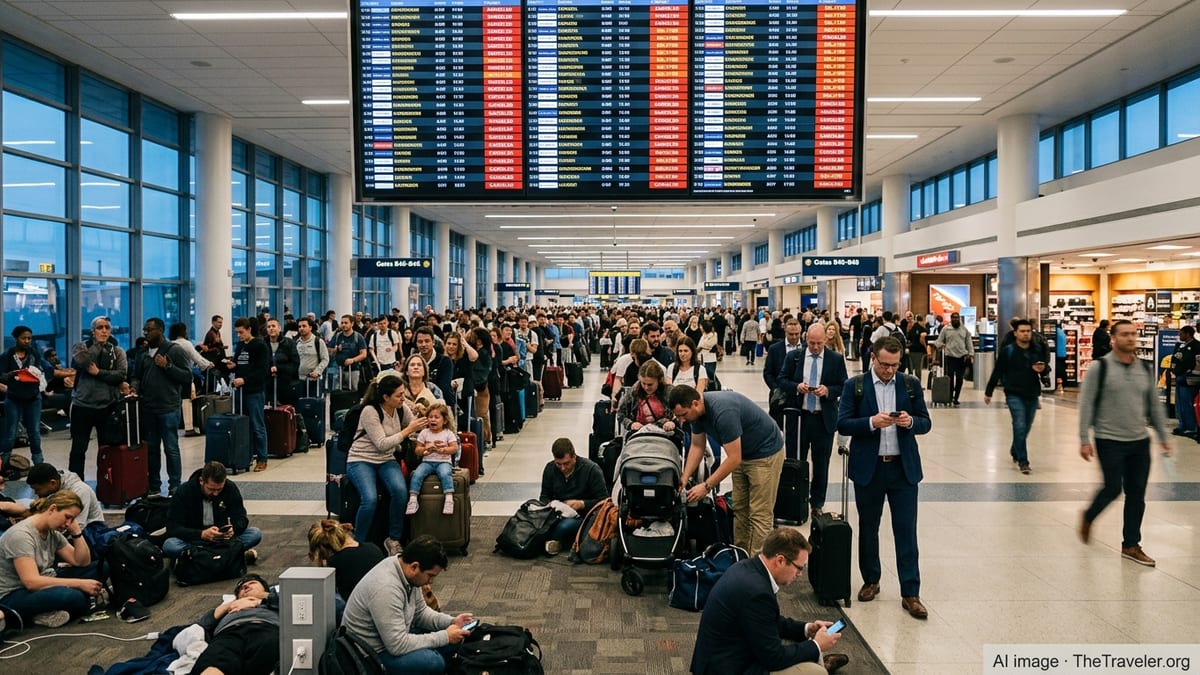
Widespread Cancellations Across Major US Hubs
Flight-tracking dashboards and airline status pages on Wednesday indicated that a wave of cancellations and delays had rippled through the US network, hitting carriers such as Delta Air Lines, United Airlines, KLM, British Airways, Southwest Airlines and several regional partners. Data compiled around midday showed more than 200 flights scrubbed systemwide, with hundreds more delayed, creating knock-on effects that are expected to continue into the evening.
New York’s LaGuardia and John F. Kennedy airports were among the hardest hit on the East Coast, with clusters of domestic and transatlantic departures canceled or pushed back by several hours. In the Midwest and Mountain West, operations at Chicago and Denver were also significantly disrupted, affecting both mainline and regional jets that feed longer-haul services.
On the West Coast, Los Angeles International Airport recorded a growing list of scrapped services as airlines adjusted schedules and repositioned aircraft. The pattern mirrored previous disruption events where a relatively concentrated burst of cancellations quickly cascaded across hubs, stranding passengers far from their intended routes.
Transatlantic and Middle East Routes Under Pressure
International itineraries bore a disproportionate share of the impact, particularly transatlantic flights linking the US with major European gateways. Services operated by or codeshared with Delta, United, KLM and British Airways between US hubs and Amsterdam and London saw cancellations and rolling delays, according to publicly available schedules and traveler reports.
Connections to the Middle East also came under strain. Published coverage and airline bulletins pointed to disruptions on routes touching Tel Aviv, Kuwait and Bahrain, with some departures withdrawn from schedules and others subject to extensive rerouting or extended layovers. The combination of operational constraints and regional airspace sensitivities increased block times and reduced slack in already tight schedules.
In North America, flights to Vancouver and other Canadian gateways were affected as US carriers and their partners restructured short- and medium-haul networks to prioritize aircraft and crew for long-haul segments. The result for many passengers was an unexpected break in what are typically seamless same-day connections between secondary US cities and overseas destinations.
Operational Strains, Weather, and Network Complexity
The immediate trigger for the latest wave of cancellations varied by carrier and region, but operational strain was a common thread. Recent months have seen a pattern of weather systems moving across large swaths of the country, constraining traffic flows into crowded hubs such as Denver, Chicago and New York and forcing airlines to thin schedules in order to maintain safety margins.
At the same time, airlines continue to operate complex global networks that leave little room for error. According to data cited in industry reporting, even modest disruptions at a single hub can quickly ripple outward when aircraft and crews are tightly scheduled, especially on long-haul routes that require specific aircraft types and qualified flight and cabin teams.
Observers also note that some carriers are still refining their recovery playbooks after several high-profile meltdowns in recent years. Published analyses of those earlier incidents highlighted vulnerabilities in crew scheduling, aircraft routing and IT systems. The current wave of cancellations, while smaller in scale than past crises, underscores how quickly pressure can build when multiple carriers and hubs are tested at the same time.
Passengers Confront Rebooking Challenges and Uncertain Timelines
For travelers, the disruption translated into a familiar set of challenges: long lines at service counters, extended waits on customer-service phone lines and limited same-day alternatives on popular routes. Social media posts and online forums on Wednesday described passengers stuck in transit hubs as they sought new connections to Europe, the Middle East and Canada.
Publicly available guidance from airlines stressed the importance of using mobile apps and websites for rebooking, where self-service options often appear before they are reflected at airport desks. In several cases, carriers activated flexible travel policies that allowed affected customers to change dates or routes without standard change fees, although fare differences still applied on some itineraries.
Travel advocates advised passengers to monitor both their airline’s status tools and general flight-tracking platforms, since rolling delays sometimes evolved into outright cancellations with relatively short notice. For those connecting onward to destinations such as Amsterdam, London, Vancouver, Tel Aviv, Kuwait or Bahrain, the risk of missed connections remained high as aircraft and crews struggled to return to their planned rotations.
What Travelers Should Do If They Are Affected
With schedules still in flux, travel experts recommended that passengers booked on the affected airlines take a proactive approach. Checking in as early as systems allow, confirming flight status multiple times in the 24 hours before departure and enabling push notifications can provide valuable lead time if a cancellation occurs.
For those already at the airport, same-day options may be more accessible through digital channels than through traditional service desks, particularly during peak disruption periods when staff are stretched. Some travelers have reported better results by searching for alternative routings via other hubs such as Atlanta, Dallas, Houston or Boston, then approaching airline staff with specific options in hand.
Travel planners also note that passengers heading to high-demand international destinations may need to brace for overnight stays or longer, especially where routes are limited or aircraft are specialized, such as services to Tel Aviv, Kuwait and Bahrain. In such cases, retaining boarding passes, receipts and documentation of disruptions can be important for pursuing any compensation or reimbursement that may be available under airline policies or applicable regulations.