

More news on this day
Stricter US entry controls, new data-sharing rules and an expanded visa bond scheme are reshaping who will be allowed into the country for the 2026 World Cup, with travel experts warning that some overseas fans could find themselves blocked from matches at the last minute.
Get the latest news straight to your inbox!
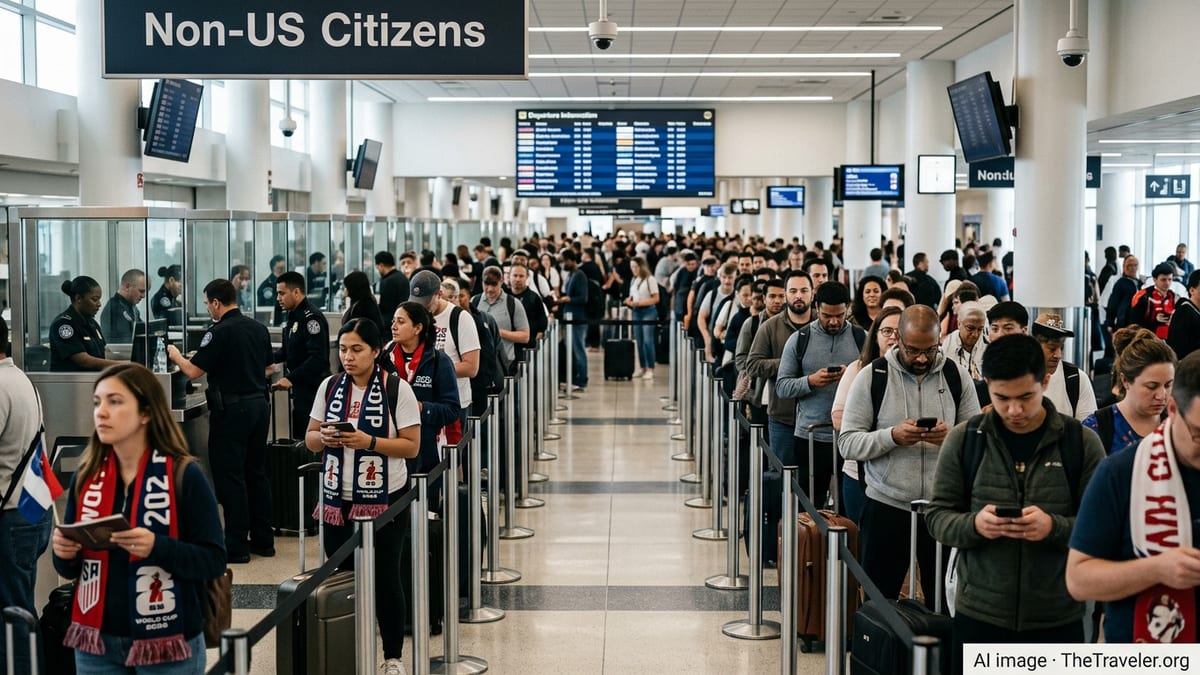
New Screening Rules Target Visa Waiver Travelers
Millions of visitors normally enter the United States each year through the Visa Waiver Program, using the Electronic System for Travel Authorization instead of a full consular visa. Ahead of the 2026 World Cup, that shortcut is becoming more intrusive. According to recent regulatory filings and industry coverage, starting in February 2026 many travelers from more than 40 participating countries will be required to provide social media identifiers from the past five years as part of a mandatory ESTA application.
Travel and tourism groups say the extra data requirement could function as a new barrier for some would be visitors, particularly younger fans and frequent social media users who are uneasy about handing over years of online activity to a foreign government. Privacy advocates argue that the policy could also have a chilling effect on speech if travelers feel they must self censor in order to avoid jeopardizing their trip.
Publicly available guidance indicates that ESTA remains a pre clearance tool rather than a guarantee of entry. Even with an approved authorization, border officers retain broad discretion to refuse admission on arrival. For World Cup visitors, that combination of deeper data mining and on the spot judgment raises the possibility that a small misstep in an online profile or an inconsistent answer at passport control could be enough to derail a long planned football pilgrimage.
Visa Bonds and Overstay Crackdowns Raise the Stakes
Separate from ESTA, non immigrant visa rules are also tightening in ways that could affect World Cup plans. An analysis by global mobility specialists notes that in January 2026 the United States extended its non immigrant visa bond program to dozens of countries. Under this scheme, some applicants considered to present a higher risk of overstaying their visas can be asked to post a substantial refundable bond as a condition of entry.
US officials have framed the bond initiative as a response to overstay statistics in certain markets, but tourism advocates warn that it effectively adds a steep surcharge for visitors from targeted countries. For football fans already facing soaring airfares, hotel prices and match tickets, an extra financial guarantee that may run into thousands of dollars could make an in person World Cup experience unaffordable.
This comes on top of a separate visa integrity fee introduced in 2025, which travel industry reporting describes as a 250 dollar charge attached to some categories of applications. Sector groups say that higher costs, slower processing and a perception of hostility toward foreign visitors have already contributed to lower international arrivals, even as global travel rebounds. With the World Cup less than 100 days away, there is growing concern that these policies will keep stadium seats and local businesses emptier than forecast.
Fans From Restricted Countries Face Direct Bans
While most of the new rules affect how visitors are screened, fans from a number of countries may not be able to attend World Cup matches in the United States at all. A presidential proclamation issued in late 2025 broadened existing travel restrictions on several nations on security grounds, limiting or suspending entry for many categories of travelers. Subsequent reporting has highlighted the impact on supporters from African and Middle Eastern teams that have qualified or remain in contention.
In some cases, travel coverage indicates that entire national fan bases have seen their plans collapse overnight. Supporters from countries newly added to the restricted list, such as Senegal and Ivory Coast, have described paying deposits for flights and accommodation only to learn that obtaining a US visa is now extremely unlikely. Analysts point out that these measures may also affect dual nationals and residents of third countries whose passports or travel histories trigger additional scrutiny.
FIFA maintains that it expects host nations to facilitate access for competing teams and their delegations, but there is less clarity for ordinary ticket holders. Commentators note that while Canada and Mexico continue to issue visas and electronic travel authorizations under stable rules, the US environment is more volatile, creating a patchwork in which some fans may choose to attend only matches outside American stadiums.
Priority Schemes Offer Help, But Not Guarantees
To blunt the impact of tighter controls, US agencies have begun promoting special arrangements tied to the tournament. Travel industry briefings refer to a planned priority appointment system, often described as a FIFA linked fast track, which would allow verified ticket holders to request expedited visa interview slots in early 2026. In addition, news reports from late 2025 state that applicants who can prove they have purchased World Cup tickets may receive prioritized processing in some consulates.
Consular experts caution that such measures are designed to ease backlogs rather than waive eligibility rules. Applicants must still meet all standard requirements, including demonstrating strong ties to their home country and sufficient funds for their stay. There is also no assurance that priority schemes will be available in every location, or that slots will match the surge in demand from fans in major football markets.
Travel planners say that the combination of higher visa fees, possible bonds, additional security checks and limited interview capacity means that would be visitors should treat the World Cup as a complex project rather than a routine holiday. Many are advising clients to apply as early as possible, avoid non essential trips that might complicate their travel histories, and prepare documentation that clearly shows their intention to return home after the final whistle.
What Travelers Should Do Now to Avoid Being Turned Away
With the first match scheduled for June 11, 2026, timing is becoming critical for overseas fans who want to attend games in US host cities. Travel risk consultants and global assistance firms recommend starting with the basics, such as confirming that passports will be valid for at least six months beyond the end of the trip and checking whether a traveler is eligible for ESTA or needs a full B1 or B2 visa.
Analysts suggest that visitors from Visa Waiver Program countries pay close attention to the new social media disclosure rules and be prepared for more detailed questions about their online presence. Those from nations subject to higher overstay rates or existing travel restrictions are urged to monitor official advisories and local embassy announcements, since eligibility can shift quickly in response to political or security developments.
Commentary across the travel sector stresses that the United States is still expected to welcome millions of foreign visitors during the tournament, and the vast majority will clear the border without incident. At the same time, the evolving mix of data requirements, financial conditions and country specific bans means that some fans will likely see their World Cup plans disrupted at the visa window or the airport gate, rather than inside the stadium.