

More news on this day
Malaysia Airlines is temporarily boosting capacity on its flagship European routes, adding extra flights between Kuala Lumpur, London Heathrow and Paris Charles de Gaulle in early March 2026 as carriers across Asia and Europe scramble to cope with severe disruption to usual flight paths.
Get the latest news straight to your inbox!
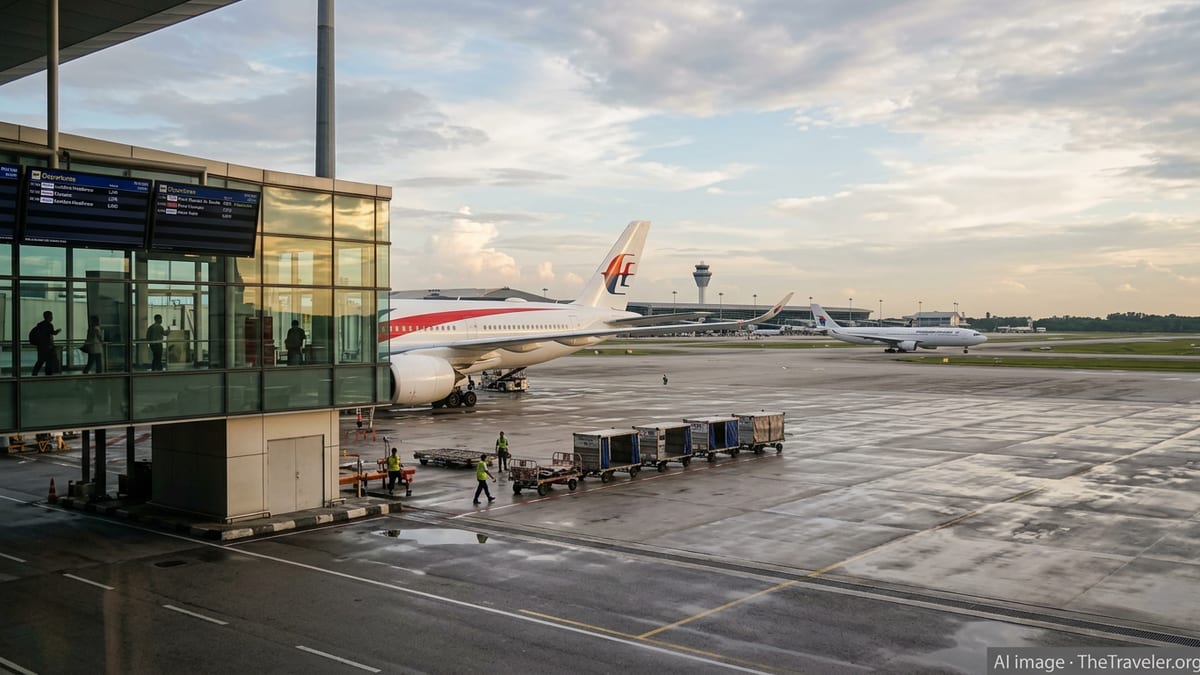
Short-Term Capacity Surge on Key Europe Links
Publicly available information shows that Malaysia Airlines will operate additional services between Kuala Lumpur International Airport and both London Heathrow and Paris Charles de Gaulle from 6 to 8 March 2026. The move supplements the carrier’s existing twice-daily operation to London and its regular Paris schedule, providing a short but significant lift in total seat capacity between Malaysia and Europe.
Reports indicate that the extra flights are designed to accommodate passengers whose travel plans have been affected by widespread disruption to air corridors linking Asia and Europe. While full timetables vary by day, the added services are being slotted around the regular schedule to maximize connectivity from Kuala Lumpur to onward destinations across Southeast Asia, Australia and domestic Malaysia.
According to published coverage, the uplift represents an emergency capacity injection rather than a permanent schedule change. However, the airline’s willingness to mobilize widebody aircraft and crews at short notice underlines the growing strategic importance of Europe in its post-pandemic network rebuild, particularly as demand for long-haul leisure and visiting-friends-and-relatives travel remains resilient.
Rerouting Around Middle East Airspace Restrictions
The timing of the extra London and Paris services coincides with major restrictions on airspace across parts of the Middle East, which have forced airlines to divert or cancel numerous Asia–Europe flights. Industry reports describe a complex operational picture in which carriers must lengthen routings, secure alternative overflight permissions and re-time services to maintain connectivity.
Malaysia Airlines’ additional Kuala Lumpur–London and Kuala Lumpur–Paris flights are reported to be using adjusted routings that avoid closed or constrained airspace, adding flying time but preserving a vital link between Southeast Asia and Western Europe. Travel trade coverage notes that the carrier is focusing on maintaining continuity of service while competitors scale back or consolidate some frequencies.
This approach places Malaysia’s flag carrier among a group of Asia–Europe operators opting to add selective capacity as a buffer against disruption. Aviation analysts point out that, in such circumstances, supplementary flights can help absorb displaced passengers from cancelled or severely delayed services, preventing bottlenecks at key hubs and smoothing the recovery of normal operations once airspace constraints ease.
Reinforcing a Rebuilt European Network
The decision to ramp up London and Paris flights, even temporarily, is the latest chapter in Malaysia Airlines’ renewed emphasis on Europe. Publicly available data show that London Heathrow has long been the airline’s primary European gateway, served with twice-daily frequencies and operated by Airbus A350-900 aircraft, forming a cornerstone of its long-haul offering.
The carrier deepened this strategy in March 2025 by resuming non-stop services between Kuala Lumpur and Paris Charles de Gaulle after a multi-year absence. Aviation industry analyses at the time highlighted the return to Paris as a key step in rebuilding a two-point European network, giving the airline greater scheduling flexibility and more options for passengers connecting to continental cities via partnerships.
By now deploying extra Paris flights alongside London during a period of network stress, Malaysia Airlines signals that both cities are firmly embedded in its long-term plans. The move also supports tourism and business links between Malaysia, the United Kingdom and France, markets that tourism boards and airport operators in all three countries have targeted for growth as global travel demand rebounds.
Implications for Passengers and Travel Demand
For travelers, the added services offer more options and a higher chance of securing seats during a week when many long-haul itineraries are being reshuffled. Travel industry reports suggest that demand for Europe-bound travel from Malaysia and neighboring countries remains robust, with forward bookings supported by school holidays in some markets and sustained interest in multi-country European itineraries.
The extra capacity on Kuala Lumpur–London and Kuala Lumpur–Paris routes is expected to benefit not only point-to-point passengers but also those connecting from Australia, New Zealand and across Southeast Asia. Kuala Lumpur continues to function as a significant one-stop hub on the so-called Kangaroo Route and other long-haul corridors, and any incremental seats to Europe tend to be quickly absorbed, especially during periods of disruption.
Travel agencies and online booking platforms are likely to adjust inventory rapidly as the additional flights are loaded into global distribution systems. While the extra services are limited to a three-day window, they can ease immediate pressure on fares and availability, particularly in premium cabins where last-minute rebooking options are often scarce.
Malaysia’s Growing Role in Asia–Europe Connectivity
The short-term boost in Malaysia Airlines capacity to London and Paris also aligns with broader trends positioning Malaysia as a more prominent player in Asia–Europe air connectivity. Official traffic outlooks from Malaysia’s aviation authorities have pointed to increasing bilateral capacity and a gradual broadening of non-stop links to European hubs, supported by both local and foreign carriers.
As competing airlines across the region unveil their own Europe growth plans, Kuala Lumpur’s enhanced long-haul offering helps keep the Malaysian hub visible to travelers weighing options that include Gulf carriers and other Asian gateways. The willingness to operate additional flights during operationally challenging periods can also reinforce traveler confidence that reliable alternatives exist when routings suddenly change.
While the latest capacity surge is framed as a temporary response to extraordinary circumstances, it underscores how quickly the balance of Asia–Europe connectivity can shift. For now, Malaysia Airlines’ extra London and Paris flights demonstrate the carrier’s readiness to defend and strengthen its European footprint, even as it navigates one of the most complex operating environments seen since long-haul travel began its post-pandemic recovery.