

More news on this day
Malaysia Airlines is stepping in to ease mounting pressure on long-haul travellers by introducing short-term additional flights between Kuala Lumpur, London and Paris from March 6 to 8, 2026, offering vital extra capacity as carriers worldwide grapple with ongoing airspace closures and widespread schedule disruptions.
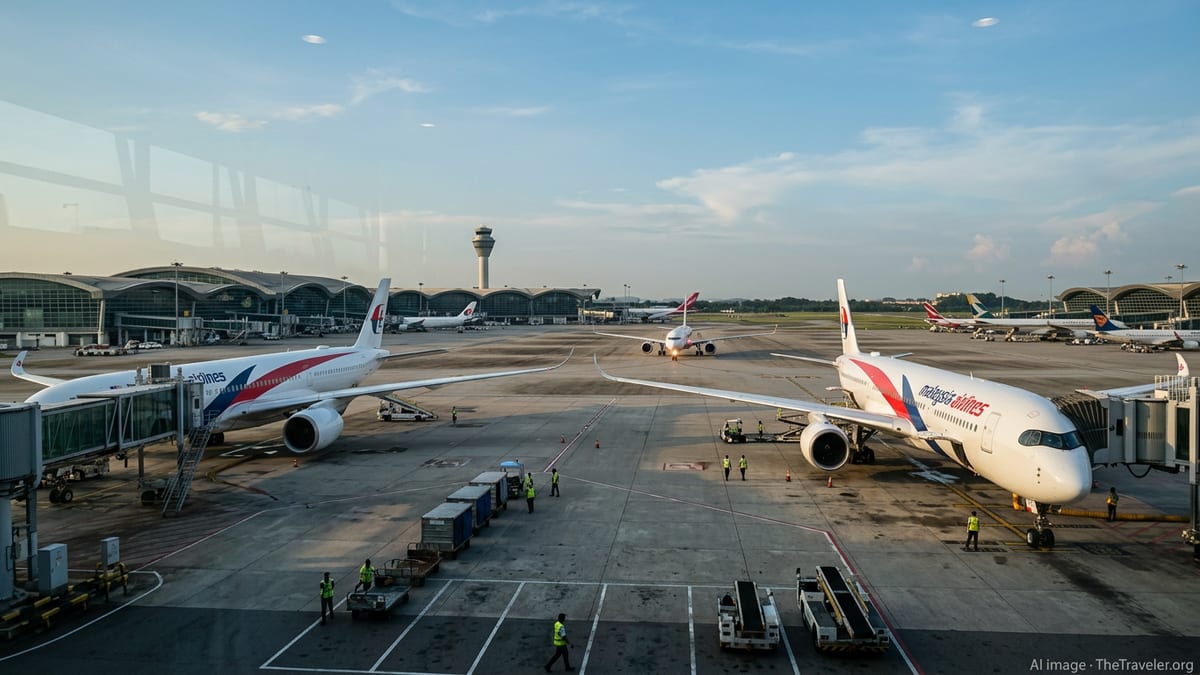
Targeted Extra Capacity Between Kuala Lumpur and Europe
Malaysia Airlines confirmed that it will operate supplementary services linking Kuala Lumpur International Airport with London Heathrow and Paris Charles de Gaulle over the period March 6 to 8, 2026. The extra flights are designed to complement the carrier’s existing daily services on both routes, which continue to operate on adjusted routings that avoid closed or restricted airspace.
According to statements carried by several Malaysian outlets, the airline will add at least one return rotation to Paris and multiple additional services to London over the three-day window. The move follows days of mounting strain on long-haul capacity to and from Southeast Asia and Europe, with many passengers reporting difficulty finding available seats after other carriers trimmed or rerouted services.
The additional Europe flights will be operated using Malaysia Airlines’ Airbus A350-900 aircraft, the backbone of its long-haul fleet. By deploying widebody jets configured for both premium and economy cabins, the airline aims to accommodate a mix of stranded leisure travellers, students and business passengers whose journeys have been disrupted by the latest round of global travel upheaval.
The supplementary services are being slotted around the regular timetable to maximise the number of extra seats without displacing existing bookings. Industry observers say the swift deployment underlines how national carriers are once again being called upon to backstop connectivity during periods of acute stress in the global aviation system.
Relief for Passengers Affected by Airspace Closures
The decision to bolster capacity on the Kuala Lumpur to London and Paris corridors comes as airlines worldwide navigate a patchwork of airspace closures and restrictions across parts of the Middle East and surrounding regions. Those closures have forced lengthy diversions on some long-haul routes and led several carriers to temporarily suspend or consolidate services, creating a bottleneck for travellers trying to move between Europe, Asia and the Middle East.
Malaysia Airlines has already been adjusting its wider network in response. The carrier recently announced temporary resumptions of select services to Jeddah and Madinah on limited dates, while flights to Doha remain suspended as security assessments continue. Against this backdrop, the airline has stressed that its operations to London and Paris remain on schedule and are being flown on alternative routings that steer clear of affected areas.
For passengers, the most visible impact has been the scarcity of available seats and higher fares on remaining long-haul options. Reports of travellers struggling to rebook journeys via traditional hubs have been common in recent days. By inserting extra widebody flights on two of its most strategically important European routes, Malaysia Airlines is attempting to create an additional safety valve for those caught up in the disruption.
Travel agents in Kuala Lumpur and London say demand for the extra services is expected to be strong, particularly among passengers whose original itineraries on other airlines have been cancelled or significantly rerouted. Many are seeking more direct routings that avoid lengthy detours or multiple connections at already crowded transit hubs.
Operational Safeguards and Alternative Routings
Malaysia Airlines has repeatedly emphasised that safety remains the overriding priority as it adjusts its flight patterns in response to changing conditions. The airline says all services to London and Paris are currently operating on alternative routings that keep aircraft well away from conflict-affected airspace, in line with international guidance and national regulatory directives.
Operational planners have had to balance the need to add capacity with constraints on crew duty times, aircraft availability and longer flight times associated with diversions. The deployment of the fuel-efficient Airbus A350-900 is central to that strategy, helping to mitigate higher fuel burn on extended routings while maintaining commercially viable payloads.
The airline is also working closely with aviation authorities, air navigation service providers and airport partners in Europe and Asia to secure necessary slots and overflight permissions for the additional services. These behind-the-scenes measures are critical to ensuring that the extra flights can be mounted at short notice without compromising schedule reliability for existing operations.
Malaysia Airlines has encouraged passengers to monitor their booking status via official channels and to ensure contact details are up to date so they can receive real-time notifications about any schedule changes or reaccommodation options. The carrier’s customer service and ground teams have been placed on heightened readiness to manage higher volumes of rebooking and check-in queries over the coming days.
Support for Global Connectivity and Tourism
The Kuala Lumpur to London and Paris routes are key pillars of Malaysia Airlines’ long-haul network, linking Southeast Asia with two of Europe’s most important aviation hubs. The additional services are expected to benefit not only point-to-point travellers but also those connecting onward across Europe, the Americas and Africa via partner airlines, as well as passengers from secondary Asian markets feeding into Kuala Lumpur.
Tourism stakeholders in Malaysia and Europe say the move is particularly welcome given the still-fragile state of international travel demand. While global passenger traffic has largely recovered from the lows of the pandemic era, the sector remains vulnerable to sudden geopolitical shocks and operational disruptions, which can quickly undermine consumer confidence.
By stepping in with extra capacity at a moment of heightened uncertainty, Malaysia Airlines is seeking to position itself as a reliable bridge between regions. The additional Kuala Lumpur–London and Kuala Lumpur–Paris flights also underscore the carrier’s broader ambition to re-establish and grow its European footprint, following the full restoration of daily Paris services last year and the continued strengthening of its London operations.
Industry analysts note that moves like this can have a stabilising effect across the wider aviation ecosystem. Extra seats on key trunk routes create more options for airlines looking to re-route passengers from disrupted networks, while also providing governments with added assurance that citizens and residents can return home or reach critical destinations even when usual corridors are constrained.
What Travellers Need to Know
Travellers hoping to take advantage of the extra Malaysia Airlines flights between Kuala Lumpur, London and Paris are being urged to book as early as possible, as demand is expected to be intense over the limited three-day operating window. Seats will be available through the airline’s usual sales channels and travel agency partners, subject to availability.
Passengers whose original itineraries have been disrupted by other carriers should contact their ticketing airline first to explore rebooking or endorsement options onto Malaysia Airlines services. Travel advisors caution that rules can vary significantly depending on fare type and interline agreements, and that last-minute bookings on long-haul routes may carry higher prices during periods of constrained capacity.
Airports and ground handlers in Kuala Lumpur, London and Paris are also preparing for higher passenger volumes during the extra flight days. Travellers are being advised to arrive earlier than usual at the airport, allow extra time for security and border formalities, and check terminal and gate information frequently in case of late adjustments.
While the additional Malaysia Airlines services will not resolve all of the pressures created by global travel disruptions, they are expected to provide meaningful relief on two of the most in-demand long-haul corridors linking Southeast Asia and Europe. For many stranded or anxious passengers, that incremental capacity could make the difference between being stuck for days and finally getting a confirmed seat home.