

More news on this day
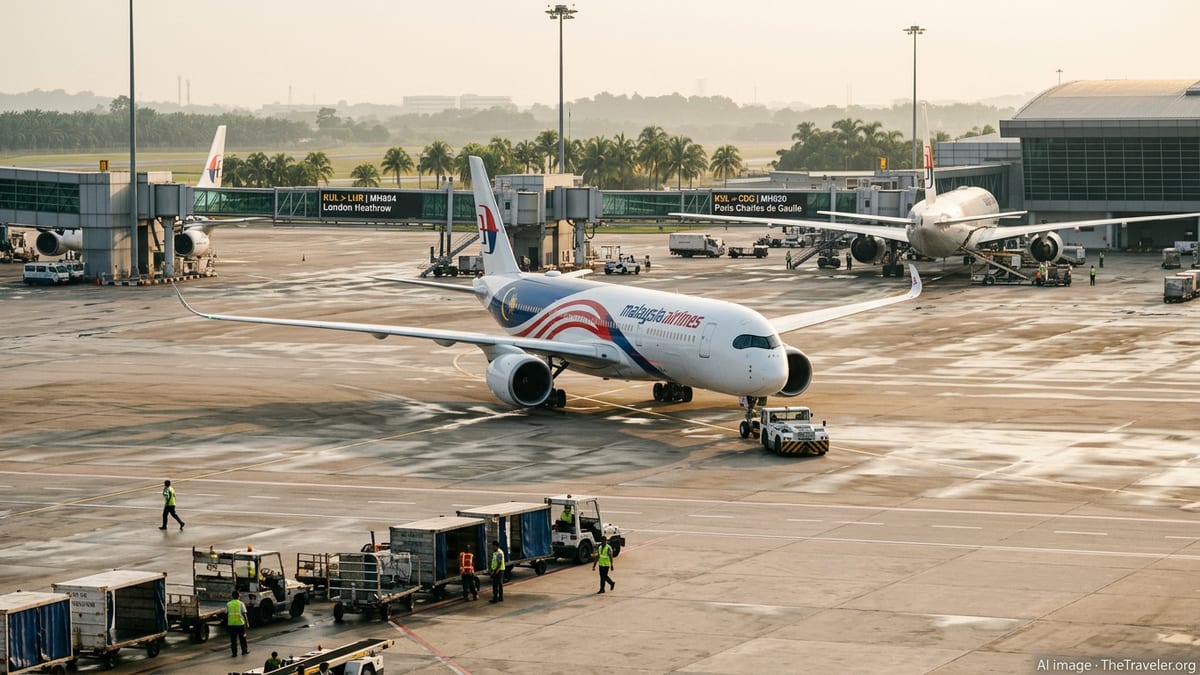
Malaysia Airlines is stepping into a widening gap in global connectivity, rolling out extra services between Kuala Lumpur, London and Paris this weekend as airlines worldwide scramble to cope with major airspace closures and cascading flight disruptions.
Extra Europe Flights as Airspace Closures Ripple Worldwide
Malaysia Airlines announced a series of additional flights between Kuala Lumpur International Airport, London Heathrow and Paris Charles de Gaulle from March 6 to 8, aiming to accommodate passengers stranded or delayed by the latest wave of global travel disruption. The move comes as airspace closures in parts of the Middle East and neighboring regions force carriers to cancel or reroute services between Europe and Asia, triggering widespread congestion and last-minute itinerary changes.
The airline is operating these services on top of its regular schedule, effectively boosting near-term capacity on two of its most strategically important long-haul routes. According to the carrier, the added flights are being treated as relief operations focused on re-accommodating disrupted travelers, though limited seats have also been opened for new bookings where possible.
Industry data show hundreds of flights across multiple airlines have been canceled, diverted or subjected to extreme detours in recent days, particularly those that would normally cross affected airspace on the most direct tracks between Europe and Asia. As schedules buckle under the strain, Malaysia Airlines is positioning its Kuala Lumpur hub as a stable southern alternative for passengers trying to reach the United Kingdom and continental Europe.
Travel analysts say the speed of Malaysia Airlines’ response reflects both a commercial opportunity and a wider responsibility to maintain connectivity along key trade and tourism corridors. With many travelers still wary of complex multi-stop itineraries, direct links to London and Paris from a geographically advantageous Southeast Asian hub are drawing renewed attention.
London and Paris Strengthened as Cornerstones of European Network
London has long been Malaysia Airlines’ flagship European destination, surviving painful network cuts that saw other European routes suspended in the wake of the carrier’s restructuring. In recent years the Kuala Lumpur to London Heathrow service has been steadily rebuilt as a premium long-haul corridor, operated primarily with Airbus A350 aircraft and marketed heavily to both leisure and business travelers connecting across Asia and Australia.
Paris, by contrast, represents the airline’s newest and most symbolic European comeback. After a nine-year hiatus, Malaysia Airlines resumed non-stop Kuala Lumpur to Paris Charles de Gaulle flights in March 2025, initially several times a week before ramping up to a daily service as demand recovered. The restoration of Paris not only broadened options for Malaysian and Southeast Asian passengers heading to France and the wider Schengen area, it also signaled fresh confidence in the carrier’s long-haul strategy.
By layering short-notice extra flights on both the London and Paris routes during this period of disruption, Malaysia Airlines is effectively doubling down on its two European pillars. Aviation observers note that the airline’s move underlines a long-term bet on Europe, despite competition from powerful Gulf and Asian hubs offering one-stop alternatives between the continents.
The pair of cities also carry outsized symbolic weight. London remains a historic financial and cultural gateway for Southeast Asia, while Paris continues to be one of the most aspirational destinations for Malaysian holidaymakers and students. Ensuring continuous, reliable access to both cities has become a core plank of Malaysia Airlines’ post-restructuring identity as a leaner but more focused national carrier.
Alternative Routings Offer Shorter Detours Than Gulf Hubs
The latest turbulence in global aviation has been driven in part by airspace closures around key Middle Eastern corridors, which are forcing Gulf-based airlines to absorb lengthy detours around restricted zones. Many of those carriers have been adding hours to flight times between Europe and Asia, straining fleets and crews while passengers contend with missed connections and extended travel days.
Malaysia Airlines is seeking to differentiate itself by taking advantage of Kuala Lumpur’s location, which allows southern routings that skirt the most heavily restricted areas while avoiding the extreme zigzags now appearing on some long-haul flight paths. While total journey times between Kuala Lumpur and European gateways such as London and Paris have still increased, many of the airline’s services have been able to limit the incremental flying time compared with rivals operating from Gulf hubs.
Operationally, the decision to mount extra flights over a defined three-day window gives the carrier a chance to clear backlogs of disrupted passengers while preserving some breathing space for maintenance and crew planning. The airline has also been working with alliance and codeshare partners to stitch together onward connections once passengers land in London or Paris, easing pressure on fragmented itineraries.
For travelers, the practical impact is visible in slightly longer schedules and a renewed emphasis on flexibility. Malaysia Airlines is urging passengers booked on affected dates to monitor flight status closely, update contact details and, where necessary, accept rebookings that may involve alternative departure times but preserve the convenience of a single-carrier, one-stop journey between Asia-Pacific and Europe.
Passenger Demand, Strategic Timing and Market Share
The timing of Malaysia Airlines’ move is particularly sensitive. March typically marks the transition from northern winter schedules into the busier spring and summer seasons for Europe-bound traffic. Corporate travel begins to pick up after the early-year lull, while leisure bookings rise as travelers from Malaysia, Singapore and beyond look to Europe for school holidays, sports events and early-summer city breaks.
By injecting capacity just as global disruptions are peaking, Malaysia Airlines is aiming to protect its own customers from extended stranding while simultaneously capturing market share from travelers re-routed by other carriers. Travel agents in Kuala Lumpur report a spike in queries for direct Kuala Lumpur to London and Kuala Lumpur to Paris options as passengers search for alternatives that minimize the risk of missed connections in congested hubs.
The additional services also serve as a live stress test for the airline’s long-haul operations, including its upgraded cabins, inflight service and digital tools. Over the past two years, Malaysia Airlines has invested in refreshed seating, streamlined booking interfaces and more personalized onboard offerings, all intended to position the carrier as a competitive full-service option on premium long-haul routes.
If the relief flights perform well and load factors remain high, analysts suggest the airline could consider selectively adding more permanent frequencies on the London and Paris routes, especially during peak northern summer and year-end holiday periods. For now, however, the carrier is framing the March 6 to 8 operations as a targeted response to an extraordinary set of circumstances affecting the wider aviation ecosystem.
What Travelers Should Expect in the Days Ahead
Despite Malaysia Airlines’ efforts, travelers can still expect a period of uncertainty as global schedules adjust to the new airspace reality. Airlines across Europe, the Middle East and Asia continue to fine-tune routings and flight times, while airport operators grapple with displaced traffic and the knock-on effects of mass cancellations and diversions.
Passengers booked on Malaysia Airlines services to London and Paris in the coming days are being advised to arrive early at the airport, allow extra time for security and immigration, and maintain flexibility in case departure times shift. The carrier has encouraged customers to make full use of its mobile app and online tools, which provide real-time gate information and any last-minute changes prompted by operational constraints.
At Kuala Lumpur International Airport, airport authorities and the airline are coordinating gate assignments and ground handling to keep the mix of regular and relief flights moving as smoothly as possible. While some congestion is likely at peak departure banks, especially in the evenings for Europe-bound services, early reports suggest that the airport is coping better than many of the larger hub rivals closer to the affected airspace.
For an industry still recovering from the shocks of the pandemic and other geopolitical crises, Malaysia Airlines’ rapid deployment of additional London and Paris flights illustrates how nimble capacity decisions can help stabilize critical long-haul corridors. As conditions evolve, the airline’s performance on these routes will be closely watched by travelers, regulators and competitors searching for a template on how to keep global travel moving when the skies grow uncertain.