

More news on this day
Malaysia Airlines is set to deepen its presence in the Gulf and beyond with the launch of a third daily non stop service between Kuala Lumpur and Doha from June 30, 2026, a move that significantly expands connectivity and flexibility for travelers linking Southeast Asia with the Middle East, Europe, Africa and North America.
Third Daily Service From June 30, 2026
Malaysia Airlines will introduce the additional Kuala Lumpur–Doha rotation at the start of the northern summer peak, with the third daily flight scheduled to commence operations on June 30, 2026. The new service will complement the carrier’s existing twice daily nonstop flights on the route, taking its total operation to 21 weekly frequencies between the Malaysian capital and the Qatari hub.
Industry sources in Kuala Lumpur indicate that the third frequency has been timed to capture evening and late night bank connections over Doha, a period of strong demand for onward travel to Europe and North America. For Malaysia Airlines, the step marks another phase in the evolution of its partnership with Qatar Airways and aligns with broader trends of capacity growth between Southeast Asia and the Gulf.
The launch follows several seasons of robust load factors on the route, supported by both point to point traffic and connecting flows. By locking in the start date at the end of June 2026, the airline positions itself to benefit from mid year school holidays in key markets across Asia Pacific, Europe and the Middle East.
Enhanced Global Connectivity Via Doha
The third daily Kuala Lumpur–Doha flight is designed to plug more seamlessly into the complex banked schedule at Hamad International Airport, giving Malaysia Airlines passengers a broader spread of connection options. Doha functions as a major transit gateway for traffic heading from Southeast Asia to Europe, the Middle East, Africa and the Americas, and added frequency from Kuala Lumpur increases the number of viable one stop itineraries in each direction.
With the new schedule, travelers originating in Malaysia, as well as those flying in from secondary cities in the Malaysia Airlines domestic and regional network, will find improved options to connect to key European capitals, including London, Paris, Frankfurt and Rome, along with major North American cities served by Qatar Airways. Shorter transit times in Doha and more evenly spaced departures from Kuala Lumpur are expected to reduce overall journey times on several long haul city pairs.
The move also strengthens Kuala Lumpur’s role as an access point for outbound travelers from Indonesia, Singapore, southern Thailand and parts of Borneo who use the Malaysian capital as a springboard to the Gulf and beyond. For inbound tourism, additional Doha capacity opens up more single connection itineraries into Malaysia from cities in the Middle East, North Africa and Central Asia.
A350 Fleet Underpins Premium Experience
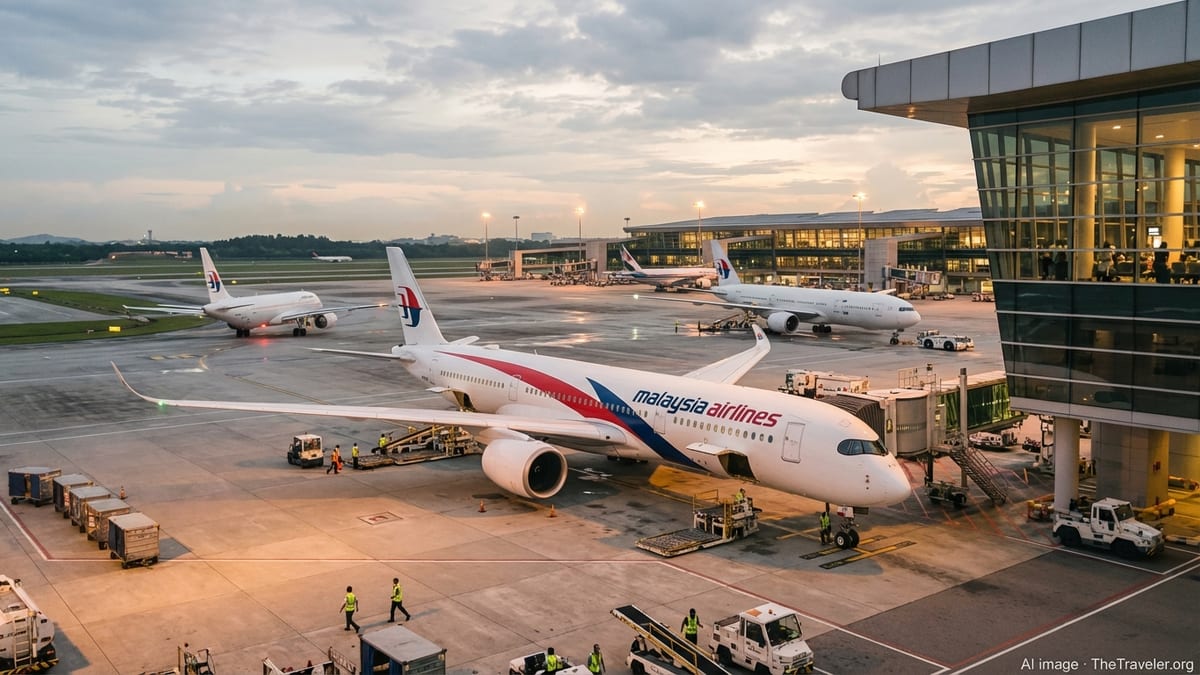
Malaysia Airlines has in recent years consolidated its Doha operation around the Airbus A350 900, and the expanded schedule is expected to continue relying heavily on the type. The aircraft, configured with 40 Business Class seats, 32 Economy Comfort seats and 228 Economy Class seats, allows the carrier to offer a competitive premium product and higher comfort levels on the seven to eight hour sector between Kuala Lumpur and Doha.
Business Class on the A350 900 features a 1 2 1 configuration with all aisle access, lie flat beds and enhanced storage, while the Economy Comfort section provides extra legroom and wider seats compared with the main cabin. For the growing segment of leisure and business travelers using Kuala Lumpur–Doha as the first leg of journeys to Europe or North America, the upgrade from older widebody types to the A350 has been a notable selling point.
The addition of a third daily flight increases the daily number of premium seats available on the route, which is expected to be particularly attractive to corporate accounts, high yield travelers and frequent flyers within the oneworld alliance. It also gives Malaysia Airlines more flexibility to match capacity and product to specific connection banks and high demand days of the week.
Deepening Partnership With Qatar Airways
The frequency boost is closely linked to the deep codeshare and commercial partnership between Malaysia Airlines and Qatar Airways, centered on Doha as a shared hub for onward connectivity. Under the arrangement, Qatar Airways already codeshares on Malaysia Airlines operated services between Kuala Lumpur and Doha, while Malaysia Airlines places its code on a wide range of Qatar Airways routes to Europe, the Middle East, Africa and the Americas.
By moving to three daily flights, Malaysia Airlines can offer more itineraries branded under its own code while still feeding significant traffic into Qatar Airways long haul network. For Qatar Airways, the expansion adds more Southeast Asia capacity at a time of solid demand, without the need to deploy additional aircraft of its own on the Kuala Lumpur sector beyond its existing services.
The closer integration of schedules also provides operational resilience. With three Malaysia Airlines departures and multiple Qatar Airways flights daily on Kuala Lumpur–Doha, customers are more likely to find same day reaccommodation options in the event of disruptions, which in turn supports confidence among corporate buyers and tour operators.
More Flexibility for Business and Leisure Travelers
From a passenger perspective, the third daily flight primarily delivers greater choice in departure times and connection patterns. Travelers from Kuala Lumpur will be able to select from a wider spread of late night and early morning options, tailoring their itineraries to preferred arrival times in Europe or the Middle East and to minimize lengthy layovers in Doha.
Business travelers in particular stand to benefit from the ability to schedule same day connections to key financial centers while maintaining workable departure and arrival times. Leisure travelers, including families and group tours, gain access to more combinations that fit hotel check in windows and cruise embarkation schedules, especially during peak holiday periods when existing flights can fill up quickly.
For passengers starting their journeys outside Kuala Lumpur on Malaysia Airlines domestic or regional feeders, the revised timetable is expected to improve connection integrity. Better alignment of Kuala Lumpur arrivals from cities such as Kota Kinabalu, Kuching, Penang and Singapore with the trio of Doha departures will reduce forced overnight stays and open up new one stop options to long haul destinations.
Tourism and Trade Upside for Malaysia
The frequency increase is also being viewed through the lens of national tourism and trade strategy. Additional capacity on the Kuala Lumpur–Doha corridor should make it easier to attract visitors from high spending source markets in the Gulf, as well as from Europe and North America connecting through Doha. Malaysia’s tourism authorities have been working to rebuild international arrivals, and more one stop options via a major global hub are an important part of that effort.
On the trade side, improved connectivity enhances the ease with which business delegations, investors and professionals can reach Malaysia from markets in the Middle East and beyond. The new flight will support travel linked to sectors such as energy, finance, education and medical tourism, where cross border flows between Malaysia and Gulf countries have been steadily expanding.
While the primary focus of the Kuala Lumpur–Doha route is passenger traffic, higher frequency and widebody capacity also provide opportunities for additional belly hold cargo uplift. This can benefit exporters of high value goods from Malaysia, including electronics, pharmaceuticals and perishables, seeking rapid access to markets across Europe and the Middle East.
Competitive Landscape on the Kuala Lumpur–Doha Corridor
Malaysia Airlines’ expansion comes against a backdrop of intensifying competition between Southeast Asia and Gulf carriers. Qatar Airways already operates multiple daily flights between Kuala Lumpur and Doha, and the combined schedule of both oneworld partners positions Doha as one of the most heavily served Gulf gateways from Malaysia.
At the same time, rival Gulf airlines continue to develop their own links to Kuala Lumpur and to other Southeast Asian capitals. The addition of a third daily Malaysia Airlines flight to Doha can be seen as a strategic move to defend and grow share on traffic flows to Europe and the Middle East that might otherwise route through alternative hubs.
For travelers, heightened competition generally translates into a broader spread of fares, more aggressive promotional activity around peak seasons and incremental improvements in onboard and ground services. The enhanced Kuala Lumpur–Doha offering under the Malaysia Airlines and Qatar Airways partnership is likely to become a benchmark for one stop connectivity between Southeast Asia and long haul markets over the next few seasons.
What Travelers Should Know Before Booking
With tickets for the third daily flight expected to be progressively loaded into global distribution systems and online channels ahead of the June 30, 2026 start date, travelers planning mid year trips will soon be able to compare all three Malaysia Airlines departures side by side. Industry observers anticipate that the airline will initially use pricing and schedule differentiation to spread demand across the three daily services.
Passengers are advised to pay close attention to connection times in Doha when selecting itineraries, especially on journeys to and from Europe and North America where overnight flying patterns and immigration processes can affect overall comfort. The expanded schedule should make it easier to choose flights that minimize airport waiting times while still allowing sufficient buffers for potential delays.
Frequent flyers in Malaysia Airlines and Qatar Airways loyalty programs can expect additional opportunities to earn and redeem points on the route, given the higher number of daily frequencies and corresponding inventory. For many, the appeal of the third daily Kuala Lumpur–Doha flight will lie in the combination of modern A350 hardware, strengthened hub connectivity and an increasingly seamless partnership between two of the region’s most prominent full service carriers.