

More news on this day
Malaysia Airlines will introduce a third daily non-stop service between Kuala Lumpur and Doha from June 30, 2026, in a strategic capacity increase designed to capture surging demand on one of its most important long-haul corridors and deepen its partnership with Qatar Airways.
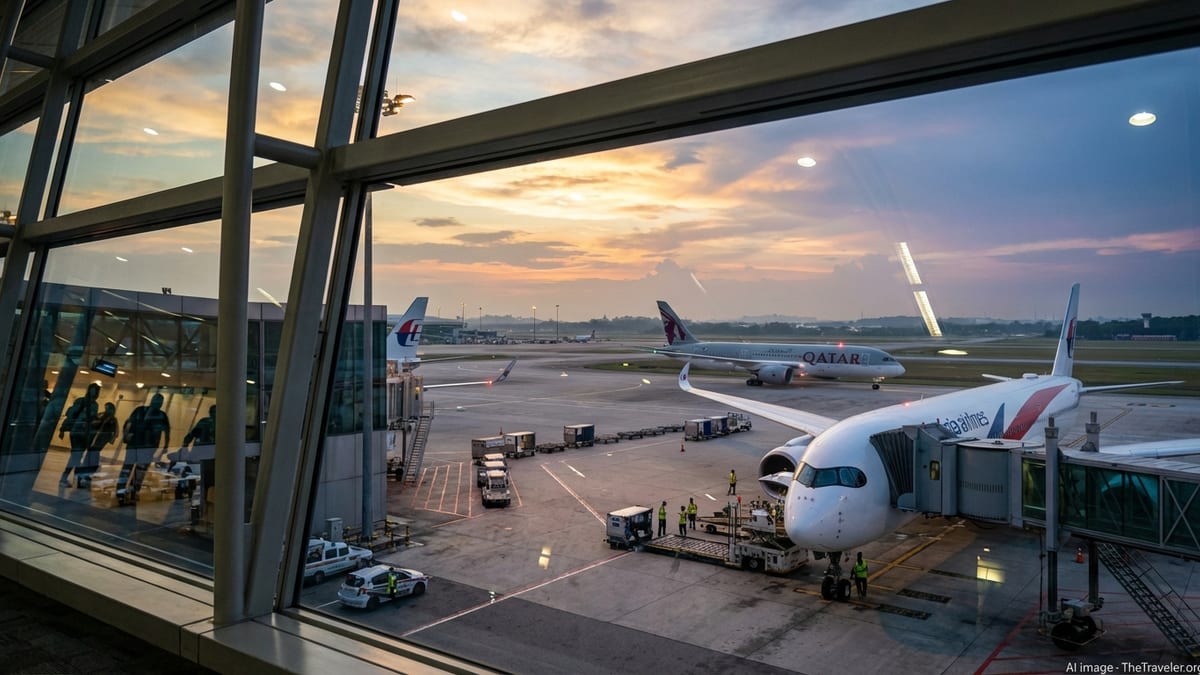
Third Daily Frequency Marks Key Milestone in Network Strategy
The additional Kuala Lumpur–Doha rotation will lift Malaysia Airlines’ operation on the route to 21 flights per week, signalling the carrier’s confidence in sustained traffic growth between Southeast Asia, the Gulf and beyond. Industry data show that combined services by Malaysia Airlines and Qatar Airways on the city pair have risen steadily over the past two years, reflecting both recovering leisure markets and resilient corporate and VFR travel.
The new flight is scheduled to commence on June 30, 2026, providing another non-stop option from Kuala Lumpur International Airport to Hamad International Airport. While detailed timings are still being refined, the third frequency is expected to complement the existing morning and evening departures, creating an evenly spaced schedule that supports convenient two-way connectivity across both partners’ networks.
The move follows a broader growth phase at Malaysia Aviation Group, which has been rebuilding capacity, renewing its fleet and targeting an expanded global footprint after years of restructuring. Executives have flagged plans to grow departures and deepen partnerships as central planks of a long-term strategy to position Malaysia Airlines as a competitive full-service hub carrier for the Asia Pacific region.
For passengers, the most immediate impact will be greater choice of departure times and improved chances of securing seats during peak periods, particularly in premium cabins where demand has rebounded strongly on long-haul routes.
Strengthening the Malaysia Airlines–Qatar Airways Partnership
The decision to add a third daily frequency is closely intertwined with the strategic partnership between Malaysia Airlines and Qatar Airways, which has transformed Doha into a key gateway for Malaysian travelers heading to Europe, Africa and the Americas. Codeshare arrangements already allow Malaysia Airlines passengers to access a wide network of destinations via Doha, while Qatar Airways customers benefit from enhanced connections across Southeast Asia through Kuala Lumpur.
Qatar Airways has itself been increasing capacity to Kuala Lumpur in recent seasons, reinforcing Doha’s role as a super-connector hub for long-haul flows. Hamad International Airport has steadily grown its share of connecting traffic on major corridors such as Asia–Europe, supported by tight schedule coordination and short minimum connection times. The addition of another Malaysia Airlines-operated service feeds further volume into this hub-and-spoke system.
For Malaysia Airlines, Doha complements its existing partnerships into other global hubs and helps diversify its long-haul exposure beyond traditional Northeast Asia and Australia markets. The third daily flight is expected to unlock more efficient banked connections at both ends, reducing overall journey times and widening the range of viable itineraries on a single ticket.
From a commercial standpoint, the enhanced cooperation with Qatar Airways supports higher aircraft utilisation, improved load factors and better revenue management opportunities. Frequent services tend to attract a greater share of high-yield business travellers, who value schedule flexibility and seamless connections more than headline fares.
Capacity Growth Aligned with Post-Pandemic Recovery
Malaysia Aviation Group has highlighted capacity expansion as a central theme of its post-pandemic recovery plan, with available seat kilometres rising as new aircraft arrive and frequencies increase on strategic routes. The third daily Kuala Lumpur–Doha service fits into this narrative as a targeted bet on strong, sustainable demand where the carrier already has a proven presence and strong partnerships.
Traffic between Southeast Asia and the Middle East has recovered faster than many long-haul markets, underpinned by a combination of labour flows, religious travel, leisure demand and rising premium traffic. The Kuala Lumpur–Doha corridor in particular has benefited from strong two-way flows, including Gulf-based expatriates travelling to Malaysia, Middle Eastern tourists seeking Southeast Asian destinations, and Malaysian travellers connecting onward via Doha to Europe and North America.
Analysts note that adding a third daily flight provides more than just incremental seats; it also enhances the attractiveness of the route to corporate travel accounts and tour operators seeking reliable space allocations and flexible itineraries. With three daily frequencies, Malaysia Airlines can better tailor capacity to seasonal peaks, distribute demand across different time bands and protect its market share on a corridor that is increasingly competitive.
The timing of the additional service, starting in the northern hemisphere summer of 2026, positions the airline to capture high-season leisure travel, major events in the Gulf region and connecting flows to Europe’s summer holiday period. It also allows sufficient lead time for the carrier and its partners to market the new frequency and integrate it into corporate contracts and distribution channels.
Optimised Scheduling and Fleet Deployment on the KUL–DOH Route
While full operational details have yet to be finalised, Malaysia Airlines is expected to deploy widebody aircraft on the third daily Kuala Lumpur–Doha service, in line with existing operations on the route. The carrier’s long-haul fleet mix, which includes Airbus A330 and A350 aircraft, allows it to calibrate capacity and product offering according to demand patterns and slot availability in Doha.
By adding a third rotation, the airline gains greater flexibility in balancing aircraft utilisation across its long-haul network. Aircraft can be rostered to maximise overnight operations, minimise ground time and synchronise with maintenance requirements at the Kuala Lumpur hub. Industry schedules currently show a dense pattern of daily departures between Kuala Lumpur and Doha operated by both Malaysia Airlines and Qatar Airways, and the new frequency is likely to fill a remaining timing gap to create more even spacing across the day.
For travellers, a more finely tuned schedule can significantly reduce total journey times on connecting itineraries. Additional departure and arrival windows at both ends support smoother onward connections to Europe, the Middle East, Africa and the Americas via Doha, and to domestic and regional destinations via Kuala Lumpur. The third daily service also offers more resilience during operational disruptions, as passengers can more easily be rebooked on alternative same-day flights.
Seat capacity growth will be particularly visible in premium cabins, where Malaysia Airlines has been investing in product enhancements as part of its brand elevation efforts. Extra business class and premium economy inventory on a strategic long-haul route bolsters the airline’s appeal to high-value customers and corporate accounts.
Boost to Kuala Lumpur as a Regional Hub
The expansion of services to Doha dovetails with Malaysia Aviation Group’s ambition to strengthen Kuala Lumpur International Airport’s role as a competitive regional hub. Group leadership has previously outlined plans to raise daily departures and broaden the destination map, with a focus on leveraging Malaysia’s geographic position between major traffic flows in Asia, Australasia, the Middle East and Europe.
As more long-haul services such as Kuala Lumpur–Doha are added or upgauged, the carrier can build stronger inbound waves that feed its short-haul and regional operations. This supports higher frequencies and improved connectivity on routes to Southeast Asian neighbours, secondary cities in China and India, and key markets in Australia and New Zealand. In turn, the expanded network makes Kuala Lumpur more attractive as a transfer point compared with regional competitors.
The partnership-driven growth model, epitomised by collaboration with Qatar Airways, also mitigates the risks of unilateral expansion. By coordinating schedules and sharing traffic through codeshares and joint marketing, both airlines can sustain higher frequencies than might be viable independently, while offering passengers a broader range of destinations on a single itinerary.
For Malaysia as a whole, a stronger hub at Kuala Lumpur supports tourism targets, trade links and investment flows. Additional capacity to a global hub like Doha opens more one-stop options from secondary markets to Malaysia, bringing in visitors who might otherwise have connected through competing hubs in the Gulf or elsewhere in Asia.
Competitive Dynamics on the Asia–Gulf–Europe Corridor
The Kuala Lumpur–Doha route sits at the heart of a fiercely contested corridor linking Asia, the Gulf and Europe. Major Gulf carriers, Turkish operators and a growing number of Asian airlines are all vying for connecting traffic between these regions. In this environment, frequency, reliability and network breadth are critical differentiators.
By moving to three daily flights, Malaysia Airlines strengthens its position against alternative routings through other hubs, particularly for travellers originating in Malaysia and neighbouring countries. The combination of a national carrier with strong local brand recognition and a powerful Gulf partner with extensive long-haul coverage creates a competitive proposition for both leisure and corporate segments.
Doha’s rise as a leading global connecting hub, with Qatar Airways operating the majority of capacity and numerous partner airlines feeding into its banks of departures, means that having robust presence on key spokes like Kuala Lumpur is increasingly important. Additional Malaysia Airlines frequencies ensure the carrier remains visible in booking channels and competitive on travel time and convenience, not just price.
At the same time, the added capacity may exert pressure on yields if demand growth does not fully keep pace. Airlines across the region are walking a fine line between capturing market share and maintaining profitability, and Malaysia Airlines will need to manage revenue carefully on its expanded Doha operations, leveraging its partnership with Qatar Airways and its distribution reach to optimise the performance of the third daily flight.
Passenger Experience and Product Consistency
Alongside the capacity increase, Malaysia Airlines is expected to emphasise product consistency and service quality on the Kuala Lumpur–Doha route. The carrier has been working to enhance its premium offering, including cabin refurbishments, improved in-flight entertainment and upgraded soft-product elements such as catering and hospitality. Ensuring that the third daily service meets or exceeds existing standards will be essential for preserving the brand’s positioning as a full-service, premium-oriented carrier.
For many passengers, particularly those on long multi-sector journeys, the experience on the Kuala Lumpur–Doha leg shapes perceptions of both Malaysia Airlines and its partnership with Qatar Airways. A smooth transfer experience, aligned frequent flyer benefits, baggage through-check and coordinated disruption handling all contribute to the sense of a unified network rather than a patchwork of separate carriers.
The additional frequency should also ease pressure during peak periods, reducing the likelihood of overbooking and last-minute schedule changes that can undermine customer satisfaction. With more options for same-day travel, passengers gain flexibility to choose flight times that best match their onward connections, work schedules or religious observances, especially during busy seasons such as the Hajj and school holidays.
As Malaysia Airlines continues its broader transformation, developments such as the third daily Kuala Lumpur–Doha service serve as visible milestones, signalling to the market that the carrier is firmly back in growth mode and prepared to compete on strategic long-haul routes.