

More news on this day
Malaysia Airlines is recording load factors above 90 percent on its Australian routes as Sydney joins Melbourne, Perth, Brisbane and Adelaide in posting near-full flights, highlighting a powerful post-pandemic rebound in travel between Australia and Southeast Asia.
Get the latest news straight to your inbox!
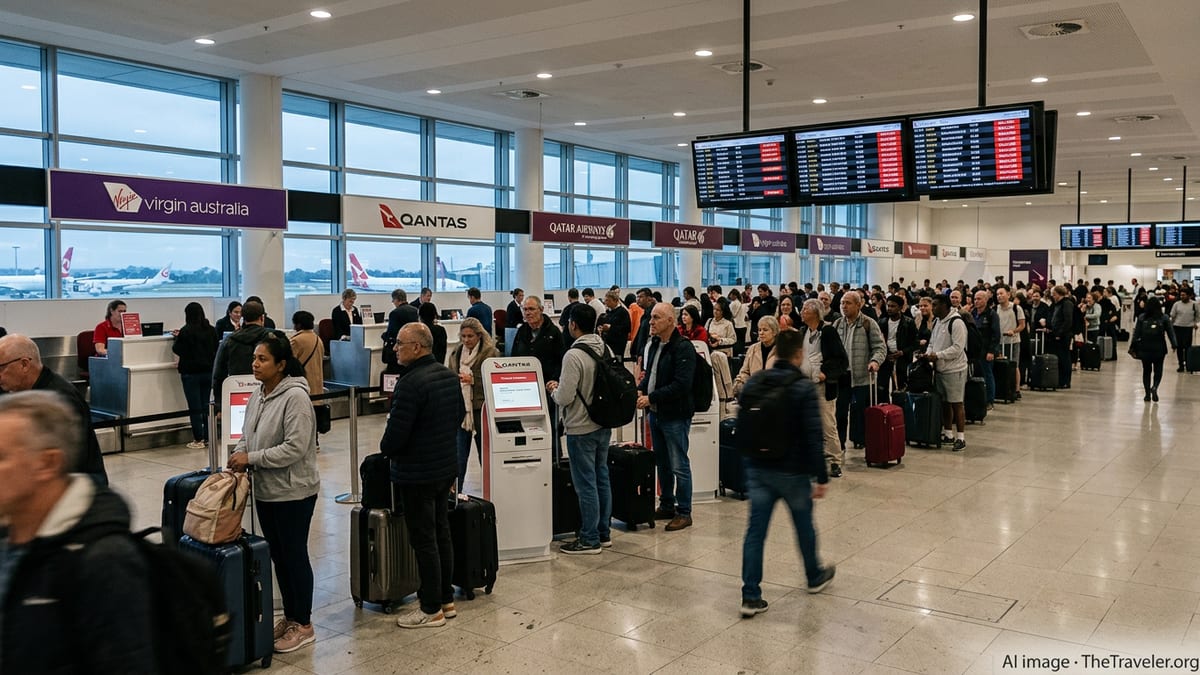
Sydney’s Capacity Push Signals a New Phase of Recovery
Publicly available information shows that Malaysia Airlines has sharply increased its presence at Sydney, adding frequencies and capacity on Kuala Lumpur services as international arrivals through the city climb toward record territory. Recent industry coverage indicates that Sydney Airport is on track for its busiest year for international travel, helped by additional services from carriers including Malaysia Airlines, which are targeting resilient demand into New South Wales.
Data from tourism and aviation agencies points to Sydney retaining the largest share of international seats into Australia, with capacity in the 2024–25 financial year edging above the previous year as more than 50 overseas destinations are connected to the city. Within that mix, the Malaysia–Australia corridor has been identified as a growth market, with airlines using expanded networks to funnel traffic from Europe and South Asia through Kuala Lumpur and into Sydney and other Australian hubs.
The strengthening of Sydney’s schedule follows a broader trend of Asia Pacific airlines treating Australia as a priority market in the global recovery cycle. Analysts note that as some regions, including parts of North Asia, have recovered more slowly, carriers have reallocated widebody capacity into routes where demand has proved both price-insensitive and structurally strong, a description that increasingly fits Sydney’s long-haul leisure and visiting-friends-and-relatives segments.
Industry commentary also highlights that Sydney’s recovery has moved beyond the initial phase of border reopening, entering a second phase where competition focuses on frequency, product upgrades and connectivity rather than simply restoring pre-2020 seat counts. Malaysia Airlines’ decision to add capacity while reporting very high load factors suggests that underlying demand is sufficiently robust to support both increased seat supply and stable yields.
Network-wide Load Factors Above Ninety Percent
Reports on Malaysia Airlines’ performance indicate that the carrier is currently achieving load factors above 90 percent across its Australian network, encompassing Sydney, Melbourne, Perth, Brisbane and Adelaide. These figures significantly outpace the global average passenger load factor of just over 80 percent reported by international airline associations in recent quarters, underlining how constrained capacity has become on these routes.
Industry analysis explains that a sustained load factor above 90 percent typically reflects a combination of strong demand and limited spare capacity. In practice, this means that a very high proportion of available seats are being sold on most departures, leaving fewer options for last-minute travelers and keeping fare levels relatively firm even as broader airfares in some markets soften. Travel management firms tracking Australian ticket prices have noted that, while average fares are gradually easing from their post-pandemic peaks, high load factors continue to point to structural demand on long-haul services.
Within Malaysia Airlines’ network, Australia has been described in public briefings as a key strategic market that justifies accelerated deployment of new aircraft. The airline is rolling out A330neo jets on several Australian routes, combining additional capacity with upgraded cabins aimed at premium leisure and business travelers. By pairing new-generation aircraft with dense demand, the carrier is seeking both improved fuel efficiency and better revenue per flight.
For Australian airports, sustained load factors in this range are a double-edged development. On one hand, full planes bring tourism spending, aviation-related jobs and stronger connections to global markets. On the other, they can signal that existing infrastructure and bilateral capacity arrangements are running close to their practical limits, particularly during peak seasons and holiday periods.
Melbourne, Perth, Brisbane and Adelaide Break Capacity Barriers
Malaysia Airlines’ performance in Sydney builds on earlier capacity milestones in other Australian cities. Aviation and tourism documents show that the airline has progressively increased frequencies to Melbourne and Perth, while also restoring and expanding services to Brisbane and Adelaide as border restrictions eased and demand returned. This network-wide growth has pushed several routes back to, or beyond, their pre-pandemic seat counts.
Coverage of the Australian international aviation market notes that Asia Pacific carriers collectively grew capacity into the country by double digits in 2024, with continued, though slower, expansion projected through the next decade. Malaysia Airlines is among the operators that have capitalised on this trend, using its Kuala Lumpur hub to channel traffic from Europe, South Asia and parts of the Middle East into multiple Australian gateways, rather than relying solely on Sydney and Melbourne.
Adelaide’s recovery illustrates how secondary capitals are also benefiting from this strategy. Local tourism presentations highlight that international passenger numbers at Adelaide Airport have climbed to record levels as airlines, including Malaysia Airlines, reinstated and expanded services from Southeast Asia. Regular Kuala Lumpur–Adelaide flights now provide both direct inbound tourism flows and one-stop access for South Australians to long-haul destinations across Asia and Europe.
Perth and Brisbane have similarly reported strong international growth as carriers respond to both outbound leisure demand and inbound visitor flows. Aviation market commentary points to Perth’s strategic position as a western gateway to Australia, shortening flying times to Southeast Asia and Europe, while Brisbane’s role as a hub for Queensland tourism has attracted additional services. For Malaysia Airlines, operating across all five major Australian cities diversifies its exposure and allows the airline to balance demand patterns across different states and seasons.
Open Skies and Bilateral Policy Unlock New Growth
The latest surge in Malaysia Airlines’ Australian performance has also been shaped by changes to the policy environment. Industry reports note that an open skies-style framework between Australia and Malaysia came into effect recently, removing previous caps on frequencies operated by designated airlines between the two countries. This shift effectively opened the door for carriers to expand capacity in line with commercial demand rather than being constrained by fixed entitlements.
Such policy liberalisation has coincided with a broader international trend, where governments seek to use additional air services to drive tourism recovery, trade and investment. In the Australia–Malaysia context, removing capacity limits has allowed Malaysia Airlines to add more than 70 weekly flights to Australian cities, while also leaving room for other Malaysian and Australian carriers to grow their own offerings on the corridor.
Aviation analysts argue that open skies arrangements can act as a catalyst when underlying demand is already strong, as appears to be the case on routes linking Kuala Lumpur with Sydney, Melbourne, Perth, Brisbane and Adelaide. By enabling airlines to upgauge aircraft, increase frequencies or launch new city-pairs without lengthy renegotiations, regulators are encouraging a more dynamic market that can respond quickly to shifts in traveller behaviour.
For Australia, this additional capacity aligns with wider tourism strategies focused on attracting higher-spending visitors from Southeast Asia and leveraging regional hubs as gateways from Europe and the Middle East. For Malaysia, the ability to deploy more capacity to Australia supports Kuala Lumpur International Airport’s position as a competing transit hub in the Asia Pacific region, reinforcing its connectivity relative to Singapore, Bangkok and other rivals.
Post-Pandemic Demand Reshapes the Australia–Asia Corridor
The resurgence of Malaysia Airlines’ Australian routes is taking place within a global context of post-pandemic travel demand that has remained surprisingly resilient. Industry associations reported record passenger traffic in 2025, with international markets growing faster than domestic segments and overall load factors remaining close to historic highs. Australia, in particular, has seen strong inbound tourism momentum even as domestic aviation stabilises.
Analysts attribute this resilience to several factors, including pent-up demand after prolonged border closures, high savings buffers among some traveler segments, and a growing preference for international leisure trips over other forms of discretionary spending. Even as economic conditions tighten in certain markets, long-haul holidays and visits to friends and relatives continue to rank highly in household priorities, especially for diaspora communities connecting Australia with Southeast Asia and beyond.
The Australia–Asia corridor has benefited from this shift, with carriers such as Malaysia Airlines, AirAsia, Singapore Airlines and others expanding capacity or upgrading fleets to capture demand. Competitive dynamics are intensifying, particularly in premium cabins and connecting itineraries to Europe, where travelers weigh options across multiple hubs and alliances. Malaysia Airlines’ strong load factors suggest that its combination of schedule, pricing and network breadth is resonating with both Australian and international passengers.
Looking ahead, aviation forecasts suggest that international capacity into Australia will keep growing, albeit at a more moderate pace than the initial rebound phase. For Malaysia Airlines, maintaining load factors above 90 percent while continuing to expand will require careful calibration of schedules, aircraft deployment and partnerships. For Australia’s major airports, the carrier’s performance underscores how crucial Southeast Asian hubs have become to sustaining connectivity and tourism growth in the decade following the global pandemic.