

More news on this day
Malaysia Airlines is rolling out extra flights between Kuala Lumpur, London and Paris from March 6 to 8, 2026, in a rapid response to mounting global travel disruption that has left thousands of long-haul passengers scrambling for seats.
Extra Europe Capacity to Ease a Strained Global Network
The national carrier confirmed that supplementary services will operate between Kuala Lumpur International Airport, London Heathrow and Paris Charles de Gaulle over the three-day window, on top of its regular daily schedule. The move is designed to absorb passengers whose plans have been upended by cascading delays, aircraft shortages and operational issues across multiple carriers.
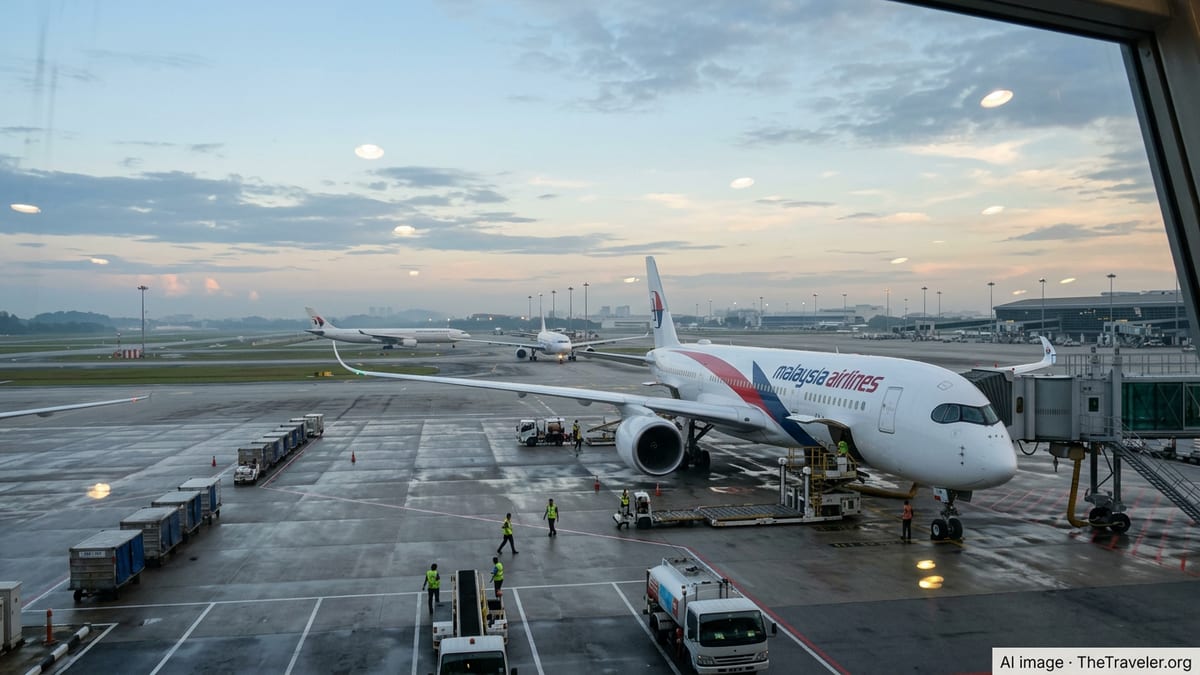
According to airline statements, the extra flights will be operated by widebody Airbus A350-900 aircraft, temporarily boosting capacity on two of Southeast Asia’s most in-demand links to Europe. The additional services are targeted at travellers who have been stranded by cancellations or severe delays elsewhere in the network, including those trying to connect between Asia, Australia and Europe.
Malaysia Airlines has stressed that the extra rotations are time-limited but may be adjusted if disruption persists. Revenue seats are on sale alongside inventory reserved for reaccommodating disrupted passengers, as the airline seeks to balance commercial demand with its role as flag carrier and network stabiliser.
What It Means for Tourists Heading to London and Paris
For leisure travellers, the short-notice capacity increase offers a rare piece of good news amid a week of queues, missed connections and rolling schedule changes at major hubs. Tourists heading to London and Paris during the busy early spring period now have additional non-stop options from Kuala Lumpur, reducing reliance on multi-stop itineraries that have proved vulnerable to disruption.
Passengers already booked on Malaysia Airlines services are unlikely to see wholesale timetable changes, as the airline has emphasised that its existing London and Paris flights are operating as scheduled. Instead, the extra flights provide a pressure valve: a pool of seats that can be used to rebook affected customers more quickly, rather than pushing them onto services days later or routing them through multiple hubs.
For long-haul tourists originating in Australia, Indonesia, Thailand and elsewhere in Southeast Asia, Kuala Lumpur’s role as a regional gateway becomes more valuable. Many of these travellers connect through Malaysia Airlines or partner airlines at Kuala Lumpur International Airport before continuing to Europe. The temporary boost in Europe-bound capacity can shorten layovers, restore disrupted itineraries and in some cases turn extended delays into same-day departures.
Opportunity and Stress Test for Hospitality Giants
Global hotel brands and major local hospitality players in London and Paris are watching the situation closely. Extra long-haul seats into both cities over the coming days should help stabilise arrival flows following a volatile period of last-minute cancellations and rebookings that has complicated room allocation, staffing rosters and revenue forecasts.
In the United Kingdom and France, international chains and upscale independents have reported a rollercoaster of no-shows and unexpected early check-outs as travellers reroute or abandon trips. By shoring up a key Asian feeder market, Malaysia Airlines’ move could smooth occupancy patterns, particularly in districts popular with visitors from Southeast Asia and Australia.
At the same time, the added capacity is a live stress test for ground operations and service consistency. Hotels near Heathrow and Charles de Gaulle that have been accommodating stranded passengers may see a rapid turnover as guests finally secure onward travel. City-centre properties, meanwhile, could receive a late surge of short-stay visitors who had braced for trip cancellations but are now able to travel.
How Malaysia Airlines Is Coordinating With Partners
Beyond the extra seats themselves, the airline is leaning on partnerships to maximise the impact of the added flights. Through interline deals and alliance relationships, travellers arriving on the supplementary Kuala Lumpur to London and Paris services are expected to access a wide range of onward connections deeper into Europe.
Industry observers say this coordination is crucial at a time when many European and Middle Eastern carriers are still juggling crew shortages, maintenance delays and congested hubs. By funnelling passengers into London Heathrow and Paris Charles de Gaulle on its own metal, Malaysia Airlines can hand travellers over to partner networks that may have more flexibility on short-haul routes, while retaining control of the critical long-haul leg from Asia.
For premium customers and corporate travellers, the additional frequencies also provide more options to maintain tight schedules. Extra business-class and premium-economy seats on the A350 services could prove especially valuable for multinational firms that rely on predictable links between headquarters in Europe and operations in Malaysia and neighbouring markets.
What Travellers Should Expect in the Days Ahead
Despite the extra flights, aviation analysts caution that the broader picture remains fragile. Passengers flying between Asia and Europe in the coming days should still prepare for longer journey times, congested terminals and potential last-minute gate changes as airlines across the region work through backlogs.
Travel agents and airline contact centres are reporting heightened call volumes as customers seek to understand their options. Malaysia Airlines has urged passengers to monitor their bookings closely and to arrive at airports earlier than usual, particularly if they are transferring from other carriers that may still be experiencing delays.
For tourists and the hospitality industry alike, the carrier’s decision to reinforce its London and Paris routes underscores how pivotal reliable air links are to the global travel ecosystem. If the three-day deployment of additional flights succeeds in clearing the most acute bottlenecks, it could provide a template for how full-service airlines and their partners respond to future episodes of global travel turmoil.