

More news on this day
Malaysia Airlines is rushing in extra widebody flights from Kuala Lumpur to London and Paris this weekend, opening a rare escape route for thousands of travelers stranded by unprecedented global airspace closures and long-haul cancellations across the Middle East corridor.
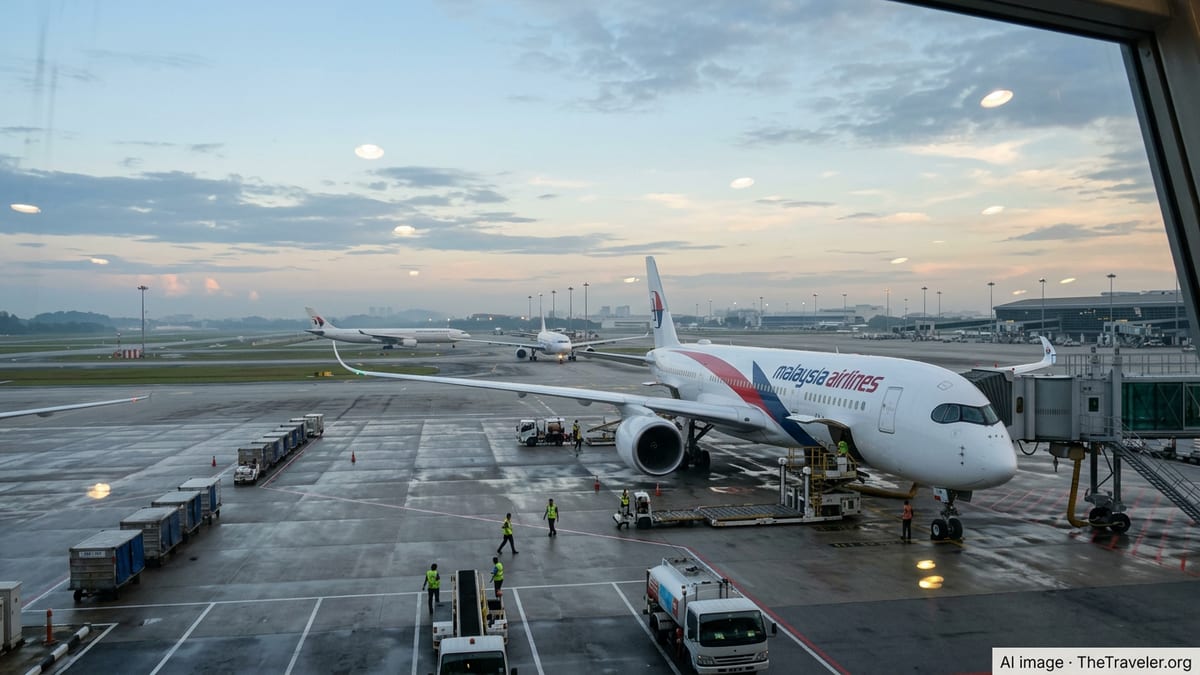
Extra Europe Flights Launched From March 6 to 8
Malaysia Airlines has deployed supplementary services between Kuala Lumpur International Airport and both London Heathrow and Paris Charles de Gaulle from March 6 to 8, 2026, in direct response to the fast-evolving airspace crisis that has crippled many of the busiest transit hubs between Asia and Europe. The additional departures sit on top of the carrier’s regular daily schedule, effectively surging capacity during one of the most turbulent weeks for long-haul aviation since the pandemic.
The airline is operating the extra services with its Airbus A350 900 fleet, adding roughly 900 seats across the three special rotations, according to industry briefings. Flight plans have been adjusted to avoid closed airspace over parts of the Middle East, with routes pushed further north to maintain safety and keep block times as predictable as possible.
Operational notices indicate an extra Kuala Lumpur to Paris service departing at 2.15 pm on March 6, followed by additional Kuala Lumpur to London flights on March 7 and 8, including a 10.00 am departure on Saturday and an 11.15 am departure on Sunday. Return sectors from Europe are being tightly sequenced to reposition aircraft back into Asia overnight and maintain onward connections across the Malaysia Airlines network.
The move comes as rival long haul carriers that typically dominate the Asia Europe market via Gulf and regional hubs have been forced to cancel or heavily curtail operations, leaving premium cabins sold out and economy seats extremely scarce on remaining services. Malaysia Airlines is positioning its nonstop Kuala Lumpur links to London and Paris as a crucial alternative for passengers scrambling to get home or reach Europe in time-sensitive situations.
Stranded Travelers Given a Vital New Lifeline
The sudden closures and restrictions affecting key West Asian airspace have triggered cascading disruption, stranding passengers across Asia, the Middle East and Europe as transit itineraries via major hubs fall apart with little warning. Online forums and social media channels have been flooded with reports of travelers in Kuala Lumpur and across the region unable to find replacement flights to the United Kingdom and continental Europe as cancellations mount.
With nonstop links from Kuala Lumpur to London and Paris operating on adjusted routings, Malaysia Airlines is now emerging as a rare lifeline for those cut off by the turmoil. The airline is prioritising rebookings for customers holding Malaysia Airlines or partner tickets whose journeys have been impacted by the wider disruption, offering seats on the new flights at no additional fare where entitlement rules allow.
Agents in Kuala Lumpur report that demand for the extra Europe services surged as soon as details filtered out through official channels and travel trade partners. Many stranded passengers with bookings on other carriers have turned to Malaysia Airlines as one of the few options able to provide a same week departure to London or Paris without complex, multi stop routings.
Despite the additional capacity, availability remains tight on key travel dates, particularly for those needing to connect immediately into regional services across the United Kingdom or onward into continental Europe. Industry watchers warn that seats on the extra Kuala Lumpur flights are likely to be snapped up quickly as travelers race to secure confirmed itineraries before the situation in affected airspace changes again.
Global Airspace Crisis Drives Rerouting and Capacity Crunch
The decision by multiple countries to restrict or close sections of airspace in late February has forced airlines to redraw long haul routings at speed, with some carriers temporarily halting services altogether on certain corridors. The knock on effect has been especially severe on traditional one stop connections between Southeast Asia and Europe via Gulf and West Asian hubs, which normally carry huge volumes of traffic.
Schedule data over the past week shows hundreds of cancellations across major long haul networks, with some airlines operating limited repatriation style services while they work around new airspace constraints. The resulting capacity crunch has left many routes heavily oversubscribed, with economy and premium cabins selling out days ahead and walk up fares spiking on the few available seats that remain.
Malaysia Airlines, which already operates nonstop Kuala Lumpur services to London Heathrow and Paris Charles de Gaulle, has been able to pivot more quickly than some rivals by overlaying extra nonstop flights rather than relying on intermediate hubs. The carrier has also temporarily resumed select Middle East routes on alternative paths to support stranded umrah pilgrims and other travelers, though its flagship Europe flights are now bearing the brunt of demand from those seeking a direct way around the crisis zone.
Aviation analysts say the airline’s swift deployment of extra A350 capacity underscores how point to point operators can play a stabilising role when traditional hub and spoke flows are disrupted. However, they caution that any further escalation in regional tensions or additional airspace restrictions could still force timetable changes and lengthier routings in the days ahead.
Rebooking Priorities and How to Secure a Seat
Malaysia Airlines has confirmed that customers holding existing Malaysia Airlines tickets or through tickets with partner carriers whose journeys have been affected by the disruptions will be given priority access to seats on the supplementary Kuala Lumpur to London and Kuala Lumpur to Paris services. Subject to fare rules, many of these passengers are being rebooked onto the next available flight at no additional cost, with change fees waived in cases directly linked to the current airspace situation.
Passengers originally booked on other airlines are also able to purchase seats on the extra flights, but travel consultants warn that inventory is dynamic and extremely limited. With heavy demand from stranded travelers worldwide, those seeking to travel over the March 6 to 8 window are being urged to confirm bookings as soon as they identify suitable options, as waitlists are moving rapidly and departures are expected to go out close to full.
The airline has deployed additional staff to its global contact centres and airport ticket counters to handle a surge in calls and last minute ticketing. On the ground at Kuala Lumpur International Airport, check in teams are working extended hours, while customer care staff assist disrupted passengers with travel documentation checks, minimum connecting time assessments and overnight arrangements where required.
Travel agents recommend that anyone who has flexibility on dates consider departures slightly outside the main disruption peaks or look at mixed itineraries which combine a Malaysia Airlines nonstop to London or Paris with a separate onward ticket purchased directly from European or UK carriers. However, they stress that travelers should build in generous connection times given continuing volatility across European airport operations.
What Travelers Should Expect in the Coming Days
While the additional Malaysia Airlines flights offer an immediate pressure valve for Kuala Lumpur based travelers, aviation experts say the wider global situation remains fluid. Routing changes can add significant flight time, potentially tightening aircraft utilisation and crew scheduling, which in turn leaves airlines with less flexibility to add even more extra services on short notice.
Passengers booked on the Kuala Lumpur to London and Paris routes over the next week are being advised to monitor their bookings closely and arrive at the airport earlier than usual to accommodate enhanced checks, longer queues and potential gate changes. Even for flights operating broadly on schedule, airport congestion and knock on delays from inbound traffic may create last minute timing adjustments.
Analysts expect Malaysia Airlines to continue reviewing capacity on its Europe network day by day, with the possibility of further ad hoc flights if airspace restrictions persist and operational conditions permit. However, they also note that securing additional widebody aircraft and crew at short notice is challenging during periods of peak disruption, meaning that the current batch of extra services between March 6 and 8 may represent the most significant short term capacity injection.
For now, the message from the travel trade is clear: for stranded travelers in Asia seeking a reliable bridge to London or Paris during this period of global travel chaos, Malaysia Airlines’ nonstop Kuala Lumpur services have become some of the most coveted seats in the sky, and those hoping to secure a place on the extra flights should move quickly before they sell out.