

More news on this day
Malaysia Airlines has unveiled a new brand film for China titled “Thousand-Mile Horse: Journeying Together in the Year of the Horse,” pairing emotive storytelling with an accelerated expansion of routes linking Chinese cities to Kuala Lumpur and the wider ASEAN region.
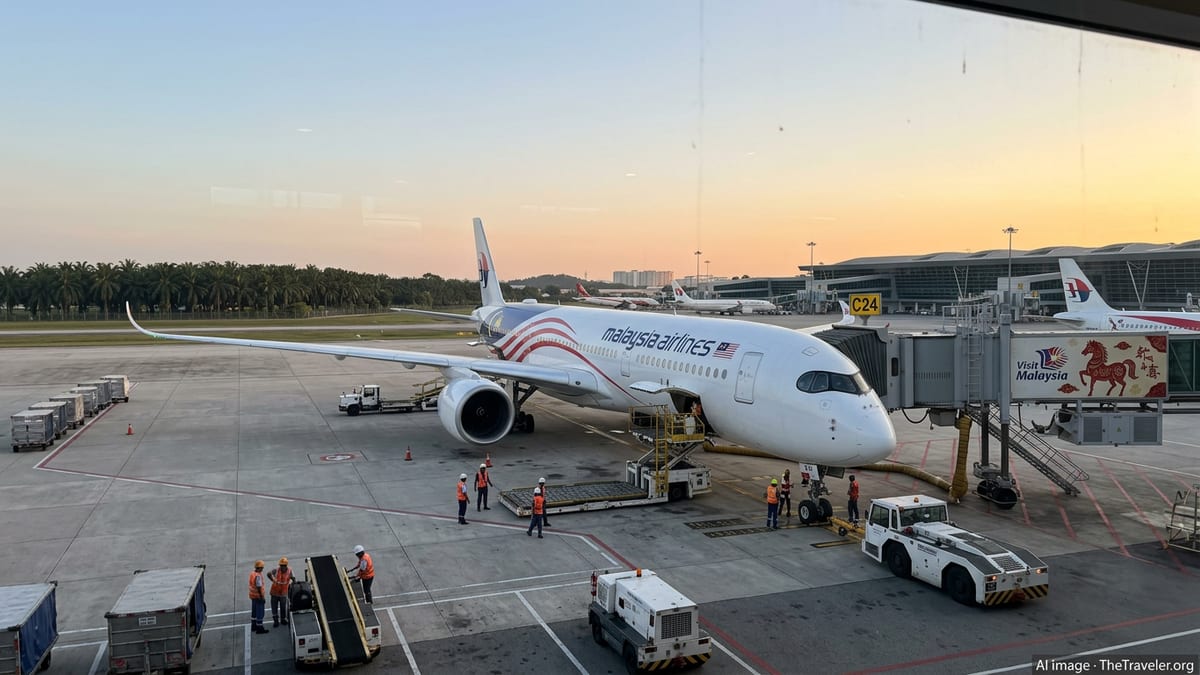
Symbolic Film Anchors Aggressive China Growth Strategy
Released in early March 2026 ahead of the Lunar New Year travel period, “Thousand-Mile Horse” is positioned by Malaysia Airlines as more than a festive campaign. The carrier describes it as a statement of long-term intent in China, aligning a powerful cultural metaphor with its robust growth in one of Asia’s most competitive aviation markets.
The film, created for Chinese audiences and key global markets, leans on the legendary “thousand-mile horse” from Chinese literature, a creature known for its endurance, strength and ability to cover vast distances. Malaysia Airlines casts this image as a reflection of its own ambitions in the market, signalling confidence as it reopens routes, adds capacity and rebuilds brand presence.
Executives say the campaign is designed to support both inbound and outbound flows between China and Malaysia by raising awareness of Kuala Lumpur’s role as a convenient one-stop hub. From the airline’s perspective, the emotional story on screen is intended to translate into renewed preference in the booking funnel as Chinese travellers weigh their options across a crowded field of regional competitors.
Seven Greater China Gateways and Growing Passenger Volumes
The launch of “Thousand-Mile Horse” coincides with a tangible expansion of Malaysia Airlines’ network into Greater China. In January 2026 the carrier restored daily non-stop flights between Kuala Lumpur and Chengdu, a route that had been suspended for nine years and is now operated into Chengdu Tianfu International Airport.
With Chengdu back on the map, Malaysia Airlines now serves seven gateways across Greater China, including Beijing, Shanghai, Guangzhou, Xiamen, Hong Kong and Taipei. The airline operated 52 weekly flights across this network in 2025, carrying approximately 860,000 passengers between China and Malaysia, figures the company cites as proof of solid post-pandemic recovery and rising demand.
Industry analysts note that this expansion dovetails with Malaysia’s broader tourism objectives as the country gears up for Visit Malaysia 2026. Extra capacity from secondary Chinese cities is expected to support leisure arrivals to beach, nature and cultural destinations beyond Kuala Lumpur, while enhanced connectivity also underpins business and student traffic in both directions.
Malaysia Airlines, which has been working to strengthen its balance sheet and refresh its fleet, is using the China build-out as a key pillar of a wider regional strategy. By consolidating frequencies and adding new points, the carrier aims to position Kuala Lumpur as a competitive alternative to other Southeast Asian hubs for travellers routing between China, ASEAN and Australia.
Storytelling Through a Child’s Eyes and Everyday Travel Moments
The “Thousand-Mile Horse” film tells its story through the curiosity of two young brothers. It opens with a simple question from a child asking what a thousand-mile horse is and what it truly represents. Rather than leaping immediately into aviation imagery, the narrative unfolds in domestic scenes, focusing on small gestures and moments of wonder in the home.
As the brothers imagine the mythical creature, the film gradually shifts toward travel, culminating in an airport sequence in which the child spots a Malaysia Airlines aircraft. Pointing to the plane, he declares that the thousand-mile horse has been found, linking the legend’s themes of resilience and forward motion directly to the carrier’s identity.
The storyline is closely tied to Malaysia Airlines’ ongoing “Time For” global brand platform and its “Elevating Moments, One Journey at a Time” content series. These initiatives emphasize journeys that are meaningful rather than purely transactional, seeking to highlight the value of connection between families, cultures and destinations.
By grounding the message in family dynamics and a child’s discovery, the airline is aiming squarely at Chinese travellers who prioritize shared experiences and multigenerational trips. The narrative choice also gives Malaysia Airlines room to showcase airport and onboard scenes that feel like natural extensions of the plot rather than overt product placements.
Showcasing Malaysian Hospitality Onboard and On the Ground
The campaign is also a vehicle to highlight the carrier’s long-standing brand promise of Malaysian Hospitality, which it frames as a blend of warmth, attentiveness and genuine care throughout the journey. Within the film and associated content, the airline points to touches such as kids’ activity packs, culturally tailored meals and small service gestures aimed at families.
Malaysia Airlines is keen to signal that its full-service offering stands out in a market where price-sensitive Chinese travellers often gravitate toward low-cost carriers or high-frequency mainland airlines. By emphasizing comfort, cuisine and human connection, the company is attempting to justify a potential fare premium while tapping into a growing segment of Chinese passengers who are once again prioritizing quality and reliability.
On the ground, the airline is reinforcing Kuala Lumpur International Airport’s position as a convenient transit point for itineraries that link multiple destinations in a single trip. For Chinese travellers pairing Malaysia with other ASEAN countries or Australia, the promise is one of seamless transfers and consistent service standards under the Malaysia Aviation Group umbrella.
Industry observers say that as competition intensifies on trunk routes from Beijing, Shanghai and Guangzhou, elements such as cabin experience, multilingual crew and tailored inflight entertainment will play a greater role in route and airline choice. Malaysia Airlines is banking on the visibility of the “Thousand-Mile Horse” campaign to make those differentiators more top-of-mind as Chinese travellers plan trips for 2026 and beyond.
Strengthening Regional Ties Amid Evolving Travel Flows
Beyond network maps and seat capacity, Malaysia Airlines is positioning its China push as part of a broader effort to deepen regional ties between China, Malaysia and neighbouring ASEAN markets. The airline’s increased flights dovetail with government-level initiatives, including visa facilitation measures and tourism promotion campaigns aimed at restoring pre-pandemic levels of two-way travel.
Tourism authorities on both sides see aviation connectivity as central to unlocking new city pairs and encouraging travel beyond traditional gateway destinations. With more non-stop services into Kuala Lumpur and onward links to beach resorts, heritage towns and nature-focused regions, Malaysia is pitching itself as a flexible base for Chinese travellers seeking varied itineraries.
For Malaysia Airlines, the “thousand-mile horse” metaphor underscores a commitment to endurance and steady progress in a market known for rapid change and intense competition. By combining network investment with emotionally resonant storytelling, the carrier is attempting to secure a durable foothold even as Chinese airlines and regional rivals continue to scale up their own offerings.
As the Year of the Horse unfolds, the success of the film and the associated route expansion will be measured not only in brand recognition but in sustained load factors, repeat travel and deeper cultural exchange. For now, Malaysia Airlines is betting that a legendary steed from Chinese lore can help carry its ambitions across a fast-growing, strategically vital landscape.