

More news on this day
Malaysia Airlines is rapidly adjusting its long-haul network, boosting flights between Kuala Lumpur and Europe while trimming Gulf operations, as widening conflict and airspace closures across the Middle East upend traditional Asia–Europe corridors.
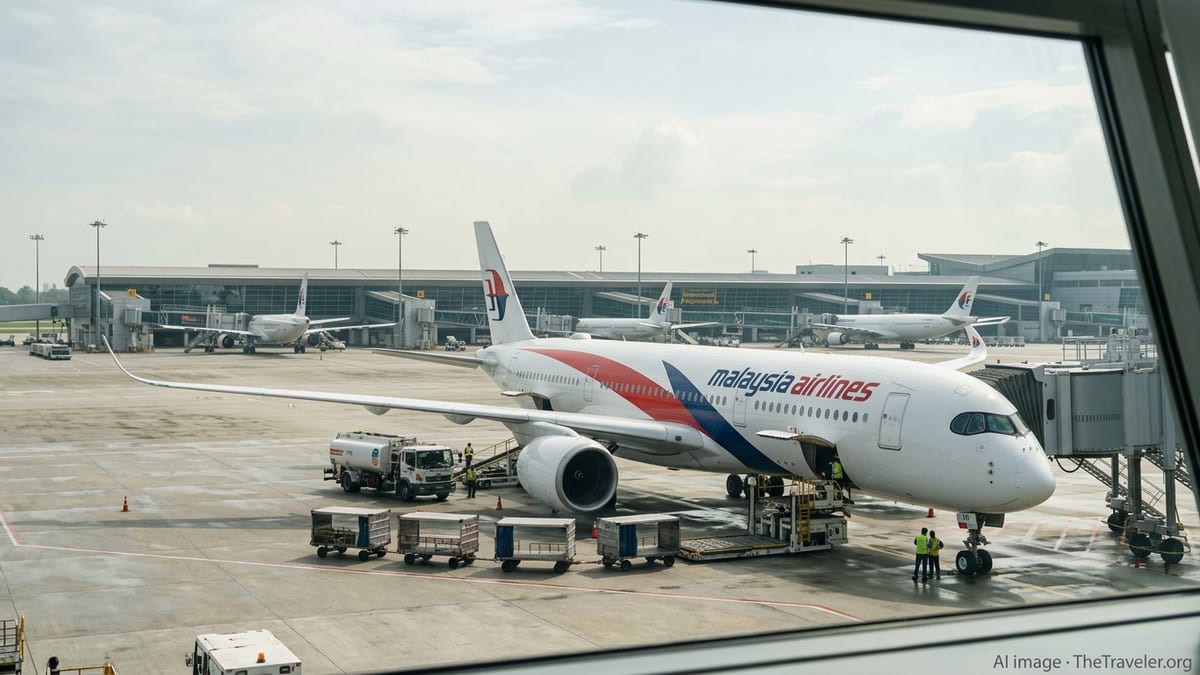
Extra Europe Flights to Keep Asia–Europe Traffic Moving
Malaysia Airlines has introduced a series of additional services between Kuala Lumpur International Airport and key European gateways to absorb demand from disrupted routes that typically cross the Middle East. The carrier has scheduled supplementary flights to London Heathrow and Paris Charles de Gaulle from March 6 to 8, deploying its long-haul Airbus A350-900 fleet to maintain connectivity for stranded and rerouted passengers.
The extra services effectively increase short-term capacity on two of the airline’s busiest long-haul routes, at a time when many European and Gulf carriers are cancelling flights or adding hours to journeys to avoid closed or high-risk airspace. For travelers who would normally connect via hubs in Doha, Dubai, Abu Dhabi or other Gulf cities, Kuala Lumpur is being positioned as an alternative bridge between Southeast Asia, Europe and beyond.
Malaysia Airlines has framed the move as both a response to immediate operational pressures and a signal of its intention to remain a reliable option for east–west travel. By concentrating resources on nonstop Europe services that can avoid the most affected parts of West Asia, the airline aims to capture spillover demand from passengers rebooking away from more heavily impacted routes.
Middle East Tensions Redraw Long-Haul Flight Paths
The network changes come against the backdrop of an escalating conflict in the Middle East that has prompted widespread airspace closures and security advisories. Large parts of West Asian skies are now subject to restrictions or overflight warnings, following government advisories and conflict zone bulletins urging airlines to avoid airspace over countries such as Iran, Iraq and others in the wider Gulf region.
Thousands of flights between Europe and Asia have been cancelled, rerouted or delayed in recent days, according to aviation data providers, with the impact spreading well beyond the immediate conflict zone. Gulf mega-hubs, which normally funnel huge volumes of traffic between Europe, Africa and Asia, have seen schedules heavily disrupted as airlines plot longer detours around restricted corridors.
For carriers like Malaysia Airlines, which sit geographically south of the most volatile airspace, the crisis presents both challenges and opportunities. Rerouting can still mean extended flight times and higher fuel burn on certain sectors, but Kuala Lumpur’s location allows some Europe-bound flights to be curved further south, skirting the main conflict-affected corridors while avoiding the need for extreme detours through Central Asia or the far north.
Suspended Gulf Services and Targeted Middle East Operations
Even as it adds Europe capacity, Malaysia Airlines is tightening its presence in parts of the Gulf. The carrier has temporarily suspended flights to and from Doha beginning March 7, citing operational and safety considerations tied to the conflict and airspace closures. The suspension affects passengers who use Doha as a transfer point onto partner airlines’ networks to Europe, North America and Africa.
The airline has also been adjusting its broader Middle East operations in line with changing risk assessments and regulatory guidance. In previous flare-ups, Malaysia Airlines rerouted flights to avoid Iranian airspace, joining a long list of international carriers that have periodically shifted flight paths away from higher-risk regions. The current round of disruptions is more extensive, forcing airlines to constantly reassess routings, alternates and crew duty times as new advisories are issued.
Industry analysts note that while some services to religious and labor-market destinations in the Middle East may be maintained or reinstated on carefully assessed routings, the emphasis for now is clearly on minimizing exposure to conflict-adjacent airspace. For travelers, this translates into a shrinking menu of direct options via Gulf hubs and a growing role for alternative connecting points such as Kuala Lumpur, Singapore and Istanbul.
What Travelers Need to Know Before Flying
For passengers planning trips between Asia, Europe and the Gulf in the coming weeks, flexibility and vigilance will be critical. Schedules are fluid, and same-day changes to routings, departure times and even origin or destination airports remain possible as airspace restrictions evolve. Travelers booked on Malaysia Airlines are being urged to monitor their booking through the airline’s digital channels and ensure contact details are up to date so that alerts about retimed or rebooked flights can be received promptly.
Those holding tickets that include Gulf connections, particularly via Doha, should pay close attention to any notifications about cancellations or involuntary rerouting. Malaysia Airlines has indicated that affected passengers will be accommodated on alternative services where possible, often via the expanded Kuala Lumpur–London and Kuala Lumpur–Paris operations or through partner airlines that can bypass the most affected airspace corridors.
Travelers should also prepare for longer journey times, even when flights operate as scheduled. Detours around restricted zones can add significant block time, with knock-on effects for connection windows and minimum layovers. Building in extra buffer time between flights, avoiding tight self-made connections, and opting for through-tickets on a single carrier or alliance can help reduce the risk of missed onward flights.
As security advisories and route maps are adjusted day by day, Malaysia Airlines and its regional rivals are likely to continue fine-tuning their networks. For now, the Malaysian flag carrier is leaning into its relative geographic advantage by strengthening nonstop links to Europe while pruning more vulnerable Gulf sectors, positioning Kuala Lumpur as a stable alternative gateway for travelers navigating a rapidly shifting Middle East airspace landscape.