

More news on this day
Malaysia Airlines is deepening its reliance on global airline partnerships to give travelers in Asia and beyond streamlined, one-ticket access to major cities across the United States, using key hubs in Doha, London, Tokyo and the U.S. West Coast as springboards for long-haul journeys.
Get the latest news straight to your inbox!
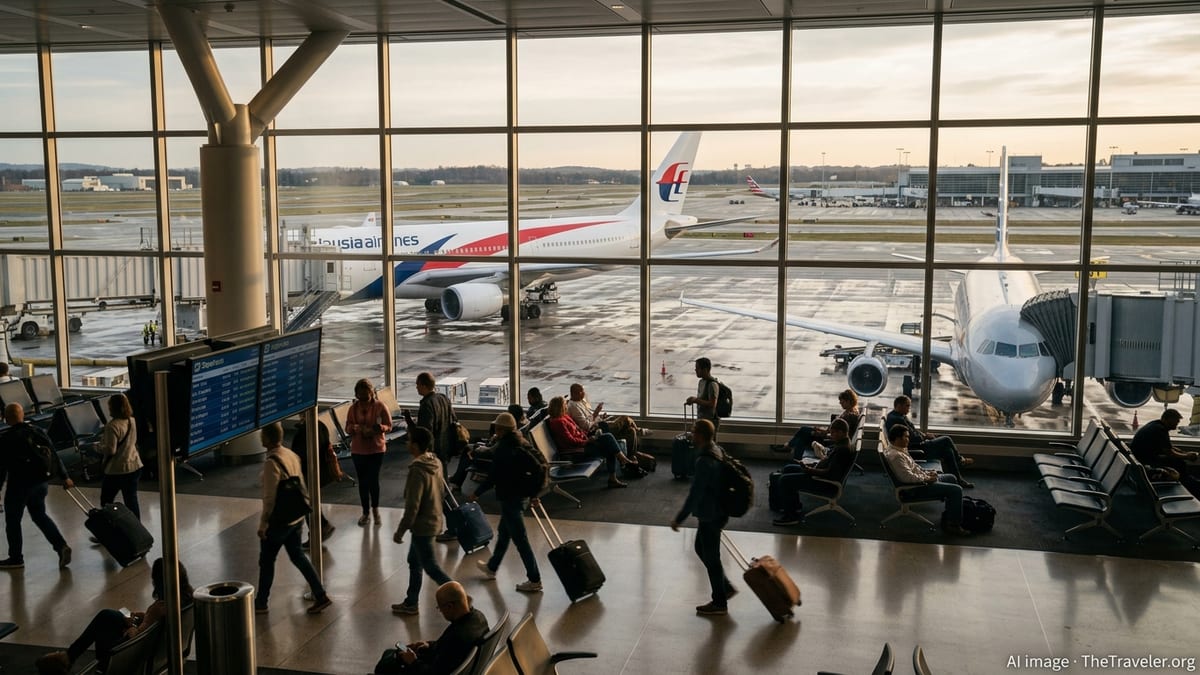
Alliance Power: Using oneworld To Reach the U.S. Market
Publicly available information shows that Malaysia Airlines, a oneworld member, has positioned partnerships rather than its own metal as the backbone of its strategy for serving North America. The carrier does not currently operate nonstop flights to the United States, but instead connects passengers through fellow alliance members with extensive U.S. networks.
Through oneworld, Malaysia Airlines is aligned with major U.S. and transatlantic players including American Airlines, Alaska Airlines and British Airways. These airlines collectively serve hundreds of destinations across the United States, allowing itineraries that begin in Kuala Lumpur or other points in Southeast Asia to be ticketed through to cities such as New York, Los Angeles, San Francisco, Chicago and Dallas on a single booking.
According to published alliance information, oneworld now brings together more than a dozen full members with overlapping networks in Asia, Europe, the Middle East and North America. For Malaysia Airlines, this structure supports through-checking of baggage, coordinated schedules on many routes and reciprocal frequent flyer benefits that are designed to make multi-carrier journeys feel like a single continuous trip.
Industry analysis indicates that this partner-centric model is a deliberate shift from the era when Malaysia Airlines attempted its own nonstops to the United States. Rather than compete directly with larger U.S. and Gulf carriers on ultra-long-haul routes, the airline now focuses on feeding passengers into partner hubs, where alliance members operate multiple daily frequencies to major American cities.
Doha and London: Key Gateways Linking Kuala Lumpur and U.S. Cities
Hamad International Airport in Doha and London Heathrow have emerged as critical bridges between Malaysia and the United States for Malaysia Airlines customers. A direct Malaysia Airlines service between Kuala Lumpur and Doha, introduced as part of a strategic partnership with Qatar Airways, provides access to a broad network of onward connections across the Americas via Qatar Airways-operated flights.
Recent network updates highlight plans to introduce a third daily Kuala Lumpur–Doha rotation from late June 2026, which is expected to enhance connectivity to more than 120 codeshare destinations available through the two carriers’ combined schedules. From Doha, travelers can typically connect to multiple U.S. gateways, including major business and leisure markets on both coasts, while remaining within a single itinerary and enjoying coordinated ground handling and transfer procedures.
On the Europe side, London Heathrow continues to play a similar role. Malaysia Airlines’ regular services between Kuala Lumpur and London link into British Airways’ extensive transatlantic network. Independent route reporting shows that codeshare arrangements between Malaysia Airlines and British Airways have been expanding, adding U.S. routes such as London to Boston and other East Coast and Midwest cities to the joint offering.
This dual-hub approach gives passengers flexibility in routing. Travelers from Kuala Lumpur can route westbound via London or northwest via Doha, depending on schedules, preferred operating airline, and final destination in the United States, while retaining the benefits of interline baggage handling and coordinated minimum connection times.
North Asia and the U.S. West Coast: Alternative Partner Corridors
Beyond the Middle East and Europe, Malaysia Airlines also leverages North Asian and West Coast partners for transpacific access. Japan Airlines, another oneworld member, provides a bridge via Tokyo, where Malaysia Airlines operates services to feed into Japan Airlines’ flights onward to cities such as Los Angeles, San Francisco and Chicago.
Historical partnership announcements describe a longstanding codeshare framework between Malaysia Airlines and Japan Airlines, which has been expanded over time to cover routes between Kuala Lumpur and Japanese hubs, as well as selected domestic Japanese sectors. From there, Japan Airlines’ transpacific services complete the journey to multiple U.S. gateways while preserving the integrated experience expected within a global alliance.
On the North American side, Alaska Airlines has become an increasingly important partner for oneworld members seeking deeper penetration of the U.S. market. Airline and loyalty-program material indicates that Alaska and its regional affiliates serve more than 120 destinations across the United States, Canada, Mexico and Central America, making it a valuable distribution platform for inbound traffic from Asia.
Malaysia Airlines’ frequent flyer program, Enrich, lists Alaska Airlines as a partner for earning and redeeming miles, enabling travelers arriving on Malaysia Airlines or another oneworld carrier to continue their journeys on Alaska’s domestic network with mileage credit and recognition of elite status. This creates a practical pathway from Kuala Lumpur, via a transpacific partner and a West Coast hub, to smaller and secondary U.S. cities that would otherwise be beyond the reach of a single intercontinental flight.
Seamless Journeys: One-Ticket Booking, Baggage and Loyalty Benefits
For travelers, the value of Malaysia Airlines’ partnership strategy is most visible in the day-to-day details of a long-haul trip. Alliance and airline documents emphasize that passengers can typically book their entire journey on a single ticket, even when multiple carriers operate the flight segments. This enables through-checking of baggage from the point of origin in Malaysia to the final destination in the United States, reducing the need to recheck bags during transfers.
Coordinated schedules and minimum connection times at partner hubs aim to minimize layovers and improve reliability. When disruptions occur, multi-carrier itineraries ticketed under alliance frameworks often allow for reprotection on alternative flights within the same partner network, providing additional resilience compared with completely separate tickets on unrelated airlines.
Frequent flyers benefit from reciprocal recognition across oneworld members. Enrich members can earn and redeem miles when flying on eligible partner-operated sectors, and elite status is generally recognized for priority check-in, boarding, baggage handling and lounge access where applicable. Alliance descriptions further highlight access to hundreds of lounges worldwide for eligible travelers, which can significantly improve the experience of long transfer times.
These service elements collectively position Malaysia Airlines as a facilitator of global journeys rather than a standalone carrier limited to its own network. By leaning on alliance infrastructure, the airline can advertise connectivity to a wide range of U.S. destinations while concentrating its own fleet on core routes within Asia, Australia, the Middle East and a handful of key long-haul markets.
Competitive Landscape and Traveler Considerations
Analysts note that Malaysia Airlines’ approach takes place in an intensely competitive long-haul market, where Gulf carriers, major U.S. airlines and other Asian network carriers all vie for traffic between Southeast Asia and North America. Choosing to grow via partnerships rather than launching new nonstops reduces capital risk for Malaysia Airlines while still keeping it present in itineraries touching the United States.
Travelers weighing options between carriers and routings may consider factors such as total journey time, preferred transit airports and the specific mix of operating airlines on each segment. For example, a passenger might opt for a route via Doha to benefit from a particular widebody cabin layout, or choose London for the convenience of daytime transatlantic departures into certain East Coast cities.
Public route and alliance data suggest that the flexibility offered by Malaysia Airlines’ partner corridors is particularly attractive to passengers outside the largest U.S. hubs. By combining long-haul flights on alliance partners with domestic connections on American Airlines or Alaska Airlines, itineraries can link Kuala Lumpur and other Malaysian cities to a wide array of regional U.S. airports in a relatively seamless manner.
As global air travel demand continues to recover and evolve, Malaysia Airlines appears set to deepen rather than retreat from its partnership-driven model. Additional frequencies on key trunk routes such as Kuala Lumpur–Doha, coupled with ongoing refinement of codeshares and loyalty integration, are likely to further entrench the airline’s role as a bridge between Southeast Asia and a broad constellation of American destinations.