

More news on this day
Malaysia Airlines flight MH160 from Kuala Lumpur to Doha executed an urgent mid-air U-turn on February 27, 2026, after a sudden escalation in regional airspace risk linked to rising tensions around Iran, prompting the carrier to activate its conflict-area diversion protocols and return the aircraft safely to Kuala Lumpur.
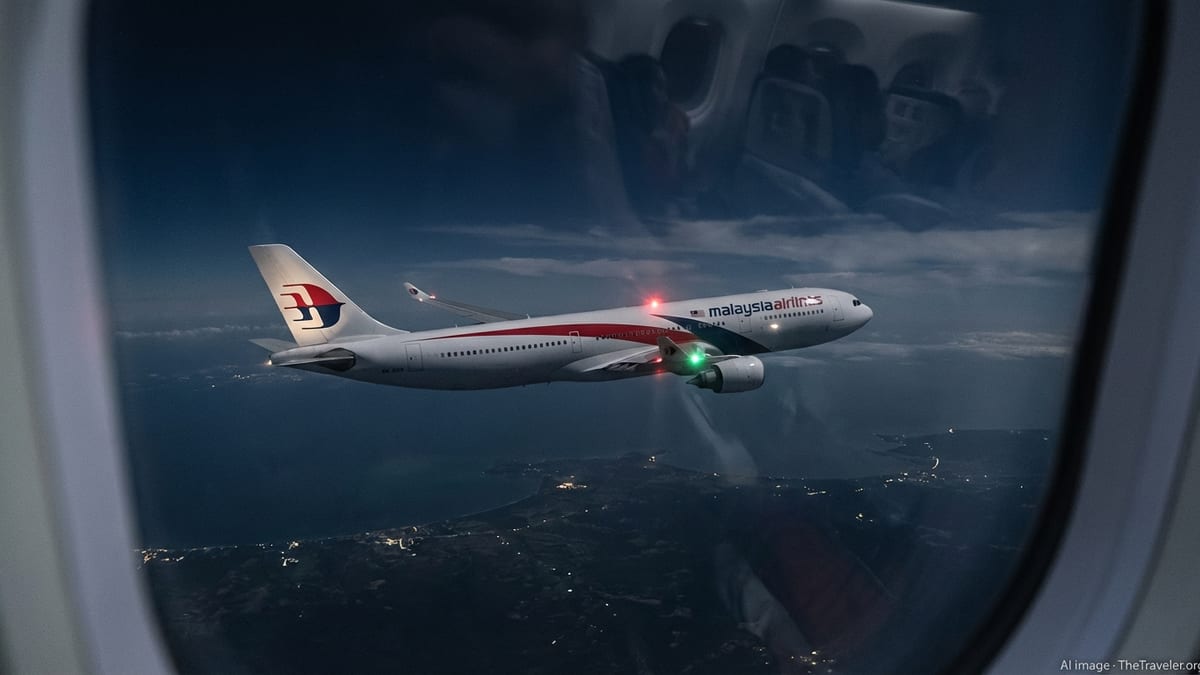
Mid-Air Advisory Triggers Abrupt Turnback of MH160
Malaysia Airlines confirmed on Saturday that MH160, operating from Kuala Lumpur International Airport to Doha, turned back partway through its journey late on February 27 following a high-priority advisory warning of heightened airspace risk en route to the Gulf. Flight tracking data cited by regional media showed the aircraft departing Kuala Lumpur at about 9.40 pm local time before reversing course over the region and landing back at Kuala Lumpur at approximately 3.36 am on February 28.
The airline said the decision was taken in strict adherence to its established conflict-area diversion procedures, which mandate immediate reassessment of routing whenever updated intelligence points to a deteriorating security picture along a planned flight path. The crew coordinated with operations control to execute the turnback, maintaining normal flight conditions throughout the return leg.
There were no safety incidents reported on board, and the aircraft landed normally with emergency services on routine standby, as is standard for precautionary returns. Malaysia Airlines reiterated that the safety of passengers and crew remains its highest priority and that it would not hesitate to alter or suspend routings when airspace risk levels change.
Second Malaysia Airlines Flight Diverted as Risks Mount
MH160 was not the only Malaysia Airlines service affected by the sudden advisory. Flight MH156, operating from Kuala Lumpur to Jeddah on the same day, was also rerouted mid-flight after receiving similar warnings about conflict-area risks further along its projected track. Instead of continuing toward Saudi Arabia, the aircraft diverted to Chennai, India, where it made a scheduled technical and operational stop.
Both MH160 and MH156 subsequently returned safely to Kuala Lumpur International Airport after their respective diversions. The carrier described the moves as precautionary and fully in line with its internal protocols for operating near or around potential conflict zones, underscoring that no direct threat to either aircraft had been reported at the time of the decisions.
Malaysia Airlines said affected passengers on both flights were assisted with rebooking on later services or alternative routings, as well as hotel accommodation and ground transport where required. Frontline and customer-care teams were deployed overnight at Kuala Lumpur and at diversion points to manage disrupted journeys and provide updated information.
Rising Iran Tensions Heighten Airspace Concerns
The airspace advisory that triggered MH160’s mid-air U-turn came as tensions around Iran sharply escalated, with reports of coordinated strikes involving Israel and the United States targeting sites in the country. Governments and aviation authorities have been closely watching the evolving security picture in and around Iranian airspace, a critical corridor for many flights linking Southeast Asia with the Middle East and Europe.
In recent years, conflict-related incidents and missile activity in the wider region have prompted regulators and airlines to reassess routes, restrict overflights and, in some cases, avoid specific flight information regions entirely. The latest developments appear to have renewed those concerns, prompting precautionary actions not only from Malaysia Airlines but also from other carriers serving the Middle East.
Regional media reported that airlines and civil aviation authorities are reviewing routing options to bypass potentially vulnerable corridors, even if that means longer flight times and higher fuel burn. For travellers, the result is a growing likelihood of diversions, delays and last-minute schedule changes on routes crossing or skirting the Middle East in the days ahead.
Operational Response and Passenger Impact
Malaysia Airlines said it is monitoring the security situation in coordination with international aviation bodies and relevant national authorities, adjusting flight paths and schedules whenever new information emerges. Operational planners are examining alternative routings that maintain safe separation from any potential conflict zones while attempting to preserve network connectivity between Kuala Lumpur and key markets in the Gulf and beyond.
Passengers affected by the MH160 and MH156 disruptions were offered assistance with accommodation, meals and rebooking, with priority given to those with onward connections from Doha, Jeddah and Kuala Lumpur. Airport lounges and customer-service desks experienced a surge in demand as travellers sought clarity on revised itineraries, but the airline reported that all customers were eventually provided with onward options or refunds according to their ticket conditions.
Travel agents and online booking platforms have begun warning customers bound for the Middle East and Europe via the region to check their contact details and monitor airline notifications closely before heading to the airport. With risk assessments evolving in near real time, industry observers say clear communication will be critical to maintaining passenger confidence, especially among long-haul travellers transiting through hubs in Asia and the Gulf.
What the Incident Signals for Future Flights
The mid-air U-turn of MH160 highlights how rapidly geopolitical shifts can reshape aviation risk calculations and flight planning decisions. Airlines already operate under stringent guidance when flying near conflict areas, but the events of February 27 underline how quickly a routine long-haul flight can be rerouted when intelligence or military activity changes the risk profile mid-journey.
Aviation analysts note that, while disruptive, such precautionary actions reflect a more conservative and data-driven approach to safety developed after past tragedies involving civilian aircraft over conflict zones. Carriers operating between Asia and the Middle East are expected to maintain heightened vigilance in the near term, with some likely to adjust departure times and routing structures to take advantage of alternative air corridors deemed safer.
For travellers, industry experts advise building more buffer time into itineraries that cross the broader Middle East, remaining flexible on routing, and paying close attention to airline alerts. As Malaysia Airlines continues to recalibrate its operations in response to the Iran-related airspace risk, MH160’s abrupt return to Kuala Lumpur may serve as an early indicator of a more turbulent period ahead for regional and intercontinental air travel.