

More news on this day
Malaysia Airlines will temporarily restore flights between Kuala Lumpur and the Saudi cities of Jeddah and Madinah from March 4 to 8, 2026, offering a narrow travel window for pilgrims and other travelers as airspace closures and conflict-related disruptions continue to roil the wider Middle East.
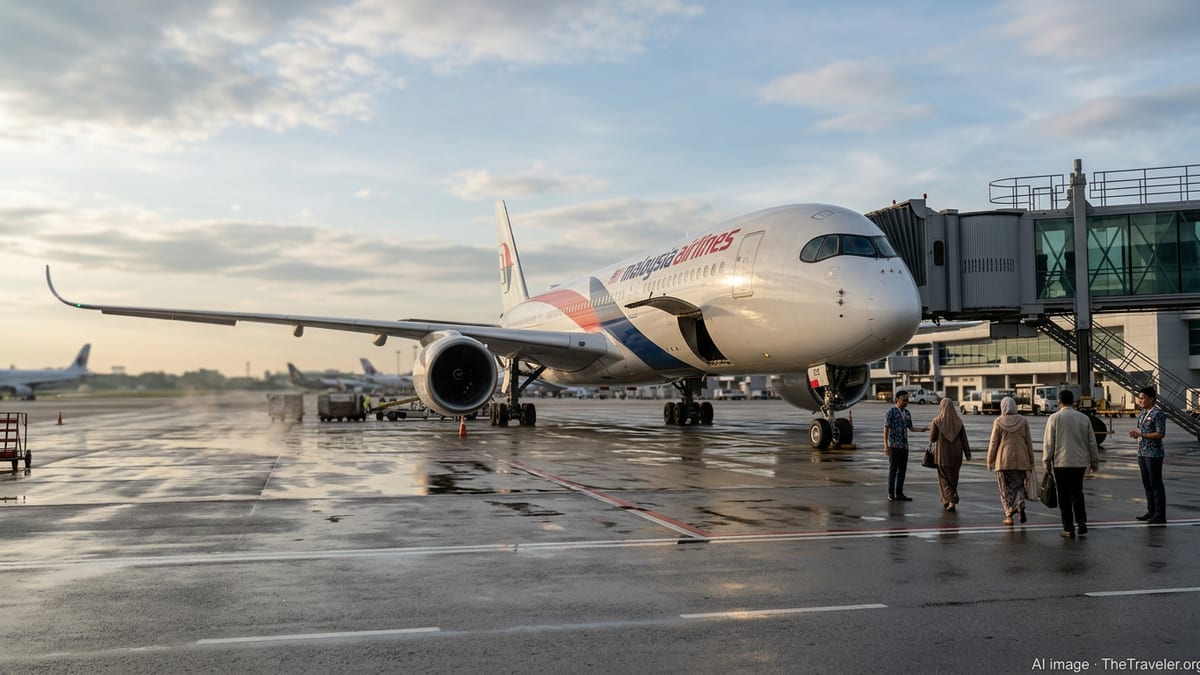
What Malaysia Airlines Is Bringing Back in March 2026
The carrier’s parent company, Malaysia Aviation Group, confirmed that a limited schedule of return services will operate to Jeddah and Madinah over a five-day period, following a full suspension of flights to several Middle Eastern destinations that began on February 28. The move marks a cautious reopening of two of its most religiously significant routes at a time when many airlines are still curtailing services across the region.
According to statements from the airline group and local media reports, the resumption covers selected rotations on core Kuala Lumpur to Jeddah and Kuala Lumpur to Madinah services. Flights are being slotted into specific dates between March 4 and March 8, rather than a full restoration of the usual timetable. Malaysia Airlines has underlined that operations beyond March 8 remain subject to ongoing review of the security situation and regional airspace restrictions.
For travelers planning March 2026 journeys, this means that seats on the resumed services are likely to be in high demand. The airline is prioritizing passengers whose original itineraries were disrupted by the suspension, and it is advising all affected customers to monitor booking portals and contact centers closely for rebooking options and schedule changes.
Key Flight Numbers and Dates Pilgrims Should Watch
Malaysia Airlines has outlined a specific set of services that will operate during the temporary resumption window. For Jeddah, flagship Kuala Lumpur–Jeddah–Kuala Lumpur flights under the MH156 and MH157 designations are scheduled to run on March 4 and 5. Additional Jeddah rotations, using MH150 and MH151, are planned on March 8, giving travelers a final outbound and inbound option at the end of the current operating window.
For Madinah, the airline plans to operate services under flight numbers MH158 and MH159 on March 5, followed by MH152 and MH153 on March 6. These flights are expected to provide critical connectivity for passengers traveling for religious purposes as well as those seeking to reposition after cancellations in late February and early March.
Travelers should note that all of these services originate from and return to Kuala Lumpur International Airport. There is currently no indication that additional frequencies will be added before March 8, and the airline has explicitly stated that operations after that date may be adjusted or extended depending on how the regional security picture evolves.
Given the constrained schedule, passengers are being urged to reconfirm exact departure and arrival times through official Malaysia Airlines channels shortly before travel. Same-day timing changes remain possible if airspace restrictions shift or if overflight permissions are amended at short notice.
Ongoing Middle East Tensions Still Shaping Airspace and Routes
The limited resumption comes against a backdrop of escalating tensions in the Middle East, where recent military action and airspace closures have forced hundreds of airlines to cancel or reroute flights. In late February, Malaysia Airlines temporarily halted services to Doha, Jeddah and Madinah in response to conflict-area advisories and the closure of key air corridors across parts of West Asia.
While the airline is now confident enough to reintroduce selected Saudi routes, it has kept services to Doha suspended until at least March 7. That reflects the broader uncertainty facing carriers operating near the Gulf, as governments and aviation authorities continue to issue evolving guidance on which corridors are considered safe for commercial traffic.
For its long-haul operations to Europe, Malaysia Airlines is currently using alternative routings that avoid the most volatile areas. Flights to London and Paris are continuing on revised flight paths that steer well clear of the conflict zone, often via more northerly or easterly trajectories. These diversions add complexity to network planning, but they allow the airline to maintain key intercontinental links while keeping operations within accepted safety margins.
Aviation analysts say that while the resumption of Jeddah and Madinah flights is a positive sign for Malaysia-bound pilgrims and the broader travel market, travelers should remain prepared for rapid changes. Shifts in military activity, new government advisories or additional airspace closures could prompt further schedule adjustments even after services have been announced.
What March 2026 Travelers Need to Know Before They Fly
For anyone holding tickets to Jeddah or Madinah in early March 2026, the first priority is to verify whether your original flight is operating under the updated schedule. Malaysia Airlines has been contacting affected passengers directly, but in some cases contact details on file may be outdated. The airline is urging customers to log in to its booking management portal to confirm itineraries, update phone numbers and email addresses, and check for new notifications.
Travelers who were scheduled to fly between February 28 and early March may be offered rebooking onto the resumed services or alternative routes where available. Because capacity is limited during the March 4 to 8 window, flexibility on dates and times will be important. Airlines across the region are still dealing with a backlog of displaced passengers, and premium travel periods around religious observances can intensify demand for seats to Saudi Arabia.
Passengers should also pay close attention to safety and transit rules in any third countries on their itineraries. With some airspaces closed and others partially restricted, routings may involve unfamiliar layovers or longer flight times than usual. It is advisable to allow ample connection time, ensure that travel documents meet the entry or transit requirements of all intermediate stops, and monitor airport announcements closely on the day of travel.
Those who no longer wish to travel during the current period of regional instability may be eligible for refunds or travel credits, depending on the fare type and the specific disruption to their flight. Malaysia Airlines has previously indicated a willingness to assist customers with alternative arrangements where flights are canceled or significantly changed for security reasons.
Practical Tips for Planning Jeddah and Madinah Trips Now
With the situation in flux, experts recommend that March 2026 travelers planning religious or family trips to Saudi Arabia build extra resilience into their plans. That means considering travel insurance policies that explicitly cover war-related disruptions and airspace closures, scrutinizing policy exclusions carefully, and keeping all booking confirmations and airline communications in one place in case claims are required later.
Travelers should aim to stay as close as possible to official information sources. Airline apps, verified social media feeds and customer contact centers can provide near real-time updates on flight status and boarding gate changes. Because conditions in the Middle East can shift quickly, information shared even 24 hours earlier may no longer be accurate by the time of departure.
On the ground, travelers heading to Jeddah and Madinah should expect a more subdued and security-conscious atmosphere than during typical pre-conflict seasons. Airport authorities are likely to maintain enhanced screening procedures and may limit access to certain areas in response to changing security advisories. Allowing extra time for check-in and security formalities, and keeping carry-on items simple and easy to screen, can help smooth the journey.
As Malaysia Airlines navigates this volatile environment, its partial restoration of Jeddah and Madinah services in early March offers a narrow but welcome corridor for essential travel. For passengers, careful planning, constant monitoring and a willingness to adapt plans at short notice will be key to making the most of this limited reopening window.