

More news on this day
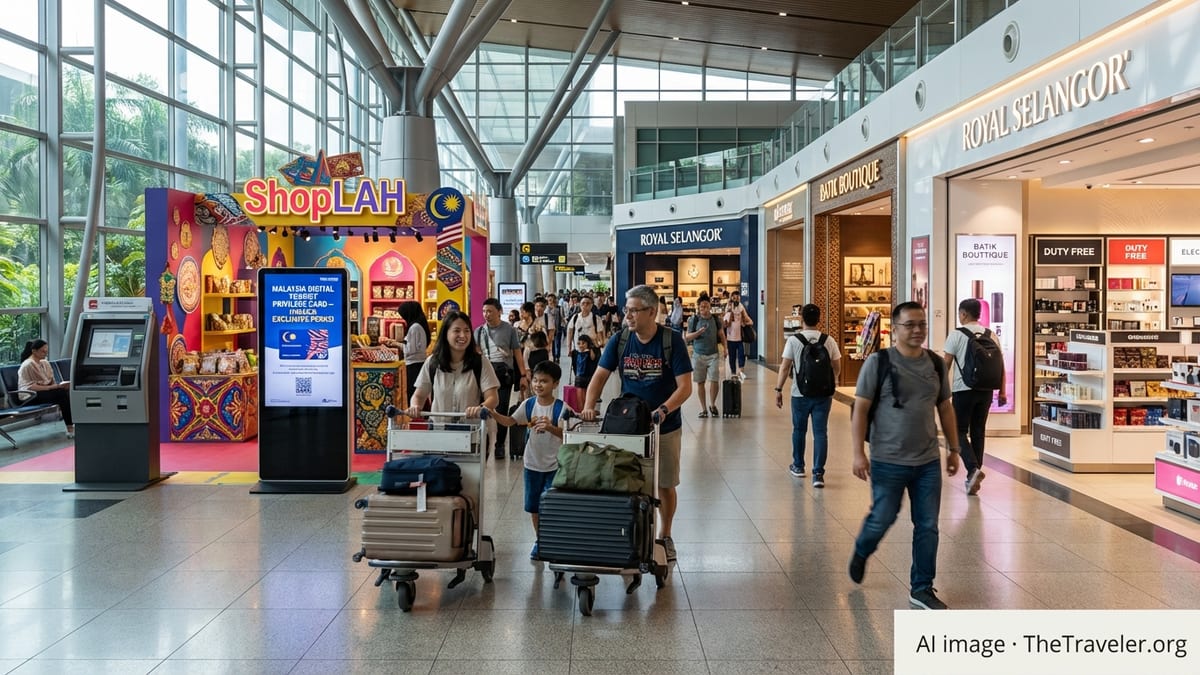
Malaysia Airports has unveiled ShopLAH, a sweeping new airport retail and dining initiative that aims to turn its terminals into high-spending, culture-rich gateways ahead of Visit Malaysia 2026, signalling a major push to convert soaring passenger traffic into greater tourism receipts.
A Strategic Retail Play for a Tourism Super Year
Launched this week at Kuala Lumpur International Airport Terminal 1, ShopLAH is positioned as an "always on" campaign that seeks to embed shopping, dining and cultural storytelling into every stage of the passenger journey. The initiative comes as Malaysia prepares for Visit Malaysia 2026, a flagship tourism year that the government hopes will draw record arrivals and spending across the country.
For Malaysia Airports, which manages Kuala Lumpur International Airport and a network of gateways nationwide, ShopLAH is both a commercial and strategic pivot. The operator is moving beyond traditional duty free and souvenirs toward a more curated, locally anchored retail mix that is designed to keep passengers in the terminal longer and spending more, while also reinforcing Malaysia’s identity the moment travellers step off the plane.
Executives describe the campaign as a long-term platform rather than a short-lived promotion. It will run continuously across terminals, with seasonal overlays tied to major festivals, school holidays and key milestones in the Visit Malaysia 2026 calendar. By sustaining visibility and engagement over several years, Malaysia Airports is betting that ShopLAH can materially lift non-aeronautical income and help position the country as a regional leader in travel retail.
From Transit Hub to Shopping Destination
The ShopLAH initiative builds on a multi-year commercial reset that has transformed the retail landscape at Kuala Lumpur International Airport. After extensive refurbishment works and tenant reshuffles, passengers are now greeted by a broader range of brands, more food and beverage options and design concepts that emphasise local culture, from batik motifs to Malaysian landmarks subtly woven into store interiors.
Recent data from Malaysia Airports illustrates the scale of the opportunity. In 2025, passenger movements across its Malaysian network reached 104.5 million, with around 44 million individual sales transactions recorded. That represented almost 29 percent growth in transactions year on year, underpinned by stronger international traffic and a renewed appetite for travel retail among both visitors and returning Malaysians.
Key categories have been expanding at a rapid clip. Food and beverage sales grew by nearly one fifth over the period, while gifts and souvenirs surged by more than 40 percent, emerging as the fastest growing segment. Within confectionery, Malaysian brands now contribute roughly one third of chocolate sales, a sign that the push to showcase homegrown products is resonating with travellers and delivering meaningful commercial returns.
Tourist Privilege Card Targets High-Value Visitors
At the heart of ShopLAH is a new digital Tourist Privilege Card, integrated into the MYAirports mobile application used across the operator’s network. Aimed squarely at international travellers, the card provides instant discounts, exclusive shopping privileges and rewards at participating retail and food outlets in terminals across Malaysia.
The card is designed to be frictionless. Visitors can register in-app, then scan a digital identifier at checkouts to unlock benefits on everything from local fashion labels and artisanal chocolates to quick-service dining and specialty cafes. By consolidating offers into a single tool, Malaysia Airports is attempting to drive both basket size and frequency of spend, while collecting valuable data on visitor preferences and behaviour.
The move aligns with a broader shift within global travel retail, where airport operators are harnessing loyalty-style programmes to integrate shopping into the wider travel planning process. For Visit Malaysia 2026, the Tourist Privilege Card will serve as a bridge between the airport gateway and the country’s tourism ecosystem, encouraging visitors to begin their spending journey on arrival and potentially extending that engagement through push notifications and themed campaigns tied to destinations beyond the terminal.
Local Brands and Cultural Storytelling Take Centre Stage
One of ShopLAH’s most distinctive features is its emphasis on Malaysian brands and creative talent. The campaign foregrounds homegrown names such as Oriental Kopi, Kapten Batik and Serai, alongside souvenir and confectionery labels that celebrate national flavours and design. The objective is to create a sense of place that distinguishes Malaysian airports from competitors in the region and offers travellers products they cannot easily find elsewhere.
To underline that commitment, Malaysia Airports has worked with a group of local artists to create limited-edition foldable keepsake bags for the ShopLAH rollout. The designs, by illustrators including Hsieying, Kideika, Daisy Dalia and Afi Sulaiman, draw inspiration from Malaysian heritage, urban streetscapes and the country’s celebrated food culture. Distributed as part of in-terminal promotions, the reusable bags are intended to be both a practical shopping companion and a tangible memento of the journey.
Beyond merchandise, cultural storytelling is being woven into the physical airport environment. Exhibition spaces, including at the Satellite Central Hub in Kuala Lumpur International Airport Terminal 1, are being used to stage rotating showcases of Malaysian art, textiles and traditional attire. A recent display focused on the kebaya, highlighting regional variations of the classic garment. For inbound tourists, such installations offer an immediate immersion into local culture; for Malaysians, they reinforce a sense of pride and recognition in familiar motifs.
Experiential Retail: From LEGO Installations to Forest-Inspired Hubs
The ShopLAH platform is also acting as a springboard for larger experiential collaborations that blur the lines between retail, entertainment and destination marketing. In January, Malaysia Airports and the LEGO Group unveiled the "Let’s Go Malaysia 2026" campaign at Kuala Lumpur International Airport, transforming parts of Terminal 1 into an immersive LEGO-themed space that reimagines the country’s landmarks in miniature brick form.
The installation, which runs through mid-2026, is designed to appeal to families and younger travellers, who are invited to explore a "mini airport within an airport" and interact with Malaysia-inspired builds. For retailers, the partnership creates a high-traffic focal point that directs passengers towards adjacent shops and branded experiences, while for tourism officials it provides a visual, shareable introduction to the country’s iconography at the start of a trip.
Within the terminal, Malaysia Airports is complementing such collaborations with its own experiential infrastructure. The forest-themed central court at Terminal 1 is undergoing a substantial expansion, creating a premium hub that blends lush interior landscaping with a ring of luxury boutiques, dining concepts and relaxation spaces. The goal is to encourage dwell time in a setting that feels more like a high-end urban precinct than a traditional transit hall, turning shopping into a natural extension of the travel experience.
Responding to Price Concerns and Value Expectations
The launch of ShopLAH comes against a backdrop of public debate about airport pricing in Malaysia. In recent weeks, Tourism, Arts and Culture Minister Tiong King Sing has highlighted complaints from travellers who perceive airport goods, including duty free chocolates and meals, as expensive compared with city outlets. He has urged Malaysia Airports to examine the cost structure faced by concessionaires, including rentals and operating overheads, in order to enable more competitive pricing.
Malaysia Airports has not yet announced specific changes to its commercial terms, but officials acknowledge that price perception is a critical factor in converting footfall into sales. The Tourist Privilege Card and ShopLAH-exclusive promotions are being framed as part of the response, offering tangible discounts and bundled deals that can help narrow the gap between terminal and downtown prices, particularly for families and group travellers.
Industry observers say the challenge for Malaysia Airports will be to balance value with the premium positioning it is seeking for its retail offer. Global travellers are accustomed to high-quality brands and elevated design in leading hubs, but they also expect transparent pricing and meaningful savings on duty free staples. ShopLAH’s success is likely to be judged in part on whether it can recast Malaysian airports as places where visitors feel both inspired to spend and confident they are getting fair value.
Upgraded Terminals to Support Retail Ambitions
ShopLAH is being rolled out alongside a series of infrastructure and service upgrades designed to make airports more comfortable and intuitive to navigate, further supporting retail performance. Kuala Lumpur International Airport Terminal 1 has already seen a wave of enhancements, from improved wayfinding and expanded family facilities to upgraded security and immigration flows aimed at reducing bottlenecks and freeing up more time airside.
Terminal 2 is in the midst of a transition from its origins as a primarily low-cost hub to a full-service terminal, with new lounges, extended retail corridors and refreshed food courts coming on stream. Across both terminals, Malaysia Airports has introduced thousands of new baggage trolleys, more wheelchairs and baby strollers, expanded buggy services and upgraded prayer rooms, alongside rest zones featuring massage chairs and entertainment screens for long-haul passengers in transit.
These investments reflect a recognition that retail performance is closely linked to the broader quality of the passenger journey. If travellers face delays at aerotrains, immigration counters or baggage belts, they are less likely to browse or dine at leisure. By smoothing these touchpoints, Malaysia Airports aims to create an environment in which ShopLAH’s offers, experiences and cultural showcases can be fully appreciated.
Aligning Airport Commerce with National Tourism Goals
For Malaysia’s tourism authorities, ShopLAH is emerging as a key piece of the Visit Malaysia 2026 puzzle. The country has been previewing its upcoming tourism year at major travel trade platforms in Europe and the Middle East, promoting a mix of nature, heritage, gastronomy and urban experiences. Airports, as the primary gateways for international visitors, are central to that narrative.
By using terminals as stages for cultural programming, locally rooted retail and targeted value propositions for foreign visitors, the ShopLAH campaign reinforces national branding messages that extend far beyond the runway. It also creates new opportunities for cross-promotion, such as featuring regional destinations in in-terminal exhibitions, showcasing state-led culinary campaigns in food courts, or tying airport shopping rewards to attractions and hotels in cities and resort areas.
With less than a year before Visit Malaysia 2026 formally begins, Malaysia Airports is under pressure to ensure its transformation keeps pace with rising expectations from tourism stakeholders. Early indicators from sales and passenger engagement point to strong momentum, but the real test will come as the campaign scales up during peak travel seasons. If ShopLAH succeeds, Malaysia’s airports could evolve from mere transit points into powerful engines of tourism spending and storytelling, amplifying the country’s appeal at a time when competition for global travellers is more intense than ever.