

Malaysia’s airports are the main gateways to a country that stretches from the skyscrapers of Kuala Lumpur to the beaches of Penang and the rainforests of Borneo. For many travellers, Kuala Lumpur International Airport and Penang International Airport will be their first impressions of the country, with a growing network of regional airports providing onward access to islands and secondary cities. This guide explains how to navigate Kuala Lumpur, Penang and key regional airports, with a focus on practical details, current transport options and what to expect on the ground.
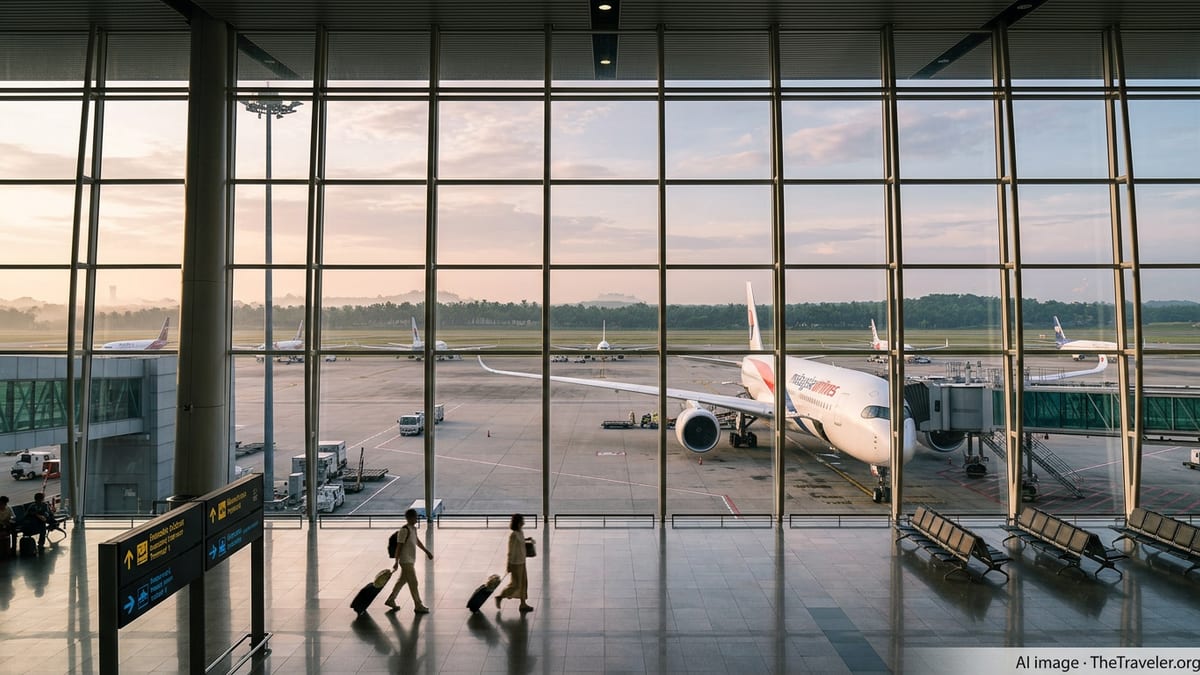
Kuala Lumpur International Airport: Malaysia’s Main Gateway
Kuala Lumpur International Airport, usually shortened to KLIA, is Malaysia’s busiest aviation hub and the primary entry point for long haul travellers. Located in Sepang about 50 to 60 kilometres south of central Kuala Lumpur, it handles a mix of full service and low cost traffic and serves as a key connector between Europe, the Middle East, Asia and Australia. The airport is spread across two main passenger terminals, known simply as Terminal 1 and Terminal 2, which are several kilometres apart and operate as separate facilities.
Terminal 1 is the original KLIA building and today accommodates a broad range of full service carriers alongside Malaysia Airlines. Flights operate from a main terminal and an international satellite building connected by an automated people mover system, commonly referred to as the Aerotrain, with shuttle buses activated during any periods of disruption. Terminal 2, opened in 2014 as a purpose built low cost facility, is the home base for AirAsia and several other budget airlines and has its own dedicated ground transport hub and rail station. There is no airside connection between the two terminals, so changing terminals always involves entering Malaysia and using landside transport.
The airport has grown steadily into one of Southeast Asia’s larger hubs, with busy peak periods in the early morning, late afternoon and late evening when long haul flights tend to bank. Queues at immigration and security can fluctuate, so travellers should allow generous connection times if they need to change airlines or terminals on separate tickets. For those in transit on a through ticket with baggage checked to final destination, connections within the same terminal are usually manageable, but tight self arranged connections that involve immigration, baggage reclaim and a terminal change carry far more risk.
KLIA operates around the clock but some services, such as certain retail outlets and rail frequency, can be reduced late at night. Flight schedules can also shift seasonally as airlines adjust capacity. It is sensible to recheck arrival or departure details close to travel and to pay particular attention to which terminal is used by each carrier, as this has direct implications for ground transport choices and transit planning.
Terminals, Layout and Transferring at KLIA
Understanding the layout of Kuala Lumpur International Airport is essential for smooth movements between flights. Terminal 1 consists of a multi level main building for both arrivals and departures, linked to a satellite building that handles most international gates. The airside connection between the main terminal and the satellite is via the Aerotrain, with shuttle buses used when the train is undergoing maintenance or temporary suspension. Journey times are short but queues can form at peak times or during disruptions, so travellers should move promptly from immigration or security to their onward gate.
Terminal 2 is a large, modern low cost terminal with a linear concourse and piers stretching out from a central arrivals and departures hall. It was built with high volume point to point traffic in mind, so walking distances can be significant, especially to the far end of the piers. However the layout is relatively intuitive, with clear zoning for domestic and international departures and extensive retail and dining options concentrated around the central area. There is no Aerotrain in Terminal 2 and all movements are on foot within the secure area once past security and immigration.
Transferring between Terminal 1 and Terminal 2 always takes place landside. Passengers must clear immigration, collect any checked luggage if not through checked, and then use ground transport between the terminals. The airport rail link, known as the Express Rail Link, connects both terminals with stops at Terminal 1 and Terminal 2 and runs to and from KL Sentral in the city. There are also shuttle buses and regular road taxis and ride hailing services that can move travellers between the terminals in normal traffic conditions in roughly 10 to 15 minutes, although journey times can be longer during peak road traffic or heavy rain.
For same day connections that involve a change of terminal and recheck of luggage, many travellers aim for at least three to four hours between flights, especially if they are unfamiliar with the airport or arriving at historically busy times. This allows a margin for queues at passport control, possible delays at baggage belts and some buffer if there is disruption to the Aerotrain or road access. Those with through tickets on a single airline group may be offered protected connections within the same terminal, which are less risky, but it is still wise to minimise unnecessary terminal changes when planning itineraries.
Getting To and From Kuala Lumpur: Trains, Buses and Taxis
The link between Kuala Lumpur International Airport and the city centre is well established, with rail, bus, taxi and ride hailing options suited to different budgets and time constraints. The fastest public transport option is the KLIA Ekspres, a non stop high speed train that runs between KL Sentral and the airport. Services typically operate every 20 minutes during much of the day and take around half an hour between KL Sentral and Terminal 1, with an additional few minutes onward to Terminal 2. Trains are air conditioned, offer generous luggage space and are generally reliable, though frequency can reduce during off peak hours and overnight.
Alongside the express service, the KLIA Transit operates on the same line but stops at several intermediate stations between the city and the airport. This suits passengers staying in accommodation near those suburbs or those connecting to specific commuter rail lines. Journey times are slightly longer than the express service but still competitive compared with road transport, particularly during rush hour. Both rail services share platforms at the airport, so travellers should check train type and stopping pattern before boarding.
Buses provide a cheaper but slower alternative between the airport and Kuala Lumpur. From Terminal 1, airport coaches typically run to major city transport hubs such as KL Sentral or other long distance bus terminals on the outskirts of the city. From Terminal 2, several operators run services to KL Sentral and other destinations. Travel times by coach can range from under an hour in light traffic to significantly longer during evening peaks or heavy rain. Buses have luggage holds and are usually comfortable, but they are more exposed to congestion on expressways leading into the city.
Metered taxis and app based ride hailing services are widely used for door to door trips. Official airport taxi counters in the arrivals halls at both terminals sell fixed price coupons for budget or premier taxis to central areas and surrounding suburbs. Ride hailing services can often be marginally cheaper and are convenient for those comfortable using smartphone apps, with clearly signed pick up zones. In both cases prices can be influenced by time of day, traffic and any surcharges. For late night arrivals when rail and some bus services operate less frequently, taxis and ride hailing become the primary options, so travellers should factor this into their budgeting.
Penang International Airport: Gateway to the Pearl of the Orient
Penang International Airport sits on the southern part of Penang Island and serves the historic city of George Town as well as the beach resorts of Batu Ferringhi and the industrial zones around Bayan Lepas. It is one of Malaysia’s busiest secondary airports, handling a mix of domestic flights from Kuala Lumpur and other Malaysian cities, alongside international services from regional hubs in Singapore, East Asia and occasionally seasonal routes from further afield. For many visitors heading straight to Penang’s heritage streets or coastal resorts, this airport replaces Kuala Lumpur as their first point of contact with the country.
The terminal at Penang International is more compact than KLIA, which makes orientation relatively straightforward. Arrivals and departures share the same building, with domestic and international areas clearly separated by signage and control points. Walking distances are shorter than at the main Kuala Lumpur terminals, though bottlenecks can still form at security and immigration during busy holiday periods and long weekends when domestic leisure traffic peaks. The airport has been undergoing incremental upgrades to ease passenger movement and improve the experience, particularly in departures where check in and security areas see the highest demand.
Facilities at Penang International include a modest but growing selection of cafés, fast food outlets, sit down restaurants and retail shops selling travel essentials, local snacks and souvenirs. Wi fi is usually available throughout the terminal and seating has been improved in some waiting areas, though space can feel tight at peak times. For those with longer waits, there are air conditioned landside areas where it is possible to sit with refreshments before passing through security closer to boarding time. As with many mid sized regional airports, overnight options inside the terminal are limited, so most travellers choose to stay in hotels in George Town or near the airport if they have an early departure.
Passenger profiles at Penang are mixed. The airport serves large numbers of foreign tourists drawn to Penang’s food and heritage, business travellers linked to the island’s technology and manufacturing sectors, as well as domestic holidaymakers from other parts of Malaysia. This mix can make queues and usage patterns somewhat unpredictable, with domestic morning departures and evening international flights often producing the highest surges. Allowing additional time for check in and security is advisable during major holiday seasons and when regional school holidays coincide.
Getting In and Out of Penang International Airport
Penang International Airport is well placed for road access to both George Town and the industrial zones along the eastern shore of the island. The main airport road connects quickly to the coastal expressway and central spine roads, with journey times to the historic core of George Town typically around 30 to 40 minutes in light to moderate traffic. Travel to the main resort strip at Batu Ferringhi can take closer to an hour or more due to narrower coastal roads and frequent local traffic, particularly in the evenings and at weekends.
Public buses provide the most economical way of travelling between the airport and various parts of Penang Island. Services are operated by the local bus company and link the airport with George Town, Komtar, the ferry terminal to the mainland and several residential districts. Buses depart from stops just outside the terminal building and fares are low, but luggage storage can be limited and services may be crowded at peak times. Travellers choosing this option should be prepared for slower journeys with multiple stops and should check the most up to date route numbers and schedules before travelling.
Taxis and ride hailing vehicles are the preferred choice for many visitors. A prepaid taxi counter in the arrivals hall sells fixed price coupons to popular areas across the island, including George Town and the northern beach districts. Ride hailing apps are widely used and often offer slightly more flexible pricing and the convenience of in app payment, with clear pick up points outside arrivals. For late night arrivals when bus services are less frequent or do not run to certain neighbourhoods, taxis and ride hailing may be the only practical options.
Car rental is available at Penang International for those who plan to explore the island or nearby mainland states in more depth. Several international and local agencies operate counters in the terminal, offering a range of vehicles. Driving conditions on the island are generally manageable for experienced drivers, though rush hour around George Town can be busy and parking in the heritage core is limited. As always, travellers should familiarise themselves with local traffic rules, toll systems and parking regulations before getting behind the wheel.
Key Regional Airports Across Peninsular and East Malaysia
Beyond Kuala Lumpur and Penang, Malaysia maintains a network of regional airports that connect smaller cities, industrial centres and tourist destinations to the main domestic and international routes. On the peninsula, important regional gateways include Sultan Abdul Aziz Shah Airport in Subang near Kuala Lumpur for turboprop and some regional jet services, Sultan Azlan Shah Airport in Ipoh, Sultan Ismail Petra Airport in Kota Bharu and Sultan Mahmud Airport in Kuala Terengganu. Further south, Senai International Airport serves the city of Johor Bahru and provides a secondary access point to the wider Singapore region for some travellers.
In East Malaysia, Kuching International Airport serves the capital of Sarawak and the surrounding region, while Kota Kinabalu International Airport is the major entry point to Sabah and the wider North Borneo region. Other important airports include Miri, Sibu, Bintulu and Labuan, each playing a role in connecting remote communities, resource projects and smaller cities. Many of these airports are operated by Malaysia’s main airport operator and have been progressively modernised, though facilities and size vary considerably from one location to another.
Regional airports typically feature single terminal buildings with straightforward layouts, shorter walking distances and fewer amenities than the large hubs. Check in, security and boarding are usually located within close proximity of one another, which can make the experience more relaxed, provided flights are on time. However, because these airports often have more limited staffing and fewer backup options, operational disruptions or weather events can have a more immediate impact on schedules.
Domestic travellers often use these regional airports in combination with KLIA or Penang, flying first to a major hub and then onward to smaller cities. When planning such itineraries, it is prudent to allow extra time between domestic and international sectors, especially in the rainy seasons when afternoon thunderstorms can cause delays. While some regional airports support immigration facilities for cross border flights, many still function primarily as domestic gateways, so passengers connecting to international services will usually need to transfer at a larger hub.
Facilities, Services and Practical Tips for Malaysian Airports
Facilities at Malaysian airports have improved steadily over the years, especially at KLIA and Penang. Travellers can expect air conditioned terminals, basic banking and currency exchange services, duty free and general retail outlets, and a mix of local and international food options. Muslim prayer rooms are standard, and family friendly facilities such as baby care rooms are increasingly common. Free public wi fi is usually available in main terminals, although performance can vary and may slow at peak times.
Several lounges operate at KLIA and, to a lesser extent, at Penang and larger regional airports. These include airline run lounges for premium passengers and frequent flyers, as well as independent pay per use lounges accessible through various membership schemes or one off payments. They typically offer comfortable seating, food and beverages, showers in some locations and quieter working spaces. Access rules and operating hours can change, so travellers who plan to rely on lounge access should confirm current details close to departure.
Accessibility has been receiving greater attention across Malaysian airports, with efforts to improve lifts, ramps, signage and boarding procedures for passengers with reduced mobility. Nonetheless, standards can still be inconsistent between airports and even between terminals. Those who require assistance are strongly encouraged to notify their airline in advance so that arrangements can be made with ground handling teams. This can include wheelchair support from check in to the gate, priority boarding and assistance on arrival.
Security procedures at Malaysian airports generally follow international norms, with standard checks on cabin baggage and personal items and separate screening for liquids, aerosols and gels. Passengers should expect to remove laptops and larger electronics during screening and may encounter variations in how strictly rules are applied at different airports. It is sensible to arrive with a margin of time, keep carry on baggage organised for quick inspection and comply with the instructions of security staff to keep queues moving smoothly.
Planning Connections, Visas and Seasonal Considerations
When planning flights through Kuala Lumpur, Penang or regional airports, travellers should pay particular attention to connection times, visa requirements and the impact of seasonal weather. Malaysia permits many nationalities to enter visa free for short stays, but rules are subject to change and can vary depending on passport, purpose of visit and length of stay. This becomes especially relevant for transit passengers who need to clear immigration to change terminals, retrieve baggage or overnight in a hotel. For some travellers, a layover that would be simple on paper may in practice require a formal entry into Malaysia.
Connections that involve self booked itineraries on separate airlines deserve careful scrutiny. A short layover might appear adequate when tickets are issued separately, but any delay on the incoming flight, long queues at immigration or baggage delays could quickly erode this margin. Travellers who must change terminals at KLIA, or who are moving from an international flight to a domestic sector at a regional airport, often prefer to schedule generous gaps or consider overnight stops to reduce risk.
Malaysia’s tropical climate also plays a role in airport operations. Afternoon and evening thunderstorms are common in many regions at certain times of year and can prompt temporary ground stops or holding patterns for arriving aircraft. In East Malaysia and along parts of the east coast, heavy monsoon rains may occasionally disrupt schedules more significantly. While most delays are moderate, passengers with tight onward connections should be aware of these seasonal patterns and, where possible, avoid pairing vulnerable short connections with times of year prone to weather disruption.
Finally, travellers should remain alert to ongoing changes in transport infrastructure around airports, such as upgrades to rail links, roadworks on access highways or terminal refurbishments. These projects are often aimed at long term improvements but can introduce temporary detours, adjusted pick up zones or altered bus routes. Checking recent information in the days before travel can help ensure that assumptions about transfer times or available services still hold true.
The Takeaway
Malaysia’s airport network is extensive and reasonably well developed, led by Kuala Lumpur International Airport as the main global hub and complemented by Penang and a string of regional gateways. Each airport has its own character and level of facilities, but they share common features: relatively straightforward layouts, improving transport links and a focus on connecting domestic regions with regional and long haul routes. Understanding the basic structure of KLIA’s terminals, the compact nature of Penang International and the more modest scale of regional airports goes a long way toward reducing stress on the day of travel.
For most visitors, the most important practical steps are to confirm terminal details in Kuala Lumpur, choose transport options that balance cost and reliability, and build adequate buffers into any self arranged connections. Awareness of visa rules, seasonal weather patterns and the limits of smaller airports can further reduce the risk of unpleasant surprises. While no trip is entirely free from disruption, informed planning makes it far more likely that Malaysia’s airports will serve as smooth gateways to the country’s cities, beaches and rainforests rather than obstacles on the journey.
Whether you are flying directly into Penang for a short break, connecting through Kuala Lumpur on a longer itinerary or venturing onward to Borneo via a regional airport, taking a little time to understand how these facilities work will reward you with a calmer, more predictable travel experience. That, in turn, leaves more time and energy to focus on what matters most: exploring Malaysia itself.
FAQ
Q1. Is there an easy way to transfer between Terminal 1 and Terminal 2 at Kuala Lumpur International Airport?
Passengers must transfer landside between Terminal 1 and Terminal 2 using rail, bus, taxi or ride hailing. There is no airside connection, so you need to clear immigration if arriving internationally, collect any checked bags if they are not checked through, and then use ground transport between the terminals. Allow at least several hours for a safe transfer, particularly at busy times.
Q2. How long does it take to reach central Kuala Lumpur from the airport?
The KLIA Ekspres train typically takes around 30 minutes from Terminal 1 to KL Sentral, with a few extra minutes from Terminal 2. By taxi or ride hailing, journeys usually range from about 45 minutes to more than an hour depending on traffic and weather. Buses can take a similar or longer time due to intermediate stops and congestion.
Q3. Do I need a visa to transit through Kuala Lumpur if I change terminals?
Many nationalities can enter Malaysia visa free for short stays, but rules differ by passport and can change. If your transit involves clearing immigration, collecting luggage or staying overnight, you are effectively entering Malaysia and must meet the country’s entry requirements. It is essential to check the latest official visa information for your nationality before booking a terminal change.
Q4. How early should I arrive at Penang International Airport before my flight?
For domestic flights, arriving about two hours before departure is usually sufficient, while for international flights many travellers allow at least three hours. During public holidays, long weekends or school holiday periods, queues at check in, security and immigration can lengthen, so adding extra time provides a useful buffer.
Q5. What are the main transport options from Penang International Airport to George Town?
Travellers can choose between public buses, prepaid taxis, ride hailing services and rental cars. Buses are the most economical but make multiple stops and can be crowded. Prepaid taxis and ride hailing vehicles provide faster, more direct journeys to hotels in George Town or beach areas, at higher but still reasonable cost.
Q6. Are Malaysian regional airports suitable for tight connections?
Regional airports often have simple layouts and quick walking times, but they can be affected by weather and have fewer fallback options during disruptions. Because many regional flights connect to or from long haul services at larger hubs, it is safer to avoid very tight connections and instead plan generous transfer windows, especially in rainy seasons.
Q7. Is wi fi widely available at Malaysian airports?
Most major Malaysian airports, including Kuala Lumpur and Penang, offer free public wi fi in their terminals. Speeds can vary and may slow at busy times, so travellers who need reliable connectivity for work may wish to keep a local SIM card or roaming plan as a backup.
Q8. Are the airports in Malaysia accessible for travellers with reduced mobility?
Larger airports like KLIA and Penang have lifts, ramps, accessible restrooms and designated assistance services, although quality and consistency can vary. Passengers who need support should notify their airline in advance so that wheelchair assistance or other help can be arranged at check in, security, boarding and on arrival.
Q9. Can I sleep overnight inside Kuala Lumpur International Airport?
Terminal 1 and Terminal 2 operate 24 hours and many travellers rest in public seating, especially during overnight connections. However, lighting and noise make true sleep difficult for some. Airside and landside transit hotels and nearby airport hotels provide more comfortable options, although availability and prices vary by season and demand.
Q10. Which Malaysian airport should I use if I want to visit Borneo?
For Sarawak, Kuching International Airport is the main gateway, while Kota Kinabalu International Airport serves Sabah and much of northern Borneo. Both are connected by frequent domestic flights from Kuala Lumpur and other Malaysian cities, and also handle selected international services from regional hubs. Travellers typically connect through KLIA or, less commonly, Penang on their way to these airports.