

From the driverless metro in Kuala Lumpur to jungle trains on the east coast, Malaysia offers a dense and varied web of ground transport that makes getting around the country surprisingly straightforward. Recent ridership highs on rail and bus networks show that both locals and visitors are relying on public transport more than ever, while app-based ride-hailing and traditional taxis continue to fill the gaps between stations and remote destinations. For travelers, understanding the strengths, quirks, and practical details of each option is the key to moving confidently between airports, cities, highlands, islands, and rural towns.
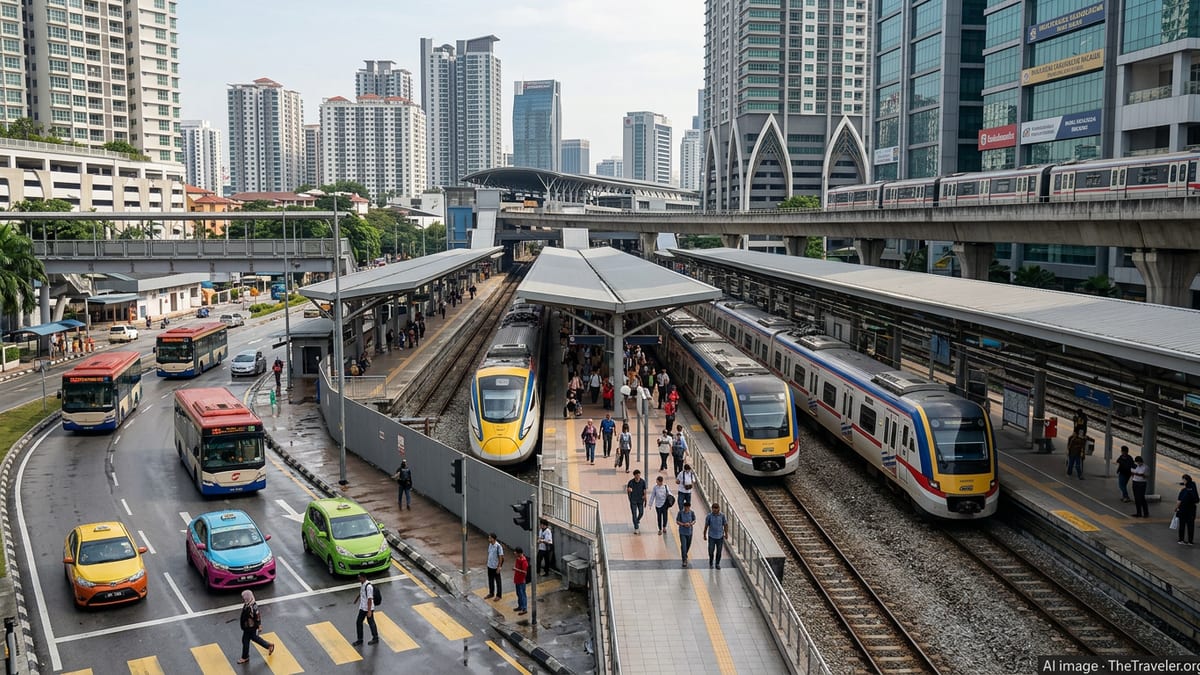
Understanding Malaysia’s Ground Transport Landscape
Malaysia’s transport network reflects its geography and development pattern: a busy, transit-rich Klang Valley anchored by Kuala Lumpur, well-served intercity corridors along the west coast of Peninsular Malaysia, and more limited but improving links in the east coast states and across Sabah and Sarawak. Rail and bus ridership in and around Kuala Lumpur has risen notably since 2023, with operator statistics indicating that on peak days in late 2025 combined rail and bus trips exceeded one and a half million journeys. While those numbers mostly reflect local commuters, they also show that visitors will find a system that is increasingly frequent, integrated, and used in real life, not just on paper.
For visitors, the most commonly used ground transport options are urban rail systems, intercity trains, long-distance express buses, ride-hailing cars, airport shuttles, and, in certain destinations, car rentals. Traditional metered taxis, informal minivans, and motorcycle taxis play a supplementary role. Each mode has its niche: trains excel on the main north-south spine of the peninsula, express buses dominate cross-country routes and late-night departures, while ride-hailing is the default for door-to-door trips in most cities and tourist hubs.
Travelers should be aware that service quality, information, and payment systems can vary considerably between regions and operators. Klang Valley’s LRT, MRT, and monorail lines are modern, frequently upgraded, and widely used, while some rural buses remain basic and infrequent. Intercity train services now range from air-conditioned, high-speed electric trains on the west coast to slower diesel-hauled services linking smaller towns and the east coast. Planning ahead, especially during holidays and weekends, is essential for snagging tickets on popular corridors such as Kuala Lumpur to Penang or Johor Bahru.
Public transport policy in Malaysia has placed increasing emphasis on shifting people out of private cars, which still dominate travel. The result is a steady expansion of rail lines, station upgrades, and bus fleet renewal. For visitors, this translates into progressively smoother connections between train stations, bus terminals, and surrounding neighborhoods, supported by feeder buses, park-and-ride facilities, and better signage. Still, last-mile issues persist, and in practice many travelers still combine public transport with ride-hailing or taxis to complete their journeys.
Urban Rail Networks: LRT, MRT, Monorail, and Komuter
In Kuala Lumpur and the wider Klang Valley, urban rail is often the fastest way to move between hotels, business districts, and major attractions. The main networks are the LRT lines, the newer high-capacity MRT lines, the city-center monorail, and KTM Komuter suburban trains. Together they serve hundreds of thousands of passengers daily and connect key points such as KL Sentral, Bukit Bintang, KLCC, Bangsar, Petaling Jaya, and the growing suburbs. Trains are air-conditioned, relatively punctual outside of occasional disruptions, and run from early morning to late evening, with shorter intervals at peak times.
Visitors quickly learn that KL Sentral functions as the central interchange where multiple rail lines intersect alongside airport trains and intercity services. From here, it is straightforward to transfer to the MRT to reach trendy areas like Bukit Bintang, or to the LRT for landmarks such as KLCC and the Petronas Towers. The monorail caters mainly to central city trips, including popular hotel zones. KTM Komuter trains link Klang, Seremban, and other outlying towns, offering an economical way for day trips and commuter-style travel with basic, functional rolling stock.
Ticketing has grown more integrated, with reloadable cards and contactless payments increasingly accepted across services, though visitors may still encounter different ticketing systems between urban rail and KTM Komuter. Station signage typically appears in Malay and English, and announcements are bilingual, which helps international travelers. Stations at major attractions and hubs usually have clear wayfinding, but in smaller stops and outlying areas travelers should not rely on detailed maps or tourist information and may want to plan routes in advance.
Outside Klang Valley, urban rail is more limited. Penang has focused largely on buses and ferries, while Johor Bahru and other growing cities rely strongly on buses, minibuses, and ride-hailing for local movement. However, KTM Komuter-style services are slowly extending in the southern corridor as new electrified tracks open. For now, visitors arriving in secondary cities should expect to depend on buses and ride-hailing rather than city metros, but those starting or ending journeys in Kuala Lumpur can take full advantage of one of Southeast Asia’s more comprehensive urban rail networks.
Intercity Trains: ETS, KTM Intercity, and the Jungle Line
For many travelers, Malaysia’s most attractive ground transport option between major west-coast cities is the ETS, or Electric Train Service, operated by Keretapi Tanah Melayu. These modern, air-conditioned trains run on electrified, largely double-tracked lines from the Thai border at Padang Besar down through Butterworth for Penang, Ipoh, Kuala Lumpur, Gemas, and now onward to Johor Bahru. The complete north-south corridor on the peninsula is gradually being brought under ETS coverage, with services and timetables adjusted as new train sets and infrastructure come online.
ETS trains are popular for their relative speed, comfort, and reliability compared with buses and driving. Journey times between Kuala Lumpur and Ipoh or Butterworth are competitive with road travel, especially when considering highway congestion and rest stops. Fares are generally mid-range, with standard-class tickets often representing good value for the level of comfort, and business-class options available on some services. Travelers should expect dynamic pricing based on demand, seat class, and distance, and should book early for weekends, school holidays, and festival seasons when trains can sell out.
Alongside ETS, diesel-hauled KTM Intercity trains continue to serve certain routes, especially linking the southern and eastern parts of Peninsular Malaysia and providing cross-border connections near Thailand and Singapore. Some older west-coast services have been retired or restructured as ETS coverage expands, but on the east coast and less electrified segments, classic Intercity trains remain the backbone of long-distance ground travel. Carriages are typically more basic than ETS units, with a mix of air-conditioned classes, snack trolleys or simple cafeterias on some routes, and a slower but often more scenic ride.
Perhaps the most evocative rail experience is the so-called jungle railway on the east coast line between Tumpat in Kelantan and Gemas in Negeri Sembilan. This route, served by diesel trains, winds through dense forest, small villages, and river valleys, providing a window into rural Malaysia. Services on this line can be slower and less frequent than ETS, and comfort is simpler, but many travelers appreciate it as a journey in itself rather than just a way to get from A to B. Regardless of the route, it is wise to check current timetables, expect occasional schedule adjustments as new rolling stock enters service, and allow buffer time for onward connections.
Express and Local Buses: The Workhorses of Overland Travel
While trains attract attention, express buses remain one of the most widely used ground transport modes for both Malaysians and visitors. Dozens of private operators link Kuala Lumpur, Penang, Johor Bahru, Malacca, the east coast states, and smaller towns, often with multiple departures throughout the day and late night. Services depart from large terminals such as Terminal Bersepadu Selatan (TBS) in Kuala Lumpur, which functions as a modern hub with ticket counters, waiting areas, food outlets, and connections to urban rail. For many routes that do not sit directly on the main railway lines, buses are the default choice.
Express buses range from basic, no-frills coaches to more comfortable services with reclining seats, air conditioning, and charging ports. Seating configurations vary, and some overnight buses offer more legroom or “VIP” layouts with fewer seats per row. Travelers should be cautious of very cheap offers from lesser-known operators, as maintenance and punctuality can differ. In general, mid-priced firms with established reputations offer a safer balance of cost and reliability. TBS and other major terminals have official ticket counters and recognized online platforms that help avoid touts and confusion.
Local and regional buses serve city neighborhoods, suburbs, and smaller towns. In Klang Valley, Rapid Bus fleets connect rail stations with residential areas, shopping centers, and office districts, usually with flat or zoned fares. Ridership on these services has risen alongside rail as commuters seek integrated journeys. Outside major cities, local bus networks can be sparse and irregular, often oriented around school and work peaks. Visitors relying on these services should check schedules in advance when possible and build flexibility into their plans, as headways can be long and real-time information limited.
On the island of Penang and in destinations like Kota Kinabalu and Kuching, city bus networks provide a cost-effective way to reach markets, museums, and beachfront areas. However, stop locations, last-bus times, and route changes are not always clearly advertised. Many travelers end up using buses for the main corridor and switching to ride-hailing or taxis for last-mile access. As with all road-based transport in Malaysia, allow for the possibility of traffic congestion, especially on holiday weekends, festive periods, and along coastal highways where single-carriageway stretches can create bottlenecks.
Ride-Hailing Apps and Taxis: The Last-Mile Lifeline
For many visitors, ride-hailing apps have become the most visible face of ground transport in Malaysia, especially in urban and tourist areas. Grab is the dominant player nationwide, with a very high share of the ride-hailing and taxi segment according to recent academic and market research. However, several competitors have emerged or expanded in recent years, including AirAsia Ride, Maxim, inDrive, and regional or niche apps catering to specific cities or vehicle types. This competition has broadened options in locations such as Kuala Lumpur, Penang, Johor Bahru, and selected secondary cities.
In practice, travelers usually find that Grab offers the broadest coverage and the fastest pickup times, particularly around airports, rail hubs, and central business districts. Fares are calculated upfront in the app and adjust based on distance, demand, and time of day. Surge pricing can appear in heavy traffic or rain, and travelers should be prepared for longer waits at peak commuting hours and after major events. Alternative apps can sometimes provide lower fares or better availability in certain neighborhoods, and locals increasingly keep more than one service on their phones to compare prices and waiting times.
Traditional metered taxis remain part of the landscape, especially at airports, transport terminals, and older hotel districts. Some can be hailed via ride-hailing apps, while others operate as standalone cabs. It is common advice to insist on the meter or to agree a fare in advance when the meter is not used. While many drivers are professional and helpful, occasional reports of overcharging persist, particularly around major tourist sites. Official taxi coupons or fixed-fare counters at some airports and terminals provide an extra layer of reassurance for new arrivals.
Motorcycle-based ride-hailing is more restricted in Malaysia than in some neighboring countries, though local rules and pilot schemes occasionally evolve. For most visitors, the primary app-based options will be cars and, in some cities, larger vehicles suitable for small groups or airport transfers. Safety standards generally align with regional norms: seat belts are expected in cars, child seats are uncommon unless pre-arranged, and weather conditions such as heavy rain can affect both driver availability and journey comfort. Travelers should factor in potential delays from sudden downpours and urban congestion when planning time-sensitive transfers.
Driving, Car Rental, and Private Transfers
Despite improvements in trains and buses, private cars remain the dominant mode of transport for Malaysians, and car rental is a realistic option for visitors who want flexibility beyond the main corridors. Rental companies, from international chains to local firms, operate at major airports and city centers, offering small hatchbacks through to larger vehicles. Rates are broadly competitive by regional standards, and booking ahead is strongly recommended for peak travel periods such as public holidays, school breaks, and major festivals.
Driving conditions in Peninsular Malaysia are generally good, with extensive highway networks linking major cities and well-maintained toll expressways along the west coast. Road signage is usually in Malay and English, and navigation apps work effectively. However, drivers should prepare for dense traffic entering and leaving large urban areas, variable lane discipline, and occasional heavy rain that can quickly reduce visibility. Night driving on rural roads requires extra caution due to limited lighting, stray animals, and slower vehicles.
In East Malaysia, road quality and coverage can vary more dramatically between urban cores and interior regions. Around Kota Kinabalu and Kuching, main routes are usually paved and signposted, but drives into mountainous or rainforest areas may involve narrow, winding roads subject to landslides or flooding. Here, some travelers opt for private transfers or tours provided by local operators, who supply vehicles and drivers familiar with local conditions. These transfers, while more expensive than public transport, can save time and stress, especially when schedules are tight or language skills limited.
Self-driving also influences how travelers interact with other ground transport modes. Many hotels and attractions offer parking tied to city rail stations, making park-and-ride strategies feasible for day trips into central Kuala Lumpur. Others combine short flights with car rentals to explore Sabah or Sarawak at their own pace. Travelers considering driving should check current licensing requirements, insurance coverage, and deposit conditions carefully and remain flexible in case weather or roadworks force last-minute changes to route plans.
Ground Transport in East Malaysia and Rural Areas
Beyond the better-known corridors of Peninsular Malaysia, visitors encounter a very different ground transport reality in Sabah and Sarawak on the island of Borneo, as well as in rural peninsular districts. Here, buses, minibuses, vans, four-wheel-drive vehicles, and riverboats often share the role that trains and high-frequency urban rail play in the west. City bus networks in Kota Kinabalu and Kuching provide affordable urban mobility, but long-distance routes between towns may be infrequent, with departure times that change seasonally or according to demand.
In rural areas, particularly where plantation roads, logging tracks, or flood-prone routes dominate, four-wheel-drive vehicles are essential. Many lodges, homestays, and nature-based operators build transfers into their packages, picking up guests from airports or nearby towns. This hybrid model, where travelers use mainstream modes like flights, intercity buses, or ferries for the bulk of the distance and rely on specialized ground transport for the “last stretch,” is common across East Malaysia. It is also used in parts of the peninsula such as Taman Negara, Cameron Highlands, and remote island jetties.
Traditional minibuses and unbranded vans can still be found at some rural hubs and informal bus stands, serving villages not reached by mainline services. While these can be an authentic way to experience local life, they often lack formal timetables, fixed fares, or safety features such as seat belts for every passenger. Language barriers can also pose challenges when negotiating routes and prices. For visitors with limited time or little experience in similar environments, arranging travel through reputable guesthouses or tour operators can reduce uncertainty.
Digital platforms are slowly extending into more remote regions, with ride-hailing and logistics apps piloting services in secondary cities and tourist gateways. Nevertheless, coverage gaps remain, mobile reception is patchy in some interior areas, and cash payment may still be the norm on buses and informal services. Travelers who plan to rely on ground transport outside major cities should prepare by carrying small-denomination cash, confirming departure times in advance when possible, and allowing generous margins between connecting services.
Practical Tips for Using Ground Transport in Malaysia
Regardless of the mode chosen, certain practices make ground travel in Malaysia smoother. Booking intercity trains and long-distance buses in advance is strongly recommended, especially on popular routes such as Kuala Lumpur to Penang, Malacca, or Johor Bahru, and during high-demand periods surrounding major religious and school holidays. Online reservations allow travelers to secure seats and avoid long queues at terminals, though it remains possible to buy tickets on the day when demand is moderate.
Time management is essential. While ETS trains and urban rail services generally keep to schedule, buses and road-based transport are exposed to traffic fluctuations, weather, and incidents. Travelers connecting from a bus to a flight or from a train to a ferry should build in buffer time, ideally several hours, to accommodate delays. When in doubt, opting for an earlier departure or breaking a journey into two shorter stages can ease pressure and reduce the risk of missed connections.
Comfort considerations also matter in Malaysia’s warm, humid climate. Air conditioning on trains, buses, and ride-hailing cars is standard, but individual vehicles can differ in maintenance and temperature settings. Light layers help with transitioning between hot streets and cool interiors, and reusable water bottles are useful as many stations and terminals provide drinking water points or shops. On longer bus journeys, rest stops at roadside food courts are common but can vary in quality, so some travelers prefer to carry snacks.
Finally, safety and etiquette expectations align broadly with regional norms. Seat belts should be used whenever available, and valuables should be kept close, especially in crowded stations or when storing luggage in bus holds or overhead racks. Queuing is common at rail platforms and bus bays, and offering seats to elderly passengers or families with children is appreciated. With a blend of planning and flexibility, most visitors find that Malaysia’s ground transport system is not only practical but also a window into everyday life across a diverse and rapidly changing country.
The Takeaway
Malaysia offers a richer spectrum of ground transport options than many visitors expect, from modern metros and higher-speed trains to classic diesel lines, express coaches, ride-hailing cars, and four-wheel-drive transfers deep into rainforest and highland regions. Urban rail and intercity trains have expanded steadily, and rising ridership figures suggest that these systems are more than showcase projects; they are integral to how Malaysians move around their cities and between regions.
At the same time, express buses remain indispensable for routes beyond the main rail corridors, while ride-hailing has emerged as the de facto last-mile solution in most urban areas. In East Malaysia and rural districts, buses, vans, and private transfers take the lead, often coordinated through local accommodations and tour operators. This patchwork may appear complex at first glance, but with a bit of research and realistic expectations about travel times, it allows travelers to stitch together wide-ranging itineraries almost entirely by ground.
For those planning a trip, the most effective strategy is to use trains for the backbone of long-distance travel where available, buses to reach cities and towns off the railway, and ride-hailing or taxis for station-to-door links. Add car rental or arranged transfers where independence or remoteness demands it, and Malaysia’s varied terrain, from island ferries to mountain roads, becomes highly accessible. Ultimately, the country’s evolving transport network is not only about getting from point to point but also about experiencing the contrasts between bustling capitals, coastal highways, and quiet jungle tracks along the way.
FAQ
Q1. What is the most popular way for travelers to move between major cities in Peninsular Malaysia?
Intercity trains on the ETS network and express buses are the most commonly used options, with many travelers choosing ETS where available and buses for routes beyond the electrified rail corridors.
Q2. How reliable are Malaysia’s intercity trains compared with buses?
ETS trains are generally punctual and less affected by traffic than buses, while diesel Intercity services can be slower and more susceptible to operational constraints; buses offer more departure times but are exposed to congestion and road conditions.
Q3. Do I need to book ETS train tickets in advance?
Advance booking is strongly recommended, especially for weekends, public holidays, and popular routes such as Kuala Lumpur to Penang or Johor Bahru, as seats can sell out.
Q4. Is ride-hailing available outside Kuala Lumpur?
Yes, ride-hailing services such as Grab and several competitors operate in many cities and larger towns, though coverage and pickup times are generally best in urban centers and tourist hubs.
Q5. Are local buses a practical option for tourists?
In large cities and popular areas like Klang Valley and Penang, local buses are a low-cost way to get around, but in smaller towns schedules may be limited and less predictable, so some flexibility is needed.
Q6. Is it safe to travel alone by bus or train in Malaysia?
Most solo travelers, including women, use buses and trains without issues by following common-sense precautions such as keeping valuables secure and avoiding isolated areas late at night.
Q7. Should I rent a car to explore Malaysia?
Renting a car can be worthwhile for exploring rural areas, highlands, or parts of Sabah and Sarawak with limited public transport, but is less necessary for itineraries focused on major west-coast cities linked by rail and express buses.
Q8. How do I get from Kuala Lumpur International Airport to the city by ground transport?
Travelers can use airport rail links feeding into KL Sentral and then transfer to urban rail, or choose airport taxis and ride-hailing cars that provide direct door-to-door service to hotels and apartments.
Q9. What is the best way to reach the east coast of Peninsular Malaysia by land?
Long-distance buses and diesel Intercity trains along the east coast line are the primary ground options, often combined with local buses or transfers to reach beach towns and island jetties.
Q10. How far in advance should I plan ground transport during major Malaysian festivals?
For periods such as Hari Raya, Chinese New Year, and school holidays, it is wise to plan and book trains and long-distance buses at least several weeks ahead, allowing extra time for traffic and crowds at stations and terminals.