

Malaysia rewards travelers who slow down and trace its contrasts: futuristic skylines and fading shophouses, steamy lowland jungles and cool tea country, hawker stalls and white sand bays. This itinerary-focused guide lays out a classic route that captures Malaysia’s best highlights, with realistic time frames, seasonal advice and on-the-ground details drawn from the latest travel information.
Understanding Malaysia’s Seasons, Safety and Entry Basics
Before sketching out any Malaysia itinerary, it is worth understanding how weather shapes your route. The country straddles the equator and stays hot and humid year-round, but two different monsoon patterns affect where you will want to be. In broad terms, the east coast of Peninsular Malaysia and much of Malaysian Borneo see their wettest conditions between roughly November and February, with some islands closing during the height of the northeast monsoon. By contrast, the west coast beach hubs such as Penang and Langkawi often enjoy some of their best weather in that same window, with short sharp showers rather than days of continual rain.
The southwest monsoon that typically runs from around May to September tends to bring more unsettled weather to the west coast, while the east coast becomes drier and calmer. In practice, climate change has blurred exact dates, and conditions can shift from year to year, so it is safest to treat these patterns as tendencies rather than guarantees. Many recent seasonal guides suggest that periods like March and April or late September and October can offer good compromises, when one coast is drying out as the other has not yet reached peak rain. For a highlights itinerary that includes both coasts or Borneo, that shoulder-season logic is especially useful.
On the practical side, Malaysia remains relatively straightforward for visitors in 2026. Most travelers must complete an online Malaysia Digital Arrival Card before entering, which records passport details and a basic itinerary. For short stays many nationalities, including citizens of the United States, much of Western Europe, Australia, New Zealand and several Asian countries, are typically granted visa-free entry for tourism, provided passports carry at least six months of validity. Exact rules do change, and some regions have separate requirements, so it is important to check the latest guidance from Malaysian authorities or your own foreign ministry before you fly.
Recent government advisories continue to describe Malaysia as a generally safe destination where normal safety precautions apply. Major incidents occasionally make headlines and authorities have tightened security in some locations, but violent crime against tourists remains relatively uncommon. As with any destination, sensible habits like using registered taxis or e-hailing apps, avoiding displays of valuables, staying aware in crowded places and monitoring local news during periods of heavy rain or flooding will reduce most risks. With that context in mind, you can focus on the more pleasant logistics of how to fit the country’s highlights into a coherent travel plan.
How Long You Need and the Classic Route Shape
Malaysia is larger and more varied than a quick glance at the map suggests, so the first decision is how many days to allocate. Around 10 to 12 days is enough for a concentrated highlights route through Peninsular Malaysia that links Kuala Lumpur, the Cameron Highlands, Penang and a west coast island such as Langkawi. With two full weeks you can slow the pace and add a cultural stop such as Melaka or Ipoh. Three weeks or more opens room for Malaysia’s eastern side or a Borneo extension without turning your trip into a blur of buses and flights.
A widely recommended structure for a first-time trip focuses on the western arc of Peninsular Malaysia, where weather is more forgiving for much of the year and transport links are excellent. Many travelers begin and end in Kuala Lumpur, Malaysia’s main international gateway, then head into the hills for cooler air in the Cameron Highlands before dropping down to the heritage streets and street food of George Town in Penang. From there, a short ferry or flight to a nearby island like Langkawi offers a softer ending of sand and sea before you loop back to the capital.
If you have additional days, you can plug in detours that reflect your interests. History-focused travelers often add Melaka, reached by road or bus from Kuala Lumpur, to explore its old trading quarter and layered colonial architecture. Food lovers may want a night or two in Ipoh, which has emerged as a smaller, more relaxed alternative to Penang with strong coffeehouse culture and cave temples in the nearby limestone hills. Wildlife enthusiasts looking further afield might reserve the final section of their trip for Sabah or Sarawak on Borneo, where rainforest, reef and indigenous cultures add a different dimension entirely.
Whatever shape you choose, it helps to be realistic about travel time. Roads are generally good and intercity buses are modern, but journeys between major stops still take several hours by road. Domestic flights are frequent and usually affordable if booked early, especially to and from Penang, Langkawi, Sabah and Sarawak. Building in a buffer afternoon here and there for rest or unexpected weather will make your itinerary feel like a holiday rather than a tight schedule of transfers.
Kuala Lumpur: Urban Energy, Food and First Impressions
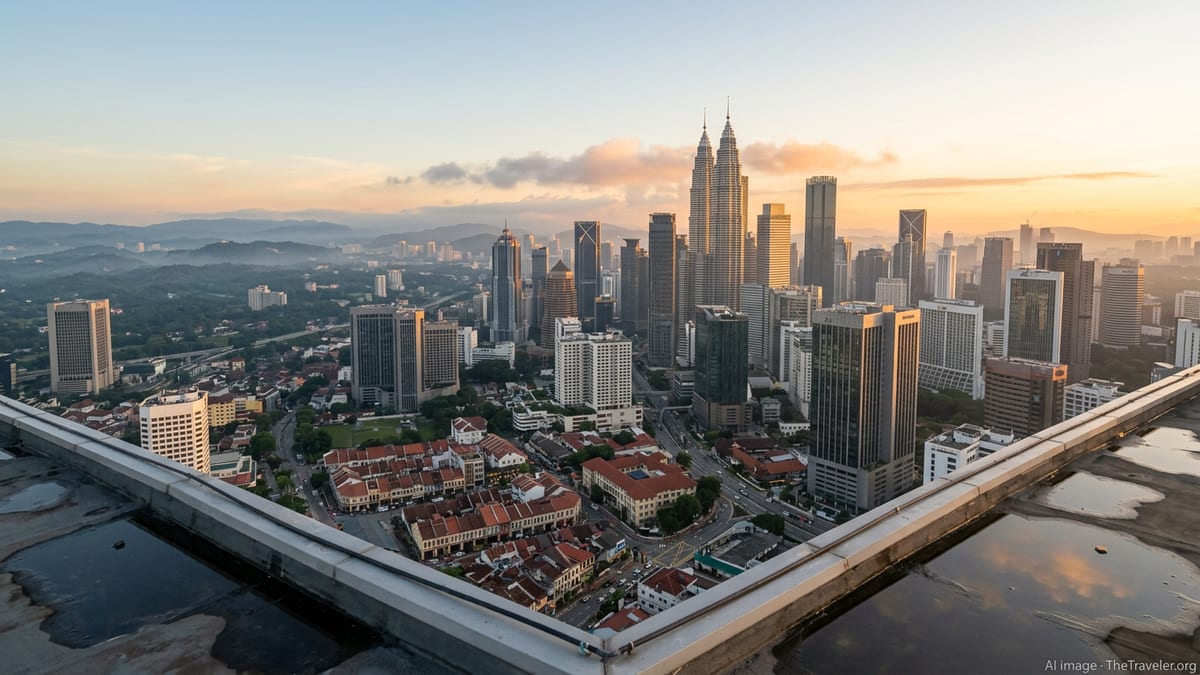
Most Malaysia itineraries begin in Kuala Lumpur, where glass and steel towers share space with older shophouses, mosques and temples. Giving the city at least two full days allows you to adjust to the climate, get a first taste of Malaysian food and see several landmark neighborhoods without rushing. Many visitors start with the Petronas Twin Towers area, where landscaped parkland and shopping malls sit below the skyline. Booking timed tickets in advance for the observation deck is wise in high season, but even without ascending, walking the surrounding streets gives you a feel for the capital’s modern side.
From there, it is easy to shift gears into older quarters. The historic core around Merdeka Square and the nearby river confluence showcases British colonial-era buildings, restored mosques and a growing network of riverside promenades. Chinatown and Little India, centered around Petaling Street and Brickfields respectively, are both lively in the evenings with market stalls, shrines and plenty of casual eateries. Kuala Lumpur’s rail network links these districts efficiently, and recent years have seen ongoing upgrades to stations and walkways that make car-free exploration more practical than before.
Food is a highlight in the capital, and any Malaysia itinerary should leave unstructured time simply to eat. Hawker centers and food courts bring together Malay, Chinese and Indian flavors along with regional specialties from across the country. The long-running debate over the “best” spots for dishes such as nasi lemak or char kway teow is part of the fun, and you will find both traditional stands and newer, more polished venues in neighborhoods like Bangsar, Damansara Heights and Taman Tun Dr Ismail. Street food culture remains strong, though you should use the same common-sense hygiene filters you would apply anywhere in Southeast Asia.
As you plan your days, factor in the heat. Midday can be punishing, especially for jet-lagged visitors, so many travelers focus on indoor museums or shopping centers in the afternoon and explore outdoors in the morning and evening. For a half-day excursion, the limestone Batu Caves just outside the city remain a popular trip, now helped by direct commuter rail connections. If your itinerary is short, there is no need to see everything in Kuala Lumpur; the goal is to acclimatize, glimpse both modern and historical sides of the capital and taste the multicultural thread that will run through the rest of your route.
Into the Hills: Cameron Highlands and Other Cool-Climate Escapes
From Kuala Lumpur, many classic itineraries curve north into the Cameron Highlands, a plateau region that offers a rare drop in temperature along with tea plantations, vegetable farms and forested trails. Road journeys usually take around three to four hours depending on traffic and route; several bus companies connect the capital with the main highland townships. The transition from lowland heat to misty hills feels dramatic, and two nights in the highlands gives enough time to explore without feeling rushed.
Cameron Highlands’ landscapes are the main draw: waves of tea bushes contouring the hills, scattered with colonial-era bungalows, roadside strawberry farms and pockets of mossy forest. Guided walks are recommended if you want to delve into longer trails, not only for navigation but for context about local ecology and the indigenous Orang Asli communities. Weather can be changeable even outside monsoon periods, with cloud and showers rolling through quickly, so packing layers and a lightweight waterproof jacket is wise.
Accommodation ranges from simple guesthouses to polished resorts, and it is worth booking in advance during domestic holiday periods when Malaysian families flock to the cool air. Because the area’s narrow roads can become congested at weekends, especially around main towns like Tanah Rata and Brinchang, allowing time for slow traffic is part of realistic planning. Some travelers who prefer a more low-key atmosphere opt instead for alternative upland escapes such as the Genting Highlands or Bukit Tinggi, which are closer to Kuala Lumpur but more focused on resorts and entertainment complexes than tea country and trails.
When designing your itinerary, Cameron Highlands often serves as the pivot between Kuala Lumpur and Penang. Many bus routes now run directly between the highlands and Penang’s mainland transport hubs, which saves you from backtracking to the capital. If you are short on time or not especially drawn to cool-climate landscapes, you can skip this section and travel straight from Kuala Lumpur to Penang by train or bus. Yet for many travelers, a few days in the hills provide a welcome change of pace and temperature that makes the rest of the route more enjoyable.
Heritage and Street Food: Penang and the West Coast
Penang holds a special place in most Malaysia itineraries, thanks to the fusion of historic architecture, rapidly evolving food culture and easy access by both land and air. The island’s capital, George Town, is a UNESCO-listed enclave of shophouses, clan houses, mosques, churches and temples, many of them restored into cafes, galleries and small hotels. Two to three nights here allows you to wander its lanes, try an array of food stalls and take at least one excursion to the island’s greener interior or coastal stretches.
Exploring George Town is largely a matter of walking and grazing. The historic core is compact and full of details, from carved wooden shutters to colorful Peranakan tilework and old clan jetties along the water. Between these visual layers, you will find hawker centers and kopitiam coffee shops serving staples that many Malaysians consider among the country’s best. Food writers and recent travelers continue to highlight Penang for its breadth of flavors, and even a short stay can feel like a progressive meal broken up by strolls and photo stops.
Beyond the old town, Penang offers hill and beach alternatives that slot neatly into a highlights itinerary. The funicular railway up Penang Hill reveals views back over George Town and the mainland when skies are clear, while trails and gardens at the top provide shade. The northern coastline around Batu Ferringhi, reached by road, lines up hotels facing the sea. While this strip feels more resort-like and the water is not as pristine as on more remote islands, it suits travelers who want beach time without another internal flight or ferry ride. Public transport, e-hailing rides and organized day trips make it straightforward to hop between these zones.
If you have a little more time before moving on, consider a night in Ipoh on the mainland between Cameron Highlands and Penang. The city has been appearing more often in recent domestic tourism campaigns and international features, credited with a slower rhythm, handsome old town streets, traditional coffee shops and access to cave temples in limestone hills nearby. Slotting Ipoh into your itinerary makes journeys between the highlands, Penang and Kuala Lumpur more granular and spreads your travel days more gently.
Island Time: Choosing Between Langkawi, Perhentian and Borneo Coasts
No Malaysia highlights route feels complete without at least a few days by the sea. The right coastal stop depends heavily on your travel dates, since the east and west coasts peak in different seasons. For most visitors on a west arc itinerary, Langkawi is the natural final stop. The island is easily reached by short flights from Kuala Lumpur and Penang or by ferry from the mainland, and it mixes sandy bays with rainforest hills, a cable car with broad views and a spread of resorts and guesthouses. Recent weather guides suggest that conditions on the west coast, including Langkawi, are often at their best between roughly November and March, with calmer seas and less prolonged rain.
If you are traveling between about March and October and are willing to add an additional internal flight and ferry to your itinerary, the east coast islands such as the Perhentians, Redang or Tioman can be spectacular. During their dry season, these islands see clearer water and calmer seas that are prized by divers and snorkelers. Many resorts close or scale back operations during the height of the northeast monsoon from roughly November to February, so it is important to check current opening dates and transport schedules before counting on a visit. When conditions are right, combining a west-coast cultural route with an east-coast island finale gives a fuller picture of coastal Malaysia.
For travelers extending into Borneo, coastal and island stays look different again. Sabah offers access to well-known dive areas and wildlife-rich coastlines, although some sites require permits and advance planning. Sarawak has a less developed but rewarding mix of beaches and national parks where forest meets sea. Because Borneo sits under slightly different weather systems, conditions can be more variable, and recent regional advice emphasizes the need to monitor local forecasts, particularly between about November and January when heavy rains can trigger flooding and landslides inland.
Whichever coast you choose, build in margins for weather. Even in broadly dry months, heavy afternoon downpours are common, and boat transfers can be delayed by rough seas. Planning at least three nights in a beach destination helps ensure you have at least one or two good weather days, and booking flexible or refundable internal flights where possible adds resilience for longer multi-stop itineraries.
Sample 12 to 14 Day Malaysia Highlights Itinerary
To bring these pieces together, it helps to see how they might play out on the ground. A common 12-day framework starts with three nights in Kuala Lumpur, two in the Cameron Highlands, three in Penang and four in Langkawi. This gives you a first city immersion, a cool-climate interlude, a cultural and culinary deep dive and a beach finale. The loop uses a mix of buses or private transfers between land-based stops and short flights or ferries for Langkawi, all on well-established routes.
Arriving in Kuala Lumpur, you might dedicate your first full day to the modern core: the Petronas area, the surrounding park, nearby malls and evening food courts. Day two could pivot to the older city, from Merdeka Square and the riverfront to Chinatown and Little India, perhaps with a half-day excursion to Batu Caves. On day three, you can keep things looser, revisiting favorite neighborhoods or exploring emerging areas, then travel to the Cameron Highlands in the afternoon or the following morning.
Two nights in the highlands allow one full day for a tea plantation visit and a guided walk, with cooler evenings in small-town cafes or at your guesthouse. From there, you travel onward to Penang for three nights, using your first afternoon to orient in George Town, the next day to focus on street food and heritage landmarks, and the third for an excursion to Penang Hill or the northern beaches. Finally, four nights in Langkawi give you enough time for a mix of beach laziness, a cable car ride or mangrove tour and a weather-dependent day left unstructured.
If you are working with 14 days or more, you can add a night in Melaka at the beginning or end of the trip or slot in Ipoh between the highlands and Penang, trimming a night from elsewhere. Alternatively, you might swap Langkawi for an east coast island if your travel month aligns with that coast’s dry season, adjusting internal flights accordingly. The important thing is to resist the temptation to cram in too many regions: focusing on a coherent arc and accepting that you will not see all of Malaysia in one visit usually leads to a more satisfying experience.
Practical Tips: Transport, Costs, Culture and Staying Flexible
On a practical level, Malaysia rewards travelers who plan the skeleton of their itinerary but leave room for day-to-day adjustments. Long-distance buses remain a comfortable and affordable way to move between most Peninsular stops, with air-conditioned coaches and frequent departures on main routes. Trains link some key cities, and domestic airlines connect Kuala Lumpur with Penang, Langkawi, Sabah and Sarawak in under a couple of hours. Booking tickets a little ahead is recommended during school holidays and festivals, when local demand spikes.
Within cities and towns, e-hailing apps and metered taxis, where available, make short hops simple. Many travelers find that they can rely largely on public transport and walking in Kuala Lumpur and Penang, then supplement buses with occasional private transfers in the highlands or to ferry terminals. As fuel and toll costs have risen in recent years, privately hired cars are no longer the bargain they once were for long distances, but for small groups who value flexibility, they can still be cost-effective compared to multiple individual tickets and transfers.
Daily budgets vary widely by travel style, but Malaysia generally offers good value compared with many long-haul destinations. Street food and casual eateries are inexpensive, while midrange guesthouses and hotels are plentiful in popular areas. Entrance fees for museums, viewpoints and national parks tend to be moderate, although specialized activities such as guided wildlife tours or diving can add up. Currency fluctuations and local price adjustments mean that any specific numbers age quickly, so it is more reliable to think in relative terms and check recent reports just before your trip.
Finally, cultural awareness will make your itinerary run more smoothly. Malaysia is a multicultural society with significant Malay, Chinese, Indian and indigenous communities, and you will encounter a range of customs and religious practices, particularly around mosques and temples. Dressing modestly in such sites, observing local signage and removing shoes where requested are straightforward ways to show respect. Alcohol is available in many places but less common in more conservative rural areas, and during major religious periods such as Ramadan, you may notice changes in opening hours or a different rhythm to daily life. Building this awareness into your planning is part of what turns a route of sights into a more thoughtful journey.
The Takeaway
Designing a Malaysia itinerary that truly captures the country’s highlights is less about ticking off a fixed list of attractions and more about balancing contrasts. A well-structured route gives you time in Kuala Lumpur’s layered neighborhoods, a pause in the cool air of the highlands, days wandering Penang’s streets and evenings on a beach where the pace slows and the sea sets the soundtrack. Choosing when to travel so that at least one coast is in its drier season, allowing for the realities of transport times and giving yourself a margin for heat, rain and rest will make that structure feel generous rather than rushed.
Malaysia will likely surprise you with how easily its pieces fit together once you grasp the basic seasonal patterns and route shapes. With current entry procedures understood, safety guidelines noted and a realistic sense of how far you can travel in the days you have, the outline becomes clear. From there, you can color in the details according to your interests: more food, more jungle, more heritage or more sea. Whatever combination you choose, the country’s blend of cultures, landscapes and flavors means that even a first-time highlights trip rarely feels like a simple checklist; instead, it often becomes the starting point for plans to return and go deeper.
FAQ
Q1. How many days do I need for a good Malaysia highlights itinerary?
For a classic route covering Kuala Lumpur, the Cameron Highlands, Penang and one island, 10 to 14 days works well. With less time, focus on Kuala Lumpur plus one or two additional stops rather than trying to see the whole country.
Q2. What is the best time of year to follow this itinerary?
If you plan to focus on the west coast, including Penang and Langkawi, roughly November to March often brings some of the most comfortable conditions. For east coast islands or Borneo, many travelers target around March to October, avoiding the heaviest northeast monsoon months, while recognizing that exact patterns can vary year by year.
Q3. Is Malaysia safe for solo travelers and families?
Recent official advisories continue to rate Malaysia as generally safe when normal precautions are taken. Cities and main tourist areas see plenty of visitors, infrastructure is relatively good and locals are used to international travelers. Standard awareness about belongings, late-night areas and weather-related disruptions still applies, as in any destination.
Q4. Do I need a visa to visit Malaysia as a tourist?
Many nationalities receive visa-free entry for short tourism stays, provided their passport is valid for at least six months beyond arrival. However, rules differ by country and can change, so it is essential to confirm requirements with official Malaysian sources or your government’s travel advice before you depart.
Q5. How should I move between cities on this route?
Intercity buses are a popular, cost-effective option and connect most major stops such as Kuala Lumpur, the Cameron Highlands and Penang. Trains serve parts of the network, and short domestic flights link the capital with Penang, Langkawi and Borneo. Within cities, a mix of public transport, walking, e-hailing rides and occasional taxis usually covers day-to-day needs.
Q6. Can I combine both the east and west coasts in one trip?
Yes, but doing so works best if you have at least two weeks and travel in a shoulder period when both coasts are reasonably accessible. Many travelers follow the west coast arc and then add an east coast island or a Borneo segment, using domestic flights and ferries, while accepting that weather and transport schedules may require some flexibility.
Q7. Is it necessary to visit the Cameron Highlands, or can I skip them?
The Cameron Highlands are not essential, but they add a valuable cool-climate contrast to city and coast. If you enjoy tea plantations, mild temperatures and light hiking, two nights there can be a highlight. If your time is short or your priority is urban culture and beaches, you can travel directly between Kuala Lumpur and Penang instead.
Q8. How far in advance should I book accommodation and transport?
For peak local holiday periods, major festivals and popular island seasons, it is wise to reserve accommodation and key internal flights several weeks or more ahead. At quieter times, booking a few days to a week in advance is usually enough for buses and guesthouses, though special stays, remote lodges or small dive resorts can still fill up early.
Q9. What should I pack for a multi-stop Malaysia itinerary?
Light, breathable clothing for tropical heat; a lightweight waterproof layer; comfortable walking shoes; insect repellent; sun protection and modest options for visiting religious sites are all useful. In the Cameron Highlands or other upland areas, a light sweater or jacket helps in the cooler evenings and misty mornings.
Q10. Can I use this itinerary as a base if I am traveling with children or older relatives?
Yes. The same core route works for families or multigenerational groups if you slow the pace and add rest days. Choosing centrally located, family-friendly accommodation, breaking up long transfers and avoiding too many early starts or late arrivals will make the journey more comfortable for all ages.