

More news on this day
Malaysia is emerging as one of Asia’s most dynamic tourism comeback stories in 2025, gaining from resurgent regional travel and widespread disruption to traditional Middle East transit and holiday hubs.
Get the latest news straight to your inbox!
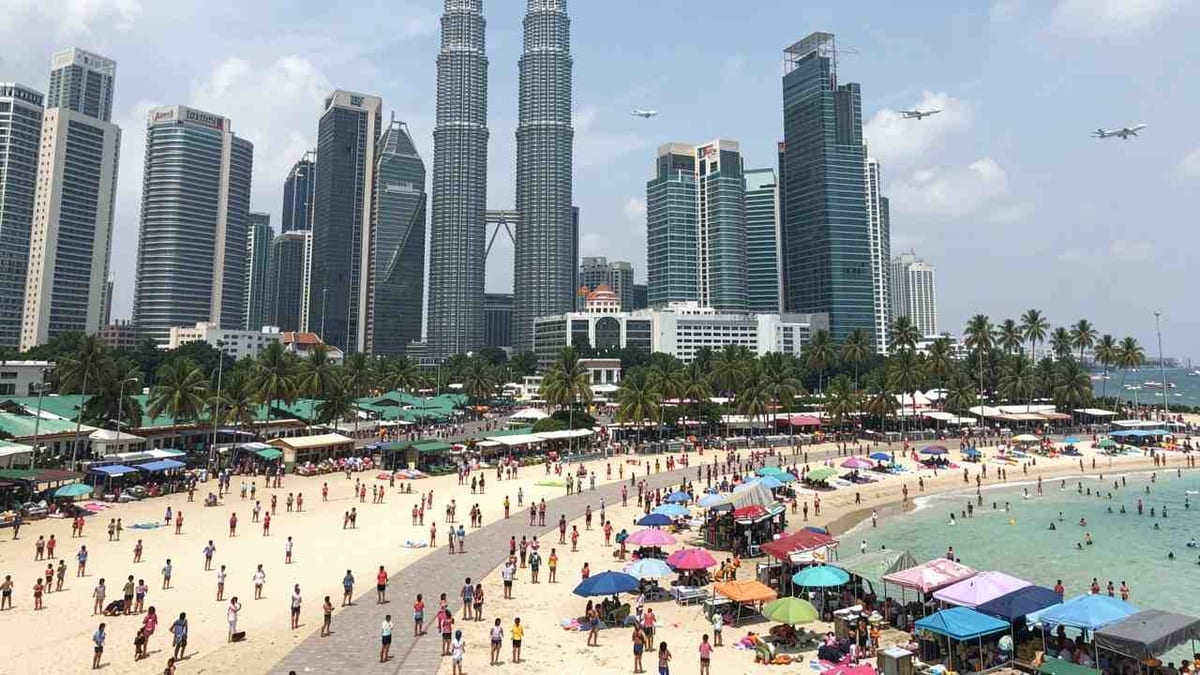
Image by Travel And Tour World
Asia’s Tourism Surge Puts Malaysia Back on the Map
Across Asia, tourism demand is rebounding at pace, with Malaysia increasingly grouped alongside China, Japan, Thailand, India and South Korea as key beneficiaries of shifting travel patterns. Global tourism rankings for 2024 show Thailand welcoming more than 35 million visitors, Japan hitting a record 36.9 million arrivals and South Korea drawing over 16 million, while Malaysia surpassed 25 million international tourists as it rebuilds toward pre‑pandemic peaks. Publicly available data indicates that these flows are being supported by strong intra‑Asian travel and rising outbound demand from China and India.
Tourism Malaysia statistics for late 2023 and early 2024 highlight how quickly key source markets have come back. Arrivals from China, Thailand, South Korea, Japan and India all rose sharply compared with 2022, with China and Thailand in particular regaining their position among Malaysia’s top contributors. Regional analysis by ASEAN and UN Tourism points to robust intra‑ASEAN movements and a growing preference for nearby destinations that can be reached in under six hours of flight time, a trend that plays directly to Malaysia’s location at the heart of Southeast Asia.
Analysts note that this regional concentration is occurring just as geopolitical tensions and higher operating costs weigh on some long‑haul markets. For many travellers from North Asia and the wider Asia Pacific, Kuala Lumpur, Penang, Langkawi and Sabah are presented as convenient, good‑value alternatives to longer itineraries that previously routed through or ended in the Gulf. The combination of visa facilitation, competitive airfares and a diversified tourism offer is helping Malaysia keep pace with its more established neighbours.
Carriers Pivot East as Middle East Routes Are Disrupted
While visitor numbers to Malaysia and its regional peers climb, airspace closures and security concerns linked to the ongoing conflict involving Iran, Israel and regional proxies are reshaping global aviation networks. Coverage by international media and aviation analysts describes thousands of flights cancelled or rerouted since late February 2026, with multiple Middle Eastern countries temporarily closing their skies and several major hubs handling a significantly reduced share of global traffic. Airlines have been forced onto longer detours that add hours of flying time and substantial fuel costs.
Many carriers are redirecting capacity toward safer and more predictable corridors, including Southeast Asia. Travel industry reports describe how the Middle East, which had grown into a crucial bridge between Europe, Africa and Asia, has been hit by a sudden tourism and transit shock. Bookings to parts of the region have softened, while demand for destinations perceived as more stable in Asia has strengthened, encouraging airlines to reinforce networks around Kuala Lumpur, Singapore, Bangkok and other regional gateways.
This rebalancing is particularly visible on Europe–Asia and North Asia–South Asia routes, where Malaysia, Singapore and Thailand now feature more prominently as transfer points. Aviation watchers argue that if the Middle East crisis persists, Asian hubs could consolidate a larger long‑term share of connecting traffic, giving countries like Malaysia an opportunity to position themselves as alternatives for both leisure and business travel flows.
Malaysia Airlines, AirAsia and Partners Capitalise on Capacity Shifts
Malaysia’s flag carrier and its low‑cost rival AirAsia are among the airlines moving quickly to harness the regional tourism upswing. Publicly available schedule data and company announcements show Malaysia Airlines restoring and expanding services to major Chinese cities, including the resumption of flights to Chengdu in early 2025, bringing its Greater China network to seven destinations. The carrier is also reinforcing links to India, Japan and South Korea as part of a broader strategy aligned with the Visit Malaysia 2026 campaign.
AirAsia, already a dominant player in Southeast Asia’s budget market, has continued to add frequencies on high‑demand leisure routes connecting Malaysia with Thailand, Indonesia, India and the wider ASEAN region. Market commentary indicates that the airline has been nimble in redeploying aircraft away from more volatile Middle Eastern sectors toward resilient short‑haul routes where demand has recovered fastest. This emphasis on dense, price‑sensitive regional traffic is helping to lift load factors and supports Malaysia’s positioning as an accessible, low‑cost holiday base.
Foreign carriers are also strengthening links to Malaysia. China Eastern Airlines, for example, recently opened a Taiyuan–Kuala Lumpur route with multiple weekly frequencies, designed to funnel more travellers from northern China into Malaysia. Singapore Airlines and its low‑cost affiliate have maintained strong schedules into Kuala Lumpur and regional Malaysian cities, while Emirates continues to operate from Dubai into Malaysia even as it navigates the broader challenges of conflict‑related detours and shifting booking patterns.
Aviation analysts suggest that these moves could lock in structural gains for Malaysia if airlines choose to keep additional capacity in the market once the Middle East stabilises. The more seats and city pairs that connect directly to Kuala Lumpur and secondary Malaysian destinations, the more likely it is that travellers will continue to choose the country over longer, less predictable itineraries elsewhere.
Gulf Hubs Under Pressure as Conflict Hits Confidence
The sharp escalation of the Iran war in early 2026 has rattled traveller confidence in parts of the Middle East and disrupted the carefully calibrated hub‑and‑spoke systems of Gulf carriers. Reports on the economic impact of the conflict describe airports across the region handling far fewer flights as airlines avoid sensitive airspace or temporarily suspend services. Additional war‑risk surcharges, rising insurance costs and concerns about potential spillover into Red Sea and Strait of Hormuz shipping lanes have further complicated operations.
Prior to the current crisis, Gulf hubs such as Dubai, Doha and Abu Dhabi served as critical waypoints for passengers flying between Europe and Asia, including many heading to Southeast Asian beaches and cities. Recent booking and capacity analyses indicate that some travellers are now opting to bypass the region altogether, choosing routings via East and Southeast Asian hubs instead. For Malaysia, this diversion manifests in more point‑to‑point and triangular traffic, often combining Kuala Lumpur with other Asian cities.
Industry observers caution that Gulf carriers remain powerful competitors with deep financial resources and that their networks are likely to recover once geopolitical conditions improve. However, the present disruption has highlighted vulnerabilities in a model that concentrates global flows through a handful of airports in a politically sensitive region. In contrast, the distributed hub network developing across East and Southeast Asia, with Kuala Lumpur as one of several key nodes, appears more resilient to any single regional shock.
Hotels Race to Capture Demand as Global Giants Confront Headwinds
The rapid return of travellers to Malaysia and its neighbours is stretching hotel capacity in popular hotspots and revealing a divergence between local operators and global giants. Large groups such as Marriott, Hilton and Accor have continued to report broadly solid revenue per available room across Asia, but public financial disclosures and regional commentary point to pockets of weakness, particularly in parts of the Middle East where conflict has curtailed both corporate and leisure stays.
In Malaysia, by contrast, occupancy in many urban and resort markets has tightened, especially during peak holiday periods and major events. Domestic and regional chains, along with independent hotels, are competing aggressively on price and experience to capture rising demand from short‑haul Asian travellers. Some operators are accelerating renovation and expansion plans ahead of Visit Malaysia 2026, betting that the current upswing will endure and that geopolitical tensions elsewhere will continue to push marginal demand into safer markets.
For global brands heavily invested in the Middle East, the picture is more complex. While flagship properties in relatively insulated Gulf destinations continue to perform, hotels in conflict‑adjacent markets face subdued bookings and higher operating uncertainty. Analysts note that this drag can overshadow stronger trading in Southeast Asia, effectively creating a two‑speed performance within the same portfolio. Against this backdrop, Malaysia’s ability to attract new branded properties while sustaining high utilisation of existing rooms is emerging as a competitive advantage.
How long this divergence lasts will depend on the trajectory of the Middle East crisis and the durability of Asia’s tourism resurgence. For now, publicly available indicators suggest that Malaysia, supported by an expanding airline network and solid regional demand, is firmly on the front foot in the global travel reshuffle.