

More news on this day
Malaysia is reshaping how foreign workers are recruited, introducing a more centralised and technology driven system that aims to simplify applications for employers while tightening oversight of migrant labour across tourism, services and other key sectors.
Get the latest news straight to your inbox!
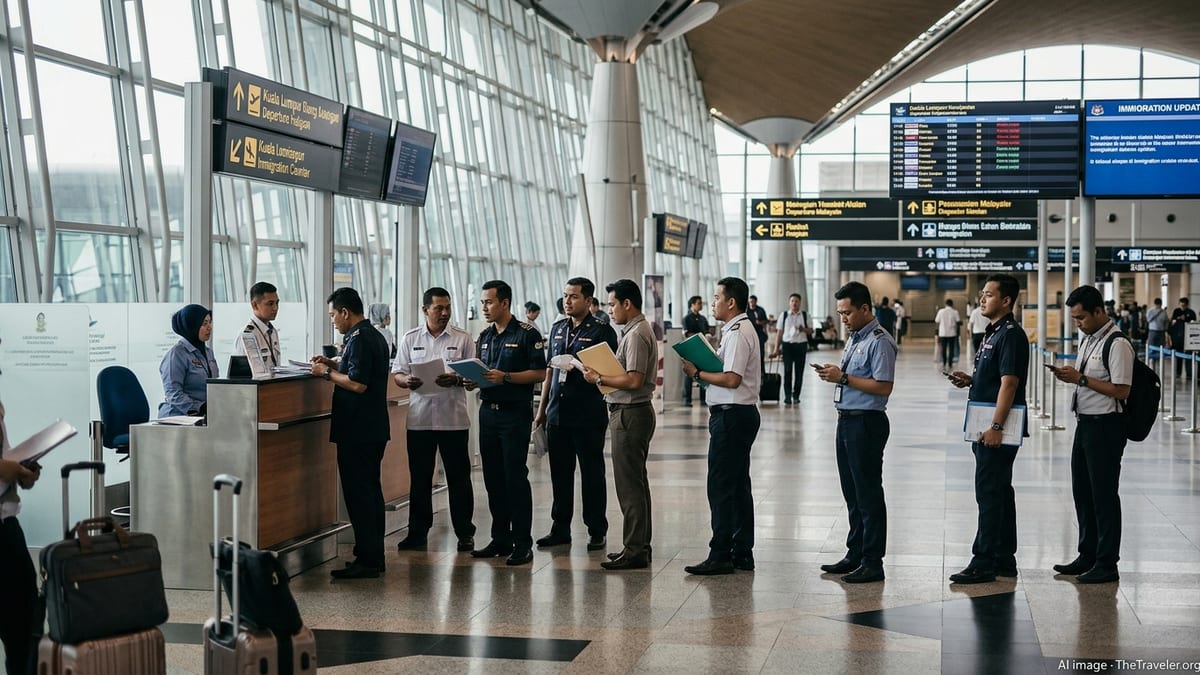
Centralised platforms shorten the hiring journey
Publicly available information shows that Malaysia is increasingly shifting foreign worker applications onto unified digital platforms that connect employers, recruiters and government agencies in one workflow. The Foreign Workers Centralised Management System, for example, has been positioned as an end to end online channel for applying for quotas, processing approvals and managing work permits, replacing a patchwork of manual and semi digital procedures that previously varied by ministry and sector.
Recent updates indicate that immigration transactions that used to require multiple in person visits and parallel submissions are being consolidated into fewer stages, with data shared across agencies responsible for labour, immigration and sectoral regulation. This is intended to cut processing times, reduce repeated documentation and limit opportunities for fraud or informal brokerage that have long complicated migrant recruitment in Malaysia.
At the same time, the broader rollout of the National Integrated Immigration System is gradually linking border control, visa issuance and work pass management in a single ecosystem. This digital backbone is designed to improve verification of workers and employers, support analytics on sectoral needs, and provide a clearer trail of each application from initial request to permit renewal.
Quota rules evolve to balance industry demand and labour caps
Malaysia continues to maintain an overall cap on the share of foreign workers in the national workforce, but recent policy adjustments show more flexibility in how quotas are allocated. Reports indicate that, after a period of tighter controls and a freeze on many new quotas, the government reopened applications in 2025 on a case by case basis for priority sectors and subsectors facing acute labour shortages, including parts of manufacturing, plantations and selected service activities.
Published coverage highlights that this reopening is time bound and monitored, with the stated goal of moving towards a long term ceiling in which foreign workers make up around one tenth of the overall labour force by 2030. This approach means that while businesses in tourism, hospitality and retail may find it easier to apply for additional workers in the near term, they are also operating under clearer expectations that reliance on low skilled migrant labour will have to moderate over the next decade.
Business associations have argued that predictable and transparent quota decisions are essential to investment planning, particularly for export oriented industries and tourism operators that rely on seasonal peaks. In response, new guidelines have focused on aligning quota approvals with verified accommodation, compliance with labour standards and demonstrable efforts by employers to improve productivity and hire and train local workers where possible.
Shorter application windows and stricter compliance checks
Alongside platform consolidation, authorities have adjusted key timelines and compliance conditions that shape how employers plan recruitment. Human resources publications report that Malaysia moved to shorten the valid window for completing stages of foreign worker recruitment, including a reduced period for paying levies after quota approval. The intention is to encourage employers to only apply for numbers they are ready to hire and deploy, and to limit situations where quota is approved but workers are not brought in promptly.
At the same time, labour and housing regulations are being enforced more actively in connection with quota approvals. Coverage in local media has linked delays or stalled approvals in some sectors to inadequate worker housing and non compliance with standards under accommodation and labour legislation. This effectively ties the ability to access foreign labour more directly to an employer’s track record on worker welfare and legal obligations.
For tourism and service sector businesses, including hotels, restaurants and attractions, these shifts mean that staffing plans must account for both documentation and infrastructure readiness. Companies seeking to benefit from simplified applications and faster processing are also under greater scrutiny to ensure that jobs, wages and living conditions for migrant workers meet national rules.
Technology driven oversight shapes the future workforce
The push towards integrated digital systems is reshaping how Malaysia manages both the volume and profile of its foreign workforce. New immigration platforms are incorporating biometric verification, QR based gate clearance and real time data sharing between checkpoints and back office systems. This digital infrastructure supports more targeted enforcement against overstays and irregular employment, while also making legitimate movements smoother for compliant employers and workers.
Policy papers and think tank commentary note that technology is also being linked to new financial tools, such as the planned multi tier levy mechanism from 2026. Under this framework, employers in different industries and wage bands are expected to pay differentiated levies for foreign workers, a change that could nudge firms towards higher productivity models and more selective use of migrant labour.
For the travel economy, which Malaysia has identified as a strategic growth engine in the run up to its 2026 tourism milestones, these reforms are expected to support a more skilled, better managed service workforce. Clearer rules and digital trails may help reputable operators secure the staff they need, while making it harder for unlicensed accommodation providers and informal intermediaries to rely on undocumented labour.
Implications for travelers and tourism investors
Although the latest workforce policies are aimed primarily at employers and recruiters, they are likely to be felt indirectly by visitors and investors. Simplified procedures can help hotels, tour operators and transport providers maintain sufficient staffing during peak seasons, reducing the risk of service disruptions that sometimes occur when hiring bottlenecks coincide with high demand.
At the same time, tighter links between quotas, levy costs and working conditions may raise operating expenses for some businesses, especially those that were previously dependent on very low wage labour. Over time, this could encourage more investment in training, service quality and technology, aligning with Malaysia’s broader goal of climbing the tourism value chain rather than competing mainly on price.
For international companies looking at new projects in Malaysian tourism, hospitality or theme park development, the evolving system offers a clearer map of requirements for foreign staff. Centralised digital applications, defined caps and stronger compliance expectations provide more visibility on how labour strategies must adapt. Observers note that as Malaysia refines its foreign worker regime, coordination between immigration reforms and its visa easing measures for tourists will be an important factor in sustaining growth across the wider travel ecosystem.