

Moving around Malaysia is usually straightforward, but planning how to get between cities on the peninsula, hop across to Borneo, or reach islands like Langkawi and the Perhentians still takes some strategy. With new train routes, shifting ferry services and a growing web of domestic flights, the smartest choices are not always the most obvious ones. This guide walks you through the main options, how they work in practice, and the small local details that help your journey go smoothly.
How Malaysia Fits Together: Geography and Travel Basics
Understanding Malaysia’s layout makes it much easier to choose the right transport. The country is split into Peninsular Malaysia on the Asian mainland and Malaysian Borneo, which consists mainly of the states of Sabah and Sarawak on the island of Borneo. Many classic routes, such as Kuala Lumpur to Penang or the east coast beach towns, sit on the peninsula, while wildlife-rich destinations such as Kota Kinabalu and Kuching are in Borneo and are almost always reached by air.
The backbone of long distance travel in Peninsular Malaysia is a north south corridor that runs from the Thai border near Padang Besar down to Johor Bahru, opposite Singapore. Along this line you will find major cities such as Alor Setar, Butterworth for Penang, Ipoh, Kuala Lumpur, Seremban and Gemas. Most intercity trains follow this route, and express buses and highways roughly parallel it. East coast destinations, including Kota Bharu, Kuala Terengganu and Kuantan, branch off to the side and are linked mainly by buses and highways rather than rail.
For island travel you will usually combine land transport to a jetty with a short ferry service. Langkawi is reached from jetties at Kuala Kedah and Kuala Perlis, while the Perhentian Islands are served from Kuala Besut. Tioman, Redang and Pangkor each have their own mainland departure points as well. At the same time, an expanding domestic flight network means that many travellers now fly directly to island airports such as Langkawi or to coastal cities that act as gateways for island ferries.
Because Malaysia is investing heavily in transport ahead of major tourism campaigns, timetables and routes can change from year to year. Train frequencies on the Electric Train Service, the spread of domestic flights and even the operation of ferry routes can shift. It is wise to treat any printed timetable or outdated blog as a rough guide only and to recheck details close to your departure date.
Riding the Rails: Using ETS and Other Trains Between Cities
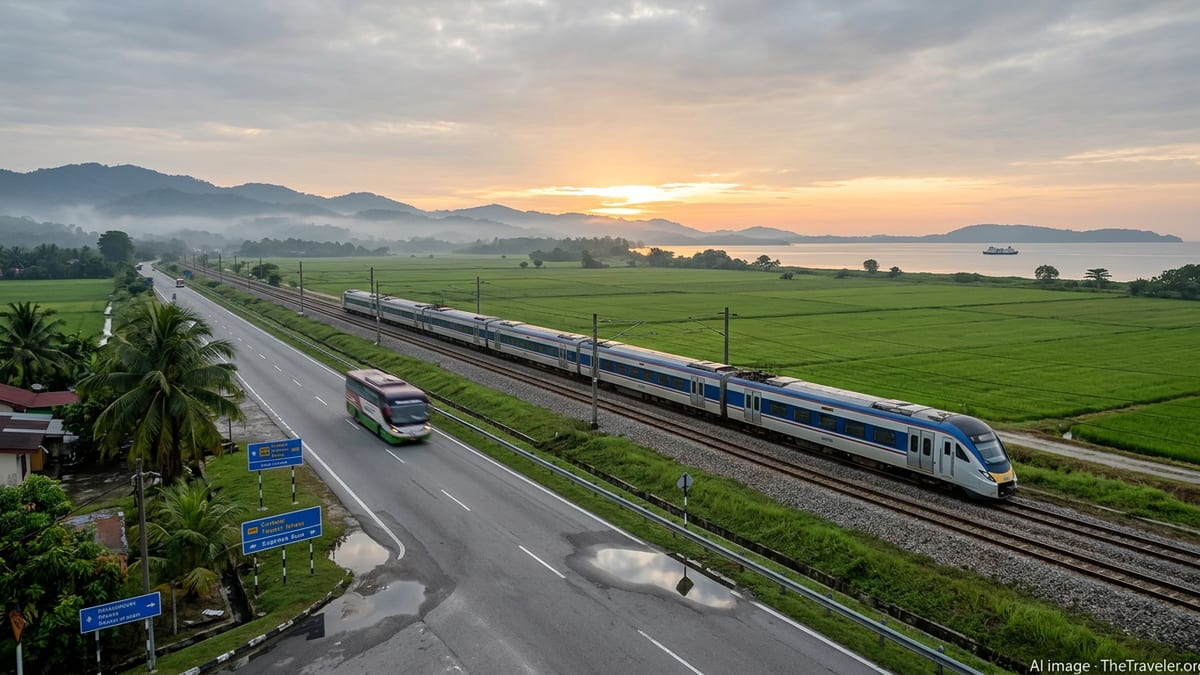
Malaysia’s Electric Train Service, usually called ETS, is the fastest and most comfortable way to move between many cities on the peninsula. ETS trains run on standard gauge tracks with higher speeds than traditional services and connect key points such as Padang Besar at the Thai border, Butterworth for Penang, Ipoh, Kuala Lumpur, Gemas and Johor Bahru. In recent years services have been extended south, and new timetables have steadily added more trips, so it is becoming realistic to cover long distances by rail in a single day.
Seats on ETS are reserved and tickets are priced higher than slower KTM Intercity or Komuter trains, but many travellers find the trade off worthwhile. Trains are air conditioned, luggage racks are available and there is usually a small café counter on board for simple snacks and drinks. Travel times can be faster than express buses on busy routes such as Kuala Lumpur to Butterworth or Ipoh, particularly on weekends and holidays when road traffic can be heavy.
Booking ETS tickets is straightforward. You can buy at station counters, through official railway apps or via third party platforms that aggregate rail and bus services. For popular travel periods such as Chinese New Year, Hari Raya and school holidays, tickets can sell out days or even weeks ahead, especially on morning and late afternoon departures. When planning multi city trips it often makes sense to secure your ETS segments first, then arrange accommodation and onward buses or ferries around those fixed train times.
Not every city is on the ETS map, and some stretches are still served by slower diesel trains or commuter services. East coast towns on the peninsula have a separate line known informally as the jungle railway, which is more of a scenic adventure than a time efficient route. On these services delays are more likely and facilities are simpler. If your schedule is tight you may prefer an express bus or flight instead. When considering any train journey, always confirm the latest timetable, because services are regularly adjusted as new rolling stock and infrastructure come online.
Express Buses and Highway Travel: When the Road Wins
Express buses remain one of the most widely used ways to travel between cities in Malaysia. They link almost every regional centre, from Kuala Lumpur to Penang, Malacca, Kuantan and Kuala Terengganu, as well as smaller towns that are not connected to the rail network. On routes where ETS services exist, buses can still compete on price and on the flexibility of departure times, with services running from early morning to late evening on busy days.
In Kuala Lumpur most long distance buses now operate from large terminals on the edge of the city, notably the Bandar Tasik Selatan integrated terminal for southbound routes and a newer hub at Gombak for east coast destinations. These complexes combine ticket counters, food outlets and connections to urban rail lines, making it easier to move between city transport and intercity buses. In other cities the main bus station is often near the old town centre or a secondary terminal on the ring road, so check departure points carefully when planning door to door timings.
Modern express buses are generally air conditioned and relatively comfortable, with reclining seats in a two by two layout. Some operators run so called VIP or executive coaches with more legroom and a two by one seating pattern. However, quality can vary, and small price differences sometimes reflect big contrasts in maintenance and comfort. When possible, book with established brands that publish recent photos of their fleets or attract consistently better reviews, particularly for overnight journeys when driver fatigue is a concern.
Traffic patterns matter when choosing the road. On Friday evenings, the eve of public holidays and the start and end of school breaks, highways into and out of major cities can become heavily congested. A four hour trip on paper can double in duration when half the country is on the move. If you must travel at these times, consider an early morning bus, a daytime ETS train where available, or even a short domestic flight to avoid spending the day in a traffic jam.
Domestic Flights: Crossing to Borneo and Linking Key Hubs
For longer distances and trips that cross the South China Sea, domestic flights are usually the fastest and sometimes the only practical choice. Kuala Lumpur’s main airport remains the primary hub, with frequent services to cities across Peninsular Malaysia such as Penang, Langkawi, Johor Bahru and Kota Bharu, as well as to Borneo gateways including Kota Kinabalu, Sandakan, Tawau, Labuan, Kuching and Miri. Secondary hubs at Penang, Johor Bahru and Kota Kinabalu support additional point to point routes that can save time by avoiding a connection in the capital.
Several airlines compete on domestic routes, including the national carrier and low cost operators. Flight frequencies on key city pairs are high, especially between Kuala Lumpur and popular leisure destinations like Langkawi and Penang or major regional centres in Borneo. In recent seasons Malaysia has encouraged airlines to add more domestic and regional services ahead of major tourism years, so travellers benefit from a denser network and sometimes promotional fares on new routes.
Booking domestic flights is similar to buying tickets in any busy regional market. Prices vary dynamically, rising around local holidays and weekends and dropping midweek or in shoulder seasons. Budget airlines typically charge extra for checked baggage, seat selection and meals, so compare the total cost rather than just the headline fare. Since weather in the tropics can be unpredictable, especially during monsoon periods, it is wise to allow buffer time if you have same day connections to international flights or onward ferries.
On the ground, pay attention to airport locations. Kuala Lumpur’s main international airport is well south of the city and linked by an airport rail service and buses, while a secondary airport at Subang handles many domestic and regional flights on smaller aircraft. In some smaller cities airports lie close to town, making quick hops particularly convenient. Because airports and airlines may adjust schedules and routes as demand shifts, always confirm flight days and times shortly before finalizing your itinerary.
Reaching the Islands: Ferries, Jetties and Seasonal Realities
For many visitors the highlight of traveling around Malaysia is reaching its islands, from the duty free beaches of Langkawi to the coral rich waters of the Perhentians, Redang and Tioman. Doing this efficiently depends on understanding how the ferry system works and how it interacts with bus and flight networks. The key idea is that almost every island has a specific mainland jetty or small handful of jetties, and your trip is built around reaching those points at the right time.
Langkawi, the country’s best known island destination, is most easily reached either by air or by ferry from jetties at Kuala Kedah and Kuala Perlis on the mainland. Previous direct ferry routes from Penang have been scaled back or suspended at various points, so many travellers now reach Langkawi by taking an overland bus from Penang to one of these jetties and then continuing by boat. The sea crossing from Kuala Perlis is shorter than from Kuala Kedah, which can make it the preferred option for travellers prone to seasickness or those trying to minimize travel time.
The Perhentian Islands are typically accessed via Kuala Besut in Terengganu, while Redang is linked via jetties near Kuala Terengganu and Tioman via jetties in Pahang or Johor, depending on the route. Ferry operators on these routes often adjust their schedules to match the northeast monsoon, reducing or suspending services during the roughest months and running more frequently in the March to October window when seas are calmer. Pangkor, closer to the peninsula’s west coast, is generally accessible year round but still subject to occasional weather disruptions.
Ferry tickets can usually be purchased at the jetty on the day of travel or booked in advance through resort operators and ticketing platforms. In peak months boats can fill up, so it is sensible to secure a spot ahead of time if you are traveling in large groups or need to match a specific bus or flight. Safety standards vary between operators. Where possible, choose services that use enclosed boats with properly maintained lifejackets and avoid traveling in poor weather if local authorities discourage sailings.
Planning Peninsular Routes: Popular City and Island Combinations
Many visitors design their Malaysian itinerary around a loop of classic destinations on the peninsula. A common route is to fly into Kuala Lumpur, travel north to Penang, continue to Langkawi and then depart via a return flight to the capital or onward to Borneo. Another popular combination is to move from Kuala Lumpur down to Malacca and Johor Bahru before crossing into Singapore. Understanding how to join these dots with the right mix of trains, buses, flights and ferries helps you minimize backtracking and wasted days.
For travel between Kuala Lumpur and Penang, travellers often choose between a direct ETS train to Butterworth plus a short ferry into George Town, or an express bus that terminates at a Penang island terminal. The train offers reliability and scenic views, while buses can take you directly across the Penang bridge to the island, avoiding an extra transfer. For those continuing to Langkawi, the logical overland step is usually from Penang or Butterworth to Kuala Perlis or Kuala Kedah by bus, then onward by ferry. Alternatively, you can fly directly from Penang to Langkawi when schedules and prices suit.
East coast itineraries often start in Kuala Lumpur with an express bus from the capital’s integrated terminals to Kuantan, Kuala Terengganu or Kota Bharu. From there you can connect by taxi or local transport to jetties for islands such as the Perhentians and Redang. These journeys are more weather dependent than west coast trips, and sea conditions during the northeast monsoon can affect both ferry schedules and your enjoyment of the islands. If your travel window overlaps with that season and your dates are not flexible, consider focusing on west coast islands like Langkawi or Pangkor instead.
Travellers heading to Borneo typically combine a peninsular loop with a separate flight segment. For example, you might travel overland from Singapore or Johor Bahru to Kuala Lumpur and onward to Penang and Langkawi, then fly from Langkawi or Penang back through Kuala Lumpur to connect to Kota Kinabalu or Kuching. Once in Borneo, you will rely mainly on domestic flights and shorter road journeys, because rail infrastructure there is minimal compared to the peninsula.
Buying Tickets, Apps to Know and Navigating Stations
Malaysia’s ticketing ecosystem is a mix of official channels and third party platforms. For ETS and other KTM rail services you can buy tickets at station counters, through official apps and websites, or via agent sites that bundle rail with buses. For buses, large terminals now host multiple counters representing different companies, and many operators also sell seats through popular bus ticketing apps used locally. Some travellers still prefer to walk the counters and compare schedules in person, but this can be time consuming at busy times of day.
When choosing where to book, think about flexibility and support rather than only the lowest fare. Official railway and airline channels are usually the easiest place to change or refund tickets if your plans shift, while third party aggregators can be convenient for comparing times and prices across many companies at once. For ferries, particularly to smaller islands, resort operators and local agents are often the most practical point of contact because they know which services are currently running and can adjust your crossing if weather or tides force changes.
At major stations such as Kuala Lumpur Sentral and Johor Bahru’s rail terminal, signage is generally bilingual in Malay and English, and staff are used to helping visitors find the correct platform. Security screening is basic and straightforward. Allow extra time at holiday periods, when queues for ticket checks and boarding can be longer and families travelling with luggage and children can slow down boarding. In smaller stations, facilities may be limited to a simple waiting area and a ticket window, so bring snacks and water if you have a long wait between services.
Mobile connectivity across most of peninsular Malaysia is strong, and e tickets on phones are widely accepted. Even so, it is wise to carry a charged power bank and offline copies of your tickets, as well as screen captures of crucial timetable information. Rural stretches of rail and road can pass through zones with weaker signals, and smaller ferry operators may still prefer printed confirmations or physical tickets handed over at the jetty office.
Seasons, Monsoons and Travel Safety
Malaysia’s tropical climate shapes how comfortable and predictable your intercity journeys will feel. The country experiences two main monsoon systems that influence rainfall patterns differently on the west and east coasts of the peninsula and in Borneo. On the east coast, the northeast monsoon typically brings heavier rains and rough seas late in the year and into the first months of the next, which can result in cancellations or reduced frequency of ferries to islands such as the Perhentians and Redang.
On the west coast and in Borneo, heavy showers are still common, but ferry routes and flights are less likely to pause completely. However, intense downpours can cause localized flooding and slow highway traffic, especially around low lying stretches and urban areas with poor drainage. Building some margin into your schedule is wise, particularly if you need to travel to or from an airport on the same day as an important international flight.
In terms of personal safety, intercity transport in Malaysia is generally considered safe, but the usual travel common sense applies. Keep valuables in a daypack you can keep close on buses and trains, rather than in the luggage hold. At night bus terminals, use official taxis or ride hailing services instead of walking long distances with bags. Inside trains and buses, occasional petty theft is possible, especially when carriages are crowded, so avoid leaving phones and passports unattended on seats.
Road safety is another consideration. Long distance buses share highways with a mix of cars, heavy trucks and motorcycles, and weather or holiday traffic can compound risks. Whenever possible, avoid overnight buses on routes you can comfortably cover by day using ETS or daytime coaches. If you must travel at night, choose reputable operators, avoid the cheapest fares that cut corners on comfort and consider taking a neck pillow and light blanket to rest more securely during the journey.
The Takeaway
Traveling between cities and islands in Malaysia is easier than ever, but the range of choices can be overwhelming at first glance. Trains on the Electric Train Service corridor now link many major points on the peninsula with speed and comfort, while express buses fill in the gaps and offer flexible departures to almost every corner of the map. Domestic flights stitch together peninsular hubs and Borneo, and ferries connect mainland jetties with beaches and coral reefs that would be hard to reach any other way.
The key to a smooth trip is to match each leg of your journey to the mode of transport that makes the most sense for that particular stretch. Use ETS on busy north south routes when you value reliability and comfort, turn to buses for east coast towns and secondary cities, fly when crossing long distances or the South China Sea and treat ferry segments as the final link in the chain to islands. Pay attention to monsoon seasons, public holidays and evolving timetables, and always double check details a few days before you travel.
Most importantly, build some flexibility into your plans. Malaysia’s transport network is developing fast, with new services and occasional growing pains, but it rewards those who travel with an open mind and a willingness to adjust. With a little planning and the tips above, you can spend more time enjoying street food, islands and rainforests and less time waiting in stations or terminals wondering what went wrong.
FAQ
Q1. What is the best way to travel between Kuala Lumpur and Penang?
The most reliable option is usually the ETS train from Kuala Lumpur to Butterworth, followed by the short ferry to George Town, although express buses and direct flights can also work depending on your budget and schedule.
Q2. How far in advance should I book ETS tickets in Malaysia?
On popular routes and around major holidays, it is wise to book ETS tickets at least several days ahead and earlier still for peak periods such as Chinese New Year and long school breaks.
Q3. Is it still possible to take a direct ferry from Penang to Langkawi?
Direct services have operated in the past but have also been suspended at various times, so most travellers now travel by bus to Kuala Perlis or Kuala Kedah and then continue to Langkawi by ferry or take a short domestic flight instead.
Q4. What is the easiest way to reach the Perhentian Islands?
Most visitors travel by bus or private transfer to Kuala Besut on the east coast and then take a boat from the jetty there, timing their visit for the calmer months outside the peak of the northeast monsoon.
Q5. Do I need to book island ferries in advance?
During busy seasons and on weekends it is sensible to reserve ferry places through your accommodation or a ticketing service, especially if you need to coordinate with fixed train or flight times.
Q6. How do I travel between Peninsular Malaysia and Borneo?
The practical option is to fly, typically from Kuala Lumpur or another major hub to airports such as Kota Kinabalu, Kuching, Sandakan or Miri, and then continue within Borneo by road and short domestic flights.
Q7. Are overnight buses in Malaysia safe?
Overnight buses are widely used but share the same road risks as any long distance night travel; choose reputable operators, avoid the very cheapest options and opt for daytime ETS or bus services when your schedule allows.
Q8. Which apps are most useful for booking transport in Malaysia?
Official airline and railway apps are good for flights and ETS tickets, while popular regional bus booking platforms help compare coach companies and schedules on key city and island gateway routes.
Q9. How does the monsoon affect travel to Malaysian islands?
On the east coast, heavy seas during the northeast monsoon can reduce or halt ferry services to islands like the Perhentians and Redang, while west coast islands such as Langkawi are less affected and remain accessible more consistently.
Q10. Is it better to fly or take the train from Kuala Lumpur to Johor Bahru?
With ETS services now running on the southern corridor, the train is often a comfortable and time efficient choice, but short flights and express buses can also be competitive depending on your departure point and onward plans.