

Malaysia and Singapore sit side by side on the map and are often combined on the same itinerary, yet they offer distinctly different travel experiences. One is a sprawling, multi-faceted country of islands, rainforests, and regional cultures; the other is a compact, hyper-organised city-state known for its skyline, safety, and efficiency. If you have to choose just one, weighing up costs, culture, food, nature, and ease of travel can help you decide where your time and budget will go furthest.
Overall Vibe and First Impressions
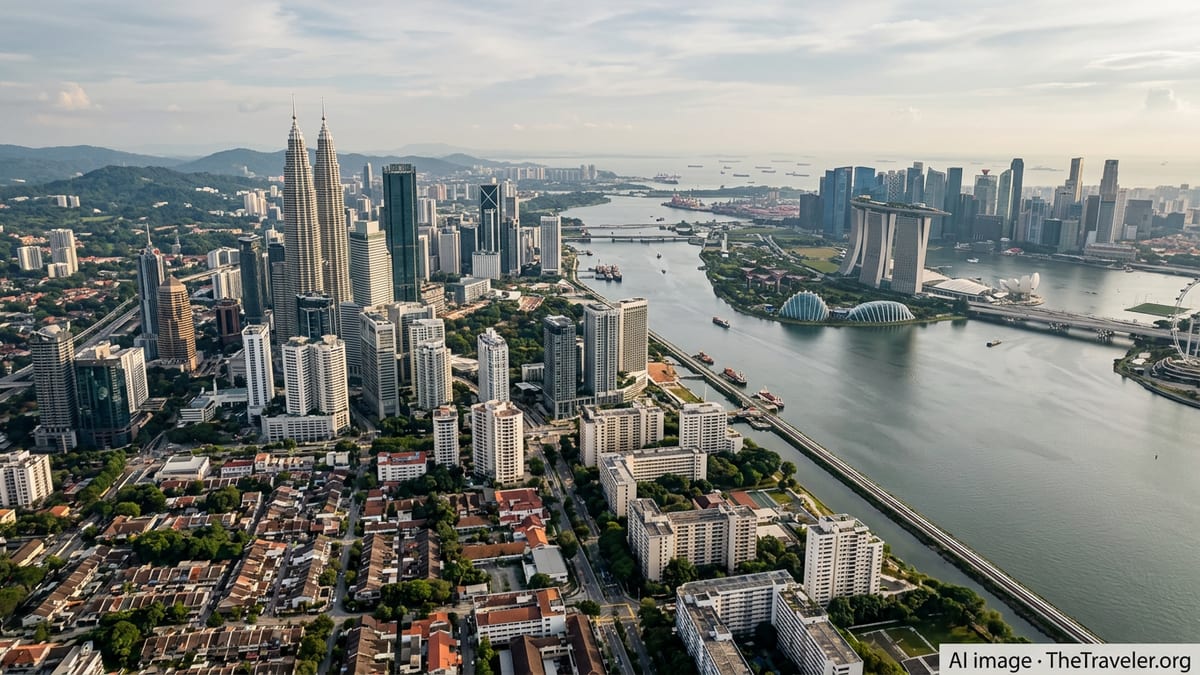
For many visitors, Singapore feels like an ultra-modern gateway to Southeast Asia. The city-state is dense and vertical, with spotless streets, gleaming malls, and polished attractions clustered around the Marina Bay skyline. Public spaces are meticulously planned, green spaces are manicured, and the overall atmosphere is one of order, predictability, and safety. It can be a gentle introduction for first-time travellers to the region who value structure and straightforward logistics.
Malaysia offers a more sprawling, layered experience. Kuala Lumpur is busy, energetic, and sometimes chaotic, but it quickly gives way to smaller cities, fishing villages, hillside towns, and tropical islands. The mood is a blend of modern urban life and everyday local rhythms: night markets, roadside food stalls, ramshackle shopfronts, and traditional wooden homes. Travelling through Malaysia feels more like a journey across different worlds than a single city break.
In short, Singapore often impresses with polish, while Malaysia rewards those who appreciate variety and a degree of unpredictability. Your preference may come down to whether you want a compact, controlled environment or an open-ended adventure with more contrasts between places.
Costs, Value and Trip Budget
From a budget perspective, Malaysia is generally far more affordable than Singapore. Accommodation options range from very low-cost guesthouses and homestays to mid-range city hotels and luxury island resorts, with everyday food, local transport, and internal flights usually priced at levels that feel moderate or low to visitors from North America or Europe. Travellers who enjoy eating in hawker centres, roadside stalls, and casual local restaurants will find that their money stretches especially far.
Singapore, by contrast, is consistently ranked among the most expensive cities in the world. Hotel rates are high across the board, and centrally located properties command a significant premium. Meals in hawker centres and casual eateries can still be good value, but restaurant dining, bar tabs, attraction tickets, taxis, and even everyday items like coffee or soft drinks can add up quickly. Many visitors find that a few days in Singapore can rival a week or more of on-the-ground expenses in Malaysia.
For cost-conscious travellers, Malaysia offers more room to upgrade experiences within the same budget. You might opt for a beachfront stay, a guided nature excursion, or an additional internal flight instead of cutting corners. Singapore, on the other hand, is often best enjoyed as a shorter, high-impact city break, with careful planning to prioritise a handful of key attractions and free or low-cost experiences like garden visits and neighbourhood walks.
Culture, History and Urban Character
Both Malaysia and Singapore share deep multicultural roots, with Malay, Chinese, Indian, and other communities shaping language, religion, and daily life. In Singapore, this diversity is curated through clearly defined districts such as Chinatown, Little India, and Kampong Gelam, each with restored shophouses, temples, and mosques sitting alongside modern boutiques and cafes. Museums and galleries offer polished, well-interpreted exhibitions that are easy to navigate in a short amount of time.
Malaysia’s cultural experience is more diffuse and often feels less staged. Penang’s George Town, for instance, combines heritage streets, clan jetties, and street art with living neighbourhoods where families still run long-established shops. Malacca mixes Portuguese and Dutch colonial history with Peranakan influences, while the east coast showcases more traditional Malay coastal life and Islamic culture. In Borneo, Sabah and Sarawak introduce indigenous traditions and longhouse communities, offering perspectives not found in Singapore.
Urban character also differs sharply. Singapore’s cityscape is dominated by futuristic architecture, efficient transport nodes, and integrated shopping complexes. Kuala Lumpur’s skyline is defined by the Petronas Twin Towers, but everyday life unfolds in busy neighbourhoods like Bukit Bintang, Brickfields, and Chow Kit, where traffic, street vendors, and uneven pavements are part of the scene. If you are looking for streamlined museums and concentrated heritage areas, Singapore delivers; if you are drawn to cities that feel rawer and less choreographed, Malaysia’s urban centres may hold more appeal.
Food, Nightlife and Everyday Experiences
Food is a highlight in both destinations. Singapore’s hawker culture is globally recognised, with large, organised food centres serving dishes influenced by Chinese, Malay, Indian, and Peranakan traditions. Standards of cleanliness are high, signage is clear, and it is easy to sample a wide variety of dishes in a single venue. The trade-off is that prices, while reasonable for a wealthy city, are higher than comparable stalls in Malaysia, and popular centres can feel crowded and fast-paced.
Malaysia’s food scene is sprawling and often more improvised. Local favourites such as nasi lemak, laksa variants, grilled satay, and banana leaf rice are widespread and typically inexpensive. Night markets are a major feature, especially in destinations like Penang and Kuala Lumpur, where food mingles with clothing stalls, gadgets, and everyday household items. This informality can feel more immersive and, at times, more confusing, particularly where signage is limited or English is less widely used.
Nightlife also differs in tone. Singapore has a tightly regulated but vibrant bar and club scene, especially around Clarke Quay, Marina Bay, and increasingly in neighbourhoods like Tiong Bahru. Rooftop bars and high-concept cocktail venues take advantage of the skyline. In Malaysia, nightlife can be livelier in some urban pockets and quieter elsewhere, shaped by local norms and religious considerations. Kuala Lumpur’s bar districts, Penang’s heritage streets, and some island destinations offer relaxed evenings, but you are less likely to find the same density of upscale venues as in Singapore.
Nature, Islands and Outdoor Adventures
If your main goal is to experience beaches, rainforests, and wildlife, Malaysia is the more compelling choice. The country stretches across peninsular Southeast Asia and parts of Borneo, encompassing tropical islands, coral reefs, mountain ranges, and broad tracts of jungle. Island destinations such as Langkawi, the Perhentians, Tioman, and Redang in Peninsular Malaysia, as well as parts of Sabah and Sarawak in Borneo, draw snorkellers, divers, and beach-goers seeking relatively uncrowded shores compared with many other parts of the region.
On land, Malaysia offers opportunities for trekking in Cameron Highlands’ tea country, climbing Mount Kinabalu for experienced hikers, exploring national parks, and visiting riverine areas where fireflies, proboscis monkeys, and other wildlife may be spotted. Facilities and safety standards vary, and some experiences require more planning or reputable local guides, but nature-focused travellers will find considerable depth and variety.
Singapore, while compact, invests heavily in green infrastructure. Gardens by the Bay, the Singapore Botanic Gardens, and waterfront park networks offer manicured nature within easy reach of the city centre. The Southern Ridges and MacRitchie Reservoir provide accessible urban hikes, and Sentosa Island adds beaches that, while carefully designed, offer a quick escape from the city. For many travellers, Singapore’s “nature” experiences are best seen as landscaped green spaces rather than wild environments.
In practice, those who want substantial time in nature often treat Singapore as a city break before or after a longer stay in Malaysia or elsewhere in the region. If you must choose only one and your priority is outdoor adventure, Malaysia is likely to be the more satisfying option.
Getting Around, Safety and Practicalities
Singapore’s core strengths include safety, cleanliness, and world-class infrastructure. Public transport is comprehensive and largely punctual, signage is clear in English, and neighbourhoods are easy to navigate by foot. Many travellers report feeling comfortable walking around at night in central areas, and incidents involving tourists are relatively rare. Strict laws underpin this sense of order, and visitors are expected to respect local regulations on issues such as littering, smoking in public areas, and controlled substances.
Malaysia is also a popular and generally safe destination, but the experience is more variable between regions. Major cities and resort areas see large numbers of foreign visitors, yet petty crime such as bag snatching and pickpocketing can occur, particularly in crowded urban settings. Road conditions and driving standards may feel less predictable than in Singapore, and distances between key destinations are far greater, requiring the use of long-distance buses, domestic flights, or private transfers.
On the positive side, Malaysia’s transport network has been steadily improving, with low-cost airlines linking major hubs and island gateways, and a growing number of modern highways. English is widely spoken in tourist areas and by many younger Malaysians, helping with practical tasks such as purchasing tickets or asking for directions. For travellers comfortable with a bit of complexity, moving around Malaysia can be rewarding, but it requires more planning than navigating compact, highly organised Singapore.
Trip Styles: Who Each Destination Suits Best
Singapore is well suited to travellers who value ease and predictability: families with young children, older travellers who want reliable infrastructure, solo visitors seeking a clean and secure base, and business travellers looking to add a few leisure days. Its compact nature means that in three or four days you can experience major attractions, explore several neighbourhoods, and get a good feel for the city-state without constant packing and unpacking.
Malaysia tends to favour travellers who have a bit more time and enjoy moving between different environments. Backpackers and budget travellers appreciate the lower costs and the range of hostels, guesthouses, and local eateries. Couples and small groups can design routes that move from city life in Kuala Lumpur to heritage streets in Penang, onward to the islands or highlands, and perhaps on to Borneo for wildlife and trekking. This kind of multi-stop journey rewards curiosity and flexibility.
If you are planning a brief stopover, Singapore provides an efficient, high-impact introduction to the region. For a week or longer, Malaysia offers broader variety and a stronger sense of travelling through a country rather than experiencing a single metropolis. Many travellers choose to fly into one hub and out of the other, combining the strengths of each, but if you must choose only one, your style of travel and tolerance for complexity will be key deciding factors.
The Takeaway
Deciding between Malaysia and Singapore comes down to what you want most from your trip. Singapore excels as a safe, impeccably organised city break with iconic skylines, thoughtfully curated cultural districts, and efficient public transport. It is ideal if you value comfort, predictability, and the ability to experience a wide range of food and culture within a compact footprint, even if daily costs are noticeably higher.
Malaysia, by contrast, unfolds as a journey through multiple landscapes and lifestyles. From busy urban centres and historic towns to tea-covered hills, tropical islands, and Bornean rainforests, it offers more space, more variety, and generally much greater value for money. It suits travellers who are willing to navigate some logistical complexity in exchange for a richer sense of movement and discovery.
If your budget is tight and you have time to explore, Malaysia will likely deliver more experiences per dollar, especially if you focus on a few regions rather than trying to see everything. If you have limited time and prioritise ease, safety, and urban comforts, Singapore may be the better choice, perhaps paired with a short side trip into nearby Malaysia if your schedule allows. Either way, both destinations showcase the diversity, flavours, and hospitality that define Southeast Asia, each in its own distinctive style.
FAQ
Q1. Which is cheaper to visit, Malaysia or Singapore?
Malaysia is generally more affordable across accommodation, food, and internal transport, while Singapore’s hotel rates, everyday expenses, and attraction tickets tend to be significantly higher.
Q2. Is Malaysia or Singapore better for a first-time visitor to Southeast Asia?
Singapore is often easier for first-timers due to its compact size, clear signage, and highly organised infrastructure, while Malaysia offers more variety but requires more planning and time.
Q3. Which destination is better for beaches and islands?
Malaysia is the stronger choice for beaches and islands, with numerous options in Peninsular Malaysia and Borneo that cater to snorkelling, diving, and relaxed seaside stays.
Q4. How many days do I need in Singapore versus Malaysia?
Three to four days is enough for a good overview of Singapore, while Malaysia is better experienced over at least one to two weeks if you plan to visit several regions.
Q5. Is it easy to combine Malaysia and Singapore in one trip?
Yes, many travellers fly into one and out of the other or use the land border between Johor Bahru and Singapore to move between the two, though you should allow extra time for border formalities.
Q6. Which is safer for solo travellers?
Both can be safe with normal precautions, but Singapore’s compact size, strong law enforcement, and extensive public transport make it particularly comfortable for solo travellers, including at night in central areas.
Q7. Where will I find better street food, Malaysia or Singapore?
Both have excellent street and hawker food. Singapore’s centres are more regulated and organised, while Malaysia offers a broader, often cheaper range of dishes in markets and local stalls.
Q8. Which destination is better for families with children?
Singapore suits families seeking smooth logistics, theme parks, and child-friendly attractions in a compact area, while Malaysia is better for families wanting beaches, nature, and a slower pace.
Q9. Do I need internal flights in Malaysia or Singapore?
Singapore is small enough to explore without flights, whereas Malaysia often requires domestic flights or long-distance travel if you want to visit multiple regions or Borneo.
Q10. If I can only choose one, which should I pick?
Choose Singapore if you prefer a short, comfortable city-focused break with top-tier infrastructure, and choose Malaysia if you want varied landscapes, more immersive travel, and better overall value.