

For many travelers planning a first or second trip to Southeast Asia, the choice often narrows to two compelling options: Malaysia and Vietnam. Both offer tropical beaches, layered history, distinctive food cultures and good value for money, yet the travel experience in each country feels very different. Understanding how they compare in culture, cuisine and coastline can help you decide which one best matches your travel style, or how to combine them in a single itinerary.
Cultural Atmosphere: Subtle Malaysia vs Intense Vietnam
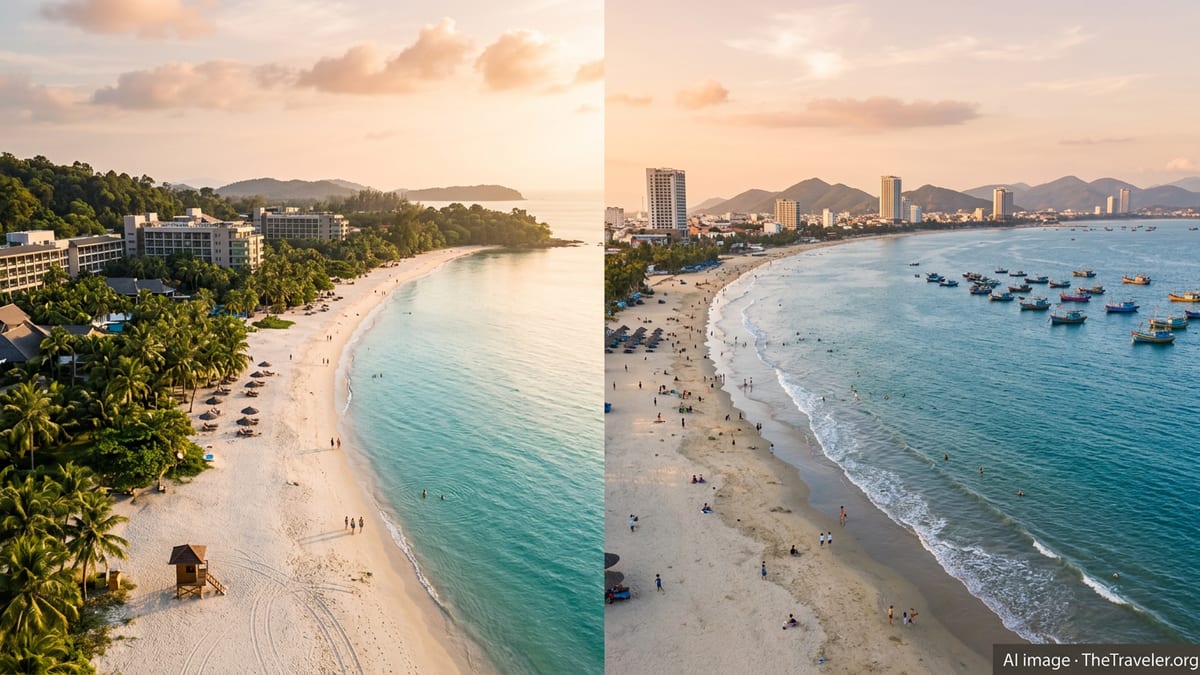
Malaysia and Vietnam sit side by side on the map of Southeast Asia, but the on-the-ground feel for visitors is strikingly different. Malaysia often comes across as measured and softly spoken, with a strong emphasis on order, shopping and family life. Vietnam feels louder, faster and more kinetic, with the constant movement of scooters, street vendors and construction shaping the soundscape of even mid-sized towns. Both are safe and generally welcoming, but the energy level is not the same, and this contrast is one of the most important factors for trip planning.
Malaysia’s social fabric is built on a multiethnic, multireligious foundation: Malay Muslim, Chinese, Indian and numerous Indigenous groups. This diversity shows in the range of religious sites, languages heard on the street and public holidays. The country’s official tourism messaging leans into harmony and modern comfort, and many travelers experience Malaysia as relaxed, relatively orderly and easy to navigate, especially in Kuala Lumpur and major resort areas. Alcohol is available but less central to social life, particularly in more conservative regions.
Vietnam, by contrast, is more ethnically homogeneous in its lowland cities, with ethnic Kinh Vietnamese forming the majority. Smaller ethnic communities are concentrated in highland regions like Sa Pa, Ha Giang and the Central Highlands. The dominant impression in Vietnam’s cities is one of momentum: coffee shops packed with young people scrolling on phones, night-time street food scenes that run well past midnight and booming domestic tourism that keeps popular sights busy year-round. The legacy of wars and rapid economic change is visible in museums, architecture and conversations with older residents, adding depth to the travel experience.
Travelers who prefer a calmer pace, smoother infrastructure and a softer sensory experience often gravitate to Malaysia. Those who thrive on bustle, improvisation and a sense of being swept along in daily local life usually find Vietnam especially rewarding. Neither is inherently better, but the contrast in rhythm and intensity is real and noticeable from the moment you arrive.
Heritage, Religion and Everyday Traditions
Malaysia’s cultural story is one of crossroads and coexistence. In Kuala Lumpur and Penang, you can move within a few blocks from a grand mosque to a Chinese temple thick with incense, then to a Hindu shrine crowded during festival days. The official religion is Islam, and this shapes everything from public signage to the rhythm of the day, with the call to prayer audible in many districts. Yet Chinese New Year, Deepavali and other non-Muslim celebrations are also major public events, and travelers quickly see how these distinct communities share civic space.
Penang’s George Town and Malacca are both UNESCO-listed for their layered heritage. In George Town, restored shophouses display Peranakan culture, a synthesis of Chinese and Malay influences visible in clothing, architecture and food. Malacca reflects centuries of Malay sultanate history, followed by Portuguese, Dutch and British rule. Even in small towns, the mix of languages on shop signs and the variety of religious buildings offer a gentle but constant reminder of Malaysia’s plural identity, making casual neighborhood walks a cultural experience in their own right.
Vietnam’s visible heritage is anchored in Confucian, Buddhist and folk traditions, overlaid with French colonial architecture and the more recent narrative of reunification. In Hanoi, the Temple of Literature, the Old Quarter’s guild streets and colonial villas present layers of history within close walking distance. Hue preserves imperial citadels, royal tombs and pagodas along the Perfume River, providing a strong sense of Vietnam’s pre-colonial dynastic past. Many travelers are also struck by the ubiquity of small ancestor altars in homes, shops and even hotel lobbies, a sign of how spiritual practices are woven into daily life.
War-era history is more central in Vietnam than in Malaysia. Museums in Hanoi, Ho Chi Minh City and the former demilitarized zone unpack conflicts with France and the United States, and tunnels and battle sites attract both domestic and international visitors. This aspect of travel in Vietnam can be emotionally demanding but also deeply educational, and it adds context to the country’s rapid transformation in the decades since.
Food Cultures: Hawker Heaven vs Street Stall Frenzy
Both Malaysia and Vietnam are major food destinations, and neither is likely to disappoint, but the way food culture is organized and the flavors you encounter show clear differences. Malaysia’s culinary scene is built on its multicultural foundations, with Malay, Chinese, Indian and Peranakan communities all contributing recognizable dishes and techniques. In practice, this means you can eat nasi lemak for breakfast, banana leaf curry for lunch and Chinese-style stir fry for dinner without leaving a single neighborhood.
Hawker centers and food courts are central to the Malaysian dining experience, especially in Penang, Kuala Lumpur and Johor Bahru. These semi-formal spaces gather dozens of stalls in one place, each focused on a handful of specialties, from char kway teow to roti canai. For travelers, this setup is convenient, social and relatively easy to navigate, especially if you are still building confidence with local food and language. Many centers offer clear signage in English and set prices, taking away some of the guesswork of street eating.
Vietnam’s food culture is more street-facing and dispersed. Rather than centralized food courts, you encounter clusters of vendors along sidewalks, down side alleys and on low plastic stools beneath tarps and umbrellas. Pho, bun cha, banh mi and endless regional noodle variations are prepared and eaten at eye level with daily life, often just meters from passing scooters. Night markets and curbside seafood restaurants, especially in coastal cities like Da Nang and Nha Trang, showcase just how central food is to socializing and leisure for Vietnamese travelers and families.
In recent years Vietnam has explicitly positioned its cuisine as a core national tourism product, with local authorities promoting food festivals and regional specialties as reasons to visit. For travelers, this has translated into more organized food tours, recipe classes and culinary events, particularly in major hubs like Hanoi, Hue and Ho Chi Minh City. At the same time, prices for simple street meals remain relatively low in both countries compared with Western standards, though Vietnam often feels slightly cheaper for basic dishes while Malaysia can edge higher in upscale malls and branded cafes.
Signature Dishes and Dietary Considerations
Malaysia’s signature foods are often rich, coconut-based and spice-forward. Nasi lemak combines coconut rice with sambal, fried anchovies and peanuts, while rendang features slow-cooked meat in a thick, aromatic sauce. Roti canai and teh tarik reflect Indian Muslim influences, and satay skewers grilled over charcoal appear at night markets across the country. Penang is widely regarded as Malaysia’s culinary capital, where char kway teow, asam laksa and Hokkien mee entice travelers to stay longer than planned.
Vietnamese cuisine leans lighter in many classic dishes, with abundant herbs, fresh greens and lime-based dipping sauces. Pho, bun bo Hue, bun cha, bun thit nuong and goi cuon (fresh spring rolls) highlight balance and contrast: hot broth and crisp herbs, char-grilled meats and cool pickles. Along the coast, grilled fish, clams and squid are served simply with salt, lime and chili, often at beachside plastic tables. Central Vietnam in particular is famous for small, snack-sized dishes, making cities like Hue and Hoi An ideal for grazing your way through local specialties.
For travelers with dietary restrictions, both countries are manageable with some planning. In Malaysia, halal considerations are central in Malay-run establishments, but Chinese and Indian eateries may feature pork and alcohol. Vegetarian and vegan options exist but are not default; Indian vegetarian restaurants are often the easiest choice for plant-based travelers, alongside modern cafes in Kuala Lumpur and Penang. In Vietnam, fish sauce and small amounts of pork often appear in broths, sauces and stir-fries even when meat is not clearly visible. That makes strict vegetarian or vegan travel more challenging outside major urban centers, although dedicated plant-based restaurants are now common in Hanoi and Ho Chi Minh City and increasingly present in Hoi An and Da Nang.
In both destinations, food hygiene varies from place to place. Malaysia’s reliance on structured food courts can make it easier for cautious travelers to choose busy, well-maintained stalls. In Vietnam, turnover at popular street spots is high, which can be reassuring, but it is wise to follow local crowds and opt for vendors who prepare food to order rather than reheating large batches that sit for long periods in the heat.
Beaches in Malaysia: Islands, Clarity and Comfort
Malaysia’s coastline is extensive, but the top-tier beach experiences for international visitors are concentrated in specific areas. Langkawi in the northwest, often described as the Jewel of Kedah, has evolved into one of the country’s flagship resort destinations, with long sandy crescents like Pantai Cenang backing onto a mix of family-friendly hotels, beach bars and more secluded upscale properties. Offshore islands around Langkawi offer calmer, clearer water and mangrove-lined inlets, and the destination continues to feature in roundups of Malaysia’s best beach getaways.
On the east coast of peninsular Malaysia, islands such as the Perhentians, Redang and Tioman are widely praised for clear turquoise water, coral reefs and relaxed village atmospheres. These islands are especially popular with divers and snorkelers during the dry season, roughly from March to October, when visibility and sea conditions are at their best. Many small resorts are simple but comfortable, while a growing number of higher-end properties target couples and families seeking more amenities without sacrificing easy access to the water.
Malaysian Borneo adds another dimension, with beaches around Kota Kinabalu, the islands of Tunku Abdul Rahman Marine Park and more remote resorts in Sabah and Sarawak. Here, rainforest meets sea, and travelers often combine beach time with wildlife encounters, such as orangutan rehabilitation centers and river safaris. While some west-coast mainland beaches near big cities are less impressive due to murkier water and proximity to ports and industry, the country’s standout islands and east coast strips remain competitive with other regional destinations and are regularly featured in best-beach lists for Southeast Asia.
Infrastructure on Malaysia’s main resort islands is generally reliable, with a mix of domestic flights and ferries connecting them to Kuala Lumpur and other hubs. This ease of access, coupled with a strong mid-range and family-friendly hotel scene, makes Malaysia particularly appealing to travelers who prioritize comfort, organized activities and a relatively smooth logistical experience over pure sense of discovery.
Beaches in Vietnam: Scenic Coasts and Emerging Islands
Vietnam’s best-known beaches stretch along its central and southern coast, with Da Nang often highlighted as a standout city-beach destination. My Khe and Non Nuoc beaches run for kilometers along the shoreline, offering soft sand, surfable waves at certain times of year and a skyline of modern hotels and apartments. For many first-time visitors, this area strikes a balance between a functioning Vietnamese city and a developed beach resort, making it easy to combine market visits and pagodas with lazy afternoons on the sand.
Farther south, Nha Trang has long been a classic beach stop, with a wide urban bay, offshore islands and a concentration of high-rise hotels. The city’s nightlife and seafood restaurants appeal to travelers who enjoy a busy, social atmosphere. The islands of Phu Quoc and smaller archipelagos off the coast have been promoted as emerging tropical escapes, with some beaches regularly cited for clear water and soft sand. At the same time, rapid development and uneven waste management in some areas mean that beach and water quality can vary significantly from cove to cove, and traveler reports often describe a mix of pristine spots and less well-maintained stretches.
Northern and central Vietnam also offer smaller beach destinations that are less internationally known but increasingly popular with domestic visitors. Coastal towns near Quy Nhon, Tuy Hoa and parts of Quang Binh province have long beaches bordered by low-rise development and fishing communities, where tourism is still evolving. Travelers who are willing to accept more rustic infrastructure are sometimes rewarded with quieter sands and more direct encounters with everyday coastal life, from basket boats heading out at dawn to evening seafood markets that cater mainly to local families.
Overall, Vietnam’s beach scene feels more varied and less standardized than Malaysia’s. You can find photogenic, often spectacular coastlines, but the experience can be uneven from one stretch of sand to the next, with differences in cleanliness, services and crowd levels even within a single bay. For some travelers this adds to the sense of exploration and local authenticity; for others it can be frustrating compared with the more consistently managed resort islands of Malaysia.
Costs, Comfort and Practical Travel Considerations
In terms of daily travel costs, both Malaysia and Vietnam still offer good value compared with Western destinations, but Vietnam typically feels slightly cheaper at the budget end, especially for local food, basic accommodation and short-distance transport. Simple guesthouses, street meals and intercity buses or trains can be very economical, particularly outside peak domestic holiday periods. In Malaysia, local eateries are also affordable and public transport in major cities is reasonably priced, but coastal resorts and island accommodations can climb in price, especially at well-known beaches and during school holidays.
Infrastructure is one of Malaysia’s strongest advantages. Major highways, domestic flight networks and intercity buses are generally efficient, and urban public transport in Kuala Lumpur and Penang is steadily improving. English is widely spoken in tourist areas and business districts, which simplifies everything from ordering food to dealing with minor travel issues. Vietnam has also expanded its domestic flight network and upgraded sections of its road system, but train speeds remain modest and traffic in large cities can be intense. English proficiency is improving in younger generations and in hospitality, yet communication can still require more patience and creativity than in Malaysia.
Weather patterns matter when comparing beaches. Peninsular Malaysia straddles two monsoon systems, which means that ideal beach conditions migrate between coasts over the year. The east coast islands, such as the Perhentians and Redang, typically shut down or scale back during the northeast monsoon, when seas are rough and many small boat services pause. Langkawi and parts of the west coast, by contrast, are often more appealing during this period. Vietnam’s long north to south axis creates its own complexity, with different regions experiencing their best beach weather at different times. Central coast beaches like Da Nang and Hoi An often shine from roughly March to August, while southern areas can be pleasant in the northern winter but humid and storm-prone later in the year.
For travelers concerned about overtourism, both destinations present a mix of busy hubs and quieter corners. Langkawi, Da Nang and Nha Trang are firmly on the international radar and can feel developed, particularly along their main hotel strips. However, Malaysia still has less internationally trafficked islands and coastal towns in both peninsular and Bornean regions, while Vietnam offers secondary coastal cities and villages that see far more domestic than foreign visitors. Choosing secondary locations, traveling slightly off season and staying in smaller, locally owned accommodations can help mitigate crowding in both countries.
Which Destination Fits Which Traveler?
Some travelers will be drawn to Malaysia’s blend of multicultural cities and polished island resorts. If you are planning a family trip with young children, or if you value easy logistics, predictable comfort and a wide range of mid-range hotels with pools and kids’ facilities, Malaysia often proves the more straightforward option. The combination of Kuala Lumpur, Penang and a few days on Langkawi or an east coast island makes for a varied yet manageable itinerary, with minimal need for overnight buses, long train rides or complex routing.
Vietnam, on the other hand, often appeals strongly to backpackers, independent travelers and those seeking a deeper sense of immersion and momentum at street level. A classic north to south route taking in Hanoi, Ha Long Bay or other karst landscapes, Hue, Hoi An, Da Nang and Ho Chi Minh City offers constant contrast in scenery and regional food, with beach time woven into the journey rather than forming the entire focus of the trip. For many visitors, the lasting memories from Vietnam are the scooter-choked intersections, dawn bowls of noodles on plastic stools and impromptu conversations on overnight trains as much as the beaches themselves.
For culture-forward travelers, both countries provide rich material but in different registers. Malaysia offers religious festivals, layered colonial and maritime history and the experience of shared public spaces between Malay, Chinese, Indian and Indigenous communities. Vietnam offers imperial citadels, war museums and an ongoing story of rapid urbanization and economic growth. Beach-focused travelers who prioritize reliable water clarity, comfortable resorts and easy access from a major international hub may find Malaysia more directly aligned with their goals, while those who are happy to accept some unevenness in exchange for more spontaneous encounters might prefer Vietnam’s evolving coastal scene.
Ultimately the decision need not be binary. Regional flight networks make it increasingly feasible to combine both countries in a single trip, using Kuala Lumpur or Ho Chi Minh City as gateways and stitching together a route that highlights each destination’s strengths. However, if time or budget limit you to one, clarifying whether you value polished comfort or kinetic immersion, and whether beaches or broader culture matter most, is the best starting point.
The Takeaway
Comparing Malaysia and Vietnam is less about ranking them and more about understanding their different personalities. Malaysia delivers a gentler sensory experience, strong infrastructure, multicultural cityscapes and some of Southeast Asia’s most approachable island resorts. Vietnam offers intensity, a powerful sense of motion and an endlessly varied street-level food culture, with beaches that range from urban crescents to emerging island hideaways.
If your ideal trip revolves around stress-free logistics, family-friendly facilities and the ability to sample diverse food and cultures within a single, comfortable framework, Malaysia may be the better first step into the region. If you are energized by the prospect of weaving through motorbike traffic, eating on sidewalks, navigating a more improvised transport network and mixing history-heavy cities with time on the sand, Vietnam is likely to captivate you.
Both countries reward slow travel and curiosity. Whether you choose mosque silhouettes against a Malaysian sunset or fishing boats bobbing off a Vietnamese beach at dawn, you will encounter a part of Southeast Asia that remains welcoming, complex and full of stories. The better you understand each country’s cultural rhythms, culinary traditions and coastline realities, the easier it becomes to choose the one that matches the journey you imagine.
FAQ
Q1. Which country is better for first-time visitors to Southeast Asia, Malaysia or Vietnam?
For travelers who prioritize ease and comfort, Malaysia usually feels more straightforward, while Vietnam offers a more intense, immersive experience that some first-timers find exhilarating.
Q2. Where are the beaches generally better, Malaysia or Vietnam?
Malaysia tends to offer more consistently clear water and well-managed resort beaches, while Vietnam has beautiful stretches that can vary more in cleanliness and development.
Q3. Is Malaysia or Vietnam cheaper for everyday travel expenses?
Vietnam often feels slightly cheaper for simple meals, budget accommodation and local transport, though both countries remain affordable compared with many Western destinations.
Q4. Which destination has more diverse food, Malaysia or Vietnam?
Malaysia’s cuisine is more overtly multicultural, drawing from Malay, Chinese, Indian and Peranakan traditions, while Vietnam offers deep regional diversity within a primarily Vietnamese culinary framework.
Q5. Is it easier to get by in English in Malaysia or Vietnam?
English is generally more widely spoken in Malaysia’s cities and tourist hubs, while in Vietnam you may need more patience and gestures, especially outside major urban areas.
Q6. Which country is better for families with young children?
Malaysia typically suits families well thanks to organized resorts, reliable infrastructure and a wide choice of mid-range hotels with family-friendly facilities near the beach.
Q7. How do I choose based on culture and history: Malaysia or Vietnam?
Choose Malaysia if you want to explore multi-faith, multiethnic urban histories, and Vietnam if you are particularly interested in imperial heritage, colonial legacies and modern war history.
Q8. When is the best time to visit beaches in Malaysia vs Vietnam?
Malaysia’s ideal beach season depends on coast and monsoon patterns, while Vietnam’s best beach weather shifts by region, so timing your trip around specific areas is important in both countries.
Q9. Can I visit both Malaysia and Vietnam on one trip?
Yes, many travelers combine them by flying between major hubs such as Kuala Lumpur, Hanoi or Ho Chi Minh City, though you will need enough time to avoid a rushed itinerary.
Q10. Which country is better if beaches are not my main priority?
If beaches are secondary, Vietnam’s varied north to south route with strong street food and historical sites can be especially rewarding, while Malaysia still offers rich city and highland experiences.