

More news on this day
Malaysia’s health authorities are issuing unusually stark warnings as tuberculosis cases climb past 3,100 nationwide just as tourist arrivals surge and Ramadan bazaars, iftar banquets and other festive gatherings pack enclosed city spaces and popular holiday destinations.
Sharp Rise in TB Cases During Peak Holiday and Festive Season
Malaysia’s Ministry of Health has confirmed 596 new tuberculosis cases in the sixth epidemiological week of 2026, bringing the cumulative total this year to 3,161. Officials say the upward trend is particularly worrying given the timing, with both international visitor numbers and domestic festive activities rising sharply across the country.
The latest surveillance figures show cases spread widely across the federation, with Sabah topping the tally, followed by the populous state of Selangor and the vast, largely rural Sarawak. Health authorities stress that while tuberculosis is not a new disease in Malaysia, the current spike during a period of intense public mixing has prompted them to strengthen public messaging and tighten surveillance around major transport and tourism hubs.
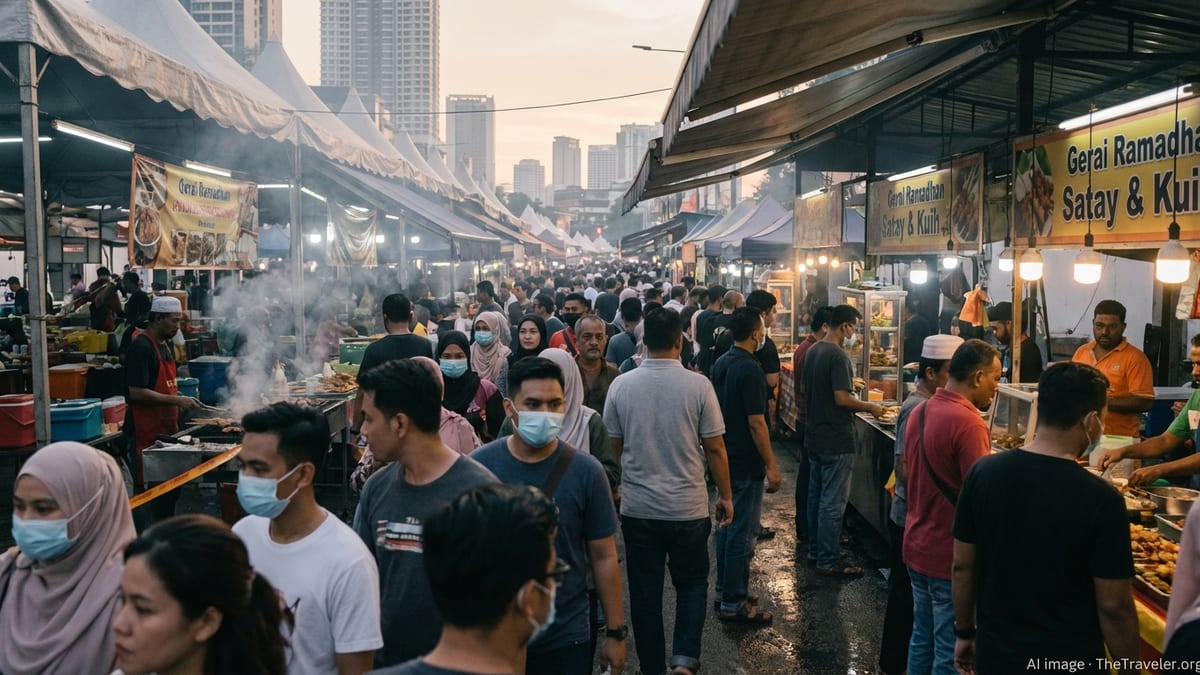
Officials note that the early weeks of 2026 have coincided with the return of large-scale Ramadan bazaars, communal iftar events and school holidays that drive domestic tourism to coastal resorts, hill stations and heritage cities. In many urban areas, popular night markets and food streets are once again drawing shoulder to shoulder crowds, creating conditions in which an airborne infection such as TB can spread more easily when an infectious person is present.
Health experts say the current pattern does not yet indicate an out-of-control epidemic, but it does underscore the need for heightened vigilance and rapid diagnosis. They emphasize that without timely detection and full adherence to treatment, TB can spread quietly through families, workplaces and tourism-linked service sectors before the scale of transmission becomes apparent.
Tourist Hotspots and Transport Hubs Under Greater Scrutiny
The resurgence of international travel has added a complex layer to Malaysia’s tuberculosis response. Major entry points such as Kuala Lumpur International Airport, Penang International Airport and the border crossings in Johor are now handling high volumes of foreign arrivals, from backpackers and regional shoppers to long-haul holidaymakers and returning diaspora.
Public health officers say they are working closely with airport and port authorities to boost on-the-ground messaging and symptom awareness among inbound visitors. While there are no blanket TB screening requirements for tourists, information on persistent cough, night sweats, weight loss and fatigue is being pushed through posters, public announcements and hotel industry briefings targeting front line staff who routinely interact with travelers.
Tourism corridors that link the capital to popular destinations such as Langkawi, Melaka and the east coast islands are also seeing more attention. Long bus rides and train journeys in air conditioned, tightly sealed coaches can create extended periods of shared air, a known risk factor when an infectious passenger is on board. Transport operators have been advised to improve ventilation where possible and to remind passengers to mask up if they feel unwell.
In major city centers, local travel and hospitality associations report receiving updated advisories urging them to encourage staff with prolonged cough or respiratory symptoms to seek medical evaluation promptly. Authorities stress that maintaining confidence in Malaysia as a safe, welcoming destination depends in part on keeping TB transmission in check among both residents and visitors.
Ramadan Bazaars, Festive Gatherings and Crowded Indoor Spaces
The timing of the TB spike alongside the holy month has drawn particular concern from health officials. Ramadan bazaars, indoor prayer halls and nightly iftar gatherings are all core to social and religious life, yet many take place in crowded, enclosed or semi enclosed spaces where airflow is limited and social distancing difficult.
The Health Ministry has gone out of its way to clarify that Ramadan itself is not a cause of tuberculosis. Instead, the risk stems from increased social interaction, especially when people spend long periods in close proximity. Officials warn that if a person with untreated, active pulmonary TB is present in a poorly ventilated setting and spends hours talking, laughing or coughing near others, the likelihood of infection climbs significantly.
Across Kuala Lumpur and other major cities, local councils have been urged to work with bazaar organizers to enhance ventilation at stalls and food courts, including improving air circulation, avoiding unnecessary enclosure of tents and encouraging operators to maintain personal hygiene standards. Visitors to these markets are being advised to wear masks in dense crowds, cover coughs and sneezes, and step outside periodically to fresher air.
Family gatherings and festive open houses present a more intimate but similar risk profile, particularly when they bring together older relatives, young children and individuals with chronic health conditions. Health professionals are urging hosts to keep windows open when possible, avoid overcrowding small rooms and ensure that guests with persistent coughs feel comfortable postponing visits until they are medically assessed.
Highest Burden States Face Dual Tourism and Health Pressures
Malaysia’s latest data highlight significant geographic differences in the TB burden. Sabah, on the island of Borneo, currently records the highest cumulative number of cases, followed by Selangor, Sarawak, Johor and the federal territories of Kuala Lumpur and Putrajaya. Several of these areas are also among the country’s busiest tourism and commercial centers.
Sabah’s appeal as a gateway to Mount Kinabalu, diving hotspots and wildlife tourism means its towns and cities see a steady turnover of domestic and foreign visitors. Yet many communities also contend with longstanding issues related to healthcare access, crowded housing and undocumented migration, all of which can complicate TB detection and treatment. The concentration of cases there has prompted calls for intensified community outreach, including mobile clinics and targeted screening in high risk neighborhoods.
In Selangor and the adjoining capital region, dense urban living, industrial workplaces and busy commuter corridors present a different set of challenges. Here, the focus is on strengthening workplace health programs and ensuring that low wage workers in service and construction sectors can access screening and treatment without fear of income loss or stigma.
Health officials reiterate that many other states, from Penang and Perak to Kelantan and Pahang, are also reporting cases, though at lower absolute numbers. With tourism routes cutting across state boundaries, authorities stress that no area can afford complacency. Instead, they argue, all regions need to reinforce basic respiratory hygiene and invest in early case finding to prevent further amplification of transmission.
Understanding How Tuberculosis Spreads and Who Is Most at Risk
Tuberculosis is caused by the bacterium Mycobacterium tuberculosis and spreads through the air when a person with active pulmonary disease coughs, speaks, laughs or sneezes. Unlike highly contagious viral infections, TB usually requires prolonged and repeated exposure, often in enclosed or poorly ventilated settings where expelled droplets and droplet nuclei can linger.
Health experts emphasize that simply passing a person with TB briefly in an open air market or on a street is unlikely to result in infection. Instead, higher risk scenarios tend to involve shared indoor spaces for extended periods, such as living in the same household, sharing a dormitory style room, or working closely together in confined offices or factory environments.
People with weakened immune systems, including those with certain chronic illnesses, undernourished individuals and the elderly, face a greater likelihood that infection will progress to active disease. Crowded housing, inadequate ventilation and limited access to healthcare further compound the risk. These factors are present in some migrant worker accommodations, urban low income districts and remote rural communities, making them key priorities for public health interventions.
At the same time, officials caution that TB does not respect social or economic boundaries. Anyone with persistent respiratory symptoms, especially a cough lasting more than two weeks, should seek medical evaluation regardless of background or travel history. Early identification of infectious cases, followed by prompt treatment, is essential to protect both households and wider communities.
Masking, Ventilation and Early Testing at the Heart of Official Advice
In response to the current surge, the Health Ministry’s advice has become more explicit and insistent. Members of the public are being urged to wear face masks in crowded indoor or semi enclosed spaces, particularly when attending Ramadan bazaars, religious gatherings, concerts, conferences or indoor tourism attractions such as aquariums, museums and shopping malls.
Authorities are also pushing a renewed focus on ventilation. Building managers have been encouraged to maximize fresh air intake in air conditioned venues, maintain ventilation systems properly and avoid sealing windows purely for comfort when crowds are large. In homes and small businesses, officials recommend opening windows and doors when possible and avoiding large numbers of people in small rooms for extended periods.
Equally critical is the emphasis on early testing and sustained treatment. Clinics and hospitals have been reminded to maintain a high index of suspicion for TB in patients with chronic cough, fever, night sweats or unexplained weight loss. Members of the public are told not to dismiss such symptoms as a lingering cold, especially if they work in customer facing roles or live with vulnerable individuals.
Health professionals underline that tuberculosis is treatable and curable with a full course of antibiotics taken over several months. However, incomplete or irregular treatment can lead to drug resistant strains that are much harder and more expensive to manage. They urge patients to adhere strictly to medical advice and to stay in regular contact with healthcare providers throughout the treatment period.
Balancing Open Borders, Economic Revival and Health Security
Malaysia’s unfolding TB challenge comes at a delicate moment in its broader post pandemic recovery. Tourism, aviation, hospitality and retail sectors have only recently regained momentum, and policymakers are wary of introducing measures that might discourage travel or dampen consumer activity during a crucial earning season.
So far, officials have avoided movement restrictions or blanket screening requirements at the border, instead framing their response around risk communication, community engagement and targeted interventions in high burden areas. They argue that with proper precautions, including mask wearing in crowded spaces, robust ventilation and rapid treatment of active cases, it is possible to safeguard public health while keeping borders and businesses open.
Industry stakeholders broadly support this approach but are calling for clear, consistent messaging to avoid confusion among travelers and operators. Hoteliers and tour providers say they need up to date guidance they can share with clients, especially group tour organizers and conference planners weighing whether to proceed with events in Malaysia in the coming months.
Public health advocates, meanwhile, stress that the current surge should be seen as a warning to invest more heavily in long term TB control, from strengthening primary care networks and laboratory capacity to improving living conditions in high risk communities. They argue that sustained, predictable funding for tuberculosis programs will be essential if Malaysia is to prevent periodic spikes from undermining both population health and its reputation as a safe, attractive destination.
What Travelers and Locals Can Do Now
For travelers already in Malaysia or planning a visit in the near future, health experts say the most effective steps are straightforward. Wearing a mask in crowded indoor environments, choosing well ventilated dining and entertainment venues, and seeking medical attention for a persistent cough can significantly reduce the risk of both contracting and spreading TB.
Visitors who plan to spend time volunteering, working in healthcare or staying in close quarters such as hostels and dormitories may wish to consult a healthcare provider before departure about any additional precautions and to ensure routine vaccinations and general health checks are up to date. While there is no universally recommended vaccine for all adult travelers against TB, individual circumstances may warrant tailored advice.
For local residents, the advice is similar but with added emphasis on protecting vulnerable household members and colleagues. Keeping living spaces airy, not delaying clinic visits for respiratory symptoms and supporting friends or relatives undergoing TB treatment to complete their course are all seen as vital contributions to community wide protection.
Health officials conclude that while the rise in cases and the crowded festive calendar create legitimate concern, the tools to control tuberculosis are well known and accessible. They maintain that with a combination of personal responsibility, community solidarity and sustained public health investment, Malaysia can navigate the current surge while continuing to welcome visitors and celebrate its rich tapestry of cultural and religious events.