

More news on this day
With parts of the Gulf grappling with travel disruptions and a temporary suspension affecting passenger movements through Doha, Malaysia is emerging as one of the clearest winners in global tourism, converting steady policy work and infrastructure investment into record visitor numbers and renewed international attention.
Get the latest news straight to your inbox!
Doha Disruptions Put Alternative Hubs in the Spotlight
Recent travel disruption linked to a temporary suspension affecting some passenger movements through Doha has underscored how dependent modern tourism is on a handful of aviation hubs. According to publicly available notices from Qatar’s tourism authorities in early March 2026, extended hotel stays and support were offered to stranded visitors as airlines adjusted schedules and capacity. The situation has prompted travellers and industry analysts to reassess routing choices and contingency plans across the region.
As carriers recalibrate networks and travellers seek more predictable connections, Southeast Asia’s diversified gateway structure has become more prominent. Kuala Lumpur International Airport, already a major low cost and full service hub, has benefited from a web of routes linking Europe, the Middle East, North Asia and Australasia. In this context, Malaysia’s position as both a transit point and a destination in its own right is gaining renewed strategic weight.
While Gulf hubs work through operational challenges, analysts note that travellers are increasingly open to itineraries that combine stopover convenience with compelling on the ground experiences. Malaysia, with its blend of modern infrastructure and varied tourism product, is well placed to capture that demand, turning global route volatility into fresh opportunity.
Record Arrivals Cement Malaysia’s Regional Tourism Lead
Published data for 2025 show Malaysia consolidating its status as Southeast Asia’s most visited destination. Coverage in regional business and travel media indicates that the country welcomed about 42.2 million international visitors in 2025, an increase of roughly 11 percent compared with 2024 and more than 20 percent above pre pandemic 2019 levels. This performance places Malaysia ahead of traditional regional rivals in pure arrivals terms and signals a decisive phase of post pandemic recovery.
Tourism officials have acknowledged that Malaysia fell short of its own 2024 target with just over 25 million international tourists, but the subsequent surge has surprised even optimistic forecasts. Independent analyses and bank research reports describe a strong rebound through 2025, with double digit year on year growth in the first half and particularly robust demand from neighbouring ASEAN markets, China and long haul source countries such as Australia, the United Kingdom and the United States.
Malaysia is now openly targeting around the mid 40 million range in international visitors by 2026 as part of its flagship Visit Malaysia 2026 campaign. Economic briefings suggest that tourism receipts are rising in tandem, with sector revenues and contribution to GDP surpassing pre pandemic benchmarks. This combination of volume and value is reinforcing Malaysia’s reputation as a tourism powerhouse at the precise moment that disruptions elsewhere are raising questions about concentration risk.
Policy, Visas and Infrastructure Drive “Unstoppable” Appeal
The country’s momentum is not an accident. Publicly released policy documents and industry commentary point to a mix of visa facilitation, digital border systems and transport investment that has steadily lowered friction for visitors. The Malaysia Digital Arrival Card, introduced as a mandatory requirement in 2024, is one element of a broader effort to streamline entry procedures and reduce processing times at airports and land borders.
At the same time, Malaysia has expanded visa free or simplified entry for key markets and coordinated marketing campaigns across its major regions, from Peninsular Malaysia to Sabah and Sarawak. Analysts say this approach has paid dividends in repeat visitation from nearby Singapore and Indonesia, while also making the country more attractive for first time visitors from emerging markets in South Asia and the Middle East.
Infrastructure upgrades have reinforced this policy push. Kuala Lumpur International Airport continues to increase its handling capacity, while secondary gateways such as Penang and Kota Kinabalu report rising passenger numbers and new international routes. Domestic connectivity, including improved highways and expanded low cost carrier networks, allows visitors to combine urban, island and highland experiences within a single trip, strengthening the perception of Malaysia as a high value, easy to navigate destination.
Diverse Experiences Outcompete Single City Stopovers
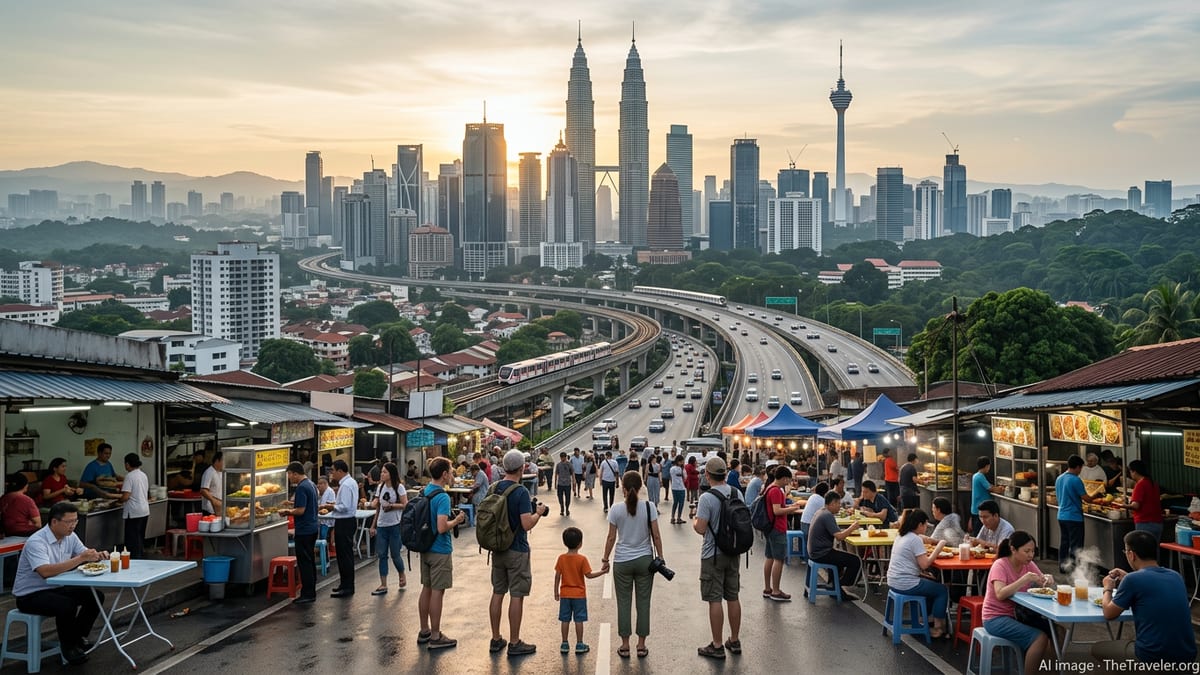
One of Malaysia’s strongest advantages, highlighted repeatedly in travel features and social media coverage, is the sheer diversity of experiences available within its borders. Kuala Lumpur’s skyline and shopping districts sit within a short flight of Langkawi’s beaches, Borneo’s rainforests and heritage rich cities such as George Town and Melaka. For travellers weighing a pure transit stop in a single city against a multi day stay in a varied destination, the trade off is becoming more obvious.
Tourism analysts point out that this breadth allows Malaysia to capture multiple market segments at once: budget conscious regional visitors driving cross border land arrivals, family travellers seeking theme parks and resorts, nature enthusiasts drawn to diving sites and national parks, and digital nomads attracted to café culture and relatively affordable long stays. This mix reduces reliance on any single source market or product, supporting resilience when external shocks hit air corridors or particular regions.
Crucially, Malaysia’s tourism brand has shifted from value only to value plus quality. Reports from hospitality consultancies note rising investment in upscale hotels, integrated resorts and eco lodges, alongside continued growth in mid range and budget options. The result is a layered accommodation landscape that can absorb surging demand without diluting the visitor experience, an increasingly important differentiator as global travel volumes climb.
Global Route Realignments Could Boost Malaysia Further
As airlines and travellers adapt to the recent Doha related suspension and broader air traffic uncertainties, network planners are reexamining the balance between mega hub concentration and more distributed connection patterns. Aviation analysts suggest that long haul carriers may lean more heavily on Southeast Asian hubs where local demand is strong enough to support point to point traffic even when transfer flows fluctuate.
Malaysia’s recent tourism performance strengthens its case in these deliberations. Strong outbound and inbound flows, underpinned by millions of regional visitors and a growing base of long haul arrivals, offer airlines a degree of demand security. Industry commentary already notes an uptick in new and restored services into Kuala Lumpur and other Malaysian airports, including routes from secondary cities in East Asia and the Middle East.
If these trends continue, Malaysia could see a virtuous cycle: more flights improving access, higher visitor numbers supporting further investment, and an increasingly sophisticated tourism offering keeping the country top of mind as other hubs navigate operational or regulatory turbulence. While the Gulf works through its current challenges, Malaysia’s tourism machine appears set not only to keep winning, but to redefine what a resilient, demand driven destination looks like in the mid 2020s.