

More news on this day
Palma de Mallorca is moving into a new phase of its tourism story, tightening controls on cruise arrivals and expanding sustainability measures as local pressure mounts to curb overtourism in the Balearic capital.
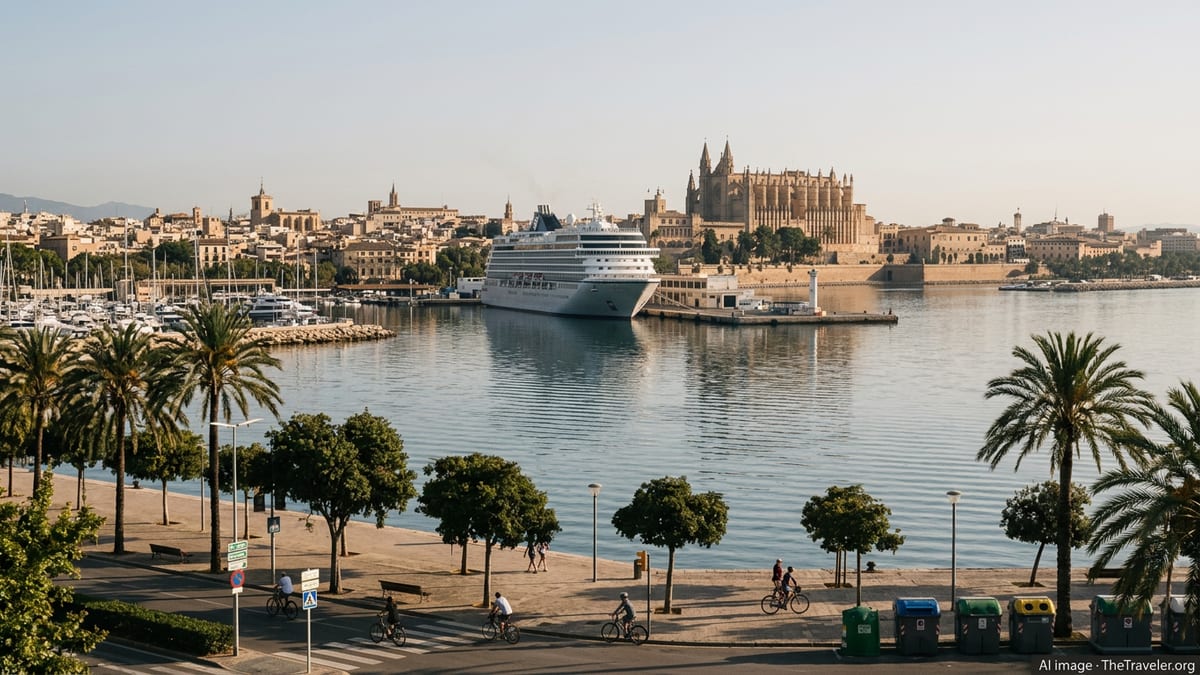
New Deals on Cruise Limits in Palma’s Port
The port of Palma, one of the busiest cruise hubs in the Mediterranean, is entering a new era of capacity management. A memorandum between the Balearic government, Palma City Council and major cruise lines has renewed and updated the earlier pledge to cap daily arrivals, keeping a formal limit of three cruise ships per day while targeting a lower average number of passengers in the peak months.
From 2027 to 2029, authorities and industry partners have agreed to reduce the daily average of cruise berths in summer from around 8,500 passengers to 7,500 between June and September, while maintaining the current ceiling in the rest of the year. Industry group Cruise Lines International Association has backed the deal, describing it as a way to provide predictability for operators while responding to environmental and social concerns.
Campaigners against mass cruising say the headline cap can be misleading, pointing out that weekly and annual passenger totals can still match or exceed recent records. Local anti-cruise platform groups have criticised the latest agreement as offering only marginal reductions, accusing authorities of “cosmetic” changes that do not fundamentally relieve crowding in Palma’s compact historic centre.
The result is a complex compromise: capacity is no longer unlimited, but pressure in high season remains intense. For visitors, that means cruise calls will still be frequent, but the city is increasingly scrutinising how and when ships dock and how passengers move through the urban fabric.
Tourist Taxes and the Push for Sustainable Funding
Alongside limits on physical capacity, Mallorca is betting heavily on financial tools to steer its tourism model. The Balearic Sustainable Tourism Tax, sometimes known as the eco-tax, has become a central pillar in the region’s strategy, with higher rates in the summer and reductions or exemptions in the quietest winter months under measures advanced in 2024 and 2025.
Recent regional plans have earmarked hundreds of millions of euros from the tax for projects ranging from coastal protection and water infrastructure to heritage restoration, skills training and climate adaptation. A majority of these funds are set to flow to Mallorca, reflecting both its role as the main gateway island and the scale of the environmental pressures it faces.
The debate over how far to go is far from settled. Proposals from political parties and trade unions to sharply raise the tax in July and August, even up to several times the current highest rate, have sparked intense negotiation in the Balearic parliament. While some initiatives to double the tax or impose steep surcharges on rental cars have been rejected or put on hold, opinion surveys show broad public support in Mallorca for making visitors contribute more during peak months.
For cruise passengers, the impact is increasingly visible in the form of per-night or per-call levies that feed directly into the sustainable tourism pot. Travellers arriving by sea are advised to factor these charges into their budgets, understanding that they are helping to finance the island’s shift toward a greener, more resilient tourism economy.
City Rules: Managing Crowds on Palma’s Streets
On the streets of Palma, authorities are complementing port and tax measures with a tightening of local rules aimed specifically at crowd control and behaviour. New municipal ordinances target excessive noise, alcohol consumption in public spaces, and large guided groups overwhelming narrow alleys in the old town, echoing steps taken in other saturated European city centres.
The city has introduced stricter limits on the size of tour groups in the most sensitive historic zones and has reinforced rules against activities such as unauthorised street camping and disruptive bar crawls. These measures are partly a response to the surge in day-trippers arriving from cruise ships, who often cluster in the same few squares and viewpoints within a short time window.
Fines running into the thousands of euros for serious breaches of the regulations are designed both as a deterrent and as a signal to residents that their concerns are being heard. Local business associations are divided: some fear that tighter rules and lower passenger throughput could hurt takings, while others argue that preserving the city’s liveability is essential for long-term visitor appeal.
For visitors, the message is clear. Palma is welcoming, but it is also asserting boundaries. Respecting signage about restricted areas for groups, avoiding noisy behaviour in residential streets and following local guidance will be increasingly important to enjoying the city without adding to tensions.
Local Backlash and the Politics of Overtourism
The new wave of regulation comes against a backdrop of unusually vocal public protest. In 2024 and 2025, thousands of residents took to the streets across the Balearic Islands, with major marches in Palma calling for “less tourism, better tourism” and urgent action on housing affordability, environmental stress and quality of life.
Demonstrators have linked soaring tourist numbers, including those from cruise arrivals, to rising rents, crowded public services and the loss of local character in central neighbourhoods. Graffiti and banners critical of mass tourism have appeared near the port and in popular districts, highlighting a growing sense that the social contract around tourism has been stretched to breaking point.
Regional leaders now routinely frame their agenda in terms of “containment” and “quality over quantity,” promising to cap visitor numbers, clamp down on illegal holiday rentals and channel more funds into public infrastructure. At the same time, they must balance these goals with the sector’s enormous economic weight, especially for jobs tied to cruise operations, hospitality and retail.
This tension plays out in every negotiation over cruise caps, tax levels and city rules. While environmental and community groups often argue that the measures are not ambitious enough, business lobbies warn against sudden cuts that could undermine employment. Travellers arriving in Palma in 2026 will find themselves at the centre of this evolving debate.
What Cruise Visitors Need to Know for 2026 and Beyond
For people planning a cruise call in Palma, the immediate takeaway is that the city remains a major Mediterranean stop, but with more structure and scrutiny than a few years ago. Ship numbers are being moderated rather than slashed, visitor flows in the historic centre are more regulated, and seasonal taxes are higher in summer, particularly at the upper end of the accommodation market.
Passengers can expect continued crowding on peak days, particularly when two or three large vessels arrive at similar times, but with more visible signage, police presence and stewarding around key pinch points such as the cathedral area and the most famous shopping streets. Booking guided tours that spread visits across lesser-known neighbourhoods or that use sustainable transport options, such as cycling or public buses, is increasingly encouraged by both authorities and responsible operators.
Environmentally minded travellers may wish to look for cruise lines that highlight emissions reductions, shore power connections in port or participation in local conservation projects. Many of these initiatives are voluntary, but under growing public pressure, operators are using Palma as a showcase for cleaner technologies and more sensitive shore excursion design.
The broader trend is clear: Mallorca is not closing its doors to cruise tourism, but it is trying to redefine the terms of the relationship. Visitors who are prepared to pay local taxes, follow city rules and seek out less crowded experiences will find that they align closely with Palma’s new sustainability narrative, helping to ease overtourism while still enjoying one of the Mediterranean’s signature urban island destinations.