

More news on this day
Malta has emerged as one of Europe’s most dynamic tourism success stories, closing 2025 with more than four million visitors and some of the continent’s fastest-growing tourism revenues, outpacing larger markets such as Poland, Spain, Finland and Latvia in rate of expansion.
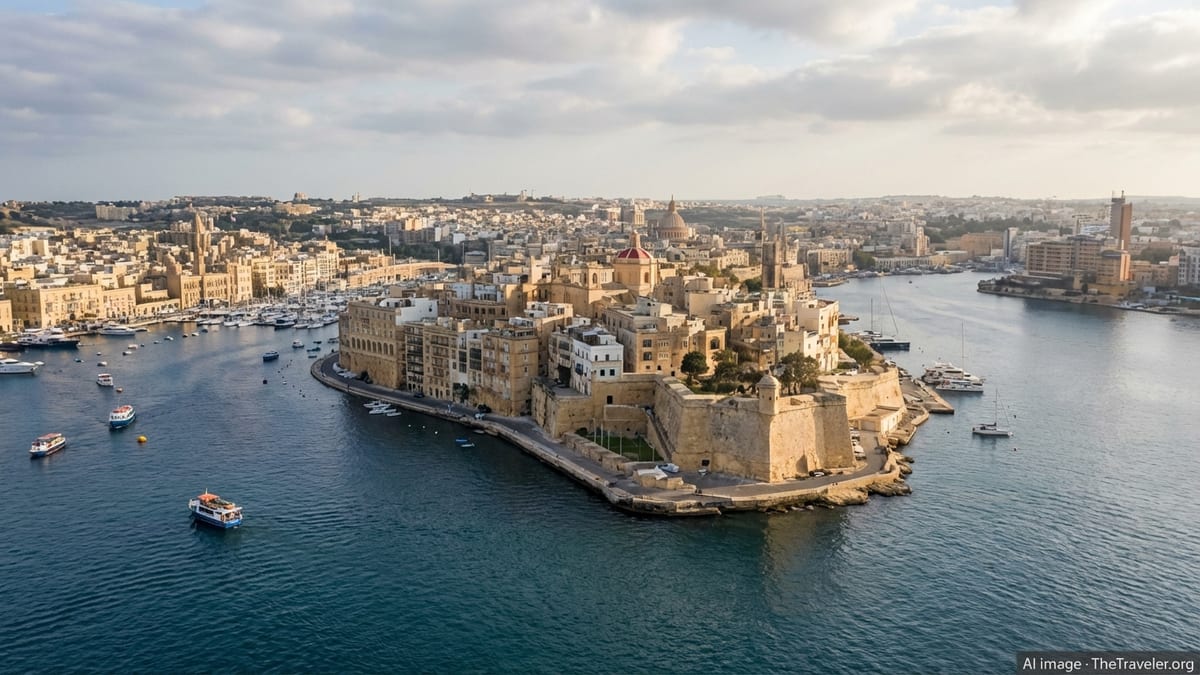
Record-Breaking 2025 Caps Two Years of Explosive Growth
Fresh data from Malta’s National Statistics Office show that the islands welcomed 4,022,310 inbound tourists in 2025, a 12.9 percent rise over the previous year and the first time the country has crossed the four‑million threshold. The latest figures confirm that the Mediterranean microstate has gone well beyond its pre-pandemic benchmarks, consolidating a sharp rebound that began in 2023 and accelerated through 2024.
Tourism expenditure climbed even faster, reaching about €3.9 billion in 2025, up 18.6 percent year on year. That follows the €3.3 billion recorded in 2024, when arrivals stood at 3.56 million and already represented a 19.5 percent increase over 2023. Taken together, the two-year surge has lifted Malta’s inbound tourism volumes by nearly one third and tourism receipts by well over that pace, confirming that visitors are not only coming in greater numbers but spending more while they are on the islands.
Visitors in 2025 spent around 25.4 million nights in Malta, an 11 percent jump compared with 2024. Officials say this translated into the sharpest increase in guest nights recorded anywhere in the European Union, far exceeding the roughly 2 percent average for the bloc. The result has helped cement tourism’s role as a core engine of Malta’s economy, with direct and indirect contributions spreading across hospitality, transport, retail and culture.
Government and industry leaders describe the 2025 results as a “decisive moment” for Maltese tourism, marking a transition from post-pandemic catch-up to a new phase of strategic growth. They argue that the challenge now is not simply to attract more visitors but to shape a tourism model that is more resilient, diversified and sustainable than before.
Outperforming Europe in Revenue and Growth Rates
While absolute visitor numbers in larger destinations such as Spain, France or Italy remain far higher, Malta’s growth rates since 2019 have been among the strongest in Europe. Between 2019 and 2024, inbound visitors to Malta grew by about 29 percent, compared with roughly 1 percent across Europe as a whole and single-digit growth in Southern Europe. In 2024 alone, Malta’s 19.5 percent jump in arrivals contrasted with a European average closer to 5 percent.
Just as striking has been the surge in tourism revenue. Tourist expenditure in Malta rose by 23.1 percent in 2024 and a further near‑19 percent in 2025, easily outpacing the growth seen in many larger European economies. In Spain, for example, income from foreign tourists increased by 6.8 percent in 2025, a healthy gain but significantly below Malta’s pace. Similar patterns can be observed when comparing Malta’s trajectory with mid-sized markets such as Poland and Finland, where tourism receipts have been expanding more gradually from a larger base.
The Malta Tourism Authority (MTA) and the Tourism Ministry have been keen to emphasize that this is not simply a story of pent-up demand after the pandemic. Officials point out that Malta is now outperforming European averages both against 2023 and against the last pre-pandemic year, 2019. In other words, the country has not only recovered lost ground but carved out a stronger competitive position in a crowded regional landscape.
Economists note that while headline comparisons with much larger markets must be treated cautiously, Malta’s double-digit rises in both arrivals and expenditure underscore a pattern of catch-up that is rare among mature European destinations. The islands’ ability to grow revenue faster than visitor numbers suggests that the strategy of targeting higher-spending segments, rather than simply chasing volume, is starting to yield tangible returns.
Shifting Toward Higher-Value, Year-Round Tourism
A central message emerging from recent national tourism conferences has been Malta’s deliberate pivot toward “high-value” tourism. Industry leaders argue that the key metric is no longer headcount alone, but the combination of visitor spending, seasonality patterns and the broader value generated for local communities.
Average expenditure per visitor in 2024 was estimated at around €924, and more recent data through 2025 point to an upward trend, with per‑capita spending edging closer to €1,000. At the same time, off-peak travel has become a critical driver of growth. Between 2023 and 2024, winter tourism to Malta increased by around 23 to 26 percent, and that momentum carried into 2025, when off-season months posted some of the strongest gains in arrivals and spending.
Officials say this shift reflects targeted marketing efforts promoting Malta as a year-round destination for culture, sports, conferences and short breaks. Campaigns have highlighted the islands’ mild winters, historic urban cores in Valletta and the Three Cities, and niche offerings ranging from diving and film tourism to religious and language travel. Airlines and tour operators have added capacity outside the traditional summer peak, helping to smooth out the seasonal spikes that once defined Maltese tourism.
The focus on higher-value and more evenly distributed tourism also aligns with broader sustainability goals. Authorities argue that by spreading visitors more evenly across the calendar and encouraging longer, higher-spend stays, Malta can support local businesses without putting undue strain on infrastructure or residents during a short, intense peak season.
Key Source Markets: Poland, the UK and Italy Drive Momentum
Behind the headline numbers lies a notable reshaping of Malta’s source markets. The United Kingdom and Italy remain the largest contributors in absolute terms, together accounting for a significant share of arrivals in 2024 and 2025. However, some of the most dramatic percentage increases have come from Central and Eastern Europe, particularly Poland and Hungary.
In 2024, inbound tourists from Poland surged by more than 58 percent compared with the previous year, making it one of Malta’s fastest-growing markets. Hungary and the Netherlands also recorded double-digit increases, while traditional Western European markets such as France and Germany posted solid but more moderate growth. By 2025, travellers from the UK, Italy and Poland together represented over 40 percent of all inbound tourists in some months, highlighting their central role in underpinning Malta’s tourism expansion.
Industry observers attribute Poland’s rapid growth as a source market to a combination of increased air connectivity, competitive pricing and targeted promotion. Low-cost carriers have strengthened direct links between Maltese airports and Polish cities, while Malta’s positioning as a sunny, culturally rich alternative to more crowded Mediterranean hotspots has resonated with Polish travellers.
Compared with other European destinations competing for the same markets, such as Spain, Croatia or Greece, Malta’s compact size and dense cultural offering have proven attractive for short and medium-length breaks. The strengthening of midweek and shoulder-season traffic from countries like Poland and Latvia is also helping Malta to reduce its reliance on traditional summer charter flows.
How Malta’s Growth Compares With Spain, Poland and the Nordics
When set against the broader European picture, Malta’s performance in 2024 and 2025 stands out less for its absolute scale than for its rapid rate of expansion. Spain, one of the world’s tourism powerhouses, welcomed 96.8 million foreign visitors in 2025 and posted record revenues. Yet the Iberian country’s 3.2 percent increase in arrivals and 6.8 percent rise in tourism income last year remain well below Malta’s double-digit jumps in both indicators.
Similarly, while Poland has seen healthy growth in its own inbound tourism, its expansion has been more gradual from a much larger base. Nordic destinations such as Finland and Baltic states like Latvia have also benefited from the regional travel rebound, but their year-on-year increases in arrivals and spending have tended to track more closely to European averages, rather than the outsized gains reported by Malta.
Analysts caution that smaller states often display more volatile percentage changes, particularly when recovering from external shocks such as the pandemic. Even so, Malta’s ability to sustain strong growth over two consecutive years suggests that the current upturn is being driven by structural factors rather than one-off events. Investments in air connectivity, accommodation, product diversification and digital marketing are frequently cited as key contributors.
The comparison with larger economies also underscores the strategic choices facing Malta. Unlike Spain, which must manage tens of millions of visitors across multiple regions, Malta’s compact geography allows for more concentrated interventions, but also magnifies pressure on infrastructure and communities when growth accelerates.
Reshaping the Islands: Infrastructure, Environment and Resident Concerns
The rapid increase in visitor numbers has inevitably reignited debate within Malta about tourism’s long-term impact on quality of life, the environment and public services. Hospitality and business groups broadly welcome the revenue boost, pointing to job creation and tax income. Residents in some localities, however, express concerns about crowding, noise and pressure on housing and transport.
Authorities say they are acutely aware of these tensions. Recent policy discussions have focused on steering the sector toward a “lower-impact” model that privileges value over volume. Measures under consideration include more stringent enforcement around short-term rentals, planning controls in high-density tourism zones, and incentives for upgrades that improve energy efficiency and reduce resource use in hotels and guesthouses.
Transport and connectivity are also under the spotlight. With more than four million tourists entering a country of roughly half a million residents in 2025, questions have been raised about airport capacity, public transport reliability and congestion in popular areas such as Valletta’s historic core and coastal resorts in the north. Investment in ferry links, pedestrianisation projects and digital ticketing is being explored as part of a wider strategy to keep the visitor experience positive while easing local frustrations.
Environmental groups, meanwhile, argue that Malta’s fragile coastal and marine ecosystems must be protected as tourism numbers rise. Pressure points include coastal construction, beach erosion and the impact of recreational boating and diving on marine habitats. Regulators have responded with new management plans for sensitive areas and campaigns aimed at promoting responsible visitor behaviour, but calls for stricter enforcement are likely to grow as the tourism curve continues upward.
Gozo, Comino and the Push to Spread Benefits
One of the more striking trends in the latest tourism data is the strong performance of Malta’s sister islands, Gozo and Comino. In 2025, well over half of all inbound tourists visited at least one of the two islands as either day-trippers or overnight guests, with some months seeing roughly 57 percent of visitors crossing the channel to the north.
This shift reflects deliberate efforts to spread tourism flows beyond the main island and reduce concentration in traditional hotspots. Gozo has positioned itself as a slower-paced, rural complement to Malta’s urban and cultural attractions, promoting farmhouse stays, hiking, diving and agritourism. Comino, with its famed Blue Lagoon, remains a magnet for day visitors, though rising numbers there have prompted calls for stricter visitor management.
Local councils and businesses in Gozo say the increased traffic has provided a vital boost to small enterprises, from family-run guesthouses to restaurants and activity providers. At the same time, they warn that infrastructure on the smaller islands must keep pace, particularly in areas such as waste management, public transport and coastal protection.
Policy-makers view the stronger performance of Gozo and Comino as evidence that Malta’s tourism offer is becoming more geographically diversified. If managed carefully, they argue, this could ease pressure on heavily visited urban areas while ensuring that the economic benefits of tourism are felt more evenly across the archipelago.
Next Chapter: Consolidating Gains Amid Global Uncertainty
The outlook for 2026 is broadly positive but more cautious. Following the double-digit expansion of 2024 and 2025, officials expect growth in arrivals to moderate as the market matures and global economic uncertainties weigh on long-haul travel. The Malta Tourism Authority has already signalled that its priority is to consolidate recent gains rather than simply chase new volume records.
Plans for the next phase include intensifying efforts in higher-spend segments such as cultural tourism, gastronomy, meetings and incentives, and niche sports events. Authorities also intend to deepen outreach in long-haul markets in North America, Latin America and the Asia-Pacific region, where visitors tend to stay longer and spend more, while continuing to reinforce connectivity with core European markets.
Digital tools, including artificial intelligence and big-data analysis, are set to play a larger role in forecasting demand, adjusting pricing strategies and tailoring promotions. Industry leaders argue that better insight into visitor behaviour will be crucial if Malta is to keep attracting higher-value tourists while managing capacity.
As Malta surpasses the symbolic milestone of four million visitors and posts some of Europe’s most robust tourism revenue growth, the central question now is how the islands can preserve the qualities that draw travellers in the first place. For policy-makers, residents and businesses alike, the challenge is to convert a surge in numbers into a long-term, sustainable advantage in an increasingly competitive European tourism landscape.