

More news on this day
Rail passengers using Manchester Piccadilly are being urged to prepare for major disruption this weekend, as extensive engineering works slash train services and close most platforms at one of the UK’s busiest city hub stations.
Get the latest news straight to your inbox!
Major Engineering Blockade Reduces Services to a Trickle
According to publicly available information from Network Rail and train operators, Manchester Piccadilly is undergoing a substantial blockade on the southern approach, with intensive track and signalling upgrades scheduled over a nine day period in February 2026. The works involve replacing multiple sets of points, renewing cabling and sleepers, and modernising lineside equipment on the approaches used by many long-distance and regional services.
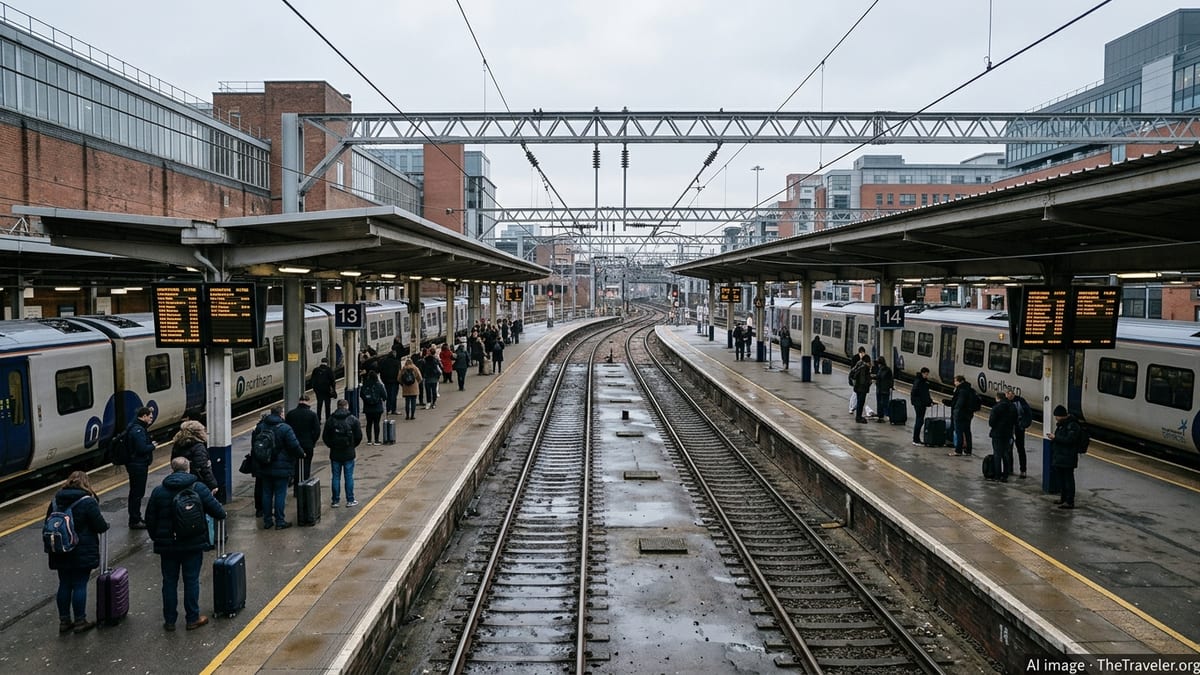
To carry out the project safely, platforms 1 to 12 in the main train shed are closed for the duration of the blockade. Only the two through platforms on the south side of the station, platforms 13 and 14, remain available for a skeleton timetable. As a result, operators have heavily reduced or diverted services that would usually start, terminate or call at Piccadilly, particularly those arriving from the south and from Manchester Airport.
Timetables indicate that this weekend’s services are significantly curtailed, with far fewer trains per hour into the city centre and extended journey times on many routes. Some trains that normally run through Piccadilly are instead terminating at other Manchester stations or bypassing the city entirely, while replacement buses are in use on key corridors.
Passengers are being advised in published guidance to check journey planners before travelling, allow additional time and expect last-minute alterations. With only limited capacity on platforms 13 and 14, crowding and bottlenecks are forecast at peak times over the weekend.
Platforms 1–12 Closed, Pressure Mounts on 13 and 14
Manchester Piccadilly normally has 14 platforms, but only platforms 13 and 14 are through lines that carry services across the city via Manchester Oxford Road. These two platforms are already known as congestion hotspots in normal conditions, handling a mix of local, regional and long-distance trains and acting as a crucial link between routes from the airport, North Wales, Merseyside, Yorkshire, the North East and Scotland.
With the main concourse platforms 1 to 12 closed, all remaining rail movements at Piccadilly this weekend are being funneled through 13 and 14. Industry briefing documents describe the service as “heavily reduced”, reflecting the constrained capacity on these two narrow, elevated platforms and the complex signalling layout on the approach.
Rail community groups and passenger forums have long highlighted the pressure on platforms 13 and 14, frequently citing crowded conditions and short turnaround times as trains arrive and depart in quick succession. The current blockade amplifies those longstanding pinch points, concentrating even more passengers and services into the limited space that remains open.
While some travellers may benefit from direct services that continue to run via platforms 13 and 14, many others will find their usual trains withdrawn, rerouted or replaced by buses, particularly on routes heading into Piccadilly from the south and south-east.
Replacement Buses, Diversions and Longer Journeys
Network Rail and operators including Northern, TransPennine Express, CrossCountry and Avanti West Coast have set out a range of alternative arrangements while the works take place. Information made public in advance of the blockade highlights a combination of replacement buses, diversions via Manchester Victoria or other regional hubs, and in some cases, complete service suspensions into Piccadilly.
For many passengers, the most visible impact will be the use of rail replacement buses between key suburban stations and alternative city terminals. These buses typically add significant time to journeys and can be affected by weekend road traffic, especially around central Manchester and along busy arterial routes.
Some long-distance services are diverted away from Piccadilly altogether, calling instead at intermediate stations where passengers can interchange to other trains. In a number of cases, operators have reduced frequencies or shortened routes to fit within the constrained capacity on platforms 13 and 14.
Journey planners for the affected weekend show extended end-to-end travel times and additional changes for many routes that usually run direct into Manchester Piccadilly. Travellers heading to events, flights from Manchester Airport or weekend city breaks are being encouraged in operator announcements to verify the status of their specific trains on the day of travel.
Impact on Commuters, Visitors and Local Connections
Although the blockade has been scheduled to span two weekends and the school half-term period, the reduction in services still heavily affects regular commuters, leisure travellers and visitors to Manchester city centre. Piccadilly is a primary gateway to the city, connecting the local tram network, regional buses and intercity rail, and disruption at this hub ripples across the wider transport system.
Passengers arriving on the limited rail services running into platforms 13 and 14 can expect busier-than-usual walkways, concourse areas and interchange points. The southern platforms are accessed via a long elevated link, which has itself been a focus of past customer complaints due to congestion and the reliability of escalators and travelators.
Local connections are also affected, with some suburban stopping patterns altered and certain stations temporarily losing their direct Piccadilly links. Travellers who normally change trains at Piccadilly may need to adjust their plans to change at Manchester Victoria, Stockport or other nodes on the network, depending on the route.
Tourism bodies and city-centre businesses rely heavily on rail access to bring visitors into Manchester’s shopping, cultural and nightlife districts. While many visitors will still be able to reach the city via alternative routes, the reduced timetable and added complexity may deter some discretionary trips over the affected weekend.
Part of a Wider Upgrade to the Manchester Rail Corridor
The works at Manchester Piccadilly this weekend form part of a broader programme aimed at improving reliability on the busy rail corridor through central Manchester. Industry documents describe a need to modernise ageing infrastructure dating back several decades, with the goal of reducing signalling faults and track failures that have frequently disrupted services in the region.
In recent years, debates about capacity at Piccadilly have focused particularly on the constrained layout around platforms 13 and 14. Proposals associated with the wider Northern Hub scheme previously included extra through platforms and further track enhancements, although not all of those plans have progressed.
The current nine day blockade, including this weekend’s closure of the main platforms, is framed in official briefing material as a “once-in-a-generation” opportunity to undertake complex work that is difficult to schedule during normal operations. While the immediate impact for passengers is significant, rail planners argue that the upgrades should lead to more reliable journeys and fewer last-minute cancellations on key routes once the work is complete.
For now, however, travellers heading to or through Manchester Piccadilly this weekend face a challenging combination of slashed services, closed platforms and unfamiliar diversion routes. Those who do need to travel are being urged in public communications to plan ahead carefully, consider alternative stations where possible and allow extra time to navigate what is expected to be one of the most disruptive periods for the station in recent years.