

More news on this day
UK rail passengers are preparing for severe disruption as Manchester Piccadilly, one of the country’s busiest rail hubs, undergoes a major track and signalling overhaul that will shut most platforms and ripple across train and tram networks over a crucial winter weekend.
Get the latest news straight to your inbox!
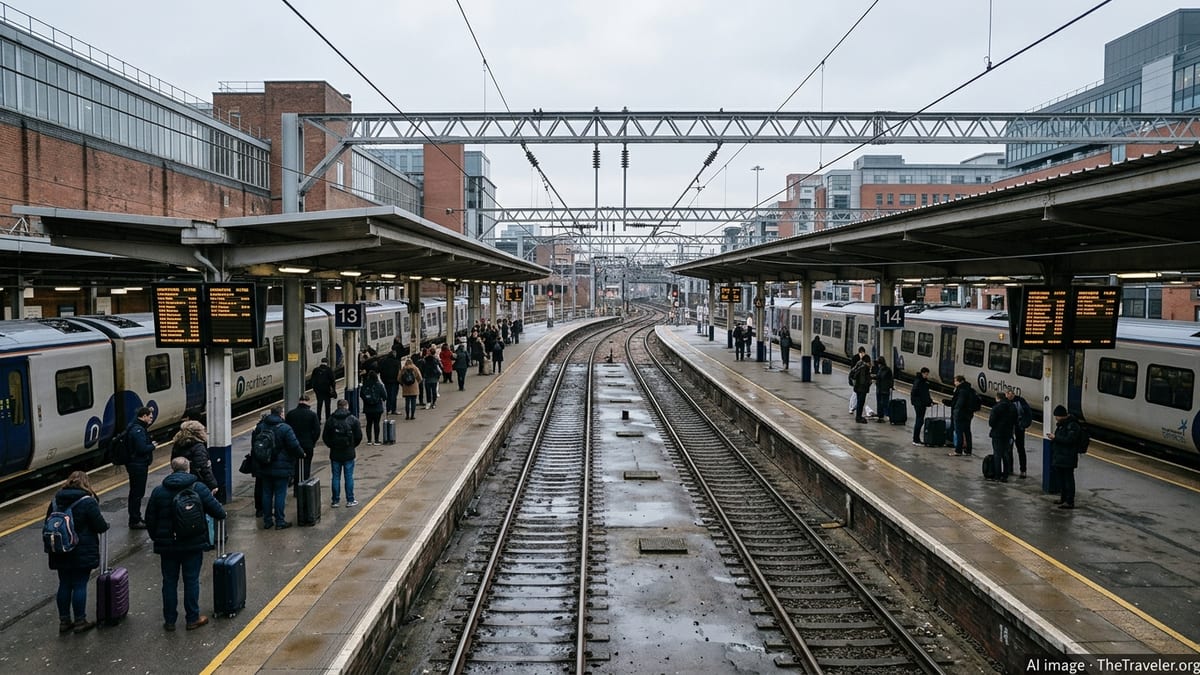
Once-in-a-Generation Works Close Core Platforms
Publicly available information from Network Rail and train operators indicates that the most disruptive phase of the Manchester Piccadilly upgrade is concentrated around a February half-term window, with a pivotal weekend when virtually all trains using the station’s main concourse are suspended. The works focus on the southern approach to the station, where dated infrastructure is being renewed to improve reliability on routes linking Manchester to London, Birmingham, the Midlands and the wider North West.
Engineering briefings describe a wholesale replacement of ageing points, sleepers and lineside equipment, part of a scheme valued at nearly eight million pounds. The southern throat of Piccadilly handles many of the intercity and regional services that pass through the station each day, and any failure in this area can quickly cascade into network-wide delays. By concentrating the work into an intense blockade, planners aim to deliver long term benefits in fewer, if more dramatic, bursts of disruption.
During the core weekend, platforms 1 to 12 are effectively out of action, removing the station’s main capacity for arriving and departing trains. Limited services are expected to continue using the through platforms 13 and 14, but the majority of passengers who usually rely on Piccadilly’s primary concourse will find their trains starting or terminating elsewhere, or not running at all.
Travel industry observers note that the closure coincides with a popular leisure travel period, as well as regular weekend events and match days that typically draw visitors into central Manchester. The combination has raised concerns that travelers who have not checked revised timetables could face last minute surprises at the station.
Long-Distance Routes Severely Curtailed
Revised plans published by several train operators show widespread alterations to long distance and regional services that normally pass through Manchester Piccadilly. Many trains from London Euston, Birmingham New Street and the West Midlands into Manchester are reduced, diverted or terminating short at stations such as Stockport, leaving passengers to complete their journey by alternative means.
On the eastern side of the network, connections towards Sheffield, the Hope Valley line and the East Midlands are also constrained, with reports indicating that some services will instead run to Manchester Victoria or be replaced by buses between key junctions. Cross-country journeys that rely on seamless changes at Piccadilly are particularly affected, as carefully timed connections no longer align under the special engineering timetable.
Airport links are among the most sensitive parts of the plan. Information shared by local rail commentators highlights periods during the works when there are no direct trains between Manchester Piccadilly and Manchester Airport, with replacement buses and tram connections expected to take up some of the slack. For travelers catching early morning weekend flights, journey times are likely to lengthen and involve at least one additional interchange.
Rail user groups warn that the scale of the changes means journey planners may advise long detours via alternative cities or recommend entirely different routes across the Midlands and North. Passengers with fixed-time tickets and seat reservations are being urged to verify whether their original trains still operate and, if not, to seek rerouting options well in advance of travel.
Tram and City-Centre Connections Under Pressure
While the focus is on the heavy rail shutdown, Manchester’s Metrolink tram system and city-centre bus links are also expected to come under strain over the affected weekend. Previous closures and diversions in the Piccadilly Gardens and St Peter’s Square area have shown how quickly tram frequencies can be reduced when tracks or junctions are restricted, pushing more passengers onto already busy stops and interchanges.
Transport planning documents and previous service notices suggest that Metrolink will be a key alternative for some rail journeys, particularly between central Manchester and the Airport or suburban hubs such as Altrincham. That shift risks creating pinch points on popular lines as rail passengers unfamiliar with the tram network arrive in large numbers, often with luggage and limited time to navigate ticket machines and platforms.
City-centre connectivity may also be complicated by ongoing road and public realm works around the station. Social media updates from recent weekends have mentioned diversions for the free city-centre bus routes that ordinarily link Piccadilly with key shopping and office districts. If similar diversions are in place during the rail blockade, passengers transferring between tram, bus and replacement rail services may face longer walks and more congested pavements.
Travel analysts note that Manchester’s compact core and dense web of stops can be an advantage if travelers are prepared to walk short distances between interchanges. However, for visitors with mobility impairments or heavy baggage, the combination of rail closures, altered tram patterns and shifting bus stops may present a significant barrier.
Knock-On Effects for Regional and Leisure Travel
The timing of the works is expected to have a pronounced impact beyond daily commuters, affecting regional day-trippers, sports fans and visitors heading into Manchester for concerts, theatre and shopping. Published engineering summaries describe the overhaul as essential to keeping the North West rail network moving, but weekend leisure travel remains highly exposed to sudden timetable changes and cancellations.
Lines radiating from Manchester towards North Wales, Cumbria and Yorkshire depend heavily on reliable cross-city connections. When Piccadilly’s core platforms are offline, operators often run shorter local services or require passengers to change at outer suburban stations that are less familiar to occasional travelers. This can lengthen journey times, complicate group travel and reduce the attractiveness of rail for short breaks.
Tourism bodies have previously highlighted the importance of predictable rail links for events and hospitality bookings, particularly in the darker months when visitors are more hesitant to drive long distances. The prospect of replacement buses, altered stopping patterns and crowded trams may prompt some would-be visitors to postpone trips or seek destinations that are less affected by engineering works.
Industry watchers point out that Manchester is not alone in undergoing major station renewals and that concentrating disruptive activity into defined periods is now a common strategy across the UK rail network. Even so, the central role of Piccadilly as a hub for northern England means that any extended closure carries outsize consequences for neighboring towns and cities.
Advice for Passengers Navigating the Chaos
Publicly available guidance from operators and transport agencies stresses that anyone planning to travel via Manchester over the affected weekend should confirm their route using up to date journey planners before setting out. Services that usually run through Piccadilly may operate at different times, start and finish at unfamiliar stations or require changes between rail, tram and bus within the city.
Rail passengers are being encouraged to allow extra time, particularly if they need to connect to Manchester Airport, major events or last trains home late on Sunday evening. In many cases, slower but more direct routes that avoid Piccadilly altogether may be preferable to relying on tight connections across a disrupted hub. Some operators are also flagging that advance tickets may be used on alternative trains or routes during engineering work, offering greater flexibility than usual.
Regular users of Metrolink are advised to anticipate busier carriages and to check for any timetable tweaks or stop closures that might coincide with the rail blockade. Travelers unfamiliar with Manchester’s public transport are likely to benefit from planning their interchange points in advance, including identifying step free access routes where needed.
With further waves of rail investment scheduled across the North West in the coming years, observers suggest that the upheaval at Manchester Piccadilly is unlikely to be the last major interruption passengers face. For now, though, the looming weekend shutdown stands out as a severe test of the city’s ability to keep people moving while one of its principal transport arteries is taken offline for an intensive upgrade.