

Stretching between the rugged Canadian Shield and the soaring Rocky Mountains, the prairie provinces of Manitoba, Saskatchewan, and Alberta offer a surprisingly diverse slice of Canada. From aurora-lit lakes and Indigenous cultural centers to Badlands full of dinosaur fossils and some of the most dramatic mountain scenery in North America, each province brings its own personality to the map. Choosing which prairie province to visit first is less about finding the single “best” one and more about matching your travel style to the right landscape, pace, and price point.
Getting Oriented: How the Prairie Provinces Differ
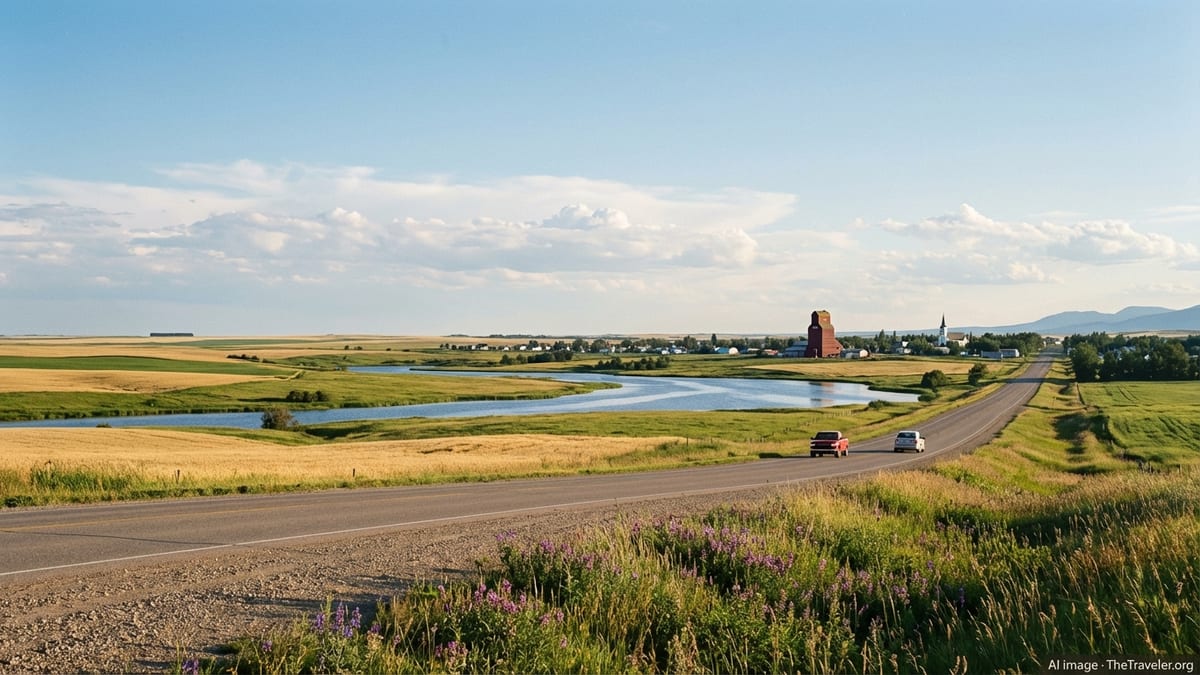
At first glance, Manitoba, Saskatchewan, and Alberta can look alike on a map: a trio of mostly landlocked provinces stretching from the United States border to the boreal north. On the ground, however, they feel distinct. Manitoba leans east, acting as a transition between Ontario’s forests and the open plains, with a strong Francophone heritage in Winnipeg and deep ties to the fur trade and northern waterways. Saskatchewan sits at the very heart of the Prairies, famous for golden fields that meet immense skies, plus a fast-growing reputation for Indigenous-led tourism and quiet, uncrowded parks.
Alberta, by contrast, is defined for many visitors by the Rocky Mountains that form its western wall. It is the most internationally known of the three, thanks to postcard names such as Banff, Jasper, and Drumheller, and it tends to feel busier and more developed as a tourism destination. Yet Alberta is not just mountains. To the east lie ranchlands, lakes, and Badlands that bridge its character back toward its prairie neighbors.
Population and infrastructure also play a role in how you experience each province. Alberta is the most populous and economically powerful, with major hubs in Calgary and Edmonton and a dense network of services that makes road tripping relatively straightforward. Manitoba and Saskatchewan are less crowded and more affordable in many areas, but distances between small towns and attractions can feel longer, and planning fuel, food, and accommodations in advance becomes more important, especially in shoulder seasons or when heading north.
For travelers, this means that each province answers a slightly different wish list. Manitoba will appeal to culture seekers, lake lovers, and those intrigued by northern adventures. Saskatchewan suits travelers who want space, sky, and slower, authentic prairie communities. Alberta is ideal for first-time visitors to Western Canada who want a simple hit of spectacular scenery and do not mind sharing it with more people.
Landscapes and Outdoor Adventure: Lakes, Grasslands, Badlands, and Peaks
Manitoba delivers some of the most varied landscapes of the trio, especially if you are willing to look beyond its “flat” stereotype. The southern part of the province features prairie and parkland, but head east and you quickly enter rugged, lake-dotted Canadian Shield country. Whiteshell Provincial Park and the Lake Winnipeg shoreline are classic cottage and paddling territory, while Riding Mountain National Park rises as an island of forested hills and wildlife above surrounding farmland. Farther north, Manitoba opens into vast boreal forest and tundra, where seasonal trips to Hudson Bay communities offer chances to see beluga whales and polar bears alongside the northern lights.
Saskatchewan’s calling card is its big-sky prairie and gently rolling farmland, yet the province bookends that grassland with unexpectedly diverse terrain. In the south, Grasslands National Park protects one of the largest remaining tracts of native mixed-grass prairie in Canada, a landscape of bison, prairie dogs, and silent coulees under brilliant stars. To the southwest, Cypress Hills and Moose Mountain Provincial Park add forested uplands, lakes, and four-season recreation, while the north is laced with freshwater lakes and boreal forest that feel worlds away from the wheat fields many people imagine.
Alberta is where the Prairies collide most dramatically with the Rockies. The western edge of the province is home to Banff and Jasper National Parks, the Icefields Parkway, and classic alpine scenery of turquoise lakes, glaciers, and jagged peaks. For hikers, skiers, and road trippers, it is an easy win, with well-developed trails, services, and accommodation choices. But Alberta also offers central parkland and northern lake country, plus the Canadian Badlands around Drumheller, where hoodoos and coulees create an otherworldly backdrop for exploring dinosaur fossil history and prairie mining towns.
If outdoor adventure is your main priority, all three provinces can deliver. Manitoba specializes in lakes and northern wildlife experiences, Saskatchewan in grassland ecosystems and uncrowded parks, and Alberta in mountain adventures and dramatic drives. Your choice comes down to whether you dream about paddling, wide-open prairie hikes, or standing beneath glaciated summits.
Culture, History, and Indigenous Experiences
Culture and history are where the differences between the provinces sharpen further. Manitoba’s capital, Winnipeg, punches above its weight with galleries, museums, and festivals. The Forks, at the meeting of the Red and Assiniboine rivers, has been a gathering place for Indigenous peoples, fur traders, and immigrants for thousands of years and now anchors a lively district of markets and public art. The city’s French Quarter celebrates its Francophone roots, and winter brings the long-running Festival du Voyageur, which highlights Métis and French-Canadian culture with music, food, and snow-sculpted installations.
Saskatchewan has recently drawn national attention for its Indigenous-led tourism and heritage sites. Near Saskatoon, Wanuskewin Heritage Park presents more than six millennia of Northern Plains Indigenous history through archeological sites, trails, and cultural programming. Across the province, Indigenous-owned resorts, cultural centers, and culinary tours are helping travelers connect with the land’s deeper stories in a more immersive way. Provincial museums such as the Royal Saskatchewan Museum in Regina provide additional context on natural and human history across the Prairies.
Alberta’s cultural profile is often overshadowed by its mountains, but its cities and smaller communities have strong offerings. Calgary and Edmonton host significant arts festivals, food scenes influenced by global immigration, and museums that interpret everything from Indigenous history to energy development and ranching culture. In the southeast, the Canadian Badlands region connects paleontology, archaeology, and settler history, with Drumheller’s Royal Tyrrell Museum serving as a core attraction for visitors curious about prehistoric life on these lands.
For travelers committed to learning about Indigenous cultures, all three provinces offer options, though they vary by region and season. Manitoba has community-based tours and cultural centers tied to its First Nations and Métis history, while Saskatchewan’s recent tourism awards spotlight its growing range of Indigenous-owned experiences. Alberta’s Indigenous tourism is dispersed between mountain parks, parkland, and northern communities. Whichever province you select, building Indigenous-led tours or visits into your itinerary adds important context and supports local communities.
Cost, Crowds, and Ease of Travel
Budget is often the deciding factor when weighing Manitoba, Saskatchewan, and Alberta. As a general rule, Alberta is the most expensive for visitors, particularly in peak summer when mountain parks are in high demand. Accommodation in Banff, Jasper, and other signature destinations commands premium pricing, and rental cars can cost more around major holidays and festival periods. The trade-off is convenience: well-maintained highways, frequent services, and a tourism industry used to international travelers help smooth the logistics, especially for first-time visitors to Canada.
Manitoba and Saskatchewan often feel more approachable for cost-conscious travelers. Outside of occasional peak events and popular fishing or cottage regions, accommodations and dining are typically more affordable than in Alberta’s mountain corridors. Campsites in provincial parks tend to be easier to book at the last minute, and rural motels, cabins, and lodges still offer good value in many areas. Touring these provinces by car requires more advance planning around fuel stops and operating hours in small communities, but the payoff is breathing room: fewer tour buses, quieter viewpoints, and a greater chance of feeling like you have a lake, trail, or prairie overlook nearly to yourself.
Public transportation is limited across all three provinces outside the largest cities, so most visitors rely on rental cars or RVs. Winnipeg, Regina, Saskatoon, Calgary, and Edmonton all have major airports with connections across Canada and to select international hubs. From Winnipeg, you can branch out to southern parks or head toward the boreal north. Regina and Saskatoon give access to Saskatchewan’s prairie parks and lakes. Calgary and Edmonton serve as classic gateways to the Rockies and Alberta Badlands, as well as routes east toward the flatter parts of the province that connect to Saskatchewan.
If you are seeking an easy, largely turn-key trip and do not mind higher prices and larger crowds in peak season, Alberta is usually the most straightforward choice. If you prioritize value, quiet, and a slower pace, Manitoba or Saskatchewan will likely suit you better, provided you are comfortable doing a bit more route planning and traveling longer stretches between services.
Best Seasons to Visit: Weather and Events
Weather is a major factor across the Prairies, where extremes are the norm rather than the exception. Winters can be intensely cold in all three provinces, with continental air masses bringing frigid temperatures that reward those prepared for serious winter clothing and conditions. The upside is that cities like Winnipeg, Saskatoon, Calgary, and Edmonton embrace the season with skating trails, winter festivals, and snow-based activities, while mountain resorts and parklands in Alberta flourish with skiing and snowshoeing.
Summer, from roughly June to early September, is peak travel time across the prairie provinces. Days are long and often sunny, with warm temperatures that favor hiking, paddling, and road trips. This is also prime time for outdoor festivals, cultural events, and farmers’ markets that showcase local food and music. Manitoban lakes fill with cottagers and campers, Saskatchewan’s national and provincial parks come alive with visitors and interpretive programming, and Alberta’s mountain towns host a full calendar of events alongside their busiest hiking season.
Shoulder seasons in late spring and early autumn can be rewarding for travelers who prefer fewer crowds, but they come with trade-offs. Some campgrounds, remote lodges, and seasonal tours may close or offer reduced services, particularly in northern areas, and weather can swing quickly from mild to wintry. Autumn brings beautiful foliage in parkland regions and the chance for crisp, clear days in the Rockies, while spring can be muddy on backroads and trails but quiet in cities and small towns.
Another seasonal consideration is wildfire activity, which has affected parts of the prairie provinces in recent years, particularly in Manitoba, Saskatchewan, and Alberta’s northern and forested regions. Conditions vary year by year, and many areas remain unaffected even during active fire seasons, but it is wise to monitor local advisories, be flexible with outdoor plans, and follow any park restrictions. For those with respiratory sensitivities, planning around air quality reports is increasingly important during the warm months.
Who Should Choose Manitoba, Saskatchewan, or Alberta?
Deciding which prairie province is “best” depends less on rankings and more on your travel personality. Manitoba tends to appeal to travelers who enjoy a blend of culture and nature, with an emphasis on lakes, rivers, and northern experiences. If you like the idea of spending time in a vibrant mid-sized city and then branching out to cottage country, paddling routes, and possibly remote northern adventures, Manitoba is a strong contender. It is also a good fit for those interested in Métis and Francophone history, winter festivals, and accessible boreal landscapes.
Saskatchewan is a natural match for travelers who romanticize the open road and wide horizons. If you find beauty in subtle landscapes, want to stargaze under some of Canada’s darkest skies, and are intrigued by Indigenous-led tourism that is still relatively under the radar internationally, Saskatchewan deserves a serious look. Its parks and small towns offer a sense of calm and authenticity that can be hard to find in more heavily promoted regions, and its grasslands and rolling hills are ideal for travelers who prefer quiet hikes, wildlife watching, and evenings by a campfire.
Alberta is the obvious choice for visitors who dream first and foremost of the Rockies. If hiking to turquoise lakes, driving along glacier-carved valleys, and pairing mountain scenery with sophisticated dining and lodging are top priorities, Alberta delivers all of that in a relatively compact, well-serviced corridor. It also works well for short trips, as you can see a great deal of iconic scenery in a few days using Calgary or Edmonton as a base and connecting by car to the mountains or Badlands.
Families, solo travelers, and couples can all find their place in any of the three provinces, but your tolerance for driving distances, your budget, and your interest in quieter versus more developed destinations should guide your final decision. Many seasoned travelers eventually visit all three, often starting with Alberta for its headline attractions and then returning to explore the subtler charms of Manitoba and Saskatchewan.
The Takeaway
So which prairie province is best to visit, Manitoba, Saskatchewan, or Alberta? The answer depends on your priorities. If you want a classic, high-impact introduction to Western Canada with towering peaks, famous national parks, and extensive visitor services, Alberta is the most straightforward choice. Its mountain corridors and Badlands are rightly celebrated and lend themselves well to road trips, short stays, and first-time visitors who want plenty of structure and options.
If your interest leans toward quieter lakes, historic river junctions, northern forests, and communities that showcase Francophone, Métis, and First Nations heritage, Manitoba offers a distinctive, often underrated experience. It rewards travelers who are curious, flexible, and interested in seeing how urban culture and wild landscapes intersect along major waterways and in the boreal north.
For those who crave big skies, subtle landscapes, and fewer crowds, Saskatchewan may be the most satisfying of all. Its grasslands, rolling farms, and forested uplands create a backdrop for emerging Indigenous tourism, uncrowded parks, and a feeling of space that can be deeply restorative. It is a province that invites you to slow down, pay attention, and appreciate the Prairies on their own terms.
In the end, there is no single winner among the prairie provinces. Each brings a different strength to the table: Alberta for spectacle, Manitoba for lake country and cultural blend, Saskatchewan for quiet horizons and Indigenous-led experiences. The best province to visit is the one that matches what you most need from your time away, whether that is a bucket-list mountain view, a tranquil lakeside campsite, or a silent moment beneath a sky full of stars.
FAQ
Q1. Is Alberta always the best choice for a first trip to the Prairies?
Alberta is often the easiest first choice because of its famous mountain parks and strong tourism infrastructure, but Manitoba and Saskatchewan can be better fits for travelers seeking quieter, less expensive, and more off-the-radar experiences.
Q2. Which prairie province is most affordable for travelers?
Costs vary by season, but in general Manitoba and Saskatchewan tend to offer lower average prices for accommodation and dining than Alberta’s busiest mountain corridors, especially in peak summer.
Q3. Where are the best opportunities to see wildlife in these provinces?
All three provinces offer wildlife viewing, but Manitoba stands out for lake and boreal species and northern experiences, Saskatchewan excels in grassland wildlife such as bison and prairie dogs, and Alberta’s mountain parks are strong for elk, mountain goats, and other alpine species.
Q4. Do I need a car to explore Manitoba, Saskatchewan, or Alberta?
Outside the main cities, a car or RV is strongly recommended in all three provinces, as public transportation to parks, small towns, and rural attractions is limited and distances can be long.
Q5. Which province is best if I want to focus on Indigenous tourism experiences?
All three have Indigenous-led tours and cultural centers, but Saskatchewan has recently gained national recognition for the breadth of its Indigenous tourism offerings, while Manitoba and Alberta also provide meaningful options in select regions.
Q6. How dangerous are prairie winters for travelers?
Winters can be very cold, with icy roads and occasional storms, but with proper clothing, a reliable vehicle, and attention to weather advisories, many visitors safely enjoy winter festivals, skiing, and other activities.
Q7. When is the best time to visit the prairie provinces for good weather?
Late spring through early autumn, roughly from June to early September, generally offers the warmest temperatures, long daylight hours, and the widest range of open attractions and events.
Q8. Are wildfires a major concern for summer travel in Manitoba, Saskatchewan, and Alberta?
Wildfire activity varies by year and region; many areas remain open even during active fire seasons, but travelers should monitor local advisories, be flexible with itineraries, and consider air quality if they are sensitive to smoke.
Q9. Can I combine more than one prairie province in a single trip?
Yes, many travelers plan road trips that link Manitoba, Saskatchewan, and Alberta, using major cities as gateways and focusing on a few key regions in each province rather than trying to see everything at once.
Q10. Which prairie province is best for families with children?
All three can work well for families; Alberta offers easily accessible mountain and Badlands highlights, Manitoba has lake resorts and engaging museums, and Saskatchewan provides family-friendly parks and attractions with fewer crowds and a relaxed pace.