

More news on this day
After years of legal wrangling and uncertainty, Manston Airport in Kent is moving closer to a full-scale revival as a dedicated air freight hub, a transformation that could redraw Southeast England’s logistics map and bring a wave of new investment and employment to one of the region’s most deprived coastal districts.
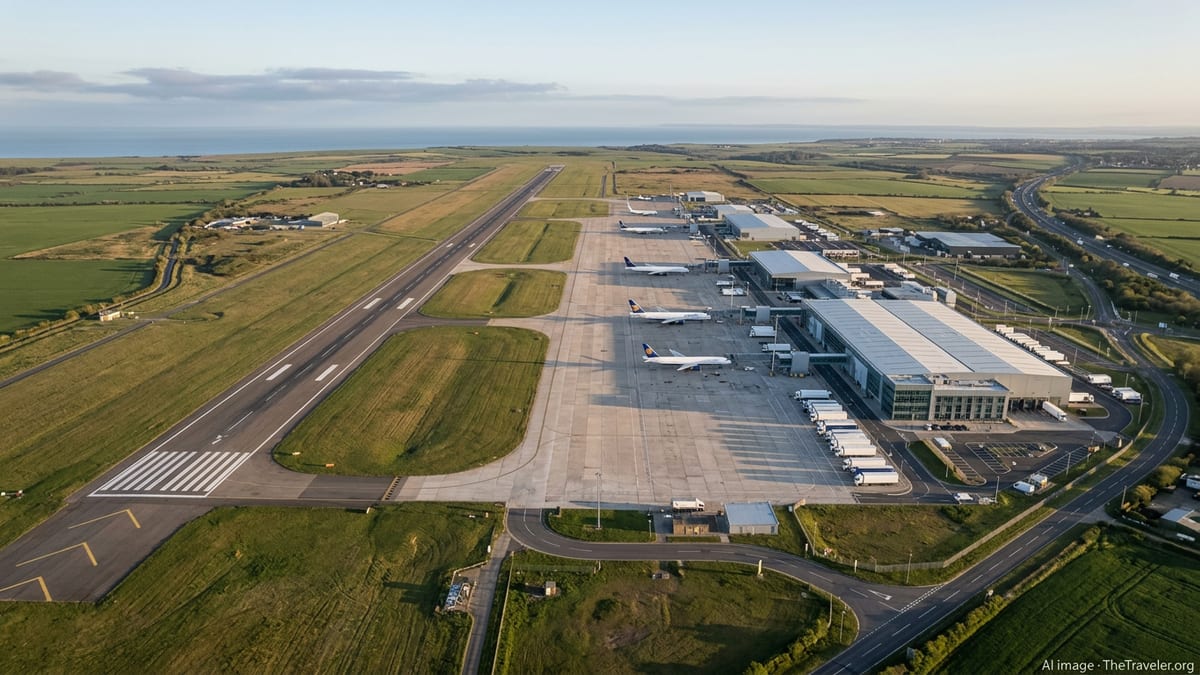
From Closure to Green Light for a Cargo-Focused Future
Once a key Battle of Britain airfield and later a small commercial airport, Manston closed to aviation in 2014 and languished amid competing visions for its future, including housing-led redevelopment. That narrative shifted decisively after RiverOak Strategic Partners acquired the site and secured a Development Consent Order in 2020 for its conversion into a modern freight-focused airport, a decision that was reaffirmed by a subsequent DCO in 2022 following further examination.
The project then became a test case for the UK’s national infrastructure planning regime. Campaigners mounted multiple judicial reviews arguing that the government had overestimated demand for a dedicated cargo hub. In May 2024 the Court of Appeal dismissed the latest challenge, leaving the DCO in place and providing a long-awaited measure of certainty for investors, local authorities and logistics operators watching the scheme.
With the consent now underpinned by an amendment order issued in 2025, which extends time limits for land acquisition and construction, Manston’s redevelopment is shifting from legal debate to delivery. Site owners have been clear that the airport will reopen with freight at its core, complemented by limited passenger operations and a cluster of aviation-related businesses.
For Thanet and the wider East Kent area, the airport’s return promises a reorientation away from years of decline, positioning the peninsula not as a peripheral outpost but as a gateway for global trade serving London, the Thames Estuary and the Channel corridor.
New Capacity for a Strained Southeast Logistics Network
Supporters of the Manston scheme argue that Southeast England’s freight system is straining under the weight of demand. Heathrow and Gatwick are largely prioritised for passenger traffic, while dedicated freighter capacity is limited and distribution centres are pushed ever further from ports and markets. As a result, significant volumes of UK cargo are trucked into mainland Europe to access air capacity, adding both time and emissions.
RiverOak’s vision is for Manston to offer at least 10,000 to 12,000 annual air cargo movements once fully operational, supported by around 65,000 square metres of warehousing and handling space. Strategically located a short distance from the Channel ports, the M2 and proposed upgrades to regional road and rail links, the site is being promoted as a multimodal freight hub able to integrate sea, road and air supply chains across Southeast England.
Industry bodies in the logistics sector have pointed to Manston’s 2,748-metre runway, uncongested airspace and proximity to major consumer markets as key advantages. The airport is expected to attract a mix of express integrators, general cargo operators and specialist freighter airlines, particularly those moving temperature-controlled goods, e‑commerce consignments and high-value components that rely on rapid connections to manufacturing clusters.
Local and regional economic development agencies have also highlighted the potential for Manston to support the government’s border modernisation strategy, including new customs and security facilities that could speed up flows of goods between the UK, the European Union and global markets.
Jobs, Skills and Regeneration for Thanet and East Kent
Beyond its aviation and logistics ambitions, the Manston project is being framed as a cornerstone of regeneration policy for Thanet, an area that has long recorded higher-than-average unemployment and lower wages than the national median. The airport’s backers have talked about creating several thousand direct and indirect jobs over the life of the scheme, from ground handling and aircraft maintenance to warehousing, security, digital logistics and support services.
RiverOak has repeatedly stressed that local recruitment and training will be central to the redevelopment. Plans have been outlined for an on-site education and skills campus to provide apprenticeships and vocational programmes in aviation operations, engineering and logistics management, with a particular focus on young people and those seeking to retrain. Partnerships with nearby colleges and universities in Kent are expected to underpin a pipeline of talent for technical and managerial roles.
Regional business leaders see the airport as a catalyst for wider investment in East Kent, including new business parks, hotel and conference facilities and improved public transport connections. Combined with other levelling-up initiatives across coastal communities, they argue that Manston can help to rebalance the Southeast’s economic geography, drawing more activity to the eastern side of the Thames Estuary.
For local residents, the promise of high-quality, year-round employment is a powerful draw. Yet it also raises questions about housing, health services and community infrastructure, prompting calls for careful coordination between the airport promoters, Thanet District Council and Kent County Council to ensure growth is matched by social investment.
Balancing Environmental Concerns with ‘Net Zero from the Start’ Ambition
While the project’s supporters emphasise its economic and logistical benefits, environmental concerns remain a central part of the debate over Manston’s revival. Campaigners have warned that thousands of additional aircraft movements could increase noise and air pollution across a swathe of coastal communities, as well as add to the UK’s aviation-related greenhouse gas emissions at a time when the country is committed to legally binding carbon budgets.
The airport’s owners counter that Manston can play a constructive role in decarbonising freight by reducing the need for long-haul trucking to continental hubs and by embedding lower-carbon technologies into the airport’s design from the outset. They have spoken of a “net zero from the start” concept, which would rely on high-efficiency buildings, extensive on-site renewables, sustainable aviation fuel infrastructure and ground operations powered by electricity or hydrogen.
Planning documents and government decisions around the DCO have acknowledged that the scheme will generate additional emissions, but argue that these must be weighed against wider economic benefits and the potential to consolidate freight flows in a facility built to modern environmental standards. The 2025 amendment to the consent is expected to require updated assessments as national climate policy and aviation technology evolve over the construction period.
Environmental groups are likely to continue scrutinising those claims as detailed design work progresses, pressing for clear limits on night flights, robust monitoring of noise and air quality, and explicit commitments on the use of cleaner aircraft and fuels. How successfully the project reconciles growth with sustainability could shape public acceptance of the airport for decades.
Timelines, Infrastructure Links and the Road to Full Operations
With the legal obstacles largely cleared, attention is turning to the practicalities of rebuilding an airport that has stood dormant for more than a decade. According to recent indications from the project team and local economic publications, extensive renovation and construction work is expected to gather pace from late 2025, with a multi-year build programme stretching towards the latter half of this decade.
Early phases are likely to focus on resurfacing the runway, rebuilding the cargo terminal complex and establishing temporary facilities that will allow a first wave of freighter services to begin proving flights and limited operations. Subsequent stages would deliver permanent warehousing, specialist handling equipment, border inspection posts and upgraded air traffic and safety systems, bringing the site in line with current international standards.
Critical to the airport’s logistics ambitions will be its surface access. Proposals are being developed to enhance road connectivity to the M2 and A299, integrate the site with regional rail services and explore direct freight rail spurs, enabling containers and palletised cargo to move quickly between Manston, Thames Estuary ports and inland distribution centres in Kent and the Midlands.
For shippers, the timing of Manston’s reopening will be closely watched. If the project can align its launch with the ongoing reshaping of post-Brexit trade routes and continued growth in e‑commerce and time-sensitive supply chains, the revived airport could become a powerful new node in Southeast England’s logistics network, reshaping how goods move in and out of the region for years to come.