

More news on this day
Bengaluru’s already congested Marathahalli junction is facing fresh disruption as one carriageway of the Marathahalli bridge is being shut for three consecutive nights to facilitate metro construction, prompting traffic diversions on several key routes around Outer Ring Road, Kundalahalli and Doddanekundi.
Get the latest news straight to your inbox!
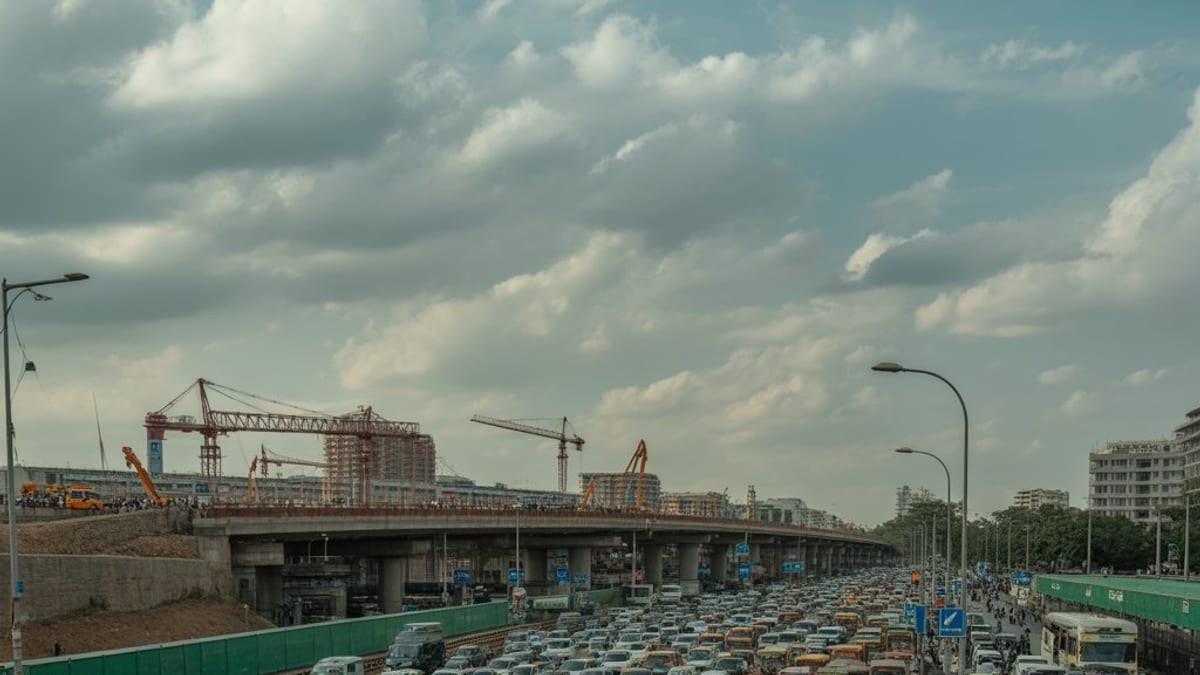
Image by Global Travel Alerts, Advisories, International Travel Alerts
Three-night closure to support metro girder installation
According to publicly available traffic advisories and local coverage, vehicle movement on the Marathahalli bridge is being halted in phases over three days to allow the lifting and placement of a large composite girder for the upcoming Namma Metro Blue Line. The closure window is understood to be restricted largely to night-time hours, with reports indicating that the main impact falls between late evening and the early hours of the morning.
The shutdown applies to a critical stretch connecting Kundalahalli Signal Junction and Doddanekundi Junction on the Outer Ring Road corridor. This section passes directly over the busy Marathahalli junction, a node that links Whitefield, HAL, the IT hub along ORR, and residential areas on Varthur Road. The bridge is a key conduit for commuter and freight traffic, and even limited-hour restrictions are expected to ripple across a wide swathe of east Bengaluru.
Reports indicate that the three-day work window has been chosen to complete a particularly sensitive stage of construction that cannot be executed safely with normal volumes of traffic moving beneath heavy cranes. While night-time scheduling is intended to reduce disruption, the presence of late-shift IT employees, intercity buses and goods vehicles on ORR means that diversions are still being closely watched by regular commuters.
The closure is part of a broader construction push along Phase 2A of the Namma Metro, which will eventually connect Central Silk Board to KR Puram via the Outer Ring Road. Environmental and planning documents for this corridor have previously flagged Marathahalli, Doddanekundi and other ORR junctions as locations where temporary detours and periodic carriageway shutdowns would be necessary during the most complex construction stages.
Key diversions via Kundalahalli, Doddanekundi and Alpine Eco Road
Traffic plans shared in public forums and news reports show that vehicles are being redirected off the main carriageway around the Marathahalli bridge during the closure windows, with several specific diversion patterns for different approach roads. For traffic arriving from the HAL side towards Whitefield and Kundalahalli, vehicles are being guided to exit near Doddanekundi Junction, cut through Karthik Nagar and then use the inner Alpine Eco Road corridor to reconnect to Kundalahalli Signal Junction.
Motorists traveling from Varthur and Kundalahalli towards HAL are being asked to turn at Kundalahalli Signal Junction and again rely on Alpine Eco Road to reach Doddanekundi and rejoin the main HAL road. This effectively shifts a significant portion of through-traffic off the elevated bridge and onto parallel neighborhood roads, which are narrower and already carry substantial local volumes during peak hours.
Additional informal guidance shared by local commuters points to Vibgyor School Road and the Kadubeesanahalli junction as another alternative for those trying to reach the southern stretch of ORR towards Silk Board. However, these deviations lengthen journey times and may push more vehicles into residential pockets that are not designed to handle sustained highway-scale flows.
Publicly available information suggests that heavy vehicles, including goods carriers that typically rely on the Marathahalli bridge at night, are being strongly encouraged to avoid the junction during the three-day period wherever possible. Some commuters have indicated that they are opting for work-from-home arrangements or adjusting office timings to sidestep the late-evening and early-morning congestion expected around the diversion points.
Persistent bottleneck at a notoriously congested junction
The latest closure underscores how fragile traffic conditions remain at Marathahalli, which regular users often rank among Bengaluru’s most challenging junctions. Long before metro construction intensified, the design of the bridge and its closely spaced U-turns, slip roads and service lanes had already produced chronic bottlenecks in almost every direction of approach.
Day-to-day accounts from commuters highlight how vehicles attempting U-turns at the top of the bridge frequently get blocked by through traffic that occupies the dedicated turning lane, leading to gridlock that can stretch far back along the ORR and feeder roads. Even small disruptions, such as stalled vehicles or minor collisions, can lock the junction for extended periods, particularly during morning and evening office peaks.
Metro-related works over the past year have added layers of complexity. Barricading, temporary narrowing of lanes, and intermittent night-time closures around Marathahalli and nearby Doddanekundi have repeatedly forced traffic onto service roads and interior streets. Local discussions indicate that noise and honking remain a persistent concern for residents living close to the bridge and along the diversion corridors.
Planning documents for the ORR metro anticipate these short-term impacts but point to longer-term benefits once trains begin running on the elevated Blue Line. The expectation is that improved mass transit will eventually reduce dependence on private cars and company-run cabs along ORR, easing pressure on choke points like Marathahalli. For now, however, the junction remains one of the most sensitive points on an already strained east Bengaluru road network.
Commuter strategies and advice for the three-day period
With the three-night closure in effect, publicly available advisories and commuter forums are urging motorists to plan ahead and, where possible, avoid transiting the Marathahalli bridge segment during the announced work windows. Those with flexible schedules are being encouraged to cross the junction well before late evening or delay non-essential trips until after the affected dates.
For drivers who must use the area during the closure, the main recommendation is to factor in additional travel time and familiarize themselves with the diversion patterns via Kundalahalli, Doddanekundi, Karthik Nagar and Alpine Eco Road. Given that many of these interior roads pass directly through residential neighborhoods, observers are also stressing the need for slower speeds and extra caution near schools, apartment gates and pedestrian crossings.
Public transport users are being advised to check real-time updates from their bus operators and local information channels, as routes that normally traverse the Marathahalli bridge may experience delays or temporary rerouting. Some commuters have reported shifting to earlier or later buses to avoid the overlap between regular office-hour congestion and the start of nightly construction activity.
Ride-hailing and cab drivers operating in the east Bengaluru corridor are also anticipated to adjust navigation choices, particularly for airport and intercity transfers that pass through ORR. As navigation apps respond to temporary closures and emerging congestion pockets, journey times may fluctuate significantly from day to day until the three-night operation is completed and normal traffic flow over the Marathahalli bridge resumes.
Metro progress and what comes next for Outer Ring Road
The Marathahalli bridge closure is the latest visible marker of the construction push on the Blue Line’s ORR segment, which aims to link several of Bengaluru’s most important technology and business districts. Publicly available project information lists Marathahalli metro station as one of the key elevated stops serving the dense IT and residential belt between Central Silk Board and KR Puram.
In recent months, residents and commuters along ORR have witnessed rapid advances in pier construction, segment launching and girder installation at multiple junctions, including sections near Mahadevapura, Bellandur and Doddanekundi. Each major lift operation has tended to be accompanied by temporary closures of flyovers, underpasses or key junctions, similar in nature to the current three-day activity at Marathahalli.
Environmental assessments and project documents prepared for the ORR metro have long anticipated higher levels of congestion, air pollution and noise during peak construction, with explicit references to Marathahalli as a hotspot for detours and bottlenecks. Mitigation measures described in these documents include coordinated diversions, signage, traffic marshals and public advisories intended to keep traffic moving as safely and efficiently as possible.
While the short-term impact of the current closure is likely to frustrate many regular users of the Marathahalli bridge, planners emphasize that such intensive operations are necessary to meet long-term timelines for the metro line. Once operational, the Blue Line is expected to offer a high-capacity alternative to road travel along one of Bengaluru’s busiest corridors, potentially reshaping commuting patterns for thousands of workers and residents who currently rely almost entirely on private vehicles and buses.