

More news on this day
Thousands of passengers across the United States faced another month of disrupted plans in March 2026, as a wave of weather, safety reviews and operational strains led major airlines to ground more than 200 flights and delay many more at key hubs from Los Angeles to Chicago and Dallas.
Get the latest news straight to your inbox!
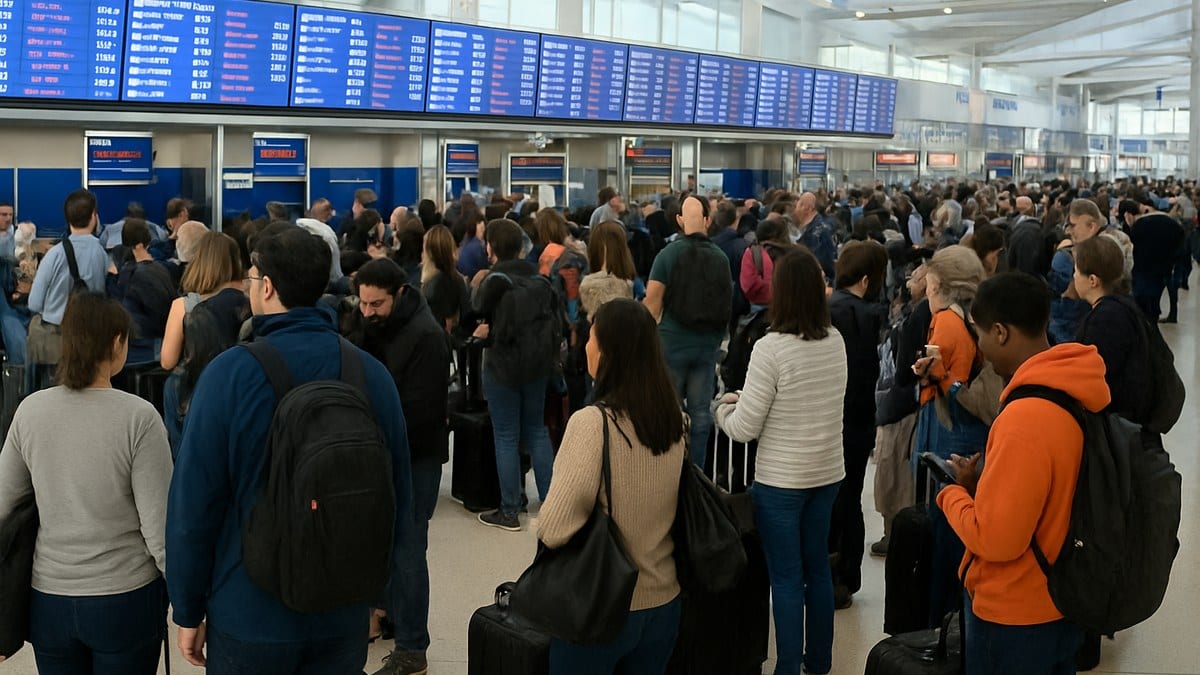
Image by Nomad Lawyer
Storm Systems Turn Major Hubs into Bottlenecks
Severe late winter and early spring storms repeatedly hit central and coastal regions in March, creating a chain reaction of delays and cancellations across the national air network. Travel industry coverage for March 31 reported more than one hundred cancellations and several thousand delays in a single day, with Chicago, Boston, Columbus, Norfolk and New Orleans among the hardest hit cities.
In the Midwest, thunderstorms and heavy rain prompted the Federal Aviation Administration to issue ground stops at Chicago O’Hare and Midway on March 31. Flight departure holds and extended arrival spacing pushed average delays close to or beyond an hour, forcing airlines to scrub dozens of departures and reset their schedules throughout the day.
These storm-driven disruptions built on the lingering effects of a powerful mid‑month blizzard that swept through the Upper Midwest and High Plains. Airlines had already trimmed schedules and preemptively canceled flights around that system, leaving little slack in aircraft and crew rotations once subsequent thunderstorm lines moved across major hubs.
Because hubs such as Chicago and New York sit at the center of coast‑to‑coast connections, weather issues in one region quickly rippled outward, affecting travelers far from the original storm zones. Passengers booked on transcontinental and regional connections often found themselves waiting on aircraft and crews stranded hundreds of miles away.
Ground Stops and Runway Constraints Compound Airline Cancellations
Beyond storms, a series of targeted ground stops and capacity restrictions added to the month’s turbulence. In the Washington region, flights at Ronald Reagan Washington National, Washington Dulles, Baltimore‑Washington, Charlottesville and Richmond were halted temporarily on March 28 after a strong chemical odor was reported at the regional air traffic facility that manages approaches into those airports.
On the West Coast, San Francisco International Airport entered March’s final week facing a sharp reduction in allowed hourly arrivals following a Federal Aviation Administration review of side‑by‑side approaches on its closely spaced parallel runways. Public reporting on the change indicated that allowable arrivals were cut by roughly one third, an adjustment expected to increase delays and force airlines to pare back some schedules.
At New York’s LaGuardia Airport, a fatal collision between an arriving aircraft and a fire truck on March 23 triggered a ground stop and temporary shutdown, further tightening capacity in one of the country’s most congested air corridors. Airlines routed around the closure or canceled flights outright, straining already busy schedules at nearby airports and contributing to the monthly tally of grounded services.
Together, these operational limits acted as a secondary shock to a system already challenged by weather and staffing. Each new restriction required airlines to reshuffle gates, aircraft and crew, often with only hours of notice, and to prioritize which flights could still operate.
Los Angeles and Dallas Reveal the Scale of Passenger Disruption
The human impact of March’s disruptions was particularly visible at large Sun Belt hubs. At Los Angeles International Airport on April 1, capping a month of instability, aviation industry summaries noted more than 170 delays and several cancellations in a single day for carriers including American, Delta and United, with long queues and crowded terminals as travelers waited for updated departure times.
Days earlier, Dallas‑Fort Worth International Airport experienced its own acute episode when nearly 270 flights were delayed or canceled on March 29. Coverage described a “domino effect” as storms and a technical hiccup in local air traffic systems combined with peak season demand, leaving aircraft and crews out of position and stranding passengers both at DFW and at downline airports nationwide.
For major U.S. airlines that rely on Los Angeles and Dallas as primary hubs, these local breakdowns quickly became national issues. Domestic point‑to‑point routes, international connections and regional feeder flights all rely on predictable flows through such mega‑hubs. When those flows were interrupted, even travelers on relatively short routes such as Phoenix to Denver or Nashville to Chicago encountered missed connections and unexpected overnights.
Travel data aggregators indicated that on several March days, combined cancellations and delays across U.S. carriers reached into the low thousands, with the cumulative effect easily surpassing two hundred grounded flights for the month once scrubbed departures at storm‑affected and ground‑stop airports were counted together.
System Strain and Staffing Gaps Underline a Fragile Network
Analysts tracking air travel performance in March pointed to longer‑term structural issues behind the month’s volatility. Public commentary has repeatedly highlighted controller shortages at key facilities, aging technology in traffic management systems and aggressive hub strategies by some major airlines as factors that can amplify the impact of any single disruption.
Industry opinion pieces focusing on Chicago O’Hare in late March noted that competition for gates and schedules has pushed hub operations close to their practical limits. When storms or ground delays occur in such an environment, airlines have fewer options to reassign aircraft or reroute travelers without causing knock‑on delays across their networks.
At the same time, federal workforce data and watchdog reports have drawn attention to persistent gaps in air traffic controller staffing. When unplanned incidents arise, from unusual odors in radar facilities to runway accidents and system checks, reduced staffing can limit how quickly traffic flows can be reconfigured and restored, forcing airlines to hold or cancel more flights.
March’s events followed several previous years in which technical outages, cybersecurity incidents and software upgrades disrupted airline and aviation systems worldwide. Many industry observers view the latest groundings as part of a broader pattern showing how reliant modern air travel has become on complex digital infrastructure that can be vulnerable to both weather‑related stress and internal faults.
What March 2026 Means for Spring and Summer Travelers
With March ending on a turbulent note, traveler advocates and aviation analysts are already looking ahead to the busy spring and summer peak. The combination of capacity reductions at certain airports, continuing storm seasons and constrained workforces suggests that even routine disruptions could trigger significant knock‑on effects if underlying issues remain unaddressed.
Publicly available guidance from airlines and travel organizations emphasizes the importance of preparation. Passengers are urged to closely monitor flight status through airline apps, build longer connection windows into complex itineraries and consider early‑morning departures, which typically face fewer cascading delays from earlier disruptions.
Consumer information published after recent shutdowns and ground stops also reiterates existing federal protections. Travelers whose flights are canceled or significantly changed for reasons within an airline’s control are generally entitled to refunds if they choose not to travel, a point that has gained renewed attention as grounded flights and missed connections accumulate.
For now, March 2026 stands out as another stress test of the U.S. aviation system’s resilience. The month’s storm‑driven delays, targeted ground stops and safety‑related capacity cuts have provided a preview of how quickly travel plans can unravel when already busy networks absorb multiple shocks in rapid succession.