

More news on this day
A record-setting March storm complex is ripping across the United States from the Rockies to the Mid-Atlantic, unleashing blizzards, tornadoes, flooding rains and destructive winds that are grounding thousands of flights and leaving spring travelers stranded in airports and highway motels nationwide.
Get the latest news straight to your inbox!
Storm Complex Stretches From Rockies To Atlantic
The current disruption is tied to a powerful March 13 to 16 storm system spinning across the central United States and southern Canada. Publicly available weather data describes a sprawling extratropical cyclone feeding on an atmospheric river from the Pacific while drawing frigid Arctic air south, a volatile combination that has generated blizzard conditions in the Upper Midwest and High Plains, an ice storm over parts of the Great Lakes, and severe thunderstorms farther south.
Reports from national outlets indicate that parts of Minnesota, Wisconsin and the Dakotas are facing whiteout conditions, while northern Michigan and interior sections of the Northeast are contending with dangerous ice accretions on roads, trees and power lines. At the same time, the southern flank of the system is driving squall lines of intense thunderstorms across the Lower Mississippi Valley and into the Carolinas, with damaging straight line winds and possible tornadoes.
This kind of coast to coast weather collision is unusual even by late winter standards. Recent coverage from Washington describes a country experiencing blizzards in the north, severe storms in the Mid-Atlantic and anomalous early season heat in parts of California, all tied to the same larger pattern. For travelers, that breadth means there are few safe detours and almost no truly unaffected corridors for cross country movement.
Flight Cancellations Spike To Pandemic Era Levels
The combined impact on aviation has been severe. Flight tracking data and airline bulletins show that US carriers have already scrubbed several thousand flights since Friday as the storm marched east, with additional cancellations and rolling delays accumulating hour by hour at major hubs. New York, Chicago, Atlanta and Washington area airports are among the hardest hit, with ground stops and runway closures rippling across airline networks.
Industry analysts are comparing the developing meltdown to January’s massive winter storm and the February Blizzard of 2026, which together led to more than 16,000 cancellations over several days and marked the worst weather related disruption since the early pandemic period. Early March brought another wave of chaos, with thunderstorms and low ceilings around Chicago O’Hare alone leading to hundreds of cancellations and more than 5,000 delays nationwide in a single day.
Travel data providers note that what makes this week’s event especially disruptive is its overlap with late winter and early spring vacation periods. Many travelers whose plans were already rearranged by January and February storms are again facing lost connections, missed cruises and abandoned ski or city breaks as aircraft and crews end up scattered across the map.
Tourists Stranded In Hubs And Resort Gateways
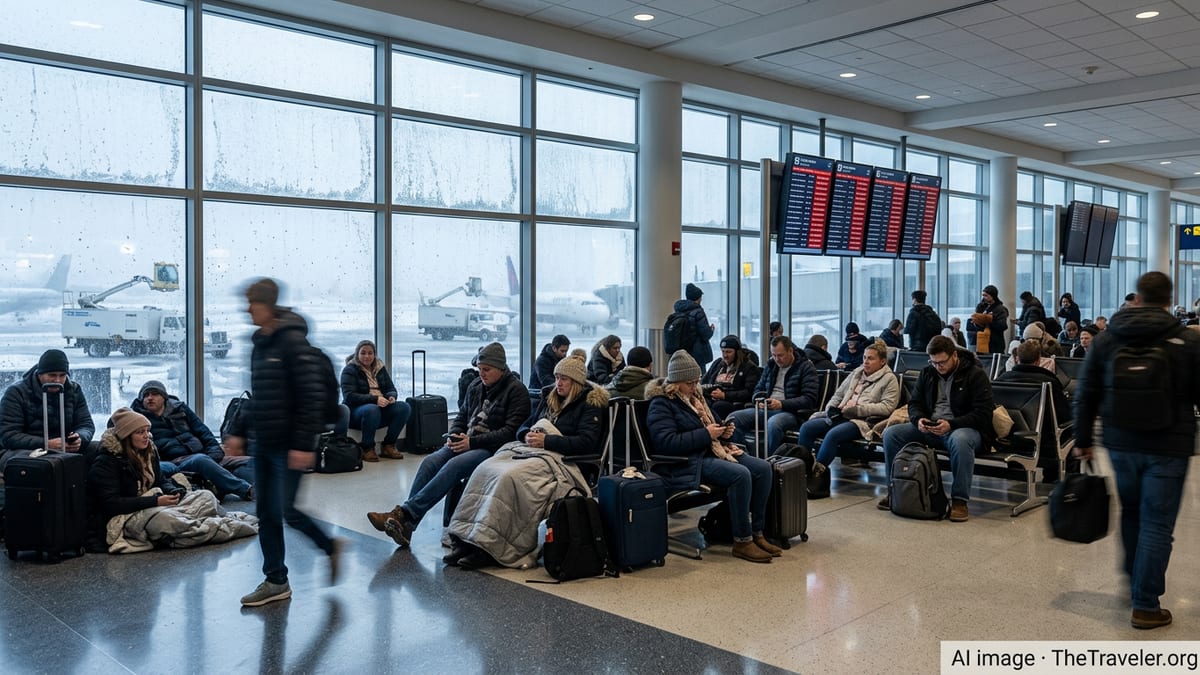
On the ground, the megastorm’s reach is being felt most acutely by tourists who counted on March shoulder season travel to dodge winter’s worst. Social media posts and local news segments show packed concourses at Chicago O’Hare, New York’s major airports, Atlanta and Dallas Fort Worth, where travelers are sleeping on jackets and carry on bags as departure boards fill with red cancellation notices.
Published coverage from Upper Midwest outlets describes visitors stuck in Minneapolis and Denver as blizzard conditions shut down interstates and limit options for rental car or bus travel. In some cases, travelers diverted from snowbound hubs are finding themselves stranded again in storm affected secondary cities as the weather shifts east and south.
Popular leisure gateways are also feeling the strain. Florida bound passengers connecting through storm impacted hubs are missing beach vacations and cruise departures, while travelers heading for Hawaiian or West Coast trips have been delayed by heavy rains and flooding earlier in the week that backed up transpacific operations. In ski country, some resorts are simultaneously welcoming fresh snow and grappling with guests who cannot depart on schedule because downline airports remain snarled.
Rail, Roads And Power Grids Under Pressure
Air travel is only one part of the unfolding March disruption. State transportation updates from the Upper Midwest report long stretches of interstate closed due to whiteout conditions and jackknifed trucks, with troopers urging drivers to stay off the roads. In the Mid-Atlantic and Southeast, bands of severe thunderstorms are triggering flash flooding that has washed out local roads and flooded low lying neighborhoods.
Rail operators are adjusting schedules as well, with publicly available timetables showing weather related slow orders and suspensions on some long distance routes that pass through storm affected states. Heavy snow and ice on overhead lines, along with potential debris on tracks, can force trains to creep along at reduced speeds or halt entirely until crews clear the way.
Power grids are under stress from multiple directions. In blizzard zones, wet snow and gusty winds are bringing down branches and power lines, while in warmer regions the same system is driving strong thunderstorms capable of producing localized but intense outages. Energy monitoring services show tens of thousands of customers across several states experiencing blackouts at various points over the weekend, complicating conditions for travelers sheltering in budget hotels and airport-adjacent motels.
What Travelers Can Expect In The Coming Days
Forecast discussions from federal meteorologists suggest the core of the storm complex will shift gradually toward the Northeast and Atlantic Canada through Monday night and Tuesday, but residual impacts on travel are likely to linger well beyond the last snowflake or raindrop. When a storm shuts down multiple hubs simultaneously, it can take several days for airlines to reposition aircraft, reassign crews and work through backlogs of displaced passengers.
Consumer advocates point out that US regulations require airlines to issue refunds when flights are canceled and passengers choose not to travel, even when weather is to blame. However, securing alternative transport during a nationwide disruption is often challenging, and publicly available airline advisories emphasize rebooking for later in the week rather than same day fixes.
Travel industry analysts advise that anyone with flights scheduled through the middle of the week should be prepared for rolling delays as residual bands of snow and rain move across the Great Lakes and Northeast and as high winds linger in portions of the Mid-Atlantic. Even in regions where skies clear quickly, the downstream effect of aircraft and crew shortages may keep schedules tight and connections risky.
For now, this mid March megastorm underscores how fragile the US travel system remains when confronted with continent scale weather extremes. After a winter marked by multiple record breaking storms and widespread cancellations, the latest disruption is a stark reminder that calendar spring does not guarantee smooth skies for travelers.