

More news on this day
MarineXchange has launched an AI-powered upgrade to its in-cabin interactive TV platform, turning every stateroom screen into a multilingual, voice-enabled sales channel designed to lift onboard revenue and personalize the cruise experience, with a particular focus on Europe’s rapidly digitizing cruise market.
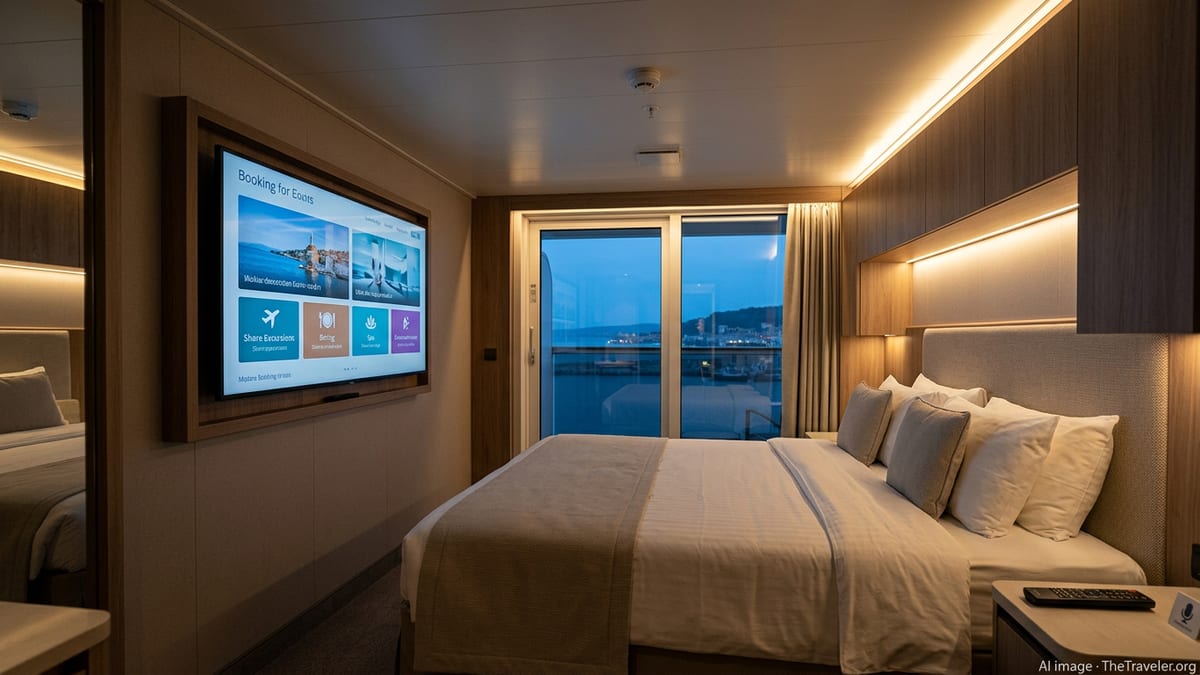
How AI Turns Cabin TVs into 24/7 Sales Hubs
According to a company announcement, the new functionality layers conversational artificial intelligence onto MarineXchange’s MXP in-cabin interactive TV, allowing guests to book a wide range of onboard services directly from their staterooms. Instead of acting solely as an entertainment or information screen, the TV now doubles as a continuously available, centrally managed commerce platform that aligns with each cruise line’s commercial strategy.
Guests can speak to the system via the microphone in the TV remote, interacting with an AI chatbot that understands natural speech in multiple languages. This enables passengers to reserve shore excursions, specialty restaurants, spa and beauty appointments, fitness classes and ticketed onboard events without visiting guest services desks or using their phones. The system displays tailored offers and recommendations on the TV interface based on guest profiles, preferences and historical behavior, turning idle screen time into targeted sales opportunities.
MarineXchange positions the enhanced MXP iTV as a data-driven revenue engine that can adjust offers in near real time. As cabins effectively become mini retail points of sale, operators gain a new way to promote high-margin experiences during key windows in the guest journey, from sea days to port evenings, with minimal additional staffing.
Revenue Gains and Capacity Optimization for Cruise Lines
MarineXchange says the AI-powered iTV feature is designed to increase onboard revenue by shifting more transactions into cabins and automating upsell moments that were previously dependent on human staff. By surfacing timely, personalized prompts for excursions or dining, the platform aims to raise conversion rates while freeing crew to focus on service rather than administrative booking tasks.
Beyond topline gains, the company highlights potential efficiency improvements in how ships manage capacity across restaurants, tours and onboard activities. Because the AI engine can prioritize offers based on remaining inventory and time to departure, it can help fill last-minute vacancies for underbooked services. Cruise operators, in turn, can smooth demand, reduce no-show exposure and balance guest flows across venues.
For revenue managers, the cabin TV channel adds another lever to complement mobile apps, kiosks and digital signage already available in the MXP365 suite. Using guest and booking data captured across the platform, lines can test different pricing, packaging and promotion strategies at scale, with performance visible in centralized dashboards. This level of control is particularly attractive in Europe, where itineraries often combine diverse source markets and travel styles, requiring nuanced yield strategies.
Elevating Guest Experience with Multilingual, Frictionless Booking
While the business case centers on revenue, MarineXchange also underscores the guest experience benefits of bringing AI into the cabin. Voice-driven booking can be especially valuable on European sailings, where a mix of languages and traveler demographics can make traditional paper forms or English-only interfaces less effective. The MXP chatbot is built to recognize natural speech in multiple languages, lowering barriers for international guests who may be less comfortable with complex menu navigation.
From the traveler’s perspective, the interaction mirrors speaking with a knowledgeable concierge, but without queues or opening hours. Guests can ask what is available at a preferred time, request ideas tailored to their interests, or modify plans late at night from the privacy of their cabin. Personalized suggestions based on past choices and stated preferences aim to surface relevant options without forcing users to scroll through long lists of activities.
MarineXchange argues that this combination of convenience and relevance can boost satisfaction scores, particularly among younger and digitally savvy passengers who expect seamless, app-like services when they travel. For cruise lines competing for the European market’s premium and experiential segments, the ability to offer a more intuitive, on-demand planning experience has become a key differentiator.
European Market Focus and Competitive Context
The rollout comes as European cruise operators increasingly invest in digital guest journeys to match advances seen in North America. MarineXchange, headquartered in Austria, has long positioned its MXP enterprise platform and MXP365 cloud suite as a way for European and global brands to centralize guest and crew data while complying with regional privacy rules such as GDPR. Expanding AI capabilities into cabin TVs extends that digital strategy directly into the stateroom.
Industry analysts note that Europe’s cruise sector, spanning large ocean ships to river and expedition vessels, is fertile ground for AI-driven personalization. With diverse itineraries and source markets, lines are seeking tools that can adapt offers to different nationalities, spending patterns and expectations in real time. An AI-enabled cabin TV that speaks the guest’s language and reflects their interests fits neatly into this push for localization and higher onboard spend per passenger day.
The move also arrives amid a broader wave of AI adoption across travel and cruise, from dynamic pricing and itinerary optimization to AI-powered marketing and content production. Other cruise brands have recently highlighted large-scale deployments of AI agents to streamline operations and enhance guest engagement, underscoring how digital capabilities are becoming central to competitive positioning rather than optional add-ons.
Technical Rollout and What Guests Can Expect Onboard
MarineXchange states that its in-cabin MXP iTV solution runs natively on all modern smart TVs, while a set-top box option is available for older hardware. This approach allows cruise lines with mixed fleets or chartered tonnage to deploy the AI functionality without a wholesale replacement of existing screens, an important consideration for European operators managing both legacy and newly built vessels.
Once implemented, guests will see context-aware recommendations and booking prompts alongside traditional TV and information content. They will be able to trigger the AI assistant using the remote control’s microphone, ask questions about excursions or onboard facilities, and confirm reservations verbally or through the on-screen interface. Transactions flow through the MXP platform, ensuring that bookings, inventory and guest profiles remain synchronized across shipboard systems and shoreside offices.
For travelers, the shift may feel gradual rather than disruptive: entertainment channels and safety information remain, but the TV increasingly behaves like an interactive concierge. For cruise lines in Europe and beyond, MarineXchange is pitching the technology as a way to future-proof stateroom infrastructure, align with broader AI strategies and unlock new revenue potential from one of the ship’s most familiar fixtures.