

More news on this day
Market Harborough, a Leicestershire market town once defined by its Victorian railways and canal junctions, is rapidly emerging as one of the United Kingdom’s most compelling small-town tourism stories, where upgraded mainline connections and carefully nurtured heritage attractions are combining to draw a new wave of visitors.
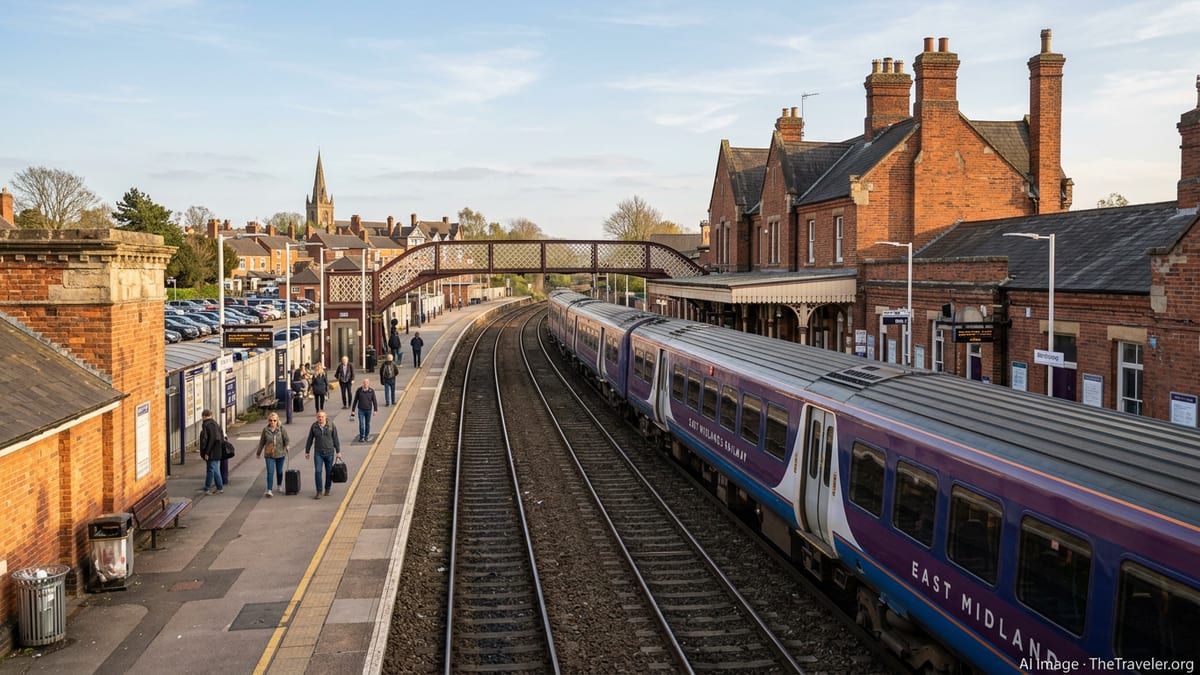
Victorian Railways Reimagined as a 21st Century Gateway
Few towns illustrate the enduring pull of Victorian railway engineering quite like Market Harborough. Its Midland Main Line station, opened in the 19th century, was long known for the sweeping curve that slowed passing expresses and marked the edge of town. Today that same site has become a symbol of regional renewal, following a series of multi-million pound upgrades to track, platforms and passenger facilities designed to keep the line at the heart of modern mobility.
The Market Harborough Line Speed and Station Improvement project, completed as part of the wider Midland Main Line upgrade, straightened track through the station, added a new platform and laid several kilometres of new rail to improve journey times and capacity between London and the East Midlands. Passengers now step off longer trains onto rebuilt platforms linked by a wide, lift-equipped footbridge, reflecting the town’s shift from provincial stop to high-performing commuter hub.
That investment is being followed by a new phase of public realm work at the station. Backed by UK Shared Prosperity Fund money channelled through Harborough District Council, East Midlands Railway is delivering a landscaped garden, welcoming arch, clearer wayfinding and extra seating, with completion targeted for March 2025. The enhancements are intended to transform the station frontage into a more inviting gateway for tourists, aligning the arrival experience with the town’s aspirations as a showcase rural destination.
Once a symbol of Victorian industrial power, Market Harborough’s railway is now being recast as an asset for low-carbon tourism. Regular services to London, Nottingham and Sheffield put the town within an hour or so of major urban centres, while local authorities promote rail as the default way to reach the historic streets, canalside walks and events that underpin its visitor economy.
Town Centre Revival: Markets, Museums and Masterplans
While the railway anchors Market Harborough’s connectivity story, the town centre is being carefully reshaped to keep visitors lingering longer. A masterplan adopted by Harborough District Council sets out a programme of improvements to streets, public spaces and pedestrian routes between the station and the historic market core, responding to long‑recognised gaps in signage and wayfinding.
At the heart of that core is Harborough Market, an indoor hall that has quietly become a bellwether for the town’s tourism fortunes. Council data shows footfall rising steadily, with more than 84,000 customers recorded in December 2023 alone and overall annual visitor numbers climbing well beyond pre‑pandemic levels. Stall occupancy remains at full capacity, and investment in upgraded heating, air conditioning and access doors has been aimed at making the space more comfortable for both regular shoppers and day‑trippers.
Alongside the market, Harborough Museum and the neighbouring historic corset factory building tell the story of the town’s industrial and social past, from textiles to transport. The museum’s recent efforts to diversify income, including a crowdfunding appeal amid funding pressures, illustrate both the fragility and importance of cultural institutions in smaller towns. For visitors, though, the combination of market bustle, heritage displays and independent cafes clustered in former factory buildings offers a compact and walkable cultural district just a short stroll from the platforms.
Local policy documents emphasise tourism, culture and town centre vitality as central planks of Harborough’s economic strategy through to 2031. That has translated into support for events, festivals and seasonal markets that aim to spread footfall through the year, building on the traditional market-town identity while positioning Market Harborough as a distinctive day-trip alternative to larger East Midlands centres.
Foxton Locks and the Canal Corridor Draw Crowds
A short journey from the station, Foxton Locks remains one of the area’s star attractions and a powerful reminder that the town’s transport heritage predates the railways. The staircase locks on the Grand Union Canal and the site of the former inclined plane boat lift draw boaters, walkers and history enthusiasts, supported by a museum, pubs and a growing calendar of canal-side events.
Annual gatherings such as the Easter floating market, featuring trading boats moored along the lock flight, underline how heritage infrastructure is being repurposed as a platform for modern visitor experiences. Food vendors, craftspeople and waterways volunteers converge on the site, turning an engineering landmark into a lively seasonal marketplace that complements the traditional stalls in the town centre.
Recent drought-related navigation closures have exposed the vulnerability of canal-based tourism to climate pressures, temporarily curtailing boat movements through Foxton and hitting some local businesses and attractions. For the most part, however, towpaths, viewpoints and visitor facilities have remained accessible, ensuring that land-based tourism continues even when water levels fall. The episode has prompted closer collaboration between heritage bodies, local authorities and community groups to build resilience into one of Market Harborough’s signature draws.
For visitors arriving by train, Foxton Locks is increasingly marketed as a car‑free day out: a short local bus ride, cycle or taxi from the station opens up a landscape where Victorian engineering, wildlife habitats and rural pubs sit side by side, reinforcing the town’s pitch as a base for slow, sustainable exploration.
Balancing Growth, Sustainability and Small‑Town Character
As visitor numbers grow, Market Harborough faces the familiar challenge of expanding its tourism offer without eroding the very qualities that make it attractive. Local transport strategies emphasise active travel, with initiatives to encourage walking and cycling for short journeys, reduce car dependence and improve safety on key routes between neighbourhoods, the station and the historic centre.
Leicestershire County Council’s transport programme for the town outlines a phased approach to managing congestion, parking and road layouts while supporting new housing and employment developments. Combined with district-level economic plans that call for more events, cultural programming and hospitality support, the picture is of a town trying to harness visitor demand as part of a broader quality-of-life agenda rather than chasing growth at any cost.
Residents remain alert to the impacts. Concerns over localised flooding, rail fares and housing affordability surface regularly, reflecting anxieties that accompany any successful commuter and tourism hub. Yet community discussions also highlight pride in the town’s architecture, green spaces and transport history, and a determination to keep Market Harborough from becoming a generic satellite of larger cities.
For now, the balance appears to be holding. The same Victorian rail and canal lines that once channelled freight and factory workers are being woven into a story of sustainable tourism, heritage conservation and measured economic ambition. In a crowded UK travel landscape, Market Harborough is using its railway past not as a nostalgic footnote, but as the backbone of a modern rural tourism triumph.