

More news on this day
Travelers heading to and from Martha’s Vineyard faced another day of disrupted plans today, with at least 12 flight cancellations and three significant delays rippling across regional routes that link the island with Barnstable, Boston and Nantucket.
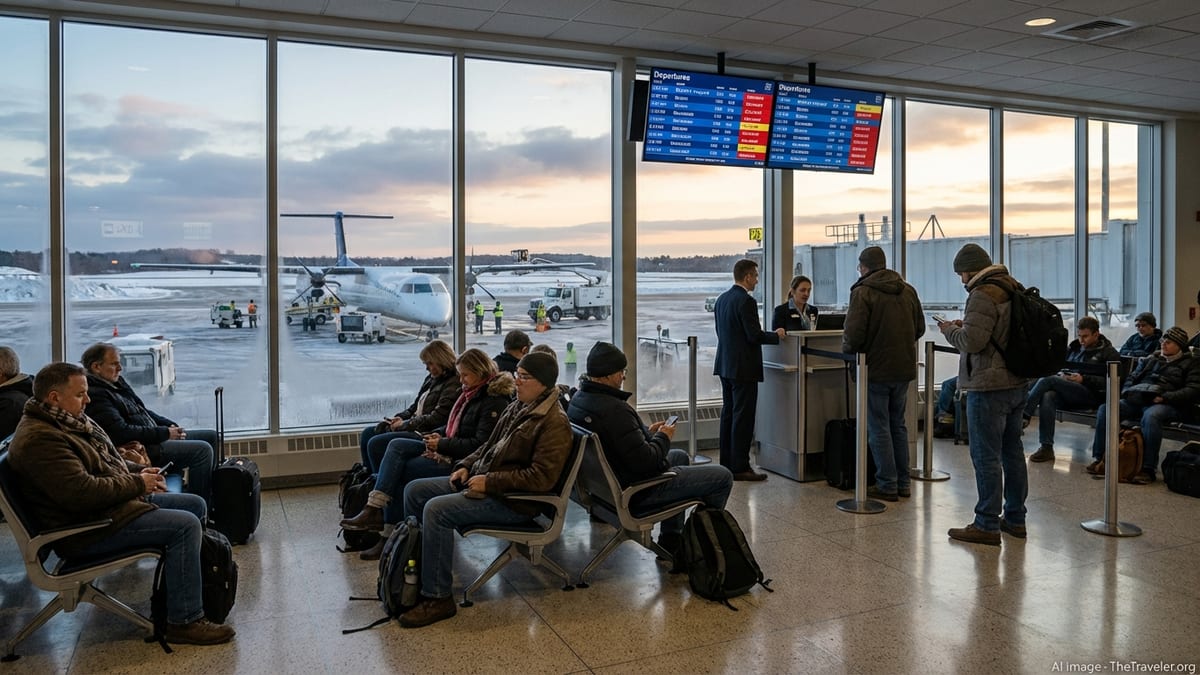
Regional Links Strained After Week of Severe Weather
The latest disruptions come as southeastern New England’s aviation network continues to recover from the historic Blizzard of 2026, which severely curtailed operations at Boston Logan and smaller coastal airports earlier in the week. While major hubs have gradually restored schedules, regional connections serving island communities remain under pressure.
Officials and airline representatives said the 12 cancellations and three delays affecting Martha’s Vineyard routes are concentrated on short-hop services connecting Barnstable Municipal, Boston Logan International and Nantucket Memorial airports. These sectors are critical lifelines for residents, commuters and visitors, particularly in the shoulder season when ferry schedules are limited and weather-dependent.
Although conditions at Martha’s Vineyard Airport itself improved following the storm, the knock-on impact of aircraft and crew displacements elsewhere in the network has continued to cascade into the island’s timetable. Carriers are working through backlogs of rebooked passengers while also trying to keep today’s schedule intact, a balancing act that has proved challenging given tight aircraft rotations on Cape and Islands routes.
Airport authorities across the region are urging travelers bound for Martha’s Vineyard or connecting through Barnstable, Boston and Nantucket to monitor their flight status closely and allow extra time for check-in, security and potential rebooking. Staffing, de-icing requirements and weather windows are all factors that can quickly alter departure boards, even after skies have cleared.
Martha’s Vineyard Travellers Face Missed Connections and Lengthy Rebookings
For passengers on today’s canceled flights, the consequences have ranged from missed family events and business meetings to unexpected overnight stays on the mainland. With relatively few daily frequencies on many island routes, a single canceled leg can mean a delay of 24 hours or more before a comparable alternative is available.
Travel agents and local hoteliers on Martha’s Vineyard reported a spike in calls from stranded travelers trying to secure last-minute rooms or shift reservations. Some visitors already on the island have opted to extend their stays rather than risk uncertain departures, while others attempting to reach the Vineyard have rerouted via Boston or opted to wait for more stable operating conditions.
The three reported delays today, largely on flights feeding Boston Logan and Nantucket, have also created complications for passengers holding onward domestic and international tickets. Even short holdups on these feeder legs can cause travelers to miss tightly timed connections at major hubs, forcing additional changes and, in some cases, added costs.
While most airlines have extended standard weather-related waivers following this week’s blizzard, policies vary by carrier, and some passengers have found that discounted fares or basic-economy tickets offer limited flexibility. Travel advisers recommend that affected customers keep documentation of cancellations and delays and communicate promptly with airlines to secure the best available alternatives.
Barnstable and Nantucket Bear Brunt of Cape Cod Disruptions
On Cape Cod, Barnstable Municipal Airport has again emerged as a focal point of disruption. The airport has already seen multiple rounds of cancellations linked to the storm’s aftermath, and today’s additional flight cuts have further constrained options for travelers using Hyannis as a mainland gateway to both Martha’s Vineyard and Nantucket.
Nantucket Memorial Airport has likewise been operating under strain, following a separate wave of cancellations that left hundreds of passengers stranded earlier in the week. Many of today’s Vineyard-bound travelers rely on synchronized timetables among Barnstable, Nantucket and Boston to complete their journeys, meaning an operational hiccup at one airport can quickly resonate across the network.
Regional carriers serving the Cape and Islands emphasize that safety remains the overriding consideration, particularly when winter weather introduces low visibility, strong crosswinds or challenging runway conditions. Even as skies brighten, cold temperatures and residual ice can require extensive ground handling and de-icing, cutting into already tight turnaround times and increasing the likelihood of downstream delays.
Local tourism and business leaders are closely watching the pattern of disruptions, mindful that reliable air access is essential not only for visitors but also for year-round residents, medical transfers and critical supply runs. While winter is traditionally a quieter period for leisure travel, the concentration of cancellations on a single day underscores the vulnerability of island communities to shocks in the regional aviation system.
Boston Logan’s Recovery Influences Island Operations
Boston Logan International Airport, the primary hub for long-haul and connecting traffic into coastal New England, continues to influence conditions at smaller airports including Martha’s Vineyard, Barnstable and Nantucket. Following days marked by hundreds of cancellations and delays during the height of the blizzard, operations at Logan have steadily improved, yet schedules remain finely balanced.
Airlines are still repositioning aircraft and crews that were stranded during the peak of Winter Storm Hernando, and some of today’s Vineyard-linked cancellations can be traced to gaps in available equipment rather than active runway closures. With carriers prioritizing high-demand trunk routes between major cities, low-capacity regional sectors are often the first to be trimmed when recovery plans are drawn up.
Passengers traveling between Logan and the islands are particularly susceptible to cascading delays, as short regional hops may be scheduled back-to-back throughout the day. A late inbound aircraft early in the morning can quickly translate into missed departure slots, compressed ground times and, eventually, flights that must be scrubbed altogether.
Massachusetts transportation officials have reiterated that full normalization of schedules may take several days, especially for smaller airports. They advise travelers with urgent plans to review not just the status of their individual flight, but also broader patterns of cancellations on their chosen carrier, as this can signal whether more disruption is likely later in the day.
Advice for Travelers Navigating Ongoing Volatility
As Martha’s Vineyard and its mainland gateways work through today’s 12 cancellations and three delays, travel experts are urging passengers to approach upcoming trips with an extra measure of flexibility. Weather in coastal New England can remain volatile well beyond the initial storm system, and recovery at regional airports often lags improvements seen at major hubs.
Travel planners recommend that passengers bound for the islands build generous connection times into itineraries that rely on Boston Logan, especially when linking to long-haul services. Where possible, opting for earlier departures can provide additional buffer if rebooking is required, while travelers with fixed commitments may want to consider travel insurance that covers weather-related disruption.
For those already affected, consumer advocates suggest maintaining clear records of cancellations, delays and additional expenses, including hotel stays and ground transport. While airlines are not always obligated to cover costs tied to weather events, some have offered goodwill vouchers or fee waivers during this week’s disruption, particularly to frequent flyers and those facing multiple schedule changes.
Despite the current turbulence, airlines and airport operators stress that flight volumes serving Martha’s Vineyard, Barnstable, Boston and Nantucket are expected to rebuild as aircraft and crews return to position and runway conditions stabilize. Until then, travelers are advised to stay closely informed, keep contingency plans in mind and anticipate that even a modest change in weather or operations can have outsized effects on the region’s tightly interlinked island air network.