

More news on this day
Central Goldfields leaders are positioning the Maryborough–Ballarat rail link as critical infrastructure for the region’s next phase of growth, urging the Victorian Government to back a significant expansion of weekday services as an election-era priority.
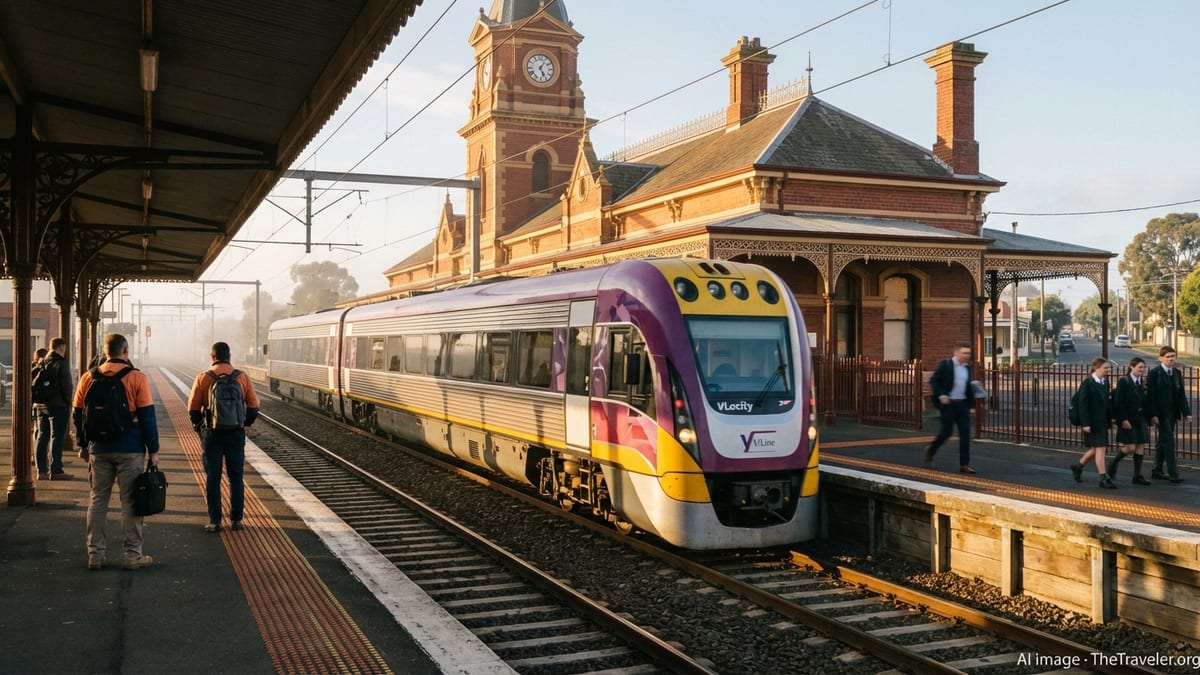
Council Pushes for Five Daily Trains on Underserved Route
The Central Goldfields Shire Council has formally called for a major uplift in services on the Maryborough–Ballarat rail line, arguing that the current timetable is out of step with the area’s economic and social ambitions. The council wants weekday services boosted from two to five trains a day between Maryborough and Ballarat, positioning the line as a genuine commuter link rather than a niche regional service.
Mayor Ben Green said the existing schedule does not provide the frequency needed for reliable commuting or convenient day trips, particularly for residents reliant on public transport. Local authorities say the line’s performance should be measured not only in raw patronage numbers but in its capacity to unlock education, employment and healthcare access for some of Victoria’s most disadvantaged communities.
The council has flagged the push for extra trains as a headline item in its 2026 state election advocacy package, due for release in coming weeks. By tying the request to the electoral cycle, local leaders hope to secure a firm commitment from candidates well before voters head to the polls.
Community sentiment appears broadly supportive of more trains, with recent local discussion highlighting both the frustrations of the current timetable and growing expectations that the line should keep pace with other upgraded regional corridors.
Economic Growth, Housing Targets and Social Equity on the Line
Local officials are increasingly framing the Maryborough–Ballarat link as a lever for meeting state housing and population targets in the Central Goldfields. With Melbourne’s affordability pressures pushing more people toward regional centres, council leaders argue that improved rail services can make Maryborough and surrounding towns more attractive to new residents and investors.
Additional services are being promoted as a way to spread growth beyond larger hubs such as Ballarat and Bendigo, while still keeping smaller communities plugged into higher education, specialist health care and professional jobs. For many residents, Ballarat is the key stepping stone to Melbourne, and better connections to the regional city are seen as essential for long-term prosperity.
The council has also linked the rail campaign to social equity outcomes, noting that limited services disproportionately affect those without access to a car. More frequent trains would make it easier for young people to attend TAFE or university, for older residents to reach medical appointments, and for jobseekers to tap into broader labour markets.
Leaders say the return of passenger rail in 2010 helped revive the historic Maryborough Station precinct and tourism in the area. They now see a new phase of investment in service frequency as the next step in turning rail connectivity into sustained economic development.
Integrating Smaller Towns and Regional Tourism into the Network
The push for more trains is not just about Maryborough itself. Council advocates highlight the benefits for intermediate communities such as Clunes and Talbot, which sit along the route and would gain more flexible access to both Ballarat and Maryborough if the timetable is expanded.
These smaller towns are increasingly marketing their heritage streetscapes, goldfields history and creative industries to visitors from Melbourne and interstate. More rail options could make short breaks and weekend trips smoother for tourists who prefer to leave the car at home, while also supporting local events and festivals that rely on predictable transport links.
The Maryborough station precinct has become a focal point for regional storytelling, including its role in supporting the Victorian Goldfields World Heritage bid. Officials say stronger rail services would reinforce that effort, making it easier for visitors to explore a network of gold rush towns by train and bus rather than relying solely on private vehicles.
Local stakeholders also continue to support calls to reinstate passenger rail between Maryborough and Mildura, framing the Maryborough–Ballarat corridor as one piece of a broader north–south spine that could reconnect communities across central and north-western Victoria over time.
Calls Align with Long-Term Rail Planning and Capacity Upgrades
The Maryborough–Ballarat campaign is being advanced against the backdrop of statewide rail planning, including the Regional Network Development Plan and major infrastructure programs reshaping regional corridors. Advocacy groups point out that previous planning documents have already acknowledged community support for extra services on the line, but that delivery has lagged behind demand.
Recent improvements on other corridors, such as increases to Echuca line services following sustained lobbying and investment, are regularly cited in local debate as a precedent for what could be achieved in the Central Goldfields. Supporters argue that even modest patronage growth should be seen as a sign that better service stimulates use, rather than a reason to hold back further upgrades.
In parallel, major works around Ballarat, including the development of an intermodal freight hub at the Ballarat West Employment Zone and changes to local road and rail interfaces, are reshaping how the region handles both passenger and freight movements. For Maryborough advocates, it is important that passenger rail is not left behind as freight capacity expands and junctions are redesigned.
State transport planners face the challenge of coordinating rolling stock, track capacity and timetable slots through key bottlenecks, particularly around Melbourne’s western approaches. Local leaders maintain that strategic investment now, paired with network-wide upgrades, can future-proof the Maryborough–Ballarat link as population growth continues across central Victoria.
Balancing Patronage Realities with a Vision for Regional Futures
Critics of a rapid expansion in services note that current boardings on the Maryborough line remain relatively low compared with some other regional routes, and argue that additional coaches could address demand more cost-effectively in the short term. Online commentary has highlighted the tension between running lightly loaded trains and the desire to seed long-term growth through better connectivity.
Proponents counter that regional rail often faces a chicken-and-egg problem, where limited timetables depress demand by making the service impractical for everyday use. They say that moving to five trains a day would represent a decisive shift toward a clockface-style service that can realistically support commuting, study and regular business travel.
As the Central Goldfields Shire Council prepares its state election advocacy strategy, the Maryborough–Ballarat rail link is shaping up as a litmus test of how serious decision-makers are about spreading growth beyond Victoria’s metropolitan fringe. For local residents, the outcome will determine whether their rail line remains a marginal service or evolves into a core pillar of the region’s future.