

More news on this day
Thousands of air travelers across Europe are facing long queues, missed connections and overnight airport stays as more than 210 flights are canceled and at least 2,709 delayed across key hubs in the Netherlands, United Kingdom, Germany, Spain, Italy, Belgium and Austria, disrupting operations for major carriers including KLM, easyJet, SAS and Iberia.
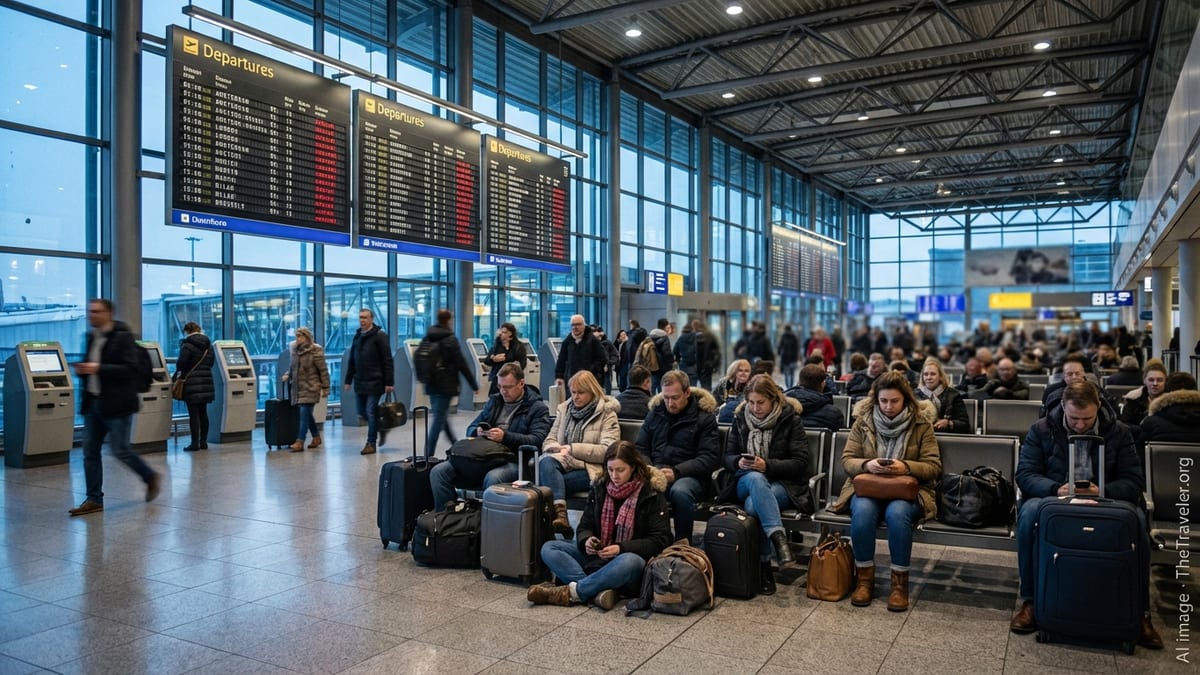
Widespread Disruption From Amsterdam to Madrid
Europe’s busiest air corridors were heavily disrupted on Thursday as airports in Amsterdam, London, Munich, Madrid, Milan, Brussels and several Austrian cities reported waves of cancellations and rolling delays. Operational data compiled by aviation tracking services shows more than 210 flights scrubbed and at least 2,709 delayed across the affected countries, a scale of disruption that effectively brought parts of the continent’s short-haul network to a crawl.
Amsterdam Schiphol, already under scrutiny after disruptive winter weather earlier in the season, again emerged as one of the worst-affected hubs. Dutch outlets reported around 100 flights scrapped at Schiphol alone as snow and ice moved across central parts of the Netherlands, with knock-on delays rippling through the day for services to and from the UK, Spain, Italy and Scandinavia.
In Spain, Madrid Barajas and Barcelona El Prat struggled with heavily congested departure boards as late-arriving aircraft from northern Europe cascaded into afternoon schedules. Italian hubs including Milan Malpensa and Rome Fiumicino reported growing clusters of delayed departures, particularly on services operated by low-cost and regional carriers trying to rotate aircraft through the disrupted network.
Germany’s Munich and Frankfurt airports, plus London Heathrow, Gatwick and other UK hubs, also recorded elevated delay rates as they absorbed diversions and missed slots linked to conditions in the Benelux region and along the storm track pushing across western Europe.
Weather, Capacity Strains and Knock-On Chaos
The latest disruption comes midway through an already punishing 2025–26 winter for European aviation, with repeated windstorms and cold snaps battering schedules and exposing capacity constraints at major hubs. Meteorological services in the Netherlands issued yellow warnings for snow and ice across several provinces, including Noord-Holland, early on Thursday as forecasters warned of difficult conditions around Amsterdam and on regional road and rail links.
This follows earlier winter storms that triggered hundreds of cancellations at Schiphol and prompted Air France-KLM to warn of tens of millions of euros in costs linked to the need for emergency de-icing supplies and extra crew and accommodation. Airlines and airports have been operating with thinner buffers after the busy 2025 holiday season, meaning local weather disruptions are more quickly cascading into continent-wide timetable chaos.
In Germany, recent storm systems and heavy snow have already led to temporary suspensions of long-distance rail services and road closures in parts of the north, adding further pressure on air travel when skies clear. Thursday’s air traffic problems were compounded by crews and aircraft still being out of position from earlier weather events, leaving schedulers with limited flexibility to recover from morning waves of disruption.
Across Spain and Italy, strong winds and rain linked to Atlantic systems have periodically hit coastal approaches and mountainous routes this month, forcing air traffic control to reduce arrival and departure rates at busy times. The result has been a pattern of rolling delays that, when combined with winter conditions in northern Europe, have left passengers facing multi-hour waits and last-minute gate changes even on routes unaffected by local bad weather.
Major Airlines Struggle to Keep Schedules Intact
The brunt of the latest disruption has fallen on Europe’s best-known network and low-cost airlines, which rely on tight aircraft rotations and complex hub operations. KLM, based at Amsterdam, again saw a substantial portion of its European short-haul program affected as snow and ice restricted movements on the ground and forced longer de-icing times for departing aircraft.
Budget carrier easyJet, which operates extensive networks from London Gatwick, Milan Malpensa and other key airports, reported clusters of delayed departures as turnarounds slowed and aircraft arrived late from other parts of the continent. With many of its passengers on point-to-point leisure and family visits, stranded travelers faced limited same-day alternatives on already busy routes.
Scandinavian operator SAS also featured among the impacted carriers, as disruptions across northern Europe and into central hubs such as Munich and Vienna complicated connections from Stockholm, Copenhagen and Oslo. Iberia, Spain’s flag carrier, faced mounting delays at Madrid as it tried to absorb late inbound flights from affected regions while maintaining long-haul departures to the Americas.
Other major players, including British Airways, Lufthansa, Air France, Ryanair and various regional affiliates, contended with a patchwork of delays and a smaller number of cancellations as they attempted to reroute aircraft and crews to cover critical long-haul links and high-yield business routes.
Brussels and Industrial Tensions Add to Passenger Anxiety
In Belgium, passengers at Brussels Airport confronted not only immediate delays but also the looming prospect of wider disruption linked to industrial action. Trade unions in the country have already flagged plans for a nationwide strike on 12 March, a move that is expected to severely disrupt or temporarily halt departures from Brussels during the 24-hour walkout.
Although Thursday’s operational problems in Brussels were mainly tied to wider European knock-on effects, the strike threat has added to the anxiety of travelers trying to reschedule winter trips or plan business journeys in the coming weeks. Airlines serving the Belgian capital are urging customers to closely monitor booking portals and apps for schedule changes and are preparing waiver policies for passengers who wish to shift travel away from the strike date.
Industrial tensions are not confined to Belgium. Across several European markets, airlines have grappled with labor disputes over pay, rosters and working conditions as staff seek compensation for intense workloads during the post-pandemic travel rebound. Previous strike actions at carriers and among air traffic controllers have triggered waves of cancellations and delays, and unions in multiple countries have warned that further walkouts remain possible if negotiations stall.
For travelers connecting through Brussels or using it as an origin or destination, the confluence of weather-related disruption, airspace congestion and labor uncertainty has created a challenging environment in which even routine journeys can rapidly become multi-leg odysseys.
Travelers Face Long Queues, Missed Connections and Overflowed Hotels
Scenes at major terminals on Thursday were characterized by lengthy queues at check-in, security and customer service desks, particularly during the morning and late-afternoon peaks. At Amsterdam, London and Munich, passengers reported waiting more than an hour to speak with airline staff about rerouting or overnight accommodation as the list of delayed flights continued to grow on departure boards.
Families and elderly passengers were among those hardest hit, with several airports rolling out camp beds, blankets and water for travelers stranded overnight. Holidaymakers returning from ski and city breaks in Austria, Italy and Spain struggled to find available hotel rooms near major hubs as local accommodation filled quickly with disrupted travelers and aircrew.
Business travelers transiting through Europe to long-haul destinations also suffered missed connections. With major carriers trying to prioritize the integrity of intercontinental journeys, passengers on short-haul feeder flights that arrived late often found themselves rebooked on departures the following day, forcing them to rearrange meetings and accommodation at short notice.
Airport operators have reiterated calls for passengers to arrive early, bring essential medications and valuables in cabin baggage, and prepare for the possibility of extended waiting periods. Assistance desks have been advising travelers to keep digital copies of boarding passes, receipts and documents that may be needed later for reimbursement or compensation claims.
What Passengers Can Expect in the Coming Days
While meteorologists expect the heaviest snow and ice around the Netherlands and parts of northern Europe to ease within 24 to 48 hours, aviation experts warn that the operational hangover could last several days. Aircraft and crew are still scattered across the network, and many airlines will need multiple rotation cycles to restore aircraft to their planned bases.
Passengers booked to travel through Amsterdam, London, Munich, Madrid, Milan, Brussels or major Austrian airports over the next few days are being urged to monitor airline apps and airport information boards closely. Even where flights remain scheduled, departure times may change at short notice as carriers adjust rotations and prioritize certain routes.
Industry analysts say that with winter still in full swing and parts of Europe braced for further storms, there is limited scope for airlines to add extra capacity to clear backlogs. Some carriers are proactively trimming schedules, particularly in early morning and late-night waves, to build in recovery time and reduce the risk of stranded aircraft and crew.
Travel agents and corporate travel managers are advising clients to consider longer connection windows, especially when pairing European short-haul flights with long-haul departures, and to avoid last-flight-of-the-day options where possible during periods of elevated disruption.
Know Your Rights: Compensation, Rebooking and Care
Consumer groups across the continent have renewed calls for passengers to familiarize themselves with their rights under European air passenger regulations when flights are canceled, heavily delayed or overbooked. In many cases, travelers departing from or arriving in the European Union, the United Kingdom or associated countries are entitled to assistance, meals, hotel accommodation and, in some situations, financial compensation.
Compensation eligibility can depend on the cause of disruption, including whether it stems from extraordinary circumstances such as severe weather or from operational and staffing problems within the airline’s control. Even where airlines are not required to pay compensation, they still generally have obligations to provide care, communication and rerouting options.
Experts recommend that passengers keep boarding passes, booking confirmations and receipts for meals, taxis and hotels related to a disruption, in case they need to file claims with airlines or specialized claims firms later. Taking time-stamped photos of departure boards and gate information can also help document the scale and duration of delays.
With Thursday’s wave of cancellations and delays stranding thousands in airports across the Netherlands, UK, Germany, Spain, Italy, Belgium and Austria, legal and consumer advisory services expect to see a fresh surge of inquiries in the coming days from travelers seeking guidance on refunds, rebooked itineraries and compensation.
Airlines and Airports Under Pressure to Build Resilience
The latest disruption has intensified debate about how Europe’s aviation system can better cope with increasingly volatile weather and growing passenger volumes. Industry bodies and airport executives have pointed to the need for upgraded de-icing infrastructure, modernized air traffic management systems and more robust staffing buffers to handle spikes in demand or sudden operational constraints.
At Schiphol and other hubs, recent episodes have highlighted how shortages of de-icing fluid, equipment and trained ground handlers can quickly snowball into mass cancellations. Similarly, storms that close a single runway or reduce arrival rates at London, Munich or Madrid can rapidly trigger delays across an interconnected network stretching from Scandinavia to the Mediterranean.
Passenger groups argue that airlines should factor more slack into winter schedules, even at the cost of reduced daily frequencies, to avoid repeated large-scale disruptions that damage traveler confidence. Environmental advocates, meanwhile, say that the industry must also plan for more frequent extreme weather events linked to climate change, which may render traditional seasonal planning assumptions obsolete.
For now, however, the immediate priority for airlines, airports and regulators is getting stranded travelers moving again. As aircraft are repositioned, crews rescheduled and weather patterns shift, Europe’s aviation network will be tested yet again on how quickly it can recover from another turbulent day in the skies.