

More news on this day
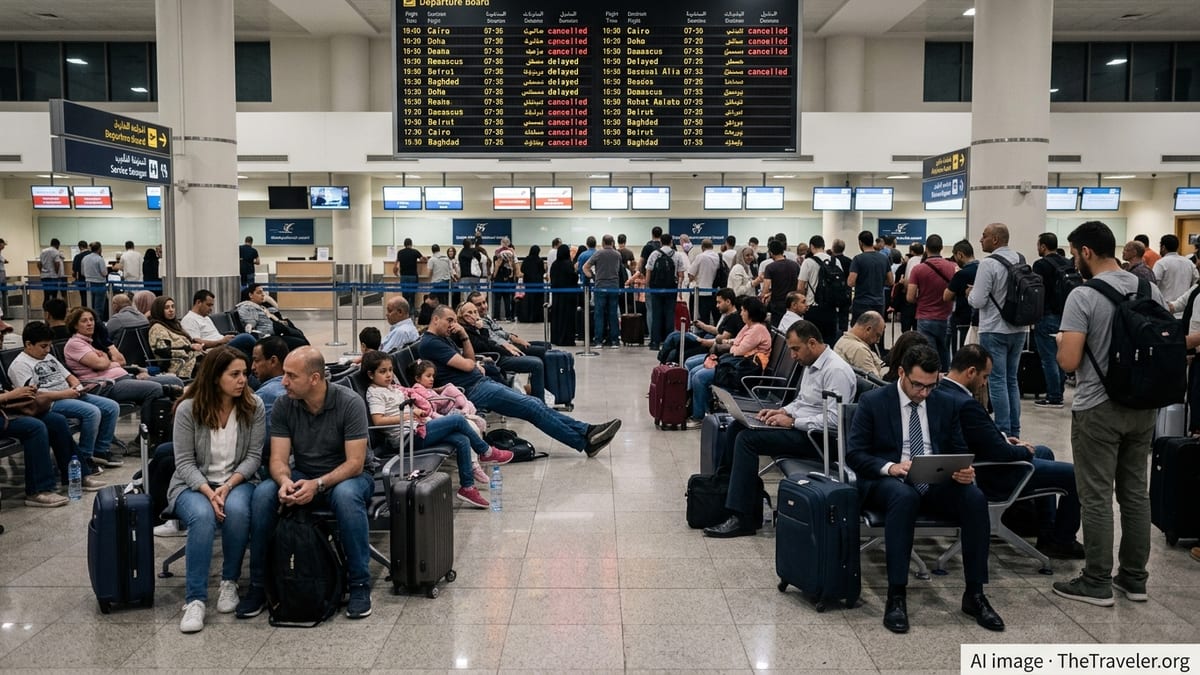
Hundreds of travelers were left stranded at Queen Alia International Airport in Amman after 28 flights were canceled and at least 27 were delayed, disrupting key routes to Cairo, Doha, Damascus, Beirut, Baghdad and other regional destinations and intensifying frustration with mounting air travel chaos across the Middle East.
Get the latest news straight to your inbox!
Disruptions Hit Major Regional Routes and Carriers
The wave of cancellations and delays at Jordan’s main international gateway has affected a mix of regional and international airlines, including Royal Jordanian, Saudia, Emirates, Flynas and Egypt Air. Publicly available flight data and local media coverage indicate that departures and arrivals serving neighboring capitals such as Cairo, Beirut, Damascus and Baghdad have been among the hardest hit, with knock-on effects for onward long-haul connections.
The cancellation of 28 flights and delays to 27 more at Queen Alia International Airport are part of a wider pattern of disruption that has swept across Middle Eastern airspace since late February, as conflict in and around Iran triggered widespread route suspensions and airspace closures. Aviation trackers and regional news outlets report that carriers have been forced to reroute or ground aircraft in response to shifting risk assessments and regulatory restrictions.
Passengers booked on Royal Jordanian and other regional airlines have reported missed connections, unexpected overnight stays and uncertainty over when normal schedules will resume. The concentration of cancellations on heavily trafficked regional corridors has amplified the impact, leaving many travelers with few alternative options.
Regional Conflict Ripples Through Jordan’s Main Hub
The operational turmoil at Queen Alia International Airport is closely linked to the broader shock to civil aviation caused by the latest escalation of conflict involving Iran and multiple regional states. Published analyses of the aviation impact describe thousands of flights canceled across the Middle East as several countries either fully or partially closed their airspace to civilian traffic, forcing airlines to suspend or divert services on short notice.
Jordan’s location between the Levant, the Gulf and North Africa, and its role as a transit point between Europe and the wider region, mean that disruptions in neighboring airspace quickly reverberate through Amman. When carriers are unable to overfly key corridors or must significantly lengthen routes to avoid affected areas, their ability to maintain regular frequencies to and from Queen Alia Airport is constrained, contributing to the spike in cancellations and delays recorded in recent days.
Photographs distributed in regional media over the past week have shown crowded departure halls and flight information boards in Amman filled with red-marked cancellations and lengthy delays. Jordan’s tourism and travel sector, already under pressure from declining visitor numbers linked to regional instability, now faces an additional setback just as the spring travel period approaches.
Passenger Frustration Mounts Amid Limited Options
For travelers caught in the disruption at Queen Alia International Airport, the immediate experience has been long waits, repeatedly changing departure times and uncertainty about rebooking. Reports circulating on social media and in travel forums describe passengers camped out in terminal seating areas or queuing at airline counters, seeking clarity on when they might be able to continue their journeys.
Publicly available information on airline policies indicates that many carriers are offering fee waivers, date changes or refunds on affected itineraries originating in or transiting through the region. However, with large numbers of flights canceled across multiple hubs, securing an alternative seat has proved difficult, particularly for those traveling onward to Europe, North America or Asia from Amman via Cairo, Doha or Gulf connection points.
Travelers have also voiced concern about the lack of clear, consolidated information on which routes are operating and how long the disruption will last. While airlines and airport operators have issued general advisories urging passengers to check their flight status before leaving for the airport, the rapidly evolving situation in regional airspace has meant that schedules can change with little notice.
Airlines Juggle Safety, Routing and Capacity Constraints
The cancellations affecting Royal Jordanian, Saudia, Emirates, Flynas and Egypt Air at Queen Alia International Airport reflect a complex operational environment in which airlines are juggling safety considerations, regulatory requirements and limited capacity. According to aviation industry assessments, carriers serving the Middle East have had to redesign flight paths to skirt closed or high-risk airspace, increasing flight times and fuel costs and complicating aircraft and crew scheduling.
When surrounding airspace restrictions tighten, airlines often reduce frequencies, consolidate services or temporarily suspend routes, prioritizing key long-haul corridors and repatriation operations. In the case of Amman, this has meant fewer available seats on core regional links that normally act as feeders for intercontinental traffic. Once aircraft and crews are out of position because of earlier cancellations, restoring the full schedule can take days, even after airspace conditions stabilize.
Industry analysts note that large network carriers such as Emirates and Saudia may be able to re-route some traffic through alternative hubs or utilize widebody aircraft to clear backlogs, but smaller regional operators, including those based in Jordan, have less flexibility. This imbalance can contribute to bottlenecks at airports like Queen Alia, where multiple airlines rely on the same constrained corridors to reach neighboring capitals.
Outlook for Travelers Using Amman in the Coming Days
While some reports suggest that parts of regional airspace are gradually reopening to commercial traffic, the situation remains fluid, and further schedule adjustments at Queen Alia International Airport appear likely in the short term. Airlines have continued to update their travel advisories, and additional operational changes may occur as they refine routings and coordinate with aviation regulators.
Travel experts advising the public through media appearances and online platforms are encouraging passengers with upcoming itineraries to or from Amman to monitor their booking status closely, allow extra time at the airport and be prepared for last-minute gate or timing changes. Travelers connecting through nearby hubs such as Cairo, Doha or Gulf airports may face additional screening or routing constraints linked to the wider regional security picture.
For Jordan’s aviation and tourism industries, the priority in the days ahead will be to clear backlogs, support stranded passengers and restore confidence among travelers. The experience of hundreds of passengers stranded as 28 flights were canceled and 27 delayed at Queen Alia International Airport underscores how quickly regional tensions can upend even well-established air links, with human and economic consequences that extend far beyond the departure boards.