

More news on this day
Hundreds of travelers were left stranded at New York’s LaGuardia Airport on Monday as a fresh wave of disruption hit U.S. air travel, with publicly available tracking data showing 211 flight cancellations and 404 delays affecting services operated by Endeavor Air, Delta Air Lines, American Airlines, JetBlue and their partners, rippling across New York, Los Angeles, Chicago and other major U.S. cities.
Get the latest news straight to your inbox!
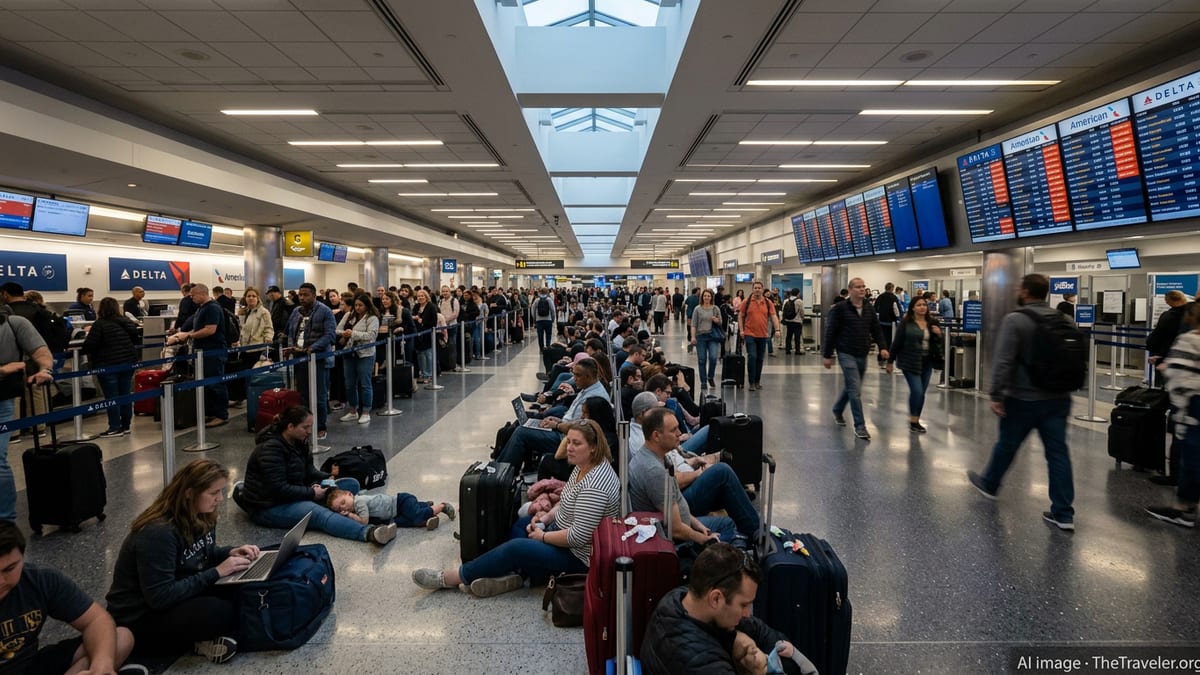
LaGuardia at the Center of a New Disruption Wave
LaGuardia once again found itself at the heart of a nationwide air travel breakdown, as a high volume of cancellations and rolling delays converged on an already capacity-constrained airport. Flight-tracking dashboards on Monday showed an elevated concentration of problem flights clustered around LaGuardia, with many categorized as either canceled outright or facing extended ground and departure delays.
The operational strain at LaGuardia fed directly into network challenges for the airlines most reliant on the airport. Delta Air Lines and its regional affiliate Endeavor Air, along with American Airlines and JetBlue, saw their schedules in and out of New York squeezed by a combination of aircraft unavailability, crew time limits and congestion-related air traffic control programs. As the day progressed, disruptions at LaGuardia cascaded into missed connections, last-minute rebookings and full departure boards at other hubs.
LaGuardia’s tight runway layout, limited space and heavy reliance on regional jets often make it particularly vulnerable when irregular operations begin. Once a critical mass of flights is delayed or canceled, available gate space, crews and aircraft quickly fall out of position, magnifying the impact on passengers both in New York and across the country.
Endeavor, Delta, American and JetBlue Struggle to Stabilize Schedules
Regional operator Endeavor Air shouldered a significant share of Monday’s cancellations, according to publicly available flight status data. As a key feeder for Delta Air Lines at LaGuardia and other Northern hubs, Endeavor’s performance directly shapes connectivity for dozens of smaller cities whose only link to the national network is via regional jets.
Delta Air Lines itself also faced widespread knock-on delays as it attempted to reposition aircraft and crews while managing passenger rebookings through its New York, Atlanta and Midwest hubs. When regional affiliates like Endeavor encounter concentrated disruption, mainline carriers often experience a secondary wave of delays and missed connections, particularly in peak morning and evening banks.
American Airlines and JetBlue, both with substantial New York operations, were also heavily represented in the disrupted schedule. Publicly accessible flight boards showed clusters of delayed departures on key business and leisure routes, including services to Los Angeles, South Florida and major Midwest cities. The combination of mainline jets and regional aircraft meant that both short-haul and transcontinental travelers were affected.
Operational recovery was further complicated by aircraft rotation patterns, where a delayed or canceled flight early in the day can force rolling schedule changes hours later at airports far from the original disruption point. That pattern appeared across multiple carriers, as delays at LaGuardia translated into late arrivals and reduced turnaround times at downline stations.
Ripple Effects in Los Angeles, Chicago and Other Major Hubs
While New York bore the brunt of the immediate disruption, the operational shockwave extended to Los Angeles, Chicago and other major U.S. cities. Travelers in those markets reported crowded gate areas and departure boards showing growing columns of orange and red indicators for delayed and canceled flights, particularly on routes linked back to LaGuardia and other Northeastern airports.
In Chicago, both O’Hare and Midway felt the impact through delayed inbound aircraft and compressed connection windows. Passengers arriving from New York and the East Coast often faced missed onward flights, leading to long lines at customer service counters as airlines worked through rebooking options on remaining seats later in the day.
Los Angeles International Airport, a key transcontinental endpoint for both Delta and JetBlue, also saw schedules tighten as New York departures slipped later into the day or were canceled altogether. Delayed flights leaving LaGuardia meant late-night arrivals in California, while outright cancellations removed capacity on some of the country’s busiest coast-to-coast corridors.
Other large hubs including Boston, Dallas–Fort Worth and Atlanta experienced similar network strains, illustrating how a concentrated disruption at one slot-restricted airport such as LaGuardia can ripple outward across the national system within hours.
Passengers Face Long Waits, Limited Options and Policy Confusion
For passengers caught in the middle of Monday’s disruption, the impact was felt most immediately in long terminal waits and uncertain rebooking prospects. With 211 cancellations and hundreds more delays across carriers, open seats on later flights quickly became scarce, especially on popular business routes linking New York with Chicago and Los Angeles.
Publicly available coverage and online discussion highlighted travelers facing multi-hour queues to speak with airline agents, while others turned to mobile apps to search for alternative routings through secondary hubs or nearby airports such as Newark and JFK. In some cases, travelers reported being rebooked on indirect itineraries with overnight connections or early-morning departures.
The situation also renewed attention on passenger rights during significant disruptions. Consumer guidance from the U.S. Department of Transportation notes that travelers on canceled flights who choose not to travel are generally entitled to refunds, even on nonrefundable tickets, while compensation or hotel accommodations in the case of delays depend on individual airline policies and whether a disruption is considered controllable or weather-related.
As delays stretched into the evening, some stranded travelers weighed whether to seek refunds and abandon trips altogether, while others tried to salvage their plans by shifting to rail, bus or last-minute rental cars for shorter regional journeys.
What Travelers Can Expect Next
Operational recovery from an event of this scale typically takes more than a single day, especially when regional fleets and busy hubs are involved. Even after the immediate wave of cancellations subsides, airlines often need additional time to reposition aircraft and crews, leaving schedules vulnerable to further delays if weather or air traffic control constraints reappear.
Travel industry observers indicate that passengers flying through LaGuardia and other East Coast airports in the coming days may continue to encounter residual delays and schedule adjustments as carriers work to realign operations. Early morning departures and late-evening flights can be particularly sensitive to aircraft having arrived late the night before, which can compress turnaround times and lead to fresh knock-on delays.
For those with upcoming trips, publicly available guidance from travel experts consistently recommends checking flight status repeatedly before leaving for the airport, enabling push notifications in airline apps, and having a backup routing in mind through alternative airports or connections. During high-disruption periods, same-day changes that might normally carry fees are sometimes relaxed, but policies can vary widely by airline and by the nature of the disruption.
Monday’s events at LaGuardia underline how quickly localized operational problems can become a nationwide travel story, particularly when they involve carriers with complex hub-and-spoke networks and a mix of regional and mainline flights serving some of the country’s busiest air corridors.